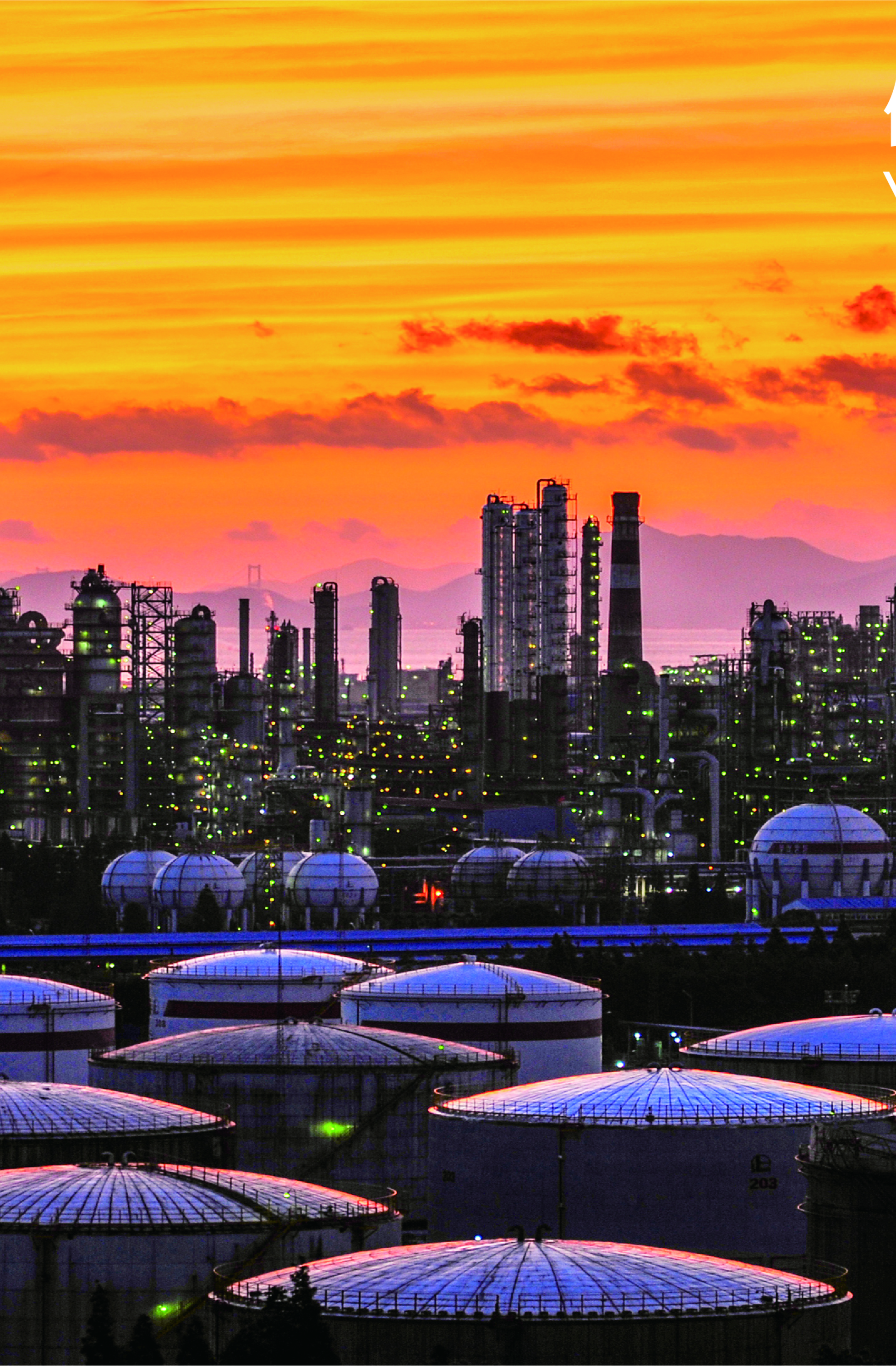
The first explosion proof distribution cabinet failure I see on offshore wind projects usually has nothing to do with the flamepath. It starts with a cable gland schedule that does not match the actual cable diameter, or an enclosure material that looked fine in the datasheet but cannot survive five years of salt spray and condensation. When specifying explosion proof distribution cabinets for offshore wind farms, the real work is deciding the interfaces before the order: zone and gas group, corrosion strategy, cable entry plan, and whether the cabinet is factory pre-wired or assembled at site. We treat the cabinet as an EPC interface point, not a catalogue item.
Explosion Proof Distribution Cabinet Requirements for Offshore Wind Farms
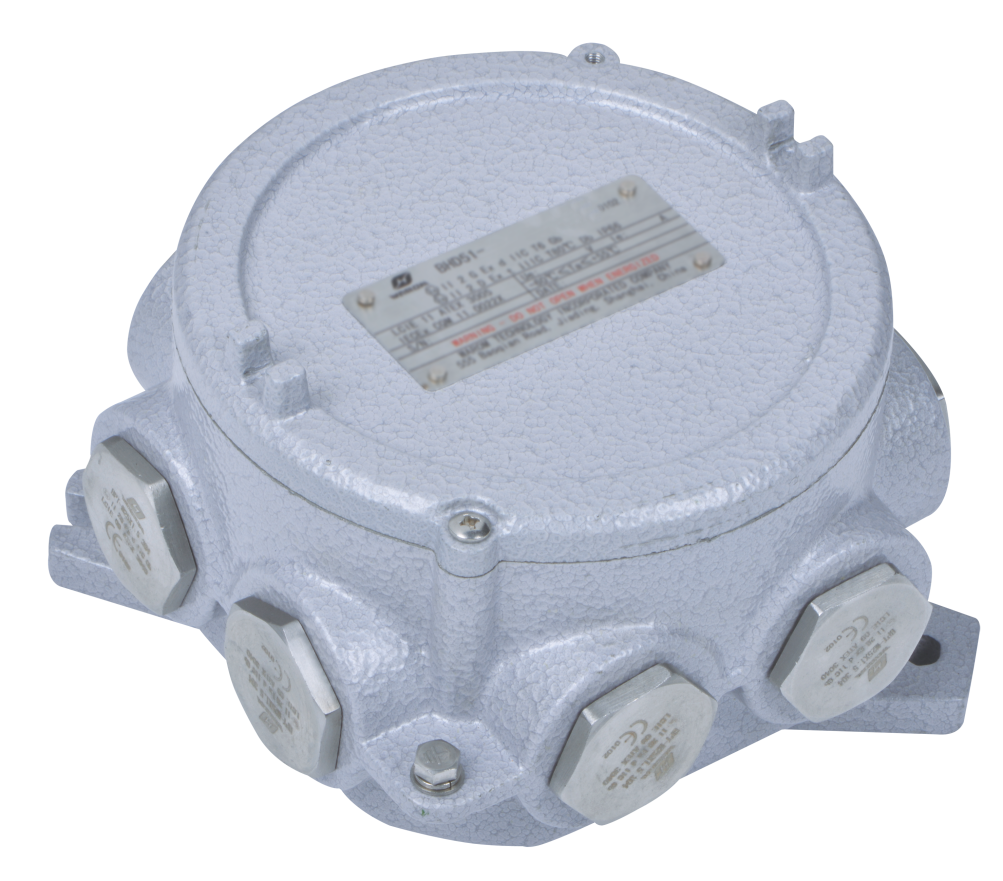
An offshore wind farm does not assign hazardous areas by accident. The turbine tower base, transition piece, and offshore substation platform carry different zone drawings, and the distribution cabinet must match each one. We start with the area classification report, the gas group from the ignition risk assessment, and the temperature class. A cabinet certified for IIB but not IIC will cause a compliance stop if the battery room or hydrogen vent line falls inside the same package.
For offshore wind, we normally specify Ex d or compound Ex d/Ex e enclosures rather than a single plastic Ex e enclosure for the main incoming distribution section. The Ex d chamber contains the switching and protection device; the Ex e chamber handles terminals and cable landing. This split reduces the number of flamepaths to inspect and keeps circuit breaker arcs inside the flameproof side. I have seen tender drawings that call for a compact Ex e cabinet with twenty glándulas de cable in the bottom plate. The drawing looks neat, but the gland spacing problem arrives later.
Offshore wind packages often fail at the document interface when the cabinet scope, certification boundary, and installation standard are not fixed in one place. <Especificación de equipos eléctricos a prueba de explosiones para proyectos EPC: Seguridad y Cumplimiento> covers how to keep the Ex certificate, cable gland schedule, and installation notes consistent before the BOM is frozen.
Zone Classification and Gas Group Selection
Zone 1 and Zone 2 are not the main difficulty. Most electrical engineers can read an area classification drawing. The problem is that offshore wind farms often have several sources of release that are added after the original area schedule: hydrogen from battery cabinets, gas from transformer fault vents, or process gas from cable sealing compounds. If the distribution cabinet is selected on a simple Zone 2 gas group IIB basis, a single added battery room can push the requirement into IIC or Zone 1.
Temperature class also changes the practical design. A T4 cabinet gives enough margin for many marine fuels, but T5 or T6 may be required if the atmosphere includes vapours with a low ignition temperature. For enclosures with circuit breakers, the short-circuit current and installed heat losses matter as much as the gas group because the temperature rise test assumes a specific number of outgoing circuits. We reserve thermal headroom rather than loading the cabinet to its maximum component rating.
Enclosure Material and Corrosion Protection
Aluminium is light and easy to machine, but offshore wind sites are not land sites. Salt collects in cable entries, under bolted joints, and around stainless fasteners in contact with aluminium. We use copper-free aluminium only when the cabinet sits inside a tower or nacelle with controlled ventilation. For decks, transition pieces, and substation platforms exposed to salt spray, we specify 316L stainless steel or GRP composite depending on fire load and cable support.
| Material | Offshore application | Risk to manage |
|---|---|---|
| Copper-free aluminium with marine coating | Inside tower or nacelle | Coating damage at cut or drilled entries |
| Acero inoxidable 316L | External deck, splash zone | Galvanic coupling with mating cable glands |
| GRP composite | Transition piece or cable trench | Fire load review and UV exposure |
If the project mixes aluminium and 316L, the mating gland material has to be specified in the same document. We have replaced enough corroded gland plates to make this a default design check.
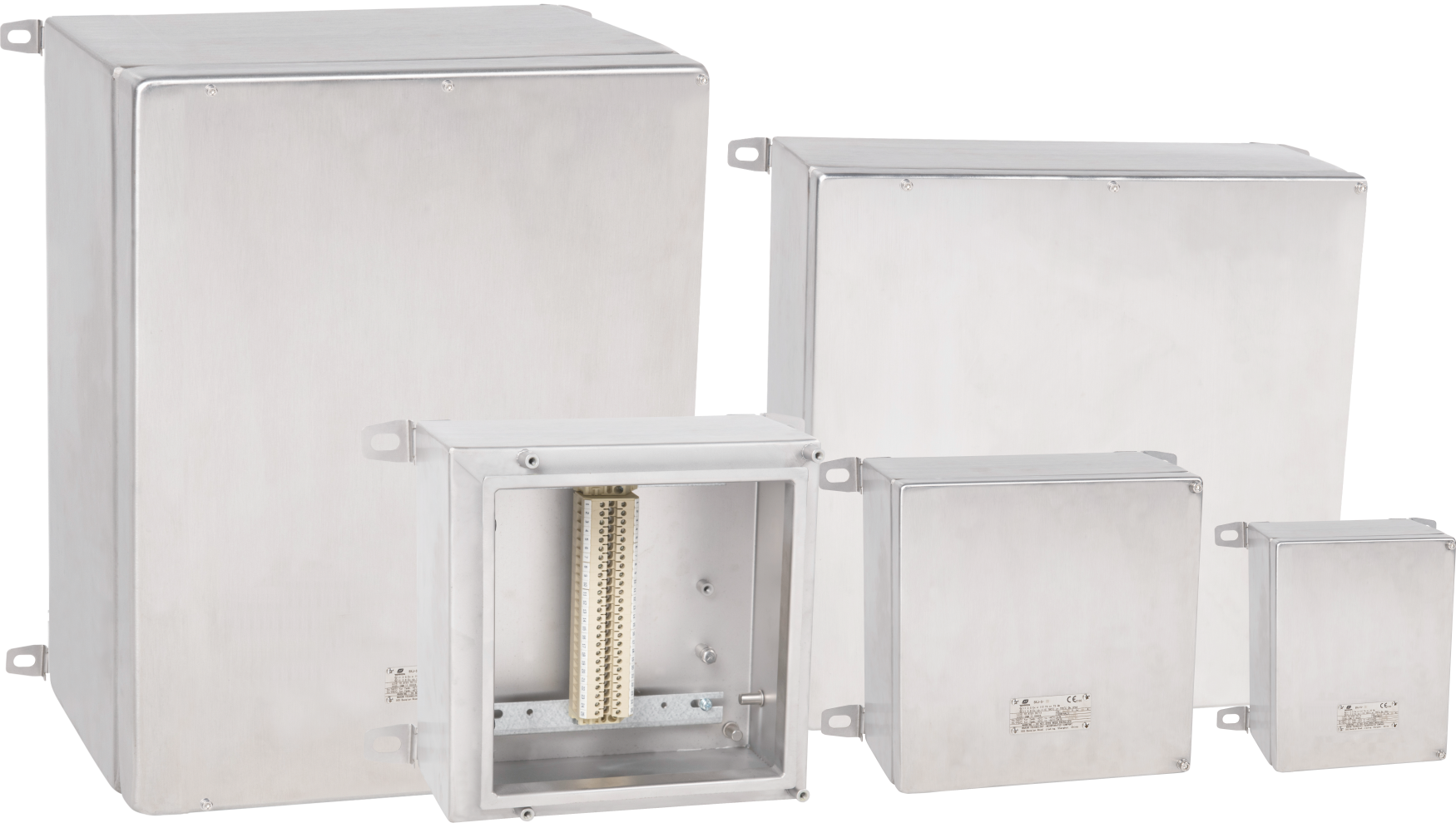
If your offshore project has a mix of 316L cabinets and copper-free aluminium junction boxes with different cable gland types, it is worth confirming the gland plate material schedule before the BOM freezes. Send the single-line diagram and cable list to gm*@***om.com and we will review the interface set.
Cable Entry Planning and Gland Selection
Cable entry planning is where most offshore wind distribution cabinet designs lose time. The bottom plate has fixed space, and each Ex d gland requires enough separation for wrench clearance and flameproof joint integrity. When a cable schedule grows from 12 to 18 circuits after the cabinet drawing is approved, the result is either a non-standard entry plate or a late request for a larger enclosure.
Unarmoured cables in Zone 1 need Ex e glands; armoured cables may need Ex d or Ex e barrier glands depending on the armour construction and the certification of the mating cable. We also check the outer sheath diameter against the gland sealing range. A 2 mm deviation is enough to make an otherwise certified installation fail the field inspection.
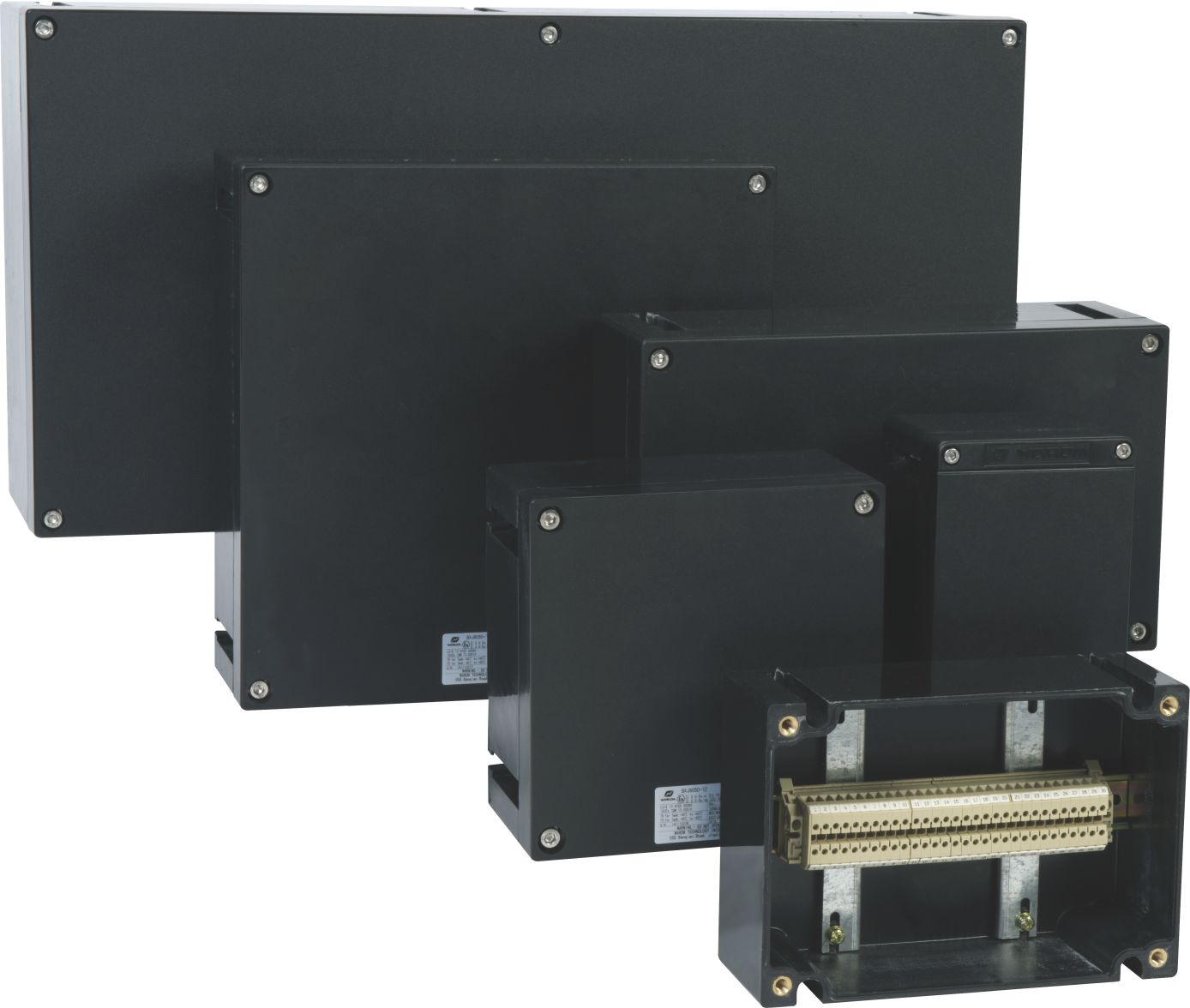
When the customer has not finalized terminal cables, we keep the gland holes as blind plugs and machine the entry plan only after the cable schedule is approved. That is less costly than rework on a 316L plate.
Factory Built Versus Site Assembled Distribution Cabinets
Site assembled cabinets appear cheaper in the quotation, but offshore wind programmes rarely save money this way. A site team on a jack-up vessel or inside a wind turbine tower needs to terminate, torque, inspect, and re-tighten in a confined space, then wait for site inspection of the flamepath. Factory built and pre-wired cabinets shift termination and continuity testing to a controlled workshop. The vessel time saved is usually larger than the extra transport cost.
Pre-wired also creates a clearer factory acceptance test boundary. We prefer to run insulation resistance, earth continuity, functional checks, and the Ex d flamepath inspection before crating. If the cabinet must be split for platform lifting, the split points must be agreed before manufacturing, not at the quayside.
Offshore wind projects compress a lot of schedule and interface risk into a small electrical package. A distribution cabinet that arrives with wrong gland entries or incomplete inspection documents can hold up commissioning, and offshore days are costly. We close the cabinet scope from single-line diagram to factory acceptance test by fixing the zone and gas group, enclosure material, cable entries, and pre-wiring split points. Send your single-line diagram, cable schedule, and environmental data to gm*@***om.com, or call +86 21 39977076 or +86 21 39972657, and we will confirm the configuration and delivery window.
Common Questions About Offshore Wind Distribution Cabinets
Does an offshore wind distribution cabinet need marine certification as well as ATEX or IECEx?
It depends on where the cabinet is installed and which classification society has jurisdiction. On an offshore substation platform or a wind turbine interface, the project may require IEC 60079 certification plus a marine design review from China Classification Society or another notified body. For an onshore substation connected to an offshore farm, IECEx or ATEX alone is usually accepted. We ask for the marine specification early because a late CCS or DNV design review can reopen approvals the vendor thought were closed.
What is the difference between an explosion proof distribution cabinet and a weatherproof offshore cabinet?
The common mistake is to treat IP66 as explosion protection. An IP66 weatherproof cabinet stops water and dust; it does not contain an internal explosion or prevent a hot surface from igniting gas. An explosion proof distribution cabinet has an Ex d or Ex e enclosure, flamepaths or increased safety measures, and a certificate against a defined gas group and temperature class. For offshore wind farms, many outdoor cabinets can be weatherproof if outside the hazardous area, but once inside Zone 1 or Zone 2 the Ex certificate is what makes the equipment legally usable.
cURL Too many subrequests by single Worker invocation. To configure this limit, refer to https://developers.cloudflare.com/workers/wrangler/configuration/#limits
cURL Too many subrequests by single Worker invocation. To configure this limit, refer to https://developers.cloudflare.com/workers/wrangler/configuration/#limits
cURL Too many subrequests by single Worker invocation. To configure this limit, refer to https://developers.cloudflare.com/workers/wrangler/configuration/#limits
cURL Too many subrequests by single Worker invocation. To configure this limit, refer to https://developers.cloudflare.com/workers/wrangler/configuration/#limits gm*@***om.com cURL Too many subrequests by single Worker invocation. To configure this limit, refer to https://developers.cloudflare.com/workers/wrangler/configuration/#limits
Si está interesado, consulte estos artículos relacionados:
La conferencia de 2024 IECEx Explosion-Proof Technology Malaysia de Warom se llevó a cabo con éxito
APPEA 2024
Con más de una década de experiencia, es un Ingeniero Eléctrico a prueba de explosiones con experiencia en el diseño y fabricación de productos de seguridad y a prueba de explosiones. Posee una experiencia profunda en áreas clave que incluyen sistemas a prueba de explosiones, iluminación nuclear, seguridad marina, protección contra incendios y sistemas de control inteligente. En Warom Technology Incorporated Company, ocupa roles de liderazgo dual como Subgerente de Ingeniería para Negocios Internacionales y Jefe del Departamento Internacional de I+D, donde supervisa iniciativas de I+D y garantiza la entrega precisa de la documentación de diseño para proyectos internacionales. Comprometido con avanzar la seguridad industrial global, se enfoca en traducir tecnologías complejas en soluciones prácticas, ayudando a los clientes a implementar sistemas de control más seguros, más inteligentes y fiables en todo el mundo.
Qi Lingyi