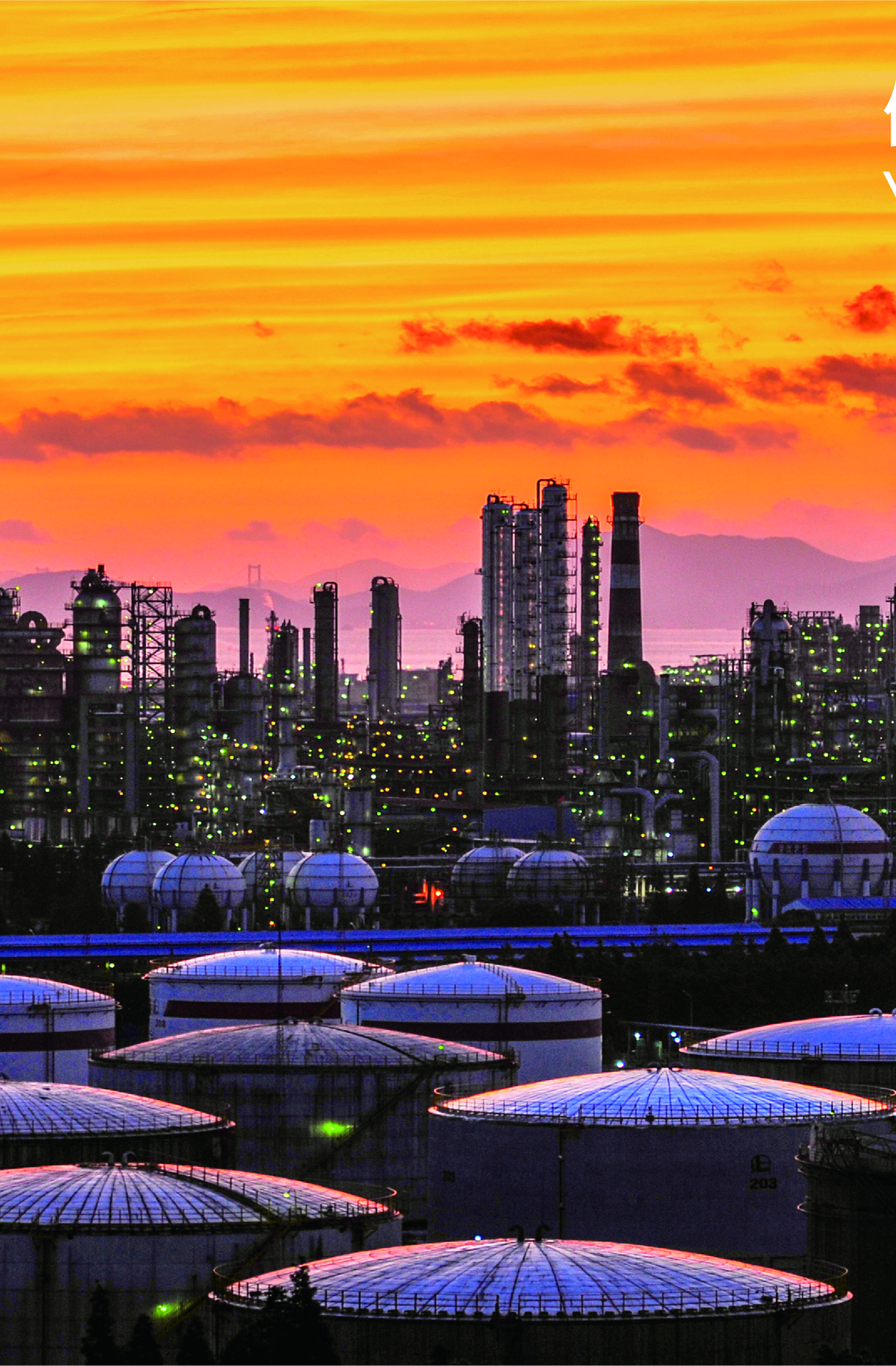
Explosion proof light fittings for offshore platforms are usually selected by zone, gas group, and lumen output. The failures I have seen later in platform life rarely start with the LED. Salt mist enters at a corroded enclosure edge, a cable gland loses its flame path, or an emergency battery cannot hold capacity after years of temperature swings. This guide focuses on the checks that decide whether a certified fitting will actually survive offshore service. It is not a generic zone summary. It is a selection path built around corrosion, gland integrity, certification, and the spare parts logic that keeps a platform lighting system maintainable.
What Offshore Platform Conditions Damage Explosion Proof Light Fittings First?
Salt, wind-driven rain, ultraviolet exposure, vibration, and repeated thermal cycling combine in a way that a factory test cannot fully reproduce. A fitting can pass IP66 and still fail in service when the enclosure coating is scratched during installation or a seal relaxes after repeated sun and spray. On lower decks and splash zones, the pattern is faster. We have opened returned offshore fixtures where the glass lens remained clear and the lamp still operated, but the flame path behind the cover was packed with salt. The fixture still produced light. It had also lost the explosion protection margin that the certificate assumed.
Offshore platforms are not one corrosion environment. The helideck is exposed to salt spray and jet blast. Walkways near fire pumps and deck drains see regular washdown and standing moisture. Process modules can be humid, sheltered, and chemically aggressive at the same time. For this reason I prefer to evaluate each area by corrosion class and mechanical access before selecting a fitting series, rather than applying one IP66 enclosure type across the whole platform. WF2 corrosion resistance is a useful baseline. It does not replace material selection at the flange faces, fasteners, and cable entries.
Which Certification and Material Combination Holds Up in Marine Environments?
An IECEx or ATEX certificate confirms the protection concept, gas group, temperature class, and the conditions under which the fitting was tested. It does not confirm corrosion life. We have seen the confusion this creates when a buyer believes that a certificate means the luminaire is automatically suitable for a platform’s lower deck. The certificate is a safety starting point. The marine environment is a separate materials problem.
| Material | Offshore corrosion behavior | Mejor uso | Maintenance focus |
|---|---|---|---|
| Copper-free aluminium alloy with powder coating | Lightweight and generally stable, but scratches or cut edges can become corrosion initiation sites | Elevated decks, process modules, dry walkways | Recoat damage points before corrosion spreads |
| Acero inoxidable 316 | Handles high chloride exposure, but heavier and more expensive | Splash zones, lower decks, cable tray lanes, helideck supports | Check crevice corrosion at threaded joints and fasteners |
| GRP or engineering polymer | Resists salts and many chemicals, but long-term UV can affect surface condition | Corrosive instrument areas, cable runs, washdown zones | Inspect cover surfaces and replacement gaskets, not only the body |
What does a marine-grade Ex certificate actually confirm?
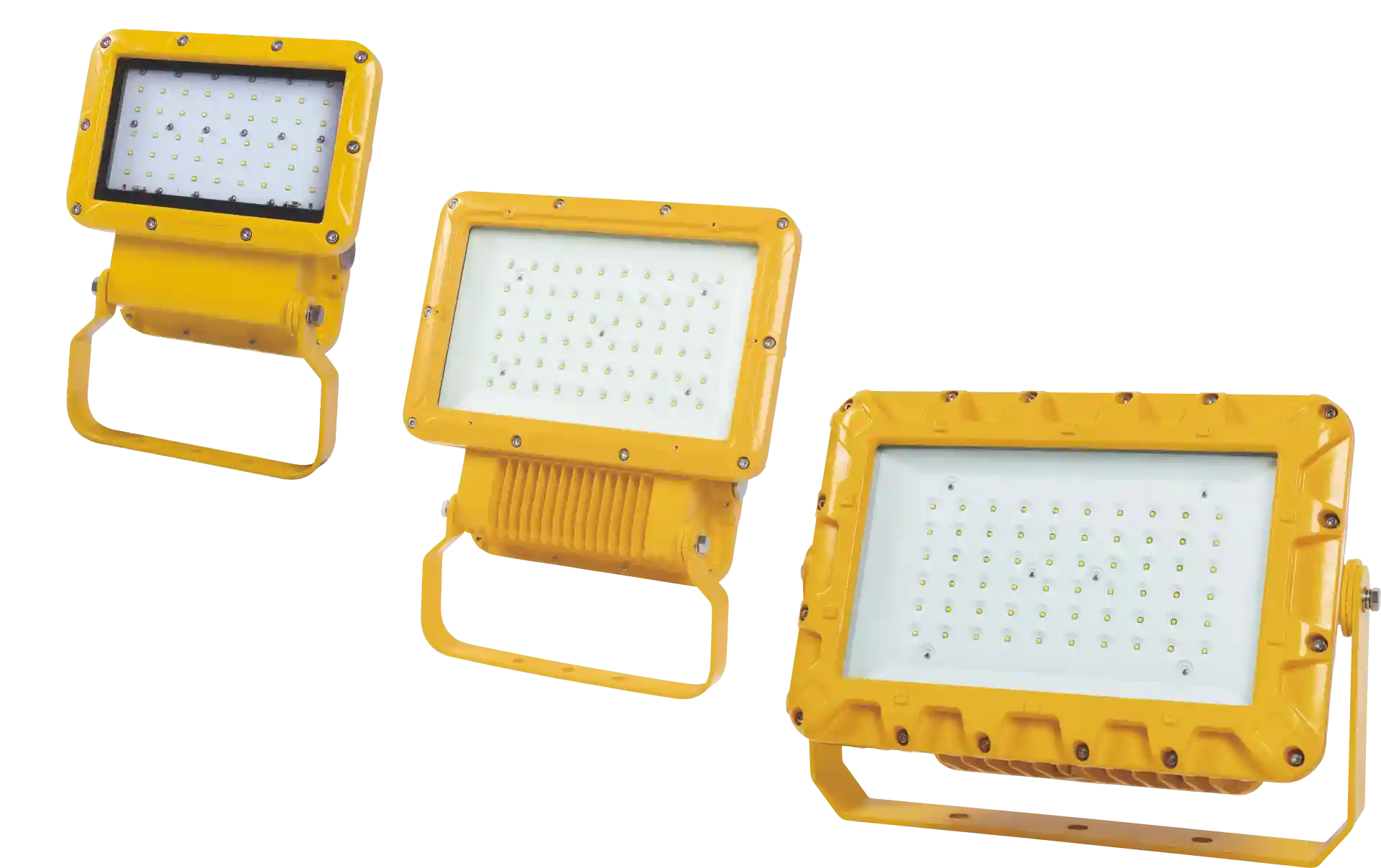
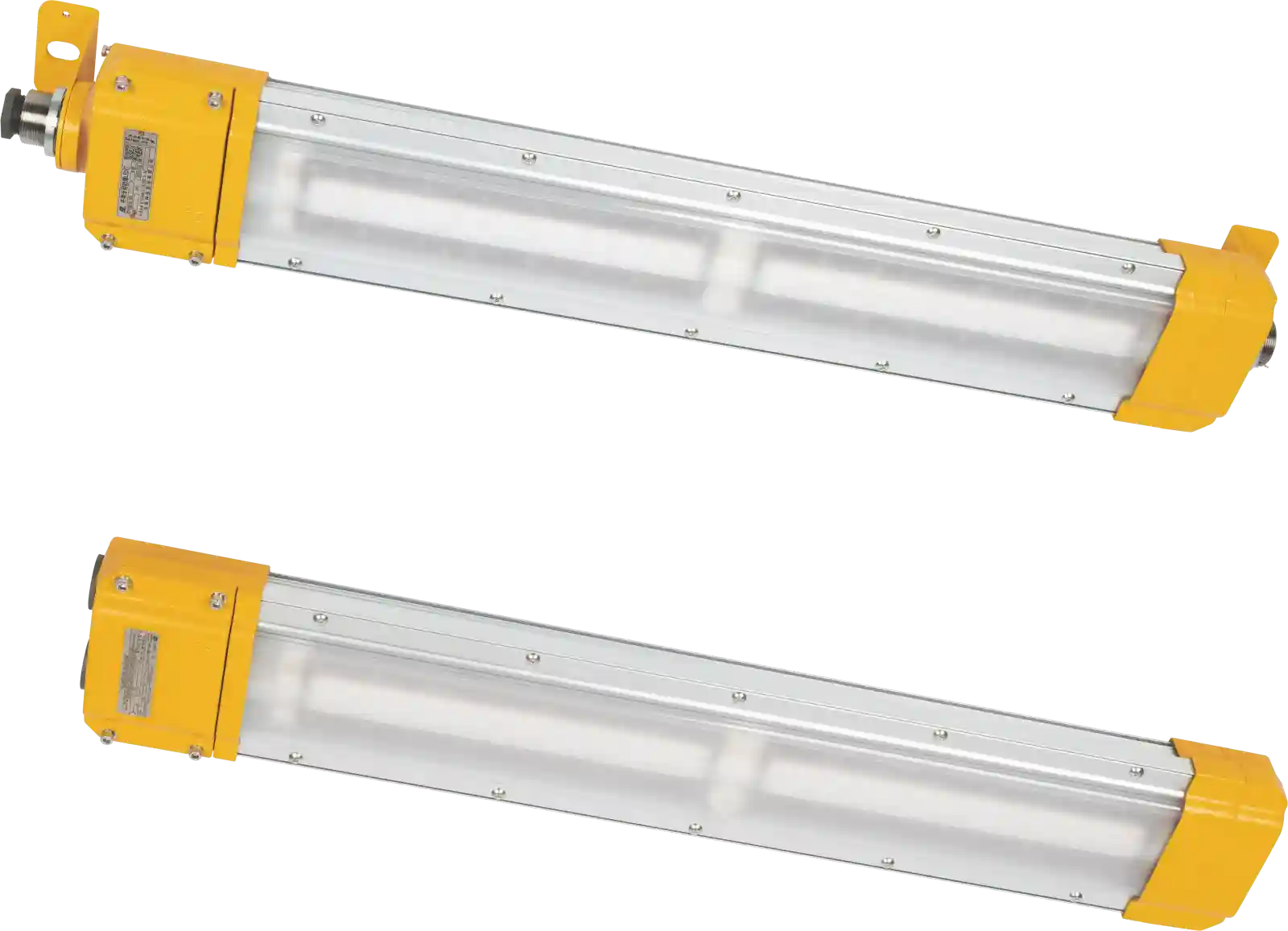
Marine grade certification is a separate layer. Some offshore projects require class society approval or marine type approval on top of IECEx and ATEX, because the installation itself sits on a marine structure. The certificate does not promise a fixed service life. In our projects I ask for three documents as a group: the Ex certificate, the ingress and corrosion rating test data, and the material declaration. When any of the three is missing, the buyer cannot predict what happens after the first two years. One example is the BAT86 floodlight, built to IEC 60079 and EN 60079, with IP66, WF2, and an ambient rating from -60°C to +60°C. Those values only hold their meaning when the enclosure and gland retain their mechanical integrity.
How Do You Specify Offshore Explosion Proof Light Fittings by Zone and Temperature Class?
Zone 1 is the more restrictive classification because an explosive gas atmosphere is likely to occur during normal operation in some platform areas. Zone 2 covers areas where an explosive atmosphere is not likely under normal conditions, and if it occurs it exists only briefly. In practice, many offshore operators specify Zone 1 certified fittings across the platform. The inventory logic is simple: one protection level, fewer wrong replacements. The trade-off is weight and cost, especially on larger platforms where a deck lighting package may run to hundreds of points.
Temperature class is a matching exercise, not a lumen decision. The fitting’s hottest external surface must stay below the ignition temperature of the gas that may be present. T6 limits that surface to 85°C and T4 limits it to 135°C. LED sources have reduced the driver and lens temperature away from the old high pressure sodium heat load, so T6 is easier to obtain. I do not automatically specify T6 for every offshore location. I first confirm the gas group and representative gas. For many offshore process areas, T4 is sufficient and opens more product options and better lead times. For hydrogen battery rooms or gas compression areas, T6 and IIC may be required, and the specification should state that at the start.
Zone 1 fixtures carry flame path and gland requirements that affect replacement inventory. <Luminarias a prueba de explosiones para áreas peligrosas de la Zona 1> covers protection concepts and mounting conditions in comparable hazardous locations.
If your platform mixes Zone 1 and Zone 2 areas, or the existing cable schedule comes from an earlier design, make the gland entry and thread form part of the fitting specification before the bill of materials is frozen. Send the zone map and cable schedule to gm*@***om.com and we will confirm the protection concept and entry configuration before you order.
Why Do Glandes de cables and Wiring Decide Offshore Lighting Reliability?
Offshore lighting circuits fail at joints before the luminaire body. The cable gland is part of the certified enclosure once installed, and a wrong gland type or thread form creates a weak point that no LED driver can compensate for. On open decks we see movement from wind, crane loads, and thermal expansion. Armoured cable needs a gland that grips the armour and seals the inner sheath. If water enters at the gland and travels into the terminal chamber, the fitting can fail while the LED module is still fine.
Why do gland plates fail before the luminaire itself?
Gland plates fail because they are the place where installation reality meets the certified design. Mixed thread forms, unbonded reducers, undersized seals, and over-tightened brass into an aluminum enclosure all create paths for salt water. We also see failures when spare glands are bought later from a different supplier and the replacement does not match the original flame path dimensions. I treat the gland schedule as a controlled part list, with the same certification traceability as the light fitting. For offshore armoured circuits, we commonly specify DQM-series glands because the IP66 sealing and flame path grip work together. The certified type follows the enclosure entry and cable construction, never a catalog preference.
Certification documents and factory history matter as much as a water test in an offshore environment. <Evaluación de proveedores de productos eléctricos resistentes a la intemperie en China para la seguridad industrial> covers how to check supplier processes, documentation, and production controls before placing an order.
Marine projects also need cable entry orientation to prevent water from pooling at the gland. We specify bottom entry drain holes or downward conduit routing where possible. For junction boxes y armarios terminales connecting lighting circuits, IP66 alone is not the full answer. The earthing arrangement and the thread type matter as much as the enclosure rating.
¿Está planeando un paquete de reemplazo de iluminación costa afuera o una nueva construcción?
Los paquetes de reemplazo presentan problemas cuando la iluminación se especifica solo como una luminaria y los prensaestopas, repuestos y documentos de certificación se tratan como compras separadas. El resultado es un inventario mixto, documentación poco clara y un equipo de mantenimiento que no puede verificar rápidamente si un accesorio sigue siendo seguro. Suministramos luminarias marinas certificadas con prensaestopas de cables a juego, repuestos y el conjunto de documentación requerido para la plataforma. Envíe su cronograma de zonas, cronograma de cables y material de envolvente preferido a gm*@***om.com, o llame al +86 21 39977076 / +86 21 39972657, y confirmaremos la configuración de los accesorios y el paquete de certificación antes de que se libere su pedido.
Preguntas frecuentes sobre luminarias a prueba de explosiones para aplicaciones costa afuera
,
Sí, si el grupo de gas y la clase de temperatura siguen coincidiendo. La luminaria para Zona 1 es más conservadora, por lo que cumple con el requisito de seguridad para su uso en Zona 2. El costo es un peso adicional y, a menudo, un precio más alto. Algunos operadores aceptan ese costo porque estandarizar en una sola clase de protección reduce la posibilidad de llevar una luminaria incorrecta a la cubierta. Yo tomaría la misma decisión cuando la plataforma cuenta con soporte remoto y es posible que el equipo de mantenimiento no esté especializado.
¿Con qué frecuencia se deben inspeccionar las luminarias a prueba de explosiones costa afuera?
Depende de dónde se encuentre la luminaria. En una zona de salpicaduras o debajo de un helipuerto, inspeccionaría cada seis meses, centrándome en las caras de las bridas, los prensaestopas y el sistema de retención de las lentes. En módulos de proceso secos y elevados, una inspección anual suele ser suficiente, a menos que una tormenta o un impacto mecánico hayan dañado el revestimiento. Después de cualquier evento de inundación o lavado con agua de mar, incluya una verificación minuciosa de las cámaras de terminales y la continuidad de puesta a tierra, incluso si la luz sigue funcionando.
¿Es una clasificación IP66 un sustituto de la certificación a prueba de explosiones?
No. IP66 describe la protección contra la entrada de polvo y agua. No tiene nada que ver con contener una fuente de ignición interna o controlar la temperatura superficial. Una luminaria puede estar completamente sellada contra la intemperie y aun así no ser segura en un área peligrosa si la envolvente no puede evitar la propagación de la llama por una falla interna. Ambos requisitos operan al mismo tiempo: el concepto de protección Ex controla el riesgo de explosión y la clasificación IP controla la degradación ambiental que posteriormente puede debilitar dicha protección.
¿Necesitan las luminarias de emergencia un plan de mantenimiento costa afuera diferente?
Las unidades de emergencia necesitan pruebas funcionales más frecuentes que la iluminación general. La capacidad de la batería disminuye antes de que la luminaria se vea mal, y las oscilaciones de temperatura en alta mar aceleran ese proceso. Prefiero una comprobación mensual del indicador y una prueba de descarga completa según el intervalo del proyecto, manteniendo las baterías de repuesto como repuestos documentados. Se aplican las mismas comprobaciones de sal y corrosión, pero una luminaria de emergencia limpia con una batería débil sigue siendo una luminaria de emergencia defectuosa. Comparta la disposición de su plataforma y el cronograma de circuitos de emergencia en gm*@***om.com y le confirmaremos qué almacenar.
Si está interesado, consulte estos artículos relacionados:
ADIPEC
Feliz Navidad 2025
CIPPE 2024
Con más de una década de experiencia, es un Ingeniero Eléctrico a prueba de explosiones con experiencia en el diseño y fabricación de productos de seguridad y a prueba de explosiones. Posee una experiencia profunda en áreas clave que incluyen sistemas a prueba de explosiones, iluminación nuclear, seguridad marina, protección contra incendios y sistemas de control inteligente. En Warom Technology Incorporated Company, ocupa roles de liderazgo dual como Subgerente de Ingeniería para Negocios Internacionales y Jefe del Departamento Internacional de I+D, donde supervisa iniciativas de I+D y garantiza la entrega precisa de la documentación de diseño para proyectos internacionales. Comprometido con avanzar la seguridad industrial global, se enfoca en traducir tecnologías complejas en soluciones prácticas, ayudando a los clientes a implementar sistemas de control más seguros, más inteligentes y fiables en todo el mundo.
Qi Lingyi