Offshore lighting budgets are usually won or lost in the first two years, not at installation. The salt spray, vibration, and temperature swings on a platform can eat through a standard aluminium fitting long before the LED module fails, which is why stainless steel explosion proof light fittings for offshore use are rarely a luxury. On most projects, they are the baseline once the area classification and corrosion exposure are read together. I have spent more than thirty years specifying and commissioning equipment for marine hazardous areas, and the costliest mistakes I see are not enclosure explosions. They are material choices that pass the certificate but fail the operating environment.
Understanding Why Stainless Steel Replaces Aluminium Offshore
Offshore decks punish aluminium in ways a paint specification rarely anticipates. A scratch from a dropped tool, a gasket seat cut during re-lamping, or a cable gland tightened too far can expose the base metal. Once the paint film is broken, chloride from salt spray wicks into the gap and starts crevice corrosion, often hidden behind the mounting foot. Stainless steel does not depend on paint for its corrosion resistance. The chromium oxide film reforms after minor surface damage, and the molybdenum in 316 or 316L increases resistance to pitting in chloride environments. The result is not a maintenance-free product, but it is a product with fewer unplanned replacements in the most inaccessible places on a platform.
Offshore wind substations add a different corrosion and vibration profile, but the enclosure logic runs the same way. <Eólica Offshore: Soluciones de Seguridad Eléctrica a Prueba de Explosiones> covers why salt mist exposure and constant motion push the specification toward stainless steel and marine-grade cable entries.
Identifying the First Failure Point in Offshore Light Fittings
The first failure is usually not the explosion protection system. In the offshore installations I have reviewed, the first movement comes from water or salt at the cable entry, followed by fastener corrosion at the bracket interface. A fixture with a valid Ex certificate can still be condemned because the terminal chamber has flooded or because the mounting arm no longer meets visual inspection. The mechanism is simple: the cable gland creates a seal between the cable and the enclosure, and if the cable outside diameter sits outside the gland’s clamping range, the seal becomes a slow leak. Offshore crews then overtighten the gland to compensate, which damages the elastomer ring and accelerates the failure.
Why Do Certified Fittings Still Flood on Offshore Installations?
Cable mismatch accounts for most of it. A certificate confirms the enclosure can contain an internal explosion, but the gland assembly must be selected for the actual cable type and outside diameter. On newbuild decks, the cable schedule can change after the light fitting order is placed, and the revised cable no longer matches the original gland. I have opened fittings that carried the correct marking but had a terminal chamber full of salt residue because the installed gland was approved for a range that did not match the final cable. The fix is not a higher IP rating. It is a check between the approved cable schedule and the gland drawing before production.
Reading the Marking Plate on Explosion Proof Light Fittings
Offshore buyers often read the plate as a single safety mark, but it is really a compact chain of selection limits. The protection method tells you what the enclosure does with an internal arc: Ex d contains the explosion, while Ex e avoids ignition sources in normal operation. The gas group and temperature class tie the fitting to the flammable atmosphere, not the deck location. The IP rating and WF marking then describe water, dust, and corrosion resistance. One additional line matters offshore: the ambient temperature range. A fixture rated only to +40 °C may be technically compliant on paper but unsuitable on a sun-loaded topside flange where local skin temperature exceeds the gas group limit.
Which Certificates Matter for Offshore Class Approval?
ATEX and IECEx cover the explosion protection concept. They do not replace marine classification. If the vessel or platform is classed, the responsible society may ask for type approval from CCS, BV, DNV, ABS, or RINA depending on flag and insurance requirements. The shipyard’s design office should confirm this early because the fitting manufacturer cannot guess which class register applies. A complete offshore submittal usually includes the hazardous area certificate, the marine type approval if required, and a material certificate for the stainless steel enclosure and fasteners. When the documentation chain is missing, even a technically correct fitting can be rejected at the purchase inspection.
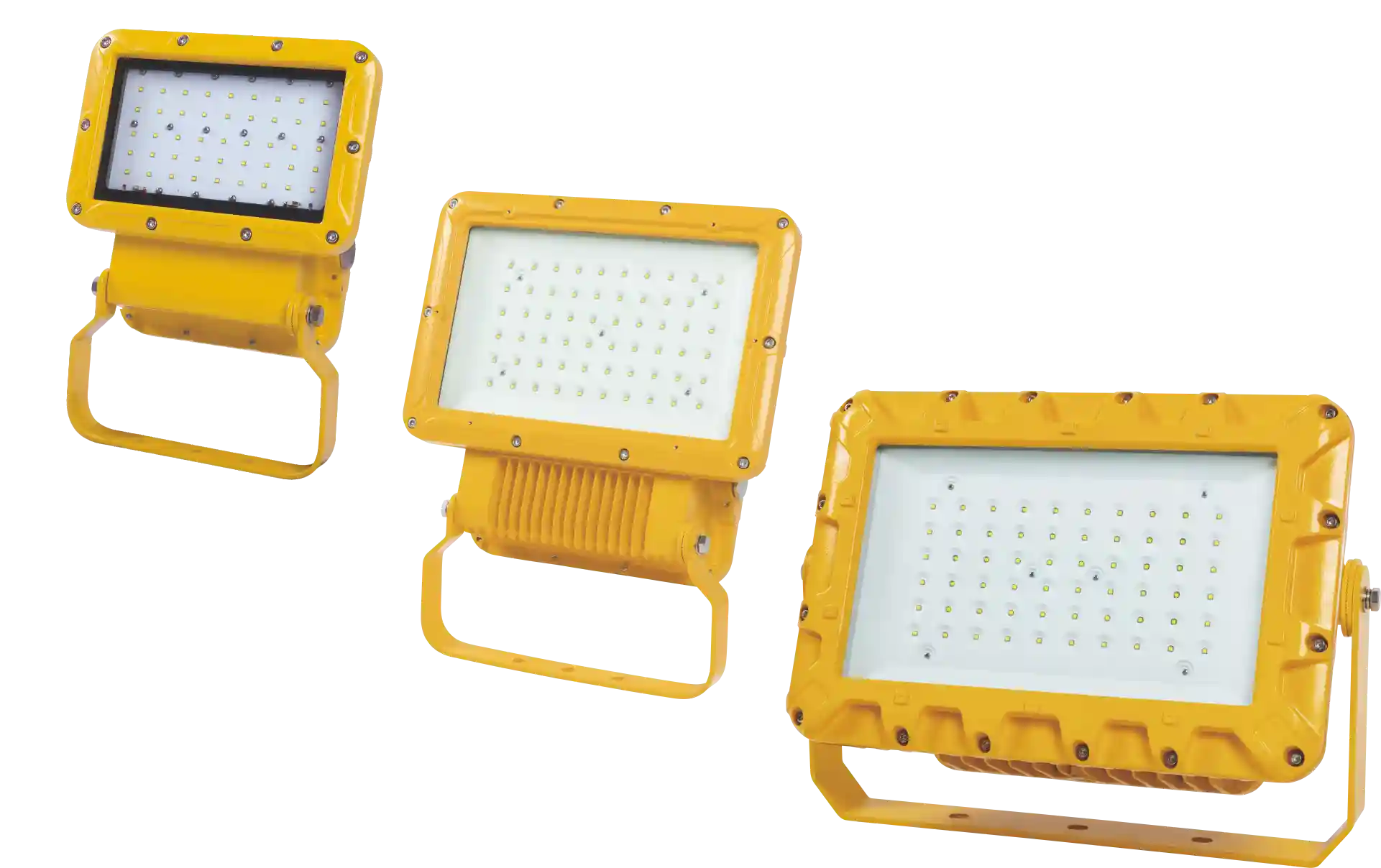
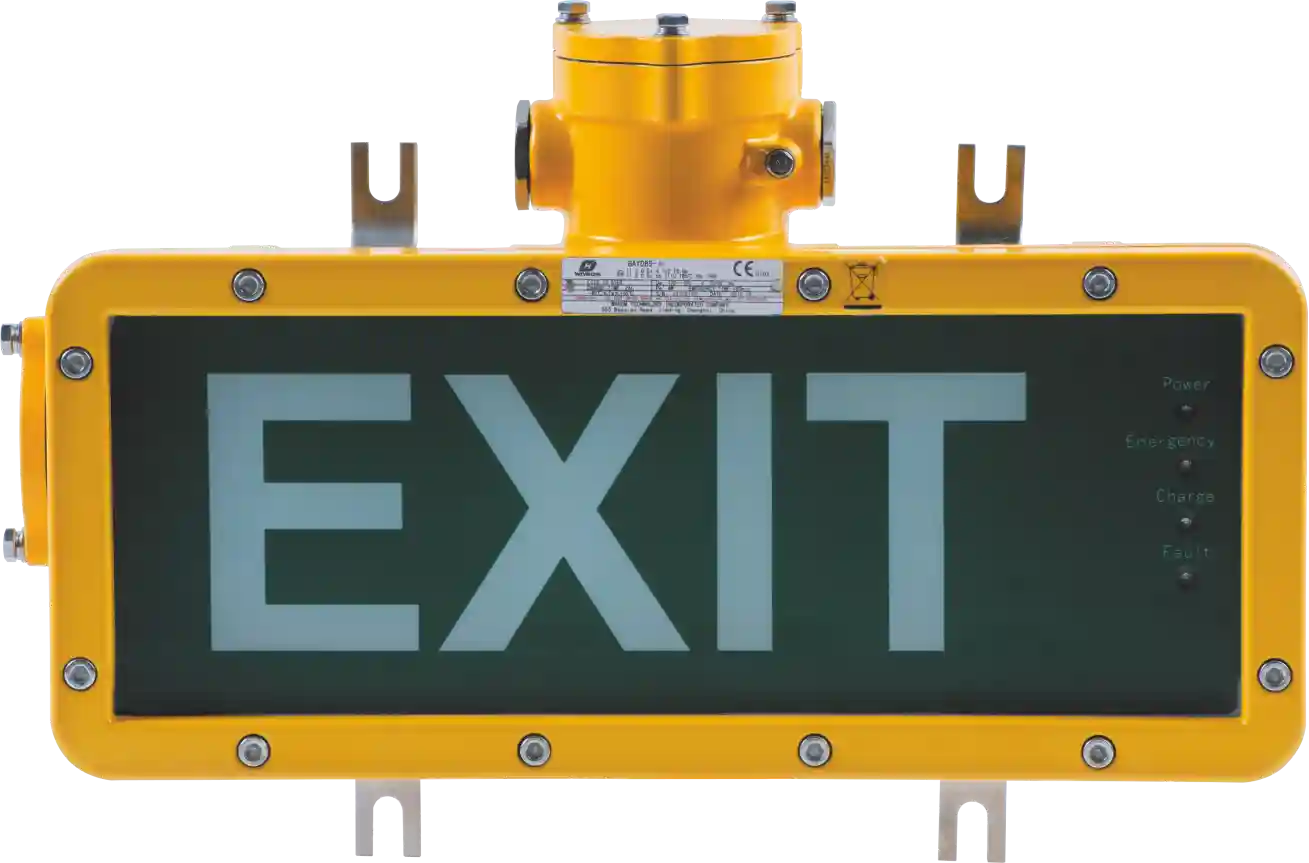
Look at the environmental lines in the same way. A fixture such as BAT86 is published with IP66, WF2, LED module, and an ambient window that can start at -60 °C. Those lines matter, but they do not answer whether the enclosure is 316L. The material line or the purchasing code must do that.
Zone 1 areas on offshore platforms often select the same light fitting family as Zone 2, but the certification path and cable entry method change. <Luminarias a prueba de explosiones para áreas peligrosas de la Zona 1> covers the Ex d and Ex e options and why cable entry style is fixed before the bracket is detailed.
If your offshore scope mixes Zone 1 and Zone 2 on the same deck, confirm the gland material and bracket finish before you freeze the luminaire schedule. Send the area classification drawing and fitting list to gm*@***om.com and we will check the configuration against the certificate.
Comparing Stainless Steel Grades for Explosion Proof Light Fittings
Stainless steel is not a single alloy choice. On an offshore deck, the difference between 304, 316, and 316L shows up in crevice corrosion, weld behavior, and bracket life. 304 is rarely worth the small saving for open exterior fittings because chlorides can pit the surface even when the fixture is cleaned. 316 adds molybdenum and much better resistance to salt. 316L lowers carbon to reduce sensitivity after welding, which matters on fabricated brackets and machined entries. Some projects use duplex stainless for high-vibration structural parts, but the enclosure itself often stays 316L.
| Grade | Offshore corrosion behavior | Typical use |
|---|---|---|
| 304 | Can pit in prolonged chloride exposure | Interior or protected locations |
| 316 | Good general marine corrosion resistance | Standard open-deck enclosures |
| 316L | Better weld and crevice corrosion behavior | Preferred for welded brackets and machined entries |
| Duplex / super duplex | Higher pitting resistance and mechanical strength | High-vibration or water-blast exposed supports |
Where Should the Budget Go Beyond the Enclosure?
The fastest way to waste a stainless steel fixture is to combine it with a carbon steel bracket and uncoated fastener. I have inspected vessel lighting where the enclosure body was intact but the mounting arm failed the close-up survey because the bracket had been sourced separately. The corrosion cell forms at the contact face between the stainless enclosure and the lower-grade bracket, and offshore saltwater acts as the electrolyte. Specify the bracket, nuts, washers, and gland surfaces in the same material class as the enclosure. The fixture body is only half the corrosion system.
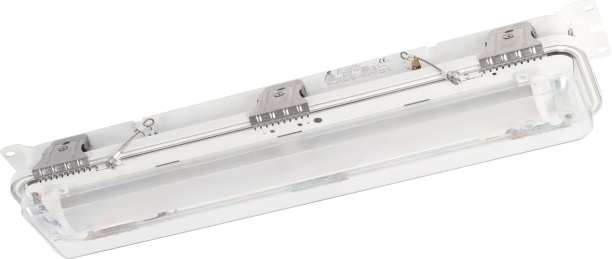
Confirming Stainless Steel Explosion Proof Light Fittings Before Procurement
Offshore purchase orders fail later when the specification answers the wrong detail first. I would rather receive a marked-up area classification plan than a long list of generic requirements. The sequence I use starts with the hazardous zone, not the lumens.
- Confirm zone classification and gas group for each deck location.
- Confirm cable type, outside diameter, and armoring before selecting the gland.
- Fix the material grade for enclosure, fasteners, bracket, and mounting arm.
- Request the certificate and material traceability package in the purchase order, not after shipment.
cURL Too many subrequests by single Worker invocation. To configure this limit, refer to https://developers.cloudflare.com/workers/wrangler/configuration/#limits
cURL Too many subrequests by single Worker invocation. To configure this limit, refer to https://developers.cloudflare.com/workers/wrangler/configuration/#limits gm*@***om.com cURL Too many subrequests by single Worker invocation. To configure this limit, refer to https://developers.cloudflare.com/workers/wrangler/configuration/#limits
cURL Too many subrequests by single Worker invocation. To configure this limit, refer to https://developers.cloudflare.com/workers/wrangler/configuration/#limits
cURL Too many subrequests by single Worker invocation. To configure this limit, refer to https://developers.cloudflare.com/workers/wrangler/configuration/#limits
cURL Too many subrequests by single Worker invocation. To configure this limit, refer to https://developers.cloudflare.com/workers/wrangler/configuration/#limits
cURL Too many subrequests by single Worker invocation. To configure this limit, refer to https://developers.cloudflare.com/workers/wrangler/configuration/#limits
cURL Too many subrequests by single Worker invocation. To configure this limit, refer to https://developers.cloudflare.com/workers/wrangler/configuration/#limits
cURL Too many subrequests by single Worker invocation. To configure this limit, refer to https://developers.cloudflare.com/workers/wrangler/configuration/#limits
cURL Too many subrequests by single Worker invocation. To configure this limit, refer to https://developers.cloudflare.com/workers/wrangler/configuration/#limits
cURL Too many subrequests by single Worker invocation. To configure this limit, refer to https://developers.cloudflare.com/workers/wrangler/configuration/#limits
cURL Too many subrequests by single Worker invocation. To configure this limit, refer to https://developers.cloudflare.com/workers/wrangler/configuration/#limits gm*@***om.com cURL Too many subrequests by single Worker invocation. To configure this limit, refer to https://developers.cloudflare.com/workers/wrangler/configuration/#limits
Si está interesado, consulte estos artículos relacionados:
Warom les desea a todos un Feliz Día Internacional de los Trabajadores
FERIA DE ENERGÍA DEL PETRÓLEO 2024
Día 1 de la Feria de Cantón 2025
APPEA 2024
Hannover Messe 2024
Con más de una década de experiencia, es un Ingeniero Eléctrico a prueba de explosiones con experiencia en el diseño y fabricación de productos de seguridad y a prueba de explosiones. Posee una experiencia profunda en áreas clave que incluyen sistemas a prueba de explosiones, iluminación nuclear, seguridad marina, protección contra incendios y sistemas de control inteligente. En Warom Technology Incorporated Company, ocupa roles de liderazgo dual como Subgerente de Ingeniería para Negocios Internacionales y Jefe del Departamento Internacional de I+D, donde supervisa iniciativas de I+D y garantiza la entrega precisa de la documentación de diseño para proyectos internacionales. Comprometido con avanzar la seguridad industrial global, se enfoca en traducir tecnologías complejas en soluciones prácticas, ayudando a los clientes a implementar sistemas de control más seguros, más inteligentes y fiables en todo el mundo.
Qi Lingyi