

Explosion proof control equipment for Éclairage à indice de protection contre les explosions sûr... solvent areas is often specified like an oil and gas package, and that assumption causes most of the rework I see in pharmaceutical electrical design. Solvent vapors such as ethanol, isopropanol, and acetone set specific gas group, temperature class, and cleaning requirements that generic Zone 1 hardware does not always meet cleanly. I have walked through pharmaceutical projects where the design institute copied a refinery specification, and the resulting enclosures were hard to clean, over-certified for the wrong gas group, and difficult to qualify. The better path is to build the specification around the solvent inventory, the GMP cleaning regime, and the documentation package before selecting enclosures. This article lays out that sequence.
Solvent Areas Demand a Zone Classification and Gas Group Review First
Pharmaceutical solvent areas are not automatically Zone 1. A dispensing room with open transfers of ethanol may be Zone 1 near the source and Zone 2 beyond the vapor cloud, while a sealed reactor or closed transfer line results in Zone 2 classification for most of the room. The actual zone depends on the frequency, source, and ventilation of release events, which come from the process HAZOP and the area classification drawing. I have seen buyers order Zone 1 equipment for an entire building because one room had open solvent handling, which wastes capital without adding safety.
What zone classification applies to pharmaceutical solvent areas?
Zone 1 applies where flammable vapor is normally present during production or cleaning. Zone 2 applies where vapor appears only in abnormal conditions or for short periods. A solvent storage room with fixed ventilation may stay Zone 2 even though the raw material is flammable. The important step is to request the formal area classification drawing, not to assume the worst-case zone and over-order flameproof hardware.
What gas group and temperature class do common pharma solvents require?
Ethanol and isopropanol are generally treated as IIB or IIA depending on the published test data for the specific solvent mixture, while acetone is IIA. Ethyl ether, used in some extraction and purification steps, shifts the requirement to IIC, which changes the flame path design and the certificate scope. Temperature class seldom drives the decision in pharma because most modern equipment is rated T4 or T6, far below the autoignition temperature of common process solvents.
| Common Pharma Solvent | Typical Gas Group | Practical Equipment Guidance |
|---|---|---|
| Ethanol | IIB or IIA | Use IIB minimum for mixed solvent areas; stainless steel preferred |
| Isopropanol | IIB or IIA | Same as ethanol; T3/T4 equipment adequate |
| Acetone | IIA | IIB equipment covers acetone; no special T class needed |
| Ethyl ether | IIC | IIC flame paths and glands required; review process quantity |
Control Equipment Selection Starts With Ex d or Ex e Enclosure Philosophy
Control equipment for solvent areas splits between flameproof Ex d and increased safety Ex e, with many compound Ex de designs covering mixed circuits. Ex d contains the explosion inside the enclosure and vents it through flame paths, which makes it suitable for switchgear, contactors, and push button contacts that generate arcs. Ex e prevents arcs and hot spots by design, which makes it smaller, lighter, and easier to clean for boîtes de jonction and distribution boards with no arcing components.
Do pharmaceutical solvent areas need Ex d or Ex e control stations?
Push button stations and démarreurs de moteurs with breaking contacts should use Ex d or Ex de because the arc risk is real. A terminal box or distribution board without making arcs can use Ex e, but it still needs IP66 and glands that match the cable specification. I select Ex e wherever possible for pharma because the cleanability is better, then reserve Ex d for the arcing elements.
Which control equipment categories belong in a solvent area specification?
A solvent area package typically includes control stations, motor starter and disconnect switches, distribution boxes, junction boxes, cable glands, gas detection inputs, and alarm beacons. The mistake is treating each category as an independent purchase. The circuit count, cable entry size, gland type, and enclosure material must be reviewed as a system, or the installer ends up with mixed thread forms and adapters that compromise the flameproof path.
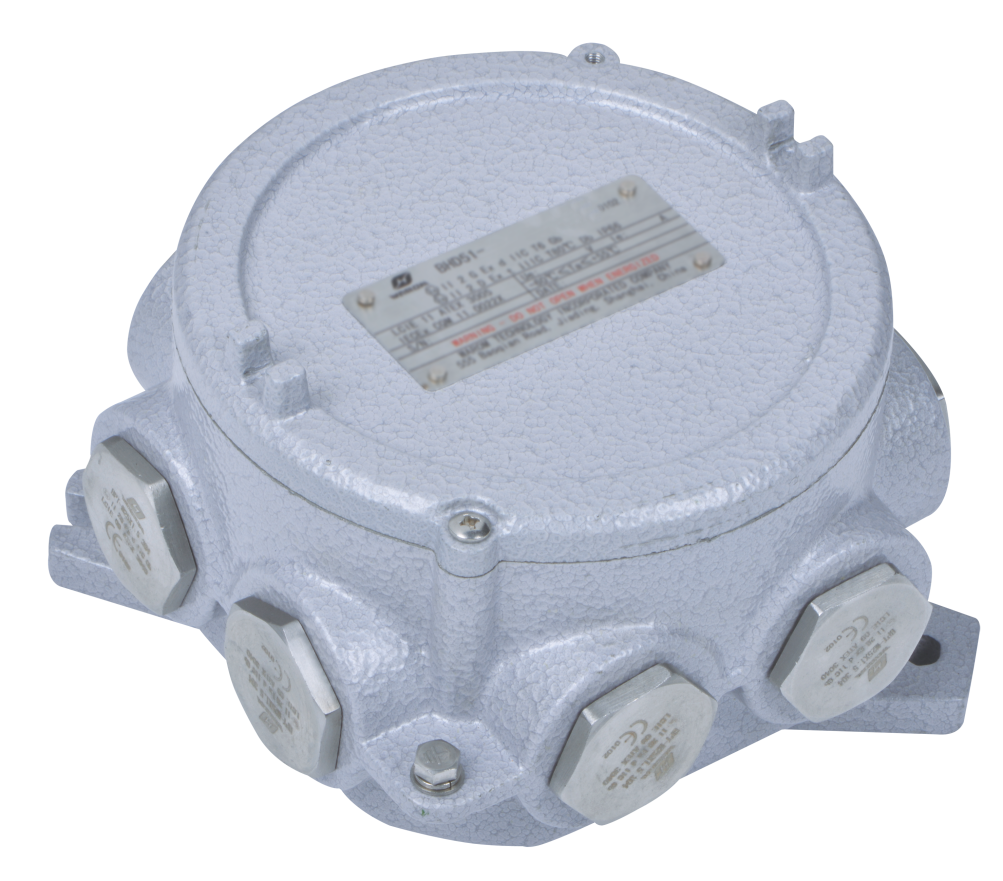
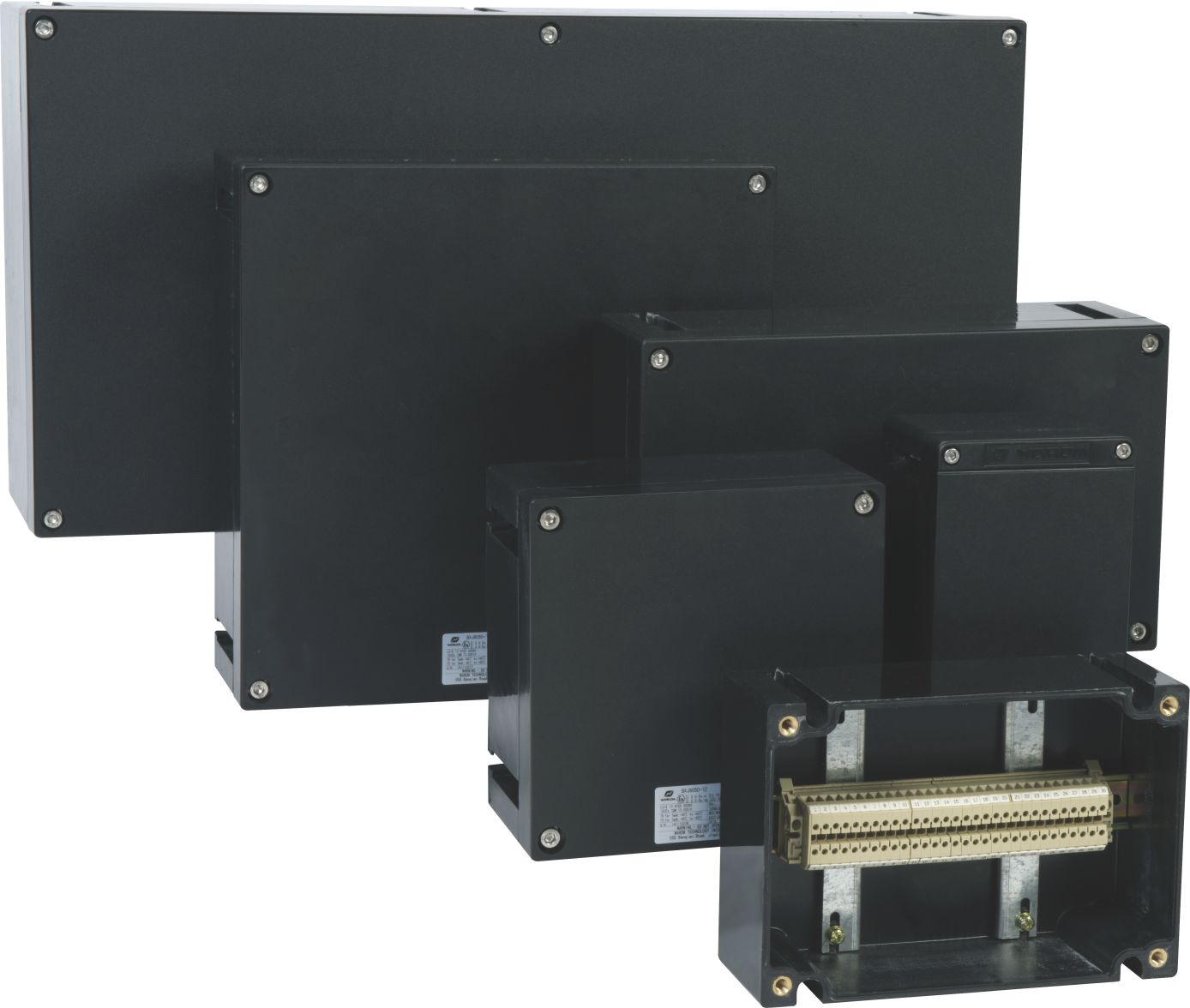
| Méthode de protection | Arcing Components | Cleaning and Maintenance | Solvent Area Fit |
|---|---|---|---|
| Ex d flameproof | Oui | Flame path gaps need protection from aggressive cleaning | Control stations, motor starters |
| Ex e sécurité accrue | No | Simpler faces, easier wipe-down | Terminal boxes, distribution boards |
| Ex de compound | Yes inside Ex d chamber | cURL Too many subrequests by single Worker invocation. To configure this limit, refer to https://developers.cloudflare.com/workers/wrangler/configuration/#limits | cURL Too many subrequests by single Worker invocation. To configure this limit, refer to https://developers.cloudflare.com/workers/wrangler/configuration/#limits |
cURL Too many subrequests by single Worker invocation. To configure this limit, refer to https://developers.cloudflare.com/workers/wrangler/configuration/#limits
cURL Too many subrequests by single Worker invocation. To configure this limit, refer to https://developers.cloudflare.com/workers/wrangler/configuration/#limits
cURL Too many subrequests by single Worker invocation. To configure this limit, refer to https://developers.cloudflare.com/workers/wrangler/configuration/#limits
cURL Too many subrequests by single Worker invocation. To configure this limit, refer to https://developers.cloudflare.com/workers/wrangler/configuration/#limits
cURL Too many subrequests by single Worker invocation. To configure this limit, refer to https://developers.cloudflare.com/workers/wrangler/configuration/#limits usine chimiquecURL Too many subrequests by single Worker invocation. To configure this limit, refer to https://developers.cloudflare.com/workers/wrangler/configuration/#limits gm*@***om.com cURL Too many subrequests by single Worker invocation. To configure this limit, refer to https://developers.cloudflare.com/workers/wrangler/configuration/#limits
cURL Too many subrequests by single Worker invocation. To configure this limit, refer to https://developers.cloudflare.com/workers/wrangler/configuration/#limits
cURL Too many subrequests by single Worker invocation. To configure this limit, refer to https://developers.cloudflare.com/workers/wrangler/configuration/#limits
cURL Too many subrequests by single Worker invocation. To configure this limit, refer to https://developers.cloudflare.com/workers/wrangler/configuration/#limits
cURL Too many subrequests by single Worker invocation. To configure this limit, refer to https://developers.cloudflare.com/workers/wrangler/configuration/#limits
cURL Too many subrequests by single Worker invocation. To configure this limit, refer to https://developers.cloudflare.com/workers/wrangler/configuration/#limitsÉvaluation des fournisseurs de boîtes de distribution antidéflagrantes chinoisescURL Too many subrequests by single Worker invocation. To configure this limit, refer to https://developers.cloudflare.com/workers/wrangler/configuration/#limits
cURL Too many subrequests by single Worker invocation. To configure this limit, refer to https://developers.cloudflare.com/workers/wrangler/configuration/#limits
cURL Too many subrequests by single Worker invocation. To configure this limit, refer to https://developers.cloudflare.com/workers/wrangler/configuration/#limits
cURL Too many subrequests by single Worker invocation. To configure this limit, refer to https://developers.cloudflare.com/workers/wrangler/configuration/#limits gm*@***om.comcURL Too many subrequests by single Worker invocation. To configure this limit, refer to https://developers.cloudflare.com/workers/wrangler/configuration/#limits
cURL Too many subrequests by single Worker invocation. To configure this limit, refer to https://developers.cloudflare.com/workers/wrangler/configuration/#limits
cURL Too many subrequests by single Worker invocation. To configure this limit, refer to https://developers.cloudflare.com/workers/wrangler/configuration/#limits
cURL Too many subrequests by single Worker invocation. To configure this limit, refer to https://developers.cloudflare.com/workers/wrangler/configuration/#limits
cURL Too many subrequests by single Worker invocation. To configure this limit, refer to https://developers.cloudflare.com/workers/wrangler/configuration/#limits
cURL Too many subrequests by single Worker invocation. To configure this limit, refer to https://developers.cloudflare.com/workers/wrangler/configuration/#limits
cURL Too many subrequests by single Worker invocation. To configure this limit, refer to https://developers.cloudflare.com/workers/wrangler/configuration/#limits
cURL Too many subrequests by single Worker invocation. To configure this limit, refer to https://developers.cloudflare.com/workers/wrangler/configuration/#limits
cURL Too many subrequests by single Worker invocation. To configure this limit, refer to https://developers.cloudflare.com/workers/wrangler/configuration/#limits
cURL Too many subrequests by single Worker invocation. To configure this limit, refer to https://developers.cloudflare.com/workers/wrangler/configuration/#limits gm*@***om.com cURL Too many subrequests by single Worker invocation. To configure this limit, refer to https://developers.cloudflare.com/workers/wrangler/configuration/#limits
Si vous êtes intéressé, consultez ces articles connexes :
Guide OSHA : Conformité essentielle à l’éclairage des chantiers de construction
Protection critique contre les explosions pour les systèmes électriques des mines souterraines
WAROM à SOGCE 2025
Température de couleur de l’éclairage industriel : un guide complet
Suspensions lumineuses : sécurité essentielle pour les zones dangereuses
Avec plus d'une décennie d'expérience, il est ingénieur électricien explosion-proof chevronné spécialisé dans la conception et la fabrication de produits de sécurité et anti-explosion. Il possède une expertise approfondie dans des domaines clés tels que les systèmes antiprédétection d'explosion, l'éclairage nucléaire, la sécurité maritime, la protection contre les incendies et les systèmes de contrôle intelligents. Chez Warom Technology Incorporated Company, il occupe des postes de direction doubles en tant que Directeur adjoint de l'ingénierie pour les affaires internationales et Chef du département international R&D, où il supervise les initiatives de R&D et assure la livraison précise des documents de conception pour les projets internationaux. Engagé dans l'amélioration de la sécurité industrielle mondiale, il se concentre sur la traduction de technologies complexes en solutions pratiques, aidant les clients à mettre en œuvre des systèmes de contrôle plus sûrs, plus intelligents et plus fiables dans le monde.

Qi Lingyi