

Explosion proof control equipment for pharmaceutical solvent areas is often specified like an oil and gas package, and that assumption causes most of the rework I see in pharmaceutical electrical design. Solvent vapors such as ethanol, isopropanol, and acetone set specific gas group, temperature class, and cleaning requirements that generic Zone 1 hardware does not always meet cleanly. I have walked through pharmaceutical projects where the design institute copied a refinery specification, and the resulting enclosures were hard to clean, over-certified for the wrong gas group, and difficult to qualify. The better path is to build the specification around the solvent inventory, the GMP cleaning regime, and the documentation package before selecting enclosures. This article lays out that sequence.
Solvent Areas Demand a Zone Classification and Gas Group Review First
Pharmaceutical solvent areas are not automatically Zone 1. A dispensing room with open transfers of ethanol may be Zone 1 near the source and Zone 2 beyond the vapor cloud, while a sealed reactor or closed transfer line results in Zone 2 classification for most of the room. The actual zone depends on the frequency, source, and ventilation of release events, which come from the process HAZOP and the area classification drawing. I have seen buyers order Zone 1 equipment for an entire building because one room had open solvent handling, which wastes capital without adding safety.
What zone classification applies to pharmaceutical solvent areas?
Zone 1 applies where flammable vapor is normally present during production or cleaning. Zone 2 applies where vapor appears only in abnormal conditions or for short periods. A solvent storage room with fixed ventilation may stay Zone 2 even though the raw material is flammable. The important step is to request the formal area classification drawing, not to assume the worst-case zone and over-order flameproof hardware.
What gas group and temperature class do common pharma solvents require?
Ethanol and isopropanol are generally treated as IIB or IIA depending on the published test data for the specific solvent mixture, while acetone is IIA. Ethyl ether, used in some extraction and purification steps, shifts the requirement to IIC, which changes the flame path design and the certificate scope. Temperature class seldom drives the decision in pharma because most modern equipment is rated T4 or T6, far below the autoignition temperature of common process solvents.
| Common Pharma Solvent | Typical Gas Group | Practical Equipment Guidance |
|---|---|---|
| Ethanol | IIB or IIA | Use IIB minimum for mixed solvent areas; stainless steel preferred |
| Isopropanol | IIB or IIA | Same as ethanol; T3/T4 equipment adequate |
| Acetone | IIA | IIB equipment covers acetone; no special T class needed |
| Ethyl ether | IIC | IIC flame paths and glands required; review process quantity |
Control Equipment Selection Starts With Ex d or Ex e Enclosure Philosophy
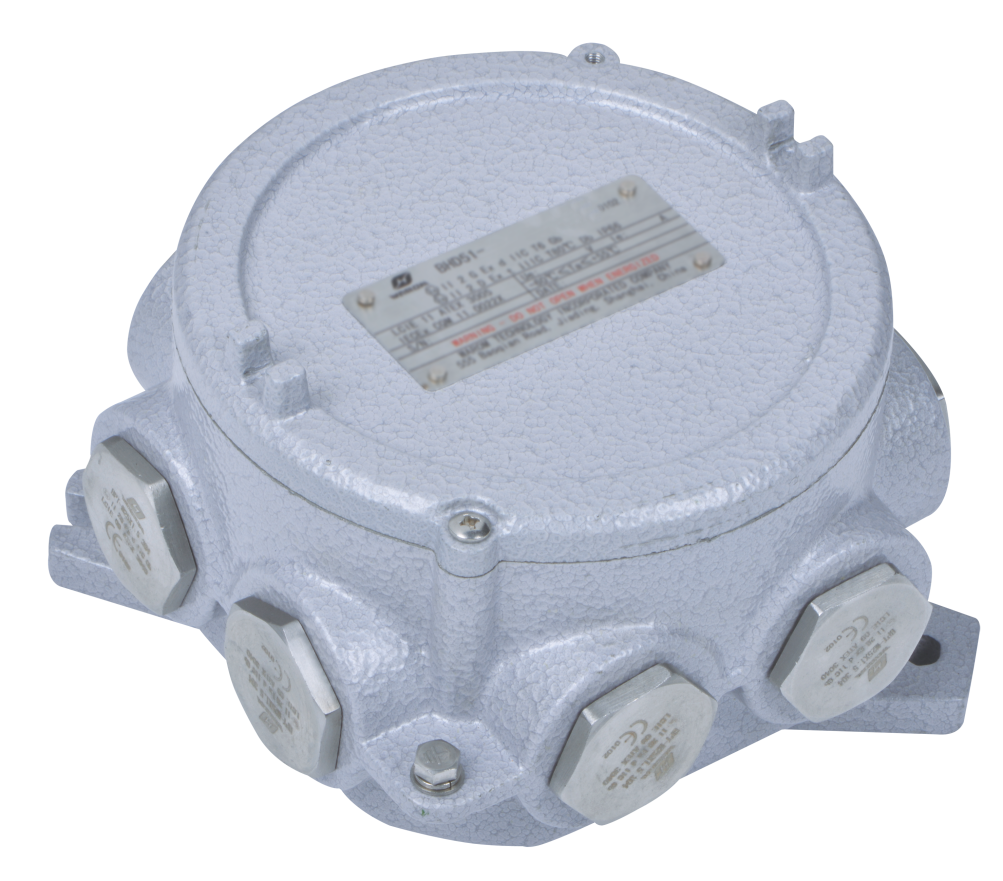
Control equipment for solvent areas splits between flameproof Ex d and increased safety Ex e, with many compound Ex de designs covering mixed circuits. Ex d contains the explosion inside the enclosure and vents it through flame paths, which makes it suitable for switchgear, contactors, and push button contacts that generate arcs. Ex e prevents arcs and hot spots by design, which makes it smaller, lighter, and easier to clean for terminal boxes and distribution boards with no arcing components.
Do pharmaceutical solvent areas need Ex d or Ex e control stations?
Push button stations and motor starters with breaking contacts should use Ex d or Ex de because the arc risk is real. A terminal box or distribution board without making arcs can use Ex e, but it still needs IP66 and glands that match the cable specification. I select Ex e wherever possible for pharma because the cleanability is better, then reserve Ex d for the arcing elements.
Which control equipment categories belong in a solvent area specification?
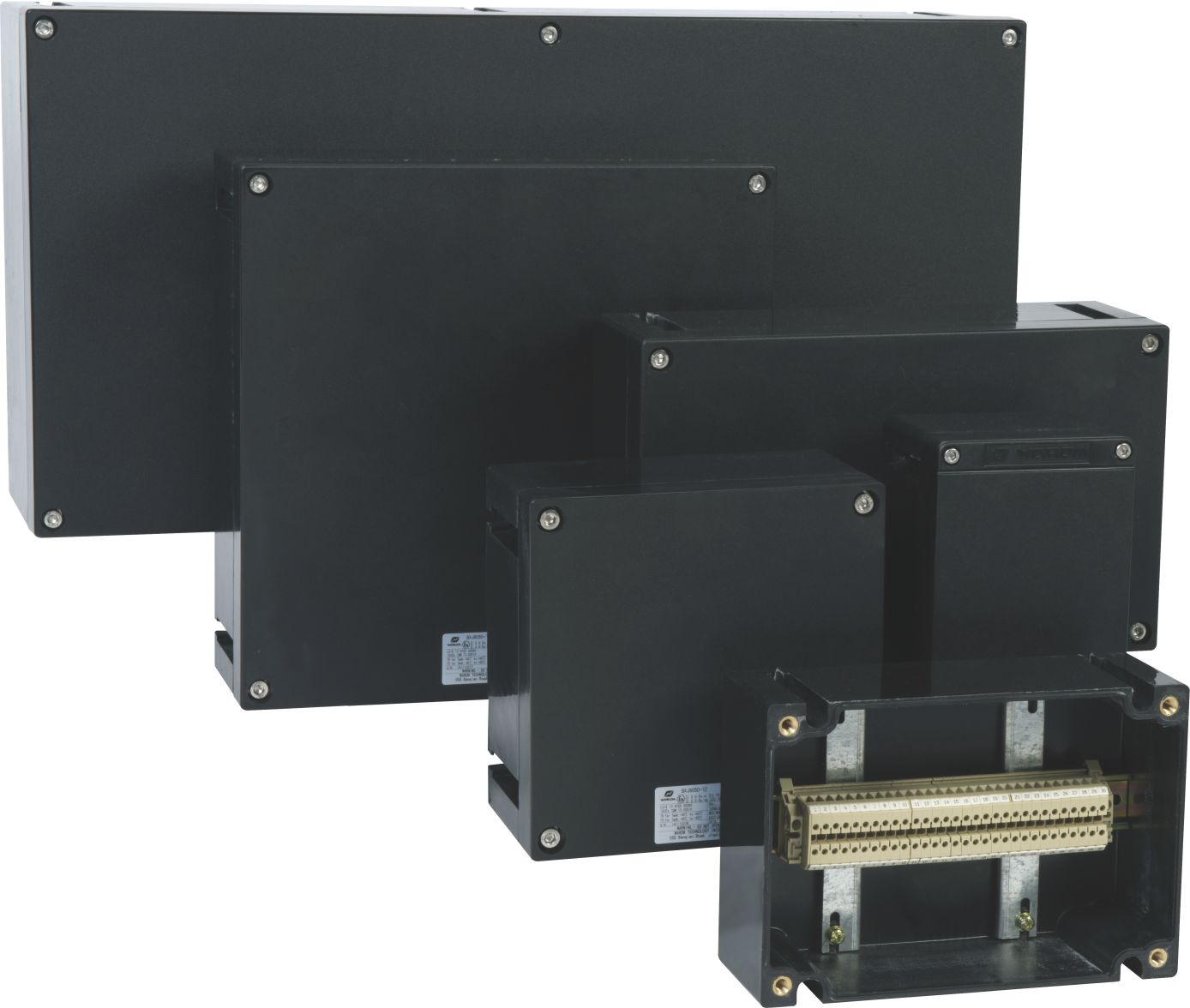
A solvent area package typically includes control stations, motor starter and disconnect switches, distribution boxes, junction boxes, cable glands, gas detection inputs, and alarm beacons. The mistake is treating each category as an independent purchase. The circuit count, cable entry size, gland type, and enclosure material must be reviewed as a system, or the installer ends up with mixed thread forms and adapters that compromise the flameproof path.
| Protection Method | Arcing Components | Cleaning and Maintenance | Solvent Area Fit |
|---|---|---|---|
| Ex d flameproof | Yes | Flame path gaps need protection from aggressive cleaning | Control stations, motor starters |
| Ex e increased safety | No | Simpler faces, easier wipe-down | Terminal boxes, distribution boards |
| Ex de compound | Yes inside Ex d chamber | Ex e outer shell, easier access | Multi-circuit control boxes |
GMP Cleaning Changes Corrosion Resistance and Enclosure Choice
GMP cleaning is the factor that usually separates pharmaceutical from oil and gas specifications. Solvent wipes, disinfectants, and hot water washing attack standard painted steel and many aluminum finishes. Pharmaceutical solvent rooms often require 316L stainless steel enclosures, smooth ground welds, no exposed fasteners with crevices, and IP66 or higher for hose-down areas. If the site uses pressurized washdown, IP69K or a protected installation becomes the practical choice.
How does cleaning affect explosion-proof control equipment selection?
Cleaning changes the enclosure material and the flame path handling. Ex d flame paths are precision machined gaps that can be damaged by abrasive pads or metal tools. If operators wipe covers with stainless steel scrapers, the certification no longer applies once the gap widens. Ex e faces do not have the same flame path, but their gasket seals still degrade under repeated alcohol exposure. I specify stainless steel, IP66 minimum, and a written cleaning instruction that prohibits abrasives on certified joints.
If your program involves multiple solvent campaigns and daily washdown, confirm with the certificate schedule of limitations how far the cleaning chemicals go before the gasket or surface finish must be replaced. Send your cleaning SOP and solvent list to gm*@***om.com and our engineers will flag the enclosure material and certificate conditions that apply to your BOM.
Documentation and Supplier Coordination Prevent Rework
Documentation is where many pharmaceutical projects stall. Auditors ask for the IECEx or ATEX certificate, the EU declaration of conformity, material certificates, surface finish data, IP test reports, and the factory test report for each assembled panel. A supplier who hands over only a product brochure cannot carry a GMP qualification campaign. The earlier these documents are collected, the less rework happens at the end.
What documentation should a pharmaceutical project request for explosion-proof control equipment?
Request the certificate of conformity, the test reports referenced by the certificate, the schedule of limitations if the equipment has restrictions, material certificates for enclosures and glands, wiring diagrams, FAT procedures, and the list of spare flame path components. Confirm the certificate number on the nameplate matches the certificate body and the equipment’s gas group and temperature class. If the certificate is clouded by an older edition, ask for the revision and the issued date.
For a wider review of supplier quality and factory audit points, <Evaluating Chinese Explosion Proof Distribution Box Suppliers> covers the checks that matter before you place an order, including certificate validity, material testing, and the questions that reveal whether a supplier controls its flame path machining.
The Fushilai Pharmaceutical CM/CDMO project in Suzhou shows how early coordination unblocks the sequence. The owner invested 500 million yuan in a 48,000 m² facility with 15 production lines for APIs and intermediates exported worldwide. Warom secured the explosion-proof equipment scope by working with the promoter, design institute, and project owner before the final specification locked in. The package included distribution boxes for workshops, warehouses, tank farms, and pump controls. Delivery was phased from December 2023 to match construction progress, and the documentation set was aligned with the qualification plan. That coordination is not a sales activity. It is how a pharmaceutical control equipment specification becomes buildable.
Specify Control Equipment Around the Solvent, Not the Generic Zone
Pharmaceutical solvent areas fail when the control equipment specification is copied from a refinery or chemical plant. The solvent gas group, the GMP cleaning chemicals, and the qualification documents decide more than the zone rating does. If you specify around those three inputs, you get equipment that operators can clean, auditors can accept, and the project can install without field modifications. Send your solvent inventory, area classification drawing, and cleaning procedure to gm*@***om.com, or call +86 21 39977076 / +86 21 39972657. Our engineers will review the gas group, temperature class, enclosure material, and certificate scope before you issue the purchase order.
Common Questions About Explosion Proof Control Equipment in Pharma Solvent Areas
Are pharmaceutical solvent areas always classified Zone 1?
No. Many pharmaceutical solvent areas are classified Zone 2, and some are only hazardous during campaign cleanup or open sampling. The classification depends on the release frequency, the ventilation, and the process, not on the building type. I have seen solvent storage rooms with fixed dilution ventilation stay Zone 2 even though the raw material is flammable. If the area classification drawing is missing, request that drawing before ordering equipment. Ordering Zone 1 hardware across the whole building is a common overspend that does not add safety. The correct start is a HAZOP and an area classification study.
Can I use a standard industrial control panel inside an explosion-proof box?
This is a common misconception. Placing a standard panel inside a flameproof enclosure does not make the components inside compliant unless the whole assembly is certified as a system. Internal arcing components still need their own protection method, and the cable entries and glands must also be certified for the zone. If a supplier offers a standard panel with an Ex d shell and no tested assembly certificate, the system may fail audit. For pharmaceutical solvent areas, the correct approach is to order a control assembly that carries a single certificate covering the enclosure, internal devices, glands, and ratings.
What is the most common mistake when specifying control equipment for pharma solvent areas?
It depends on who wrote the specification. When a design institute starts from a chemical plant or refinery template, the gas group and cleaning requirements often do not match. The specification may call for IIB IIC hardware when the process is IIA only, or it may ignore that operators will wipe down enclosures with isopropyl alcohol every shift. As a result, the equipment is either over-certified and expensive, or difficult to clean without damaging flame paths. The fix is to review the solvent inventory, the cleaning SOP, and the qualification documentation before the equipment list is frozen.
How do I verify an IECEx or ATEX certificate before purchase?
In projects we have supported, the fastest way is to take the certificate number from the nameplate and check it against the public IECEx or ATEX database, not the supplier’s brochure. Confirm that the manufacturer name, model, gas group, temperature class, and body match the equipment you are buying. Then read the schedule of limitations for any restrictions that affect installation or cleaning. If the supplier cannot show a valid certificate revision or the number cannot be found, do not proceed to the purchase order. Share your solvent list and zone drawing with gm*@***om.com and we will confirm the certificate scope and applicable conditions before you commit.
If you’re interested, check out these related articles:
OSHA Guide: Essential Construction Site Lighting Compliance
Critical Explosion Protection for Underground Mine Electrical Systems
WAROM at SOGCE 2025
Industrial Lighting Color Temperature: A Complete Guide
Pendant Light Fittings: Essential Safety for Hazardous Areas
With over a decade of experience, he is a seasoned Explosion-Proof Electrical Engineer specializing in the design and manufacture of safety and explosion-proof products. He possesses in-depth expertise across key areas including explosion-proof systems, nuclear power lighting, marine safety, fire protection, and intelligent control systems. At Warom Technology Incorporated Company, he holds dual leadership roles as Deputy Chief Engineer for International Business and Head of the International R&D Department, where he oversees R&D initiatives and ensures the precise delivery of design documentation for international projects. Committed to advancing global industrial safety, he focuses on translating complex technologies into practical solutions, helping clients implement safer, smarter, and more reliable control systems worldwide.

Qi Lingyi