

Predictive maintenance in a classified area fails when monitoring hardware cannot survive the same atmosphere it is supposed to watch. Explosion proof condition monitoring is not just a vibration sensor with a certificate; it is the complete loop of sensors, cable glands, junction boxes, barriers, and data connections that keeps a signal safe from the field to the control room. In more than thirty years of explosion-proof electrical work, I have seen too many plans treat the sensor as the project and the installation as an afterthought. That approach strands useful data and weakens the safety case.
What Explosion Proof Condition Monitoring Actually Measures
Condition monitoring in Ex areas spans vibration, temperature, pressure, gas concentration, and sometimes visual or thermal imaging. Each channel catches a different failure mode. Vibration picks up bearing distress, imbalance, misalignment, and gear wear. Temperature catches overloaded motors, failing terminations, and blocked cooling paths. Pressure and gas monitoring catch seal leaks, relief events, and combustible gas accumulation. Visual and thermal imaging add a useful overview for switchgear and terminations. 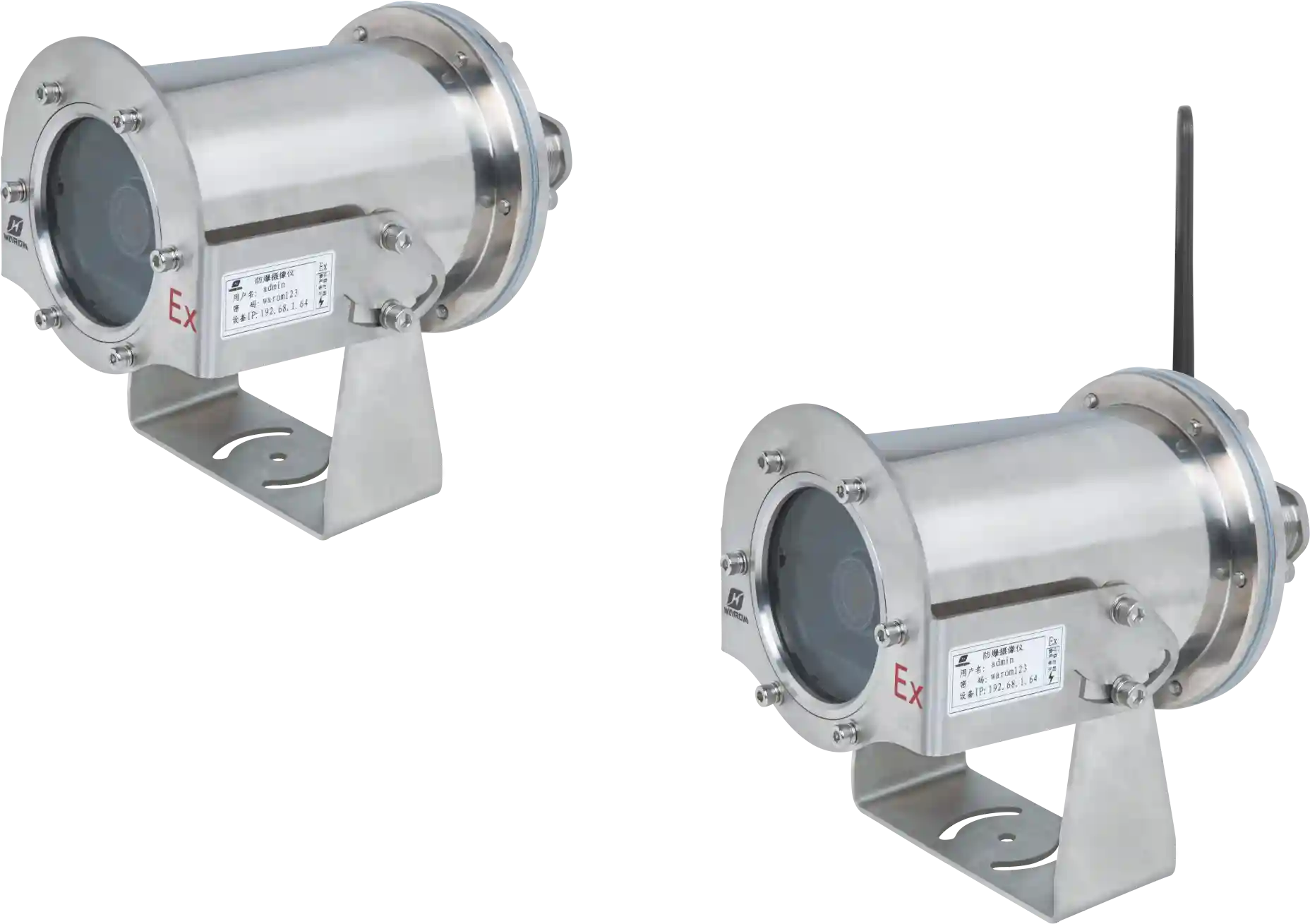
A plant that monitors only one channel catches only one failure mode, and predictive maintenance programs built on a single signal fail more often than buyers expect.
What Does Vibration Data Reveal Before a Bearing Fails?
Vibration is the earliest warning for most rotating equipment. A bearing will show high-frequency energy long before it becomes hot or noisy. In Zone 1 and Zone 2 areas, the accelerometer, its cable, and the signal conditioner all sit inside the hazardous classification. The sensor housing must meet the area protection method, and the cable gland must preserve the flamepath or increased safety. If the sensor passes its certificate but the wiring is not compliant, the reading may be valid but the loop is not.
Why Temperature Is a Confirmation Signal, Not an Early Warning
Temperature tends to rise after mechanical damage has already begun. A motor bearing that is shedding metal will eventually show a hotter housing, but waiting for temperature moves you closer to an unplanned shutdown. In coal conveyor and other material handling applications, operators often use surface temperature as a cheaper proxy and miss the first stage of bearing wear. Gas detection plays a different role. It is usually a process safety function rather than an equipment health function.
Conveyors concentrate this issue because accessible measurement points often sit outside the certified enclosure. <Solutions antidéflagrantes pour la sécurité des convoyeurs à charbon> covers how dust classification, enclosure placement, and mechanical guarding combine in coal handling areas, and why surface temperature alone is rarely enough for an early warning.
How to Choose Condition Monitoring Devices for Zone 1 and Zone 2
Zone 1 and Zone 2 push the selection decision beyond sensor accuracy. The protection method matters as much as the measurement range. A vibration accelerometer can be an intrinsically safe Ex ia device, a flameproof Ex d device, or a less protected Ex nA device only where the classification permits. The same logic applies to temperature transmitters, pressure transmitters, gas detectors, and fixed thermal cameras.
| Monitoring device | Typical protection method | Best use in hazardous area |
|---|---|---|
| Vibration accelerometer | Ex ia or Ex d | Motors, gearboxes, pumps, fans |
| Surface temperature sensor | Ex d terminal head or Ex e | Bearings, motor housings, seal chambers |
| Gas detector | Ex d or Ex ia | Leak detection, LEL and toxic gas alarm |
| Pressure transmitter | Ex d or Ex ia | Pump discharge, seal systems, process lines |
| Fixed thermal camera | Ex d housing | Switchgear, terminations, mechanical joints |
Explosion proof condition monitoring selection starts with the zone, then narrows by gas group, dust group, and temperature class. A motor housing already near its temperature class leaves no margin for a sensor head that adds heat. In practice, I have seen buyers approve a device list before checking the T class, then rework the entire loop.
The sensor choice and the cable entry should be made as one decision, not separate bids. <NPT Explosion Proof presse-étoupes for US & Middle East Projects> covers why NPT entries, sealing requirements, and mixed US and IEC specifications often create site-level problems when North American and Middle East requirements appear in the same package.
Connection points multiply when a single motor has vibration, temperature, and pressure sensors feeding one junction box. 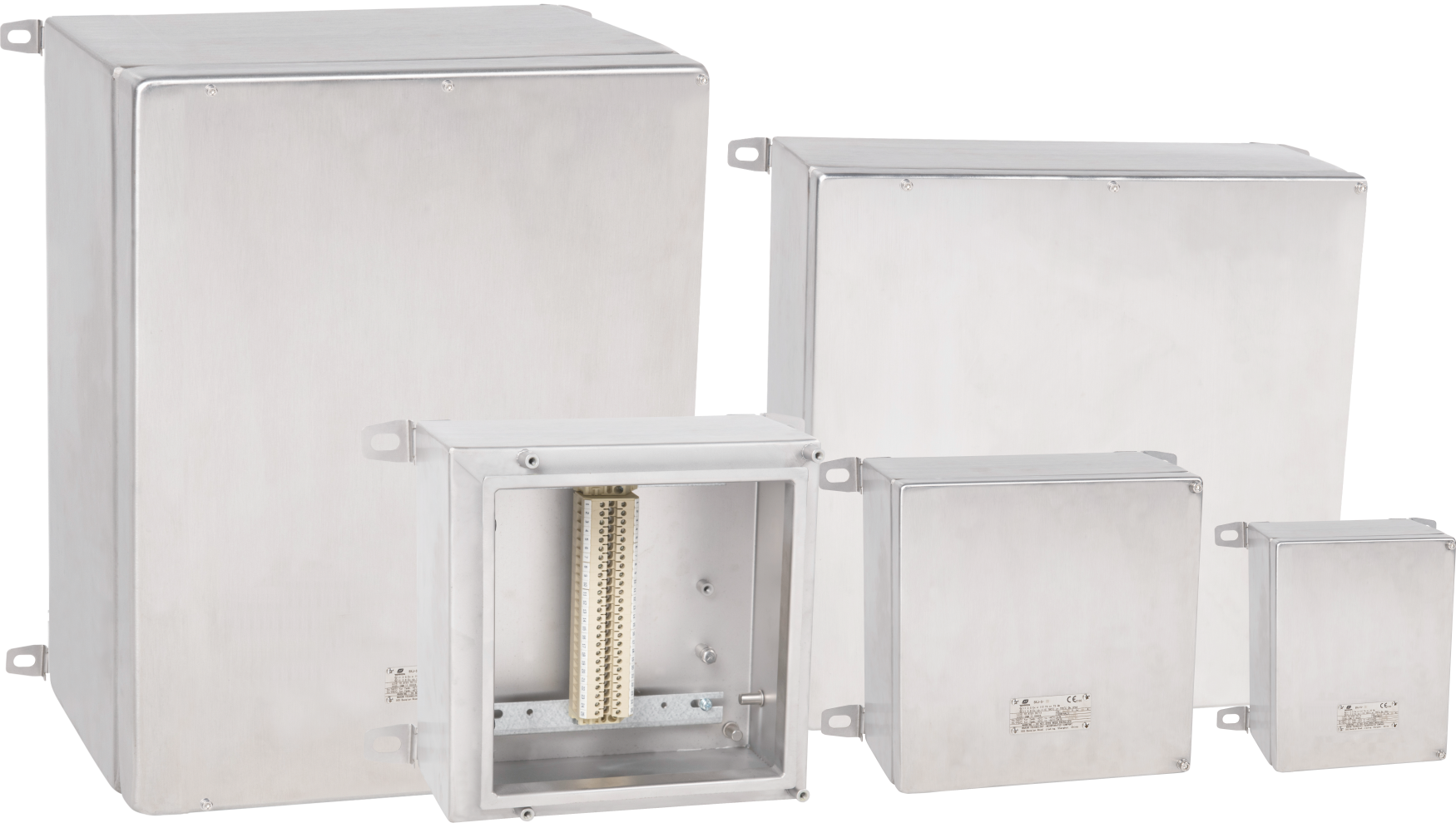
Mixed sites are where we see the most preventable specification failures. A location list that combines Zone 1 gas, Zone 21 dust, and North American conduit entry often cannot be served by one product range. Before you finalize the bill of materials, send your zone map and measurement point list to gm*@***om.com and we will confirm the protection methods, gas groups, temperature classes, and entry types that apply to each location.
What Goes Wrong When the Data Path Is Not Explosion Proof
cURL Too many subrequests by single Worker invocation. To configure this limit, refer to https://developers.cloudflare.com/workers/wrangler/configuration/#limits
cURL Too many subrequests by single Worker invocation. To configure this limit, refer to https://developers.cloudflare.com/workers/wrangler/configuration/#limits
cURL Too many subrequests by single Worker invocation. To configure this limit, refer to https://developers.cloudflare.com/workers/wrangler/configuration/#limits 
cURL Too many subrequests by single Worker invocation. To configure this limit, refer to https://developers.cloudflare.com/workers/wrangler/configuration/#limits
cURL Too many subrequests by single Worker invocation. To configure this limit, refer to https://developers.cloudflare.com/workers/wrangler/configuration/#limits
cURL Too many subrequests by single Worker invocation. To configure this limit, refer to https://developers.cloudflare.com/workers/wrangler/configuration/#limits
cURL Too many subrequests by single Worker invocation. To configure this limit, refer to https://developers.cloudflare.com/workers/wrangler/configuration/#limits
- cURL Too many subrequests by single Worker invocation. To configure this limit, refer to https://developers.cloudflare.com/workers/wrangler/configuration/#limits
- cURL Too many subrequests by single Worker invocation. To configure this limit, refer to https://developers.cloudflare.com/workers/wrangler/configuration/#limits
- cURL Too many subrequests by single Worker invocation. To configure this limit, refer to https://developers.cloudflare.com/workers/wrangler/configuration/#limits
- cURL Too many subrequests by single Worker invocation. To configure this limit, refer to https://developers.cloudflare.com/workers/wrangler/configuration/#limits
- cURL Too many subrequests by single Worker invocation. To configure this limit, refer to https://developers.cloudflare.com/workers/wrangler/configuration/#limits
cURL Too many subrequests by single Worker invocation. To configure this limit, refer to https://developers.cloudflare.com/workers/wrangler/configuration/#limits
cURL Too many subrequests by single Worker invocation. To configure this limit, refer to https://developers.cloudflare.com/workers/wrangler/configuration/#limitsAméliorer la qualité des produits et être un bon gardien de sécuritécURL Too many subrequests by single Worker invocation. To configure this limit, refer to https://developers.cloudflare.com/workers/wrangler/configuration/#limits
cURL Too many subrequests by single Worker invocation. To configure this limit, refer to https://developers.cloudflare.com/workers/wrangler/configuration/#limits gm*@***om.com cURL Too many subrequests by single Worker invocation. To configure this limit, refer to https://developers.cloudflare.com/workers/wrangler/configuration/#limits
cURL Too many subrequests by single Worker invocation. To configure this limit, refer to https://developers.cloudflare.com/workers/wrangler/configuration/#limits
cURL Too many subrequests by single Worker invocation. To configure this limit, refer to https://developers.cloudflare.com/workers/wrangler/configuration/#limits
cURL Too many subrequests by single Worker invocation. To configure this limit, refer to https://developers.cloudflare.com/workers/wrangler/configuration/#limits
cURL Too many subrequests by single Worker invocation. To configure this limit, refer to https://developers.cloudflare.com/workers/wrangler/configuration/#limits
cURL Too many subrequests by single Worker invocation. To configure this limit, refer to https://developers.cloudflare.com/workers/wrangler/configuration/#limits
cURL Too many subrequests by single Worker invocation. To configure this limit, refer to https://developers.cloudflare.com/workers/wrangler/configuration/#limits
cURL Too many subrequests by single Worker invocation. To configure this limit, refer to https://developers.cloudflare.com/workers/wrangler/configuration/#limits
cURL Too many subrequests by single Worker invocation. To configure this limit, refer to https://developers.cloudflare.com/workers/wrangler/configuration/#limits
cURL Too many subrequests by single Worker invocation. To configure this limit, refer to https://developers.cloudflare.com/workers/wrangler/configuration/#limits gm*@***om.com cURL Too many subrequests by single Worker invocation. To configure this limit, refer to https://developers.cloudflare.com/workers/wrangler/configuration/#limits
Si vous êtes intéressé, consultez ces articles connexes :
Normes d’éclairage antidéflagrant 2025 : Guide de conformité
Warom Technology brille CSSOPE 2024
Jour 2 de la Conférence et Exposition des Producteurs d'Énergie Australienne 2025
Warom à l'ADIPEC 2025
Avec plus d'une décennie d'expérience, il est ingénieur électricien explosion-proof chevronné spécialisé dans la conception et la fabrication de produits de sécurité et anti-explosion. Il possède une expertise approfondie dans des domaines clés tels que les systèmes antiprédétection d'explosion, l'éclairage nucléaire, la sécurité maritime, la protection contre les incendies et les systèmes de contrôle intelligents. Chez Warom Technology Incorporated Company, il occupe des postes de direction doubles en tant que Directeur adjoint de l'ingénierie pour les affaires internationales et Chef du département international R&D, où il supervise les initiatives de R&D et assure la livraison précise des documents de conception pour les projets internationaux. Engagé dans l'amélioration de la sécurité industrielle mondiale, il se concentre sur la traduction de technologies complexes en solutions pratiques, aidant les clients à mettre en œuvre des systèmes de contrôle plus sûrs, plus intelligents et plus fiables dans le monde.

Qi Lingyi