
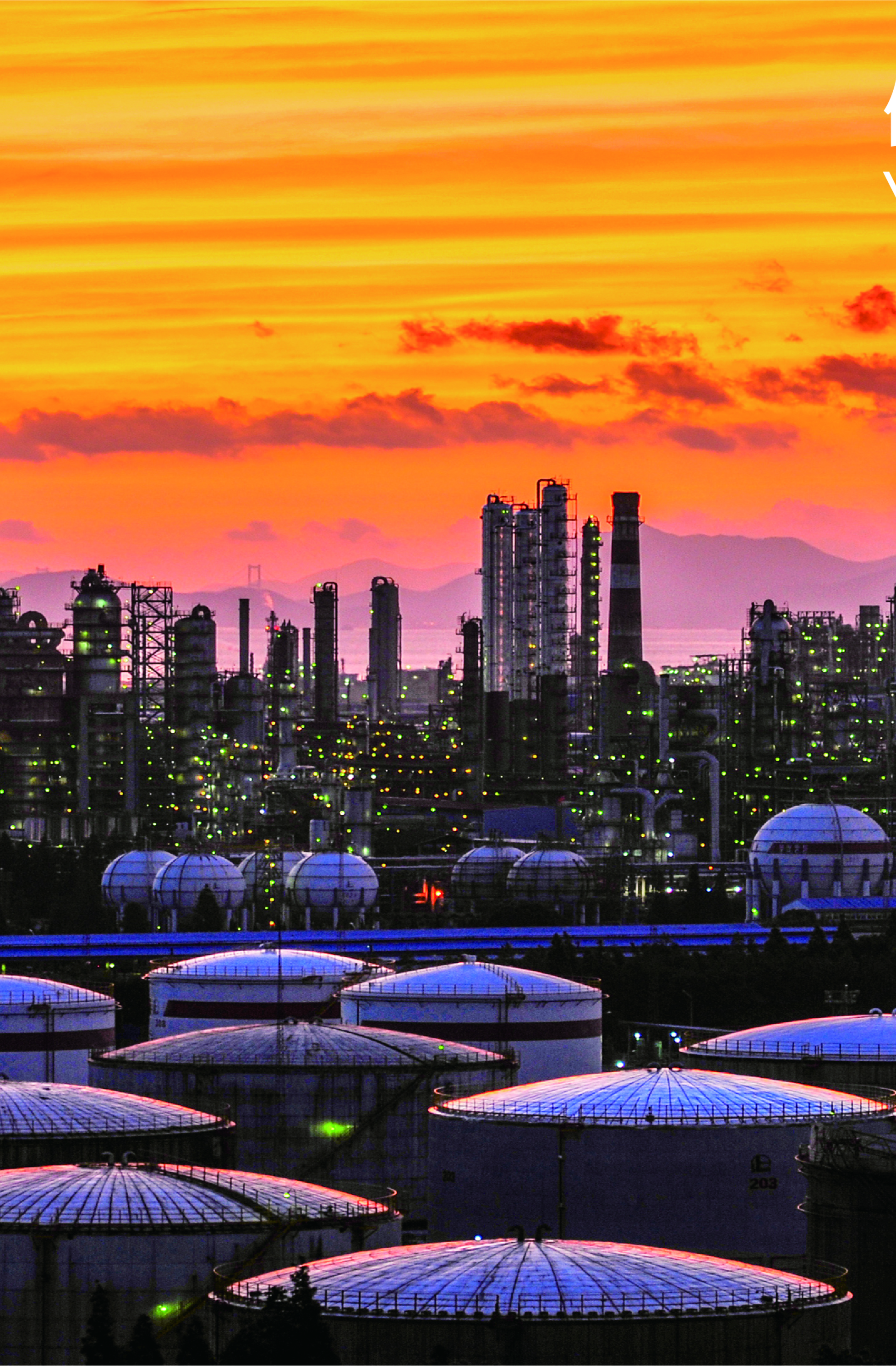
Industrial sites demand electrical systems that perform under pressure. Temporary power distribution boxes handle that role, routing electricity where it needs to go while keeping workers and equipment out of harm’s way. Getting the selection wrong means more than inconvenience—it can mean shutdowns, damaged machinery, or worse. The considerations that follow cover what actually matters when choosing these systems for demanding environments.
Industrial Power Distribution Challenges That Shape Equipment Choices
Factories, refineries, and processing plants push electrical equipment harder than most settings. Dust accumulates. Moisture finds its way in. Temperatures swing. And in certain areas, the air itself carries combustible particles or vapors that turn a small spark into a serious problem.
Standard electrical enclosures simply cannot handle these conditions. When flammable gases or combustible dust enter the picture, the stakes rise considerably. A temporary power distribution box that works fine in a warehouse might become a liability in a chemical processing area.
Real-world performance tells the story better than specifications alone. During the Tilenga project in Uganda—covering wellpads and processing facilities—WAROM delivered explosion-proof electrical systems that operated without a single safety incident despite extreme conditions. The General Paint electrical safety upgrade presented similar challenges, where a customized explosion-proof solution prevented potential fires and explosions in a chemical plant environment.
These outcomes reflect what happens when temporary power distribution box selection accounts for actual operating conditions rather than theoretical minimums.
Technical Specifications That Determine Real-World Performance
Numbers on a spec sheet translate directly into how a temporary power distribution box behaves on site. Understanding what these specifications mean helps separate equipment that will perform from equipment that will fail.
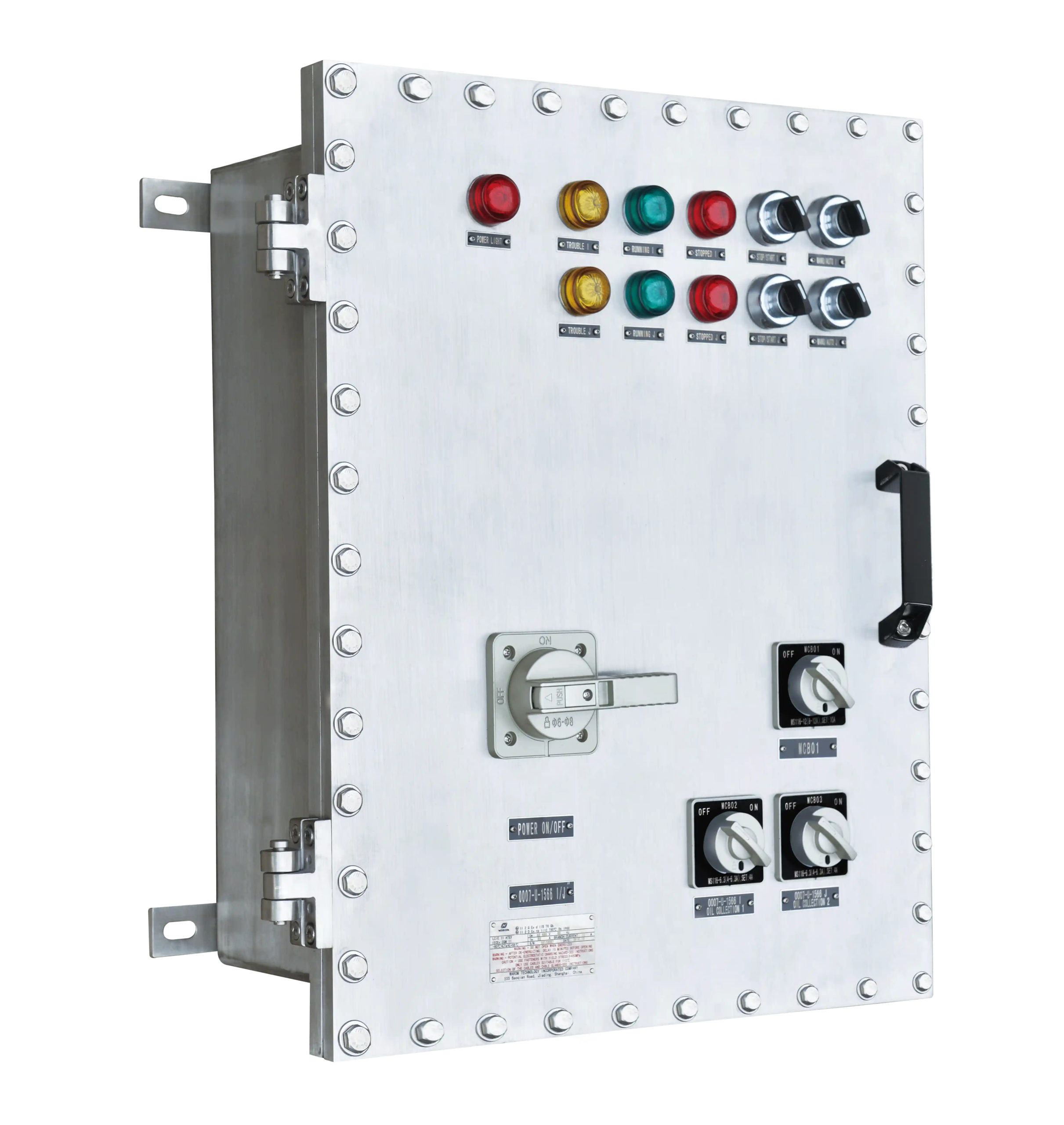
IP ratings indicate protection against solid particles and water. An IP66 rating means dust cannot enter and the enclosure withstands powerful water jets—relevant for outdoor installations or wash-down areas. NEMA enclosure types serve a similar function in North American contexts, with NEMA 4X adding corrosion resistance for harsh chemical environments.
Hazardous area classifications require closer attention. ATEX certification is mandatory throughout the European Union for equipment used where explosive atmospheres might occur. IECEx provides internationally recognized conformity assessment. UL certification dominates North American markets. Each certification involves rigorous testing to verify that equipment will not become an ignition source.
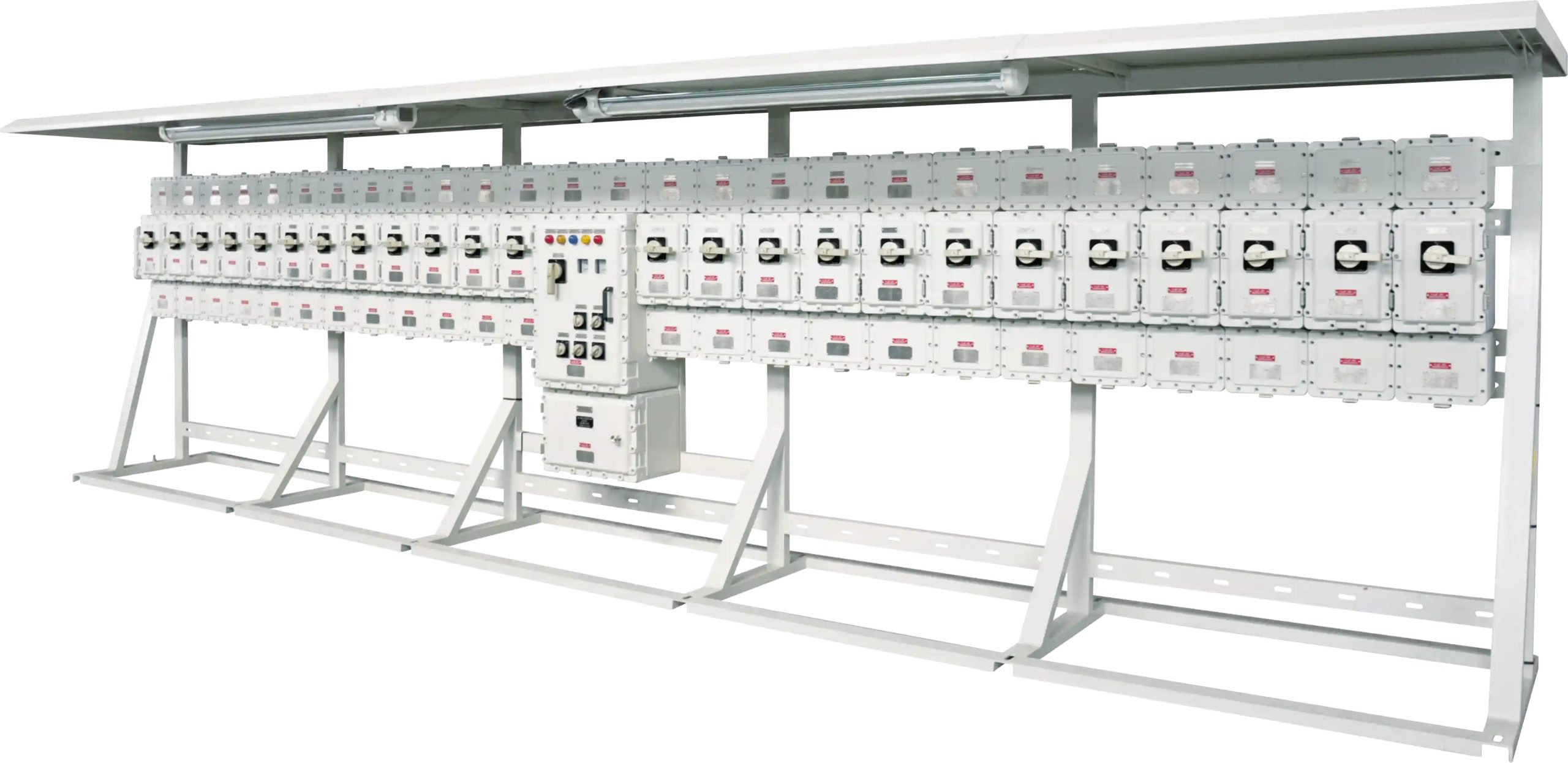
The Fushilai Pharmaceutical project illustrates how these specifications guide actual decisions. Different temporary power distribution boxes were selected for workshops, warehouses, and tank farms based on their specific hazardous area ratings and protective features. A one-size-fits-all approach would have compromised either safety or compliance.
What Are the Key Safety Certifications for Temporary Power Distribution Boxes in Hazardous Environments
ATEX, IECEx, and UL represent the primary safety certifications for temporary power distribution boxes operating in hazardous environments. ATEX applies throughout the European Union and covers equipment intended for potentially explosive atmospheres. IECEx offers international conformity assessment recognized across multiple jurisdictions. UL certification is prevalent in North America.
These certifications verify that equipment has been designed and tested to prevent explosions. The testing protocols examine how enclosures contain internal sparks, how seals prevent gas ingress, and how components behave under fault conditions. Equipment lacking appropriate certification for its intended environment creates both legal liability and genuine safety risks.
For more detailed information on ensuring safety in hazardous environments, consider reading our article: 《Explosion Proof LED Lighting Solutions for Hazardous Areas》.
Material Selection and Environmental Durability
The enclosure material determines how long a temporary power distribution box will last and how much maintenance it will require. Different materials suit different conditions, and the wrong choice shows up as premature corrosion, seal failures, or structural degradation.
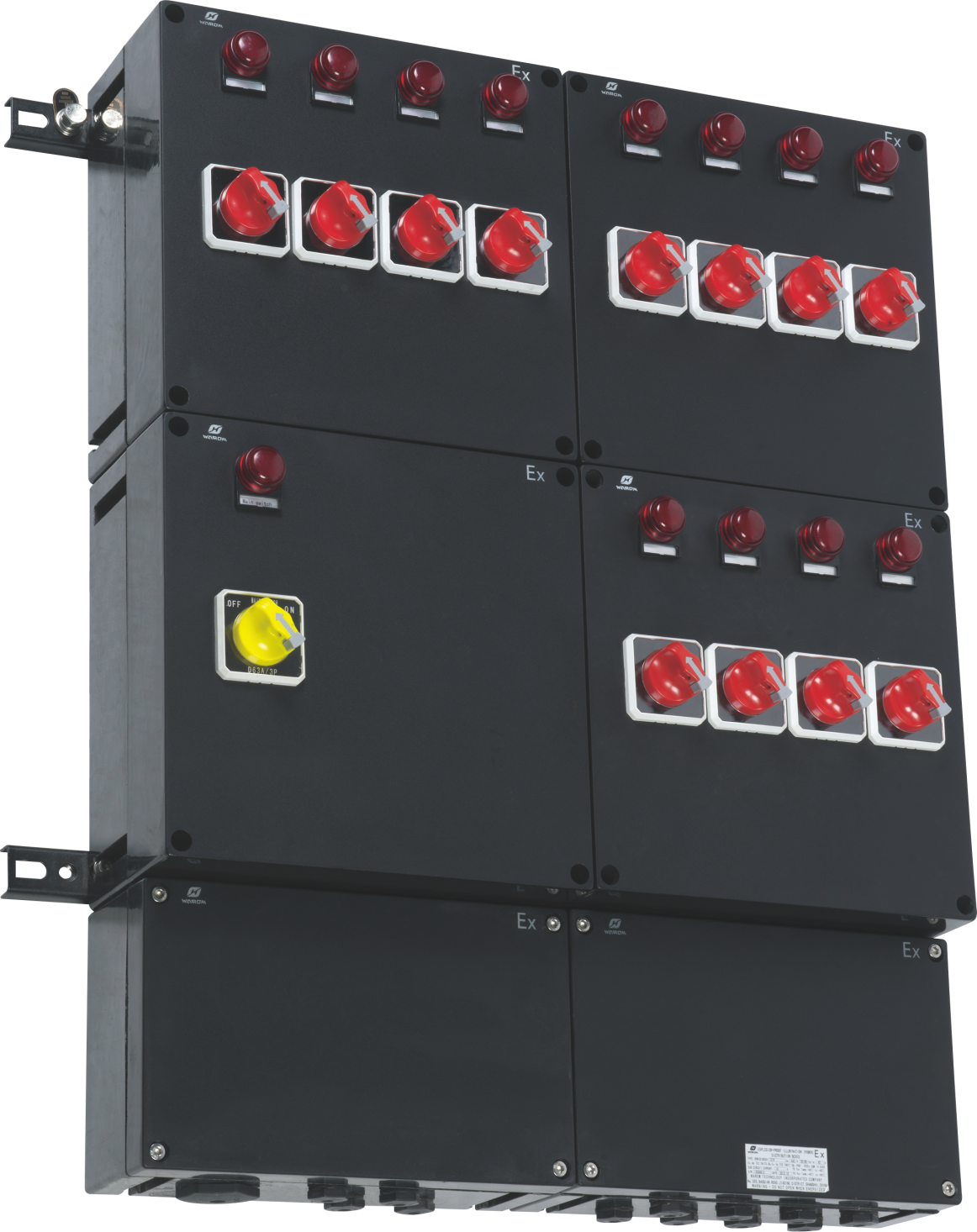
Glass fiber-reinforced polyester resin offers excellent corrosion resistance with relatively low weight. The BXM(D)8050 Explosion-proof Illumination Distribution Boxes use GRP enclosures that achieve IP66 protection while maintaining performance across wide temperature ranges. This material works particularly well in chemical and marine environments where corrosive substances are present.
Copper-free aluminum alloy provides robust construction with good heat dissipation—important when the temporary power distribution box handles significant electrical loads. The HRMD92 Series Explosion Proof Distribution Panels demonstrate this approach, combining IP66 protection with corrosion resistance suitable for oil and gas applications.
Stainless steel offers superior corrosion resistance and meets hygiene requirements for food processing and pharmaceutical facilities. The higher material cost pays off in environments where cleaning chemicals or highly corrosive substances would degrade other materials.
| Enclosure Material | Key Advantages | Typical Applications | IP Rating (Common) | Corrosion Resistance |
|---|---|---|---|---|
| GRP | Lightweight, high strength | Chemical, pharmaceutical, marine | IP66 | Excellent |
| Copper-free Aluminum | Robust, good heat dissipation | Oil & Gas, heavy industrial | IP66 | Very Good |
| Stainless Steel | Superior corrosion, hygiene | Food processing, pharmaceutical, highly corrosive | IP66/IP67 | Excellent |
Installation Practicalities and Long-Term Cost Considerations
Purchase price represents only part of what a temporary power distribution box actually costs. Installation complexity, maintenance requirements, and potential downtime all factor into total cost of ownership.
Modular designs simplify installation considerably. The BXM(D)8050 series features standardized cable entries that work with recommended cable glands, reducing installation time and the likelihood of improper connections. Scalable configurations allow the system to grow with project requirements rather than requiring complete replacement.
Maintenance frequency depends heavily on initial quality. Higher-grade components and better sealing reduce how often enclosures need inspection and servicing. The Tilenga project demonstrated this principle—equipment designed for harsh conditions required minimal maintenance while maintaining safety performance throughout the project duration.
Energy efficiency contributes to operating costs over time. Better-designed temporary power distribution boxes minimize electrical losses, which adds up across months or years of operation.
How Do I Determine the Correct IP Rating and NEMA Enclosure Type for My Industrial Application
Start by cataloging the environmental conditions the temporary power distribution box will face. Will it be exposed to dust? Water spray? Complete immersion? Corrosive chemicals? Temperature extremes?
IP ratings use two digits. The first indicates solid particle protection (0-6), the second indicates liquid protection (0-9). IP66 means complete dust protection and resistance to powerful water jets. IP67 adds brief immersion capability.
NEMA ratings address similar concerns with different numbering. NEMA 4X provides outdoor protection with corrosion resistance. NEMA 7 covers hazardous locations with specific gas groups.
An outdoor chemical plant typically needs high ratings on both scales. An indoor warehouse with controlled conditions might function adequately with lower protection levels. Underspecifying leads to equipment failures and safety risks. Overspecifying wastes money without adding meaningful protection.
What Are the Long-Term Maintenance Implications and Costs Associated with Different Temporary Power Distribution Boxes
Quality differences show up most clearly over time. A less expensive temporary power distribution box might require component replacement every few years, while a better-designed unit operates for a decade with minimal intervention.
Inspection schedules vary based on environmental exposure and certification requirements. Equipment in highly corrosive environments needs more frequent attention. Hazardous area certifications often mandate specific inspection intervals.
The cost of failures extends beyond repair expenses. Unplanned downtime disrupts operations. Safety incidents create liability exposure and regulatory scrutiny. The Tilenga project’s low maintenance record and zero safety incidents illustrate what proper initial investment delivers over time.
For further details on electrical safety, you might find our guide on 《Explosion Proof Emergency LED Light Fittings: A Comprehensive Guide》 insightful.
Partner with WAROM for Reliable Power Solutions
Ensure the safety and efficiency of your industrial operations with WAROM TECHNOLOGY INCORPORATED COMPANY’s expert-engineered temporary power distribution solutions. Contact us today for a tailored consultation and discover how our explosion-proof electrical systems can meet your most demanding project requirements, backed by decades of proven reliability and safety excellence. Email: gm*@***om.com, Tel: +86 21 39977076.
Frequently Asked Questions
What Makes an Explosion-Proof Temporary Power Distribution Box Different from a Standard One
Explosion-proof temporary power distribution boxes contain any internal sparks or heat within the enclosure rather than allowing them to ignite surrounding atmospheres. Standard enclosures make no such provision.
The construction differences are substantial. Explosion-proof units use heavier enclosures with precisely machined flame paths that cool escaping gases below ignition temperature. Seals prevent flammable vapors from entering. Internal components are selected to minimize spark generation. Cable entries use specialized fittings that maintain the enclosure’s protective integrity.
These design features undergo certification testing to verify performance under fault conditions. Standard enclosures lack this testing and the underlying design features that make such certification possible.
How Does WAROM Ensure the Reliability of Its Temporary Power Distribution Solutions in Extreme Environments
WAROM’s reliability starts with material selection and manufacturing processes. Corrosion-resistant alloys and high-grade polymers form the foundation. Precision machining ensures sealing surfaces meet tight tolerances. Assembly procedures follow documented quality protocols.
Testing validates design assumptions. Products undergo environmental stress testing, electrical fault testing, and certification testing to ATEX and IECEx standards.
Field performance provides the ultimate validation. The Tilenga project in Uganda subjected WAROM equipment to extreme conditions over an extended period. The result—energy-efficient operation, low maintenance requirements, and zero safety incidents—demonstrates that laboratory testing translates into real-world reliability.
Can WAROM Provide Customized Temporary Power Distribution Boxes for Unique Industrial Project Requirements
WAROM regularly develops customized solutions for specific project requirements. The process involves understanding voltage and amperage needs, environmental conditions, hazardous area classifications, and integration requirements with existing infrastructure.
The Fushilai Pharmaceutical project exemplifies this approach. Different areas of the facility required different configurations based on their specific hazards and operational requirements. Working with project owners and design institutes, WAROM developed solutions that addressed each area’s particular needs while maintaining consistent safety standards throughout.
Customization extends to enclosure materials, internal component selection, cable entry configurations, and mounting arrangements. The goal is equipment that fits the application rather than forcing the application to accommodate standard equipment limitations.
With over a decade of experience, he is a seasoned Explosion-Proof Electrical Engineer specializing in the design and manufacture of safety and explosion-proof products. He possesses in-depth expertise across key areas including explosion-proof systems, nuclear power lighting, marine safety, fire protection, and intelligent control systems. At Warom Technology Incorporated Company, he holds dual leadership roles as Deputy Chief Engineer for International Business and Head of the International R&D Department, where he oversees R&D initiatives and ensures the precise delivery of design documentation for international projects. Committed to advancing global industrial safety, he focuses on translating complex technologies into practical solutions, helping clients implement safer, smarter, and more reliable control systems worldwide.

Qi Lingyi