

Explosion-proof equipment exists because some environments simply won’t tolerate electrical sparks. Walk into a refinery, a grain elevator, or a paint manufacturing facility, and you’re surrounded by atmospheres that could ignite from something as minor as a loose wire connection. The equipment designed for these spaces doesn’t just survive explosions—it prevents them from ever reaching the surrounding air. Getting this right means understanding how these systems work, where they’re required, and why cutting corners on certification creates problems that extend far beyond regulatory fines.
How Explosion-Proof Equipment Actually Works
The concept behind explosion protection comes down to breaking what engineers call the Explosion Triangle: fuel, oxygen, and an ignition source. Remove any one of these elements, and you eliminate the explosion risk. Explosion-proof equipment targets the ignition source specifically.
These systems take one of two approaches. Some contain any internal explosion within a robust enclosure, preventing flames and hot gases from escaping to the surrounding atmosphere. Others eliminate the possibility of ignition entirely by limiting electrical energy to levels too low to spark combustion. The distinction matters because “explosion-resistant” equipment—built merely to withstand blast forces—offers no protection against ignition itself. That’s a different problem entirely.
Proper selection depends on matching equipment capabilities to specific atmospheric hazards. A flameproof motor rated for propane environments won’t necessarily protect against hydrogen atmospheres, which ignite at lower energy levels.
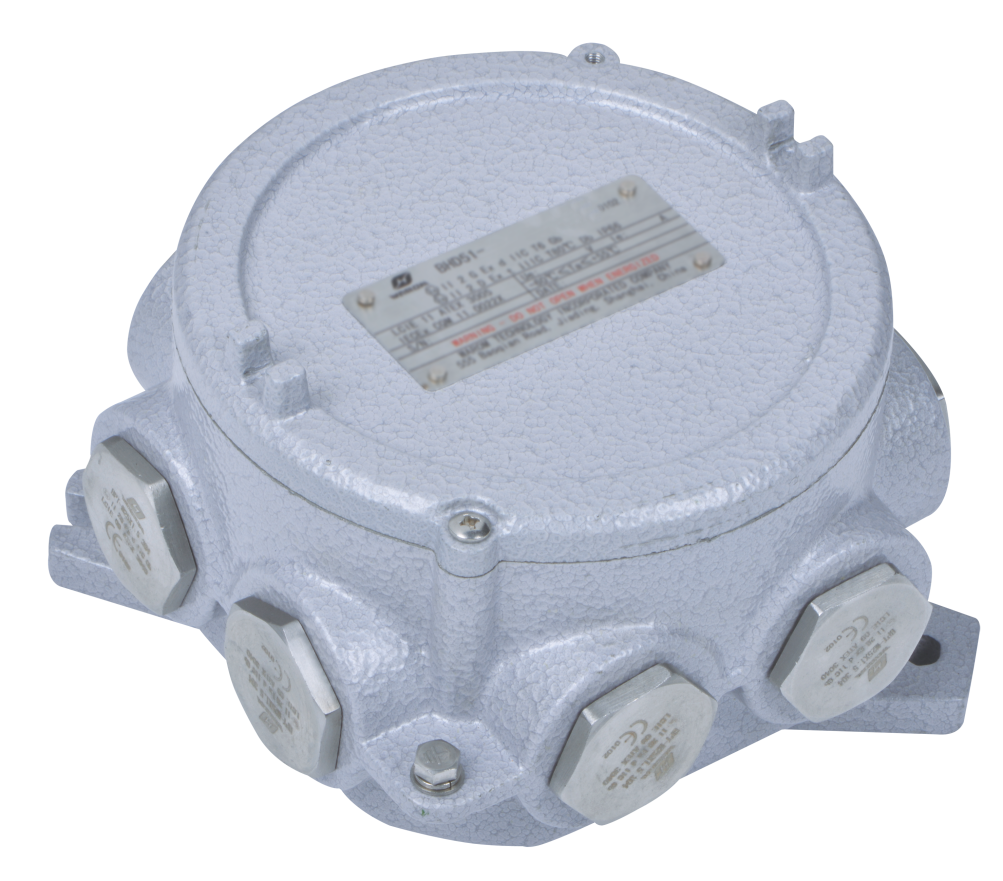
BHD91 Explosion-proof Junction Boxes
 Making Sense of Hazardous Area Classifications
Hazardous area classification determines what explosion protection equipment you actually need. Two systems dominate globally, and they approach the problem from slightly different angles.
The Zone system, used under IECEx and ATEX frameworks, categorizes locations by how often explosive atmospheres appear:
Zone 0 means explosive gas or vapor is present continuously or for extended periods. Zone 1 indicates likely occurrence during normal operations. Zone 2 covers situations where explosive atmospheres appear only briefly or under abnormal conditions.
Combustible dust environments follow parallel classifications. Zone 20 involves continuous dust presence, Zone 21 covers likely occurrence during normal operations, and Zone 22 addresses brief or abnormal occurrences.
North American facilities typically use the Division system instead. Division 1 locations contain hazardous substances under normal operating conditions. Division 2 applies when hazardous substances appear only during equipment failures or other abnormal situations.
Both systems further categorize materials by gas groups and dust groups. Group IIC covers the most easily ignited gases like hydrogen and acetylene. Group IIB includes ethylene. Group IIA encompasses propane and similar hydrocarbons. Dust classifications range from conductive dusts (Group IIIC) through non-conductive dusts (Group IIIB) to combustible flyings (Group IIIA).
Temperature classes add another layer, ensuring equipment surface temperatures stay below the ignition point of present substances. Regulatory frameworks continue evolving, and 2025 brings updated requirements that affect equipment specification and compliance documentation.
For lighting applications in these environments, the considerations become quite specific. You can explore those details in 《Explosion Proof LED Lighting Solutions for Hazardous Areas》.
Protection Methods and Their Applications
Several explosion protection methods address different operational requirements. Flameproof enclosures, designated Ex d, contain internal explosions through robust construction and precisely engineered flame paths that cool escaping gases below ignition temperature. Intrinsic safety (Ex i) takes the opposite approach, limiting circuit energy to levels incapable of causing ignition even under fault conditions.
Increased safety (Ex e) prevents sparks and excessive surface temperatures during normal operation through enhanced construction standards. Pressurization (Ex p) maintains positive pressure inside enclosures using clean air or inert gas, preventing hazardous atmospheres from entering. Oil immersion (Ex o) submerges electrical components in oil, eliminating contact with explosive atmospheres entirely.
Each method suits different applications. Intrinsic safety works well for instrumentation and control circuits. Flameproof enclosures protect motors and junction boxes. Pressurization suits control rooms and analyzer houses. Explosion proof lighting systems typically use flameproof or increased safety designs depending on the zone classification.
Navigating Global Certification Requirements
Operating across international markets means dealing with multiple certification frameworks. ATEX directives govern equipment sold in European Union markets. IECEx certification provides international recognition accepted in over 50 countries. North American operations require UL or CSA certification.
These aren’t interchangeable stamps. Each certification body maintains specific testing protocols and documentation requirements. Equipment certified under one system may need additional testing or documentation for acceptance under another.
WAROM TECHNOLOGY INCORPORATED COMPANY maintains certifications across these major frameworks. The BJK-S/G explosion proof camera carries both IECEx and ATEX certifications, approved for Zone 1, 2, 21, and 22 applications. The DQM-III/II Series cable glands hold IECEx, ATEX, and CU-TR certifications, conforming to EN and IEC 60079 series standards.
| Standard Body | Region Served | Primary Focus | Key Directives/Standards |
|---|---|---|---|
| ATEX | European Union | Equipment & Protective Systems | 2014/34/EU (Equipment) |
| IECEx | International | Certification Scheme | IEC 60079 Series |
| UL/CSA | North America | Product Safety Testing | UL 1203, CSA C22.2 No. 30 |
Practical Selection and Implementation Guidance
Selecting explosion-proof equipment starts with understanding your specific hazards. A thorough risk assessment identifies potential ignition sources, characterizes the explosive atmosphere, and establishes the appropriate zone or division classification. From there, equipment selection follows logically based on protection type, temperature class, and ingress protection ratings.
Environmental factors beyond the explosive atmosphere itself affect equipment longevity. Corrosive atmospheres, mechanical vibration, extreme temperatures, and UV exposure all influence material selection and design requirements. Equipment that meets explosion protection standards but fails prematurely due to environmental degradation creates maintenance burdens and potential safety gaps.
The Tilenga project in Uganda illustrates comprehensive implementation. WAROM supplied explosion proof lighting and electrical systems for wellpads, a central processing facility, and associated pipelines. The installation achieved zero safety incidents while meeting energy efficiency targets under challenging environmental conditions. Project completion stayed on schedule despite the complexity of coordinating multiple equipment types across a large geographic area.
A different challenge emerged at General Paint, a chemical manufacturing facility in Mexico. Existing electrical installations presented serious safety hazards in areas with flammable gas and combustible dust exposure. The solution involved gas detection systems, explosion-proof plugs, junction boxes, and distribution boxes configured for the specific hazards present. This kind of retrofit work requires careful coordination between hazard assessment, equipment selection, and installation practices.
Classification Impact on Equipment Decisions
Hazardous area classifications create non-negotiable equipment requirements. Zone 0 applications demand the highest protection levels—typically intrinsically safe or specially certified flameproof equipment. Zone 2 permits broader equipment options because explosive atmospheres appear only briefly under abnormal conditions.
Selecting equipment rated below the required protection level creates immediate compliance problems and genuine safety risks. Beyond regulatory concerns, inappropriate equipment selection can invalidate insurance coverage and expose facility operators to personal liability. Temperature class mismatches present particular risks because they’re less visually obvious than protection type errors but equally dangerous.
Understanding the Real Costs of Getting This Wrong
The financial consequences of explosion protection failures extend well beyond equipment replacement costs. Industrial accidents in hazardous areas frequently result in fatalities, severe injuries, and extensive property damage. Investigation costs, regulatory fines, and legal liabilities accumulate rapidly. Criminal prosecution of responsible individuals occurs in serious cases.
Reputational damage affects business relationships for years after an incident. Customers, insurers, and regulators all factor safety history into their decisions. Companies with poor safety records face higher insurance premiums, more frequent inspections, and reduced access to certain contracts.
The General Paint intervention demonstrates the value of proactive assessment. Identifying electrical safety hazards before an incident occurred allowed systematic correction rather than emergency response. The customized explosion-proof solution—including explosion proof electrical components like plugs, junction boxes, and distribution boxes—transformed a hazardous situation into a compliant, safe operation.
This kind of preventative investment pays returns that never appear on financial statements. Avoided accidents, maintained certifications, and continued operational authorization represent value that only becomes visible when something goes wrong at a competitor’s facility.
Why Certification Matters Beyond Compliance
Certified explosion-proof equipment provides assurance that goes beyond meeting minimum regulatory requirements. Certification testing subjects equipment to conditions more severe than normal operation, revealing design weaknesses before they cause field failures. Certified products come with documented performance characteristics that support proper selection and installation.
Using certified equipment simplifies compliance documentation and inspection processes. Inspectors recognize certification marks and can verify equipment suitability without extensive technical analysis. This streamlines both initial commissioning and ongoing compliance verification.
Equipment reliability improves with certification because the testing process identifies manufacturing variations that might cause premature failure. Preventative maintenance programs benefit from the documented performance baselines that certification testing establishes.
Working with WAROM on Your Safety Requirements
Industrial operations facing hazardous atmosphere challenges benefit from working with suppliers who understand both the technical requirements and the practical implementation constraints. WAROM TECHNOLOGY has developed explosion-proof solutions since 1987, accumulating experience across diverse industries and regulatory environments.
Consultation services help match equipment capabilities to specific application requirements. Customized designs address unusual installation constraints or environmental conditions. Global certification coverage simplifies procurement for multinational operations.
Contact WAROM to discuss your specific safety challenges. Email: gm*@***om.com | Tel: +86 21 39977076
Common Questions About Explosion-Proof Equipment
What distinguishes explosion-proof from explosion-protected equipment?
The terms often appear interchangeably, but they describe different concepts. Explosion-proof specifically refers to equipment designed to contain internal explosions without igniting external atmospheres—typically through robust enclosures with engineered flame paths. Explosion-protected encompasses broader protection methods including intrinsic safety, increased safety, and pressurization. Each method prevents ignition through different mechanisms. Selecting appropriate protection requires understanding which method suits the specific hazardous location and operational requirements.
What inspection schedules apply to explosion-proof electrical equipment?
Inspection frequency depends on environmental severity, equipment type, and manufacturer recommendations. Most safety standards call for annual visual inspections covering obvious damage, corrosion, and seal integrity. More detailed inspections every three to five years verify internal condition and continued compliance with certification requirements. Harsh environments or critical applications may warrant more frequent inspection. Documentation of inspection findings supports compliance verification and identifies developing problems before they create safety risks.
Can existing electrical equipment be converted to explosion-proof status?
Standard electrical equipment cannot be modified to achieve explosion-proof certification. Explosion-proof equipment requires specific design features, materials, and construction methods that must be incorporated from initial design through manufacturing. Attempting to retrofit standard equipment creates safety risks and produces equipment that cannot receive certification. The resulting installation would violate regulatory requirements and create liability exposure. Always specify purpose-built certified explosion-proof products for hazardous area applications.
With over a decade of experience, he is a seasoned Explosion-Proof Electrical Engineer specializing in the design and manufacture of safety and explosion-proof products. He possesses in-depth expertise across key areas including explosion-proof systems, nuclear power lighting, marine safety, fire protection, and intelligent control systems. At Warom Technology Incorporated Company, he holds dual leadership roles as Deputy Chief Engineer for International Business and Head of the International R&D Department, where he oversees R&D initiatives and ensures the precise delivery of design documentation for international projects. Committed to advancing global industrial safety, he focuses on translating complex technologies into practical solutions, helping clients implement safer, smarter, and more reliable control systems worldwide.

Qi Lingyi