

Navigating Hazardous Environments: The Imperative of Explosion-Proof Emergency Exit Light Fittings
1. Critical Challenges in Hazardous Area Egress Lighting
Emergency egress in hazardous industrial settings leaves no margin for error, and the thread runs through everything here: certified explosion-proof exit lighting that stays visible in the worst conditions, compliance with ATEX and IECEx, durable LED designs with backup power and corrosion resistance, and real-world deployments that trim maintenance and energy use while keeping people safe. Facilities handling flammable gases, vapors, or combustible dusts cannot rely on conventional fixtures. The task is to keep emergency exit lighting operational and clear under extreme stress, using equipment engineered to contain internal explosions and prevent ignition outside the enclosure.
Compliance makes the work harder. International standards such as ATEX and IECEx set design, testing, and installation requirements for electrical equipment in potentially explosive atmospheres. Falling short invites penalties, shutdowns, and serious safety failures. Risk profiles shift as operations change, so emergency egress provisions need ongoing review and periodic upgrades. Corrosive atmospheres, temperature extremes, and vibration chip away at long-term reliability. Put together, these conditions create a heavy compliance load for facility teams.
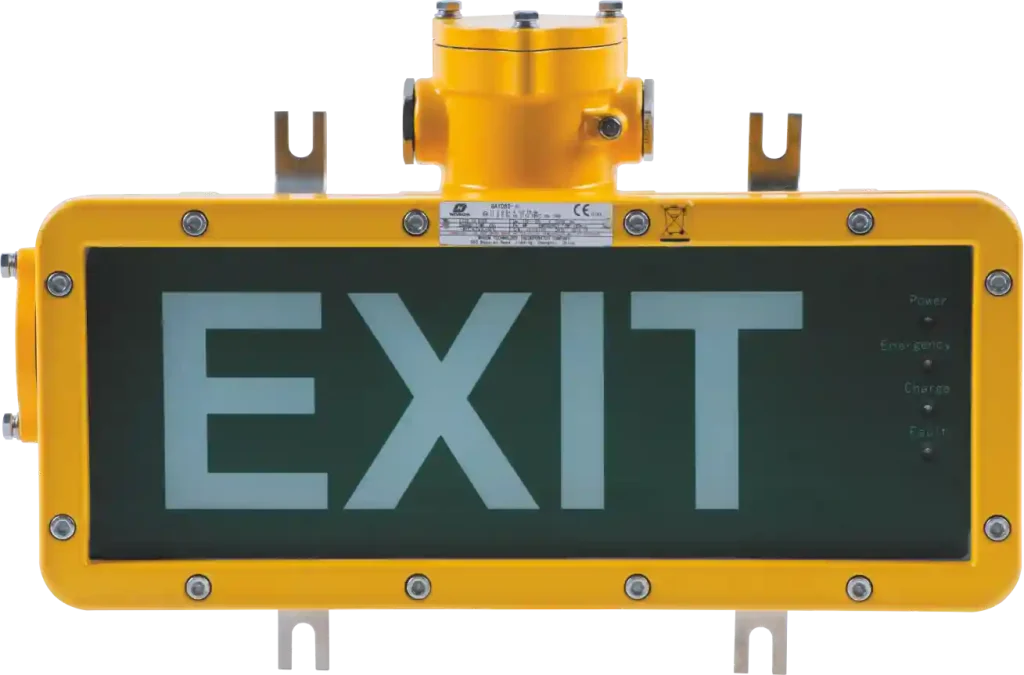
2. Advanced Solutions for Explosion Proof Emergency Exit Illumination
Meeting these challenges calls for explosion proof emergency exit light fittings built for safety and staying power. Current designs pair modern technology with robust materials to deliver dependable performance in hazardous locations. We utilize ATEX certified exit lights solutions and IECEx emergency lighting technology, guaranteeing adherence to the highest global safety standards. These certifications verify that our products are rigorously tested and approved for defined hazardous zones.
LED explosion proof exit signs deliver bright output, instant-on response, and longer service life than older technologies, which cuts the chance of light loss during emergencies. Many models add battery backup hazardous area lighting to keep illumination during power outages. Where corrosive elements are present, corrosion resistant emergency lighting solutions extend service life and reduce maintenance cycles. For example, the BAY51-Q Explosion-proof Corrosion-proof Plastic Light Fitting uses a high-quality steel lamp body with a powder-coated surface for reliable operation in environments exposed to moisture, vibration, or corrosion. Its built-in constant current constant voltage driver power includes overload protection and EOL functions to boost safety and longevity.
Below is a side-by-side look at traditional emergency lighting and advanced LED explosion-proof emergency lighting:
| Feature | Traditional Emergency Lighting | Advanced LED Explosion-Proof Emergency Lighting |
|---|---|---|
| Illumination | Lower brightness, slower activation | High brightness, instant-on |
| Energy Efficiency | High consumption | Significantly lower consumption |
| Lifespan | Shorter, frequent replacement | Longer, reduced replacement |
| Maintenance | High, due to bulb replacement | Low, minimal intervention |
| Hazardous Area Suitability | Limited, high risk of ignition | Certified, designed for explosive atmospheres |
| Corrosion Resistance | Often poor | High, specialized materials |
For further insights into maintaining compliance and safety, see 《Service & Support》.
3. Maximizing Safety and Operational Efficiency with Certified Fittings
Deploying high-quality explosion proof emergency exit light fittings lifts safety compliance and day-to-day efficiency. Purpose-built systems keep egress routes visible even when primary power is lost or incidents unfold. That preparation lowers risk to personnel and helps prevent injuries or fatalities during evacuations.
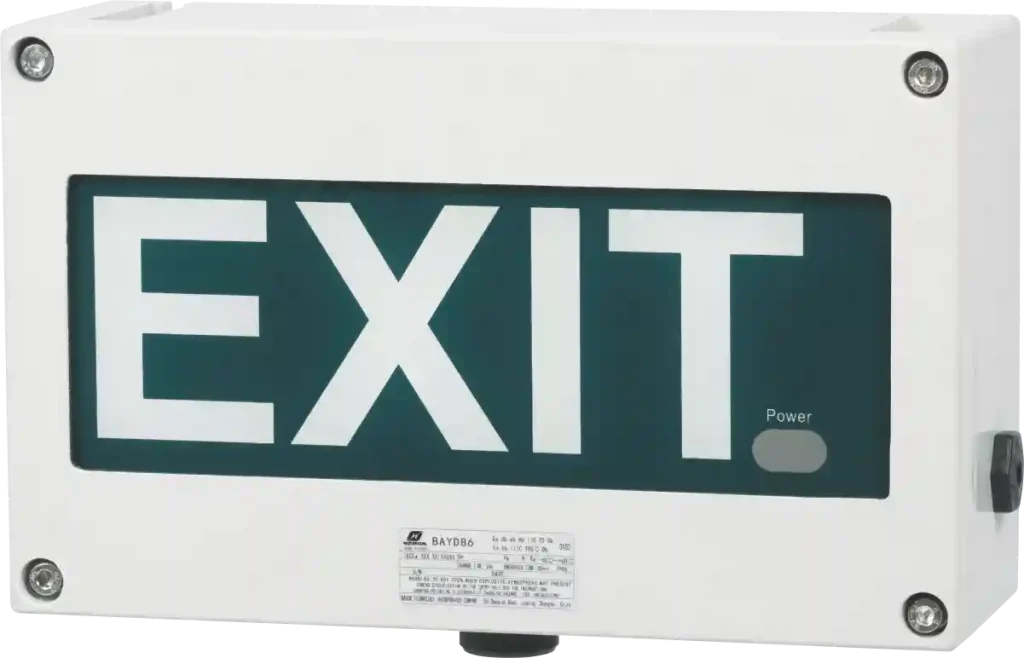
Benefits extend beyond immediate safety. Certified fittings lower maintenance costs for hazardous lighting through robust construction and advanced components, as seen in our BAYD85 Explosion-proof Emergency Exit Light Fittings, which are built for long lifespan emergency exit solutions. Fewer replacements and repairs are needed, a real advantage where access is difficult and costly. Energy efficient explosion proof lights, especially LED-based systems, draw far less power, producing meaningful energy savings over time. That reduces operating expenses and the carbon footprint. The inherent reliability also supports greater operational uptime in industrial facilities by preventing safety-related interruptions and maintaining continuous compliance. Our focus on quality is there to deliver immediate protection and long-term economic gains.
4. Real World Application of Explosion Proof Emergency Egress Systems
Our track record shows up in demanding industrial projects. One example is the Tilenga project in Uganda, an extensive development with wellpads, a Central Processing Facility (CPF), and pipelines, with major sections inside Murchison Falls National Park.
WAROM supplied explosion-proof lighting and electrical systems for this project. The solutions delivered zero safety incidents, maintained energy efficiency, and provided low maintenance reliability under extreme operating conditions. The work met stringent safety, environmental, and performance requirements on schedule. This case demonstrates our ability to provide robust, certified explosion proof lighting solutions that perform in the toughest hazardous area project success scenarios. Our contribution kept emergency egress pathways clearly illuminated to protect personnel.
Partner with WAROM for Unparalleled Safety Solutions
Partner with WAROM TECHNOLOGY INCORPORATED COMPANY to bring proven expertise in explosion-proof emergency exit light fittings to your site. Reach out for a tailored consultation to uphold the highest standards of safety and compliance in hazardous environments. Our certified solutions are built for reliability, efficiency, and peace of mind. Email us at gm*@***om.com or call us at +86 21 39977076 or +86 21 39972657.
Frequently Asked Questions
What certifications are essential for explosion proof emergency exit light fittings?
Key certifications include ATEX (for Europe) and IECEx (for international markets), which enforce strict safety standards for equipment used in potentially explosive atmospheres. Additionally, local electrical codes and emergency lighting standards (e.g., NFPA 101, EN 1838) are vital for overall system compliance. These certifications validate the product’s integrity and safety for specific hazardous zones.
How do LED explosion proof emergency exit lights enhance safety and efficiency?
LED explosion proof exit signs enhance safety through superior illumination, instant-on capability, and longer operational life, reducing the risk of failure during critical situations. They improve efficiency by consuming significantly less energy, requiring minimal maintenance, and offering extended battery backup durations, leading to lower total cost of ownership in hazardous industrial settings. This combination ensures reliable performance and cost-effectiveness.
What factors should be considered when selecting explosion proof emergency exit lighting for specific hazardous zones?
When selecting explosion proof emergency exit light fittings, critical factors include the hazardous area classification (Zone 0, 1, 2 for gases; Zone 20, 21, 22 for dusts), gas or dust group, temperature class, ingress protection (IP) rating, required lumen output for visibility, battery backup duration, and material compatibility with corrosive environments. Consulting with experts like WAROM is vital for correct specification to ensure optimal safety and compliance.
With over a decade of experience, he is a seasoned Explosion-Proof Electrical Engineer specializing in the design and manufacture of safety and explosion-proof products. He possesses in-depth expertise across key areas including explosion-proof systems, nuclear power lighting, marine safety, fire protection, and intelligent control systems. At Warom Technology Incorporated Company, he holds dual leadership roles as Deputy Chief Engineer for International Business and Head of the International R&D Department, where he oversees R&D initiatives and ensures the precise delivery of design documentation for international projects. Committed to advancing global industrial safety, he focuses on translating complex technologies into practical solutions, helping clients implement safer, smarter, and more reliable control systems worldwide.

Qi Lingyi