

Flour mills and grain silos sit at the intersection of two realities that don’t mix well: fine organic particles suspended in air, and the electrical systems needed to keep operations running. The combination creates explosion risks that have claimed lives and destroyed facilities for as long as mechanized grain processing has existed. Addressing these risks requires equipment engineered specifically for combustible dust environments, along with protection systems designed around how grain facilities actually operate rather than generic industrial templates. The solutions we implement draw on direct experience with hazardous area installations across multiple industries, adapted to the particular challenges that agricultural processing presents.
Why Grain Dust Behaves Differently from Other Industrial Hazards
Agricultural processing facilities generate combustible dust as a byproduct of normal operations. Flour dust, grain fragments, and organic fines become airborne during milling, conveying, and storage transfers. When these particles reach certain concentrations in enclosed spaces, they form explosive atmospheres that need only an ignition source to release destructive energy.
The mechanism follows what safety engineers call the dust explosion pentagon: fuel (the dust itself), oxygen (ambient air provides plenty), an ignition source, dispersion of particles into a cloud, and confinement that allows pressure to build. Remove any one element and the explosion cannot occur. Practical protection focuses on controlling ignition sources and managing dust accumulation, since eliminating oxygen or confinement isn’t operationally feasible.
NFPA 61 establishes the baseline requirements for fire and explosion prevention in agricultural and food processing facilities. Hazardous area classification under ATEX zones maps where explosive atmospheres are likely to occur, which in turn dictates what equipment can be installed in each location. A flour mill’s grinding room carries different classification than its bagging area, and the equipment specifications follow accordingly.
The General Paint project we completed demonstrated how dust risks extend beyond grain facilities into chemical manufacturing. That installation required identifying ignition sources that plant personnel had overlooked for years. The same diagnostic approach applies to flour mills, where static discharge points, overheated bearings, and electrical arcing represent the most common ignition pathways.
How Protection System Design Starts with Ignition Source Mapping
Effective explosion protection begins with understanding where ignition can occur, not with selecting equipment from a catalog. Our design process mirrors what we developed for the General Paint and Fushilai Pharmaceutical projects: on-site diagnosis first, then customized solutions built around actual operational conditions.
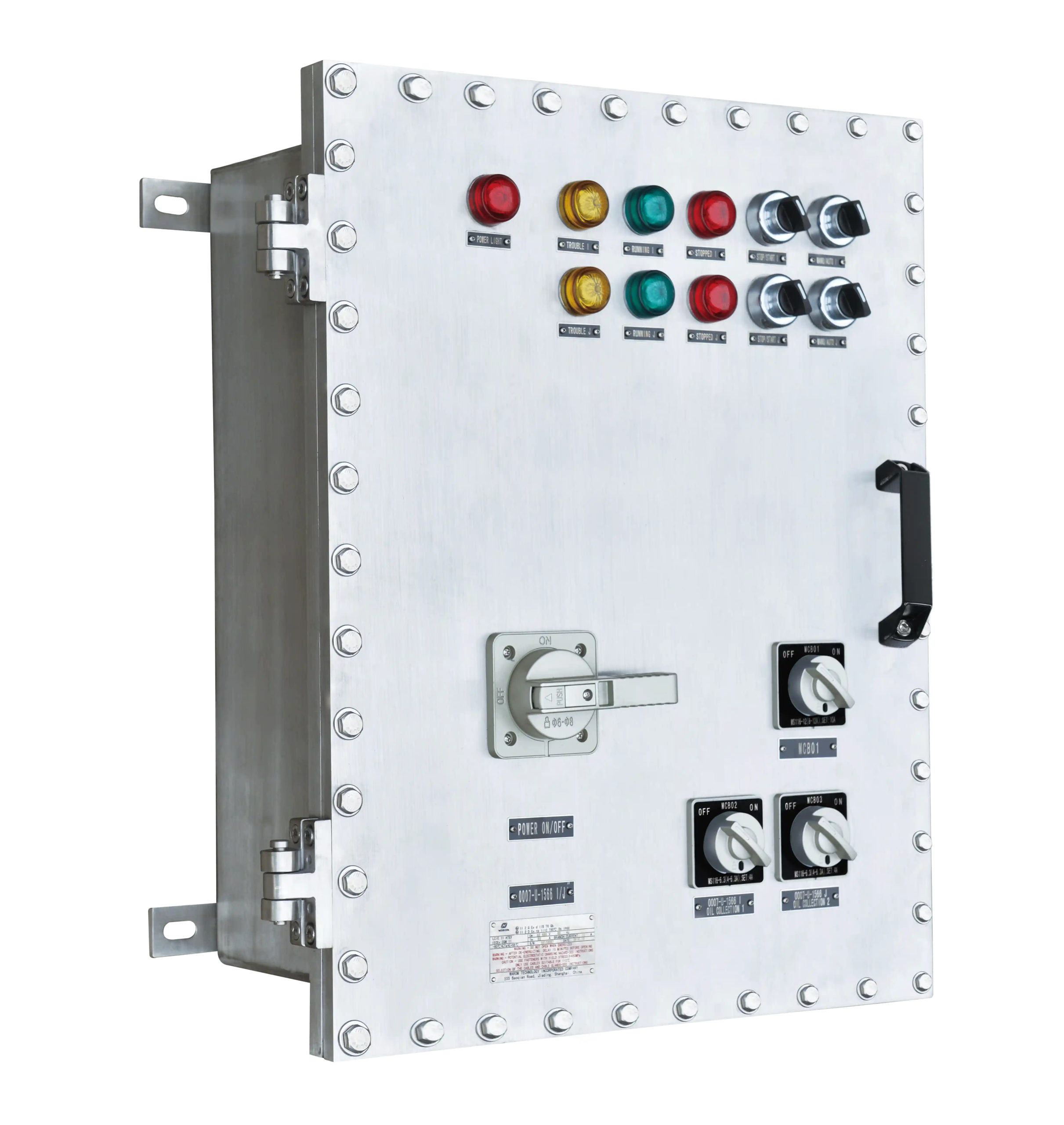
Electrical safety upgrades typically involve replacing standard components with certified explosion-proof alternatives. But the specific protection technique varies by application. Intrinsic safety circuits limit electrical and thermal energy below ignition thresholds, making them suitable for instrumentation and control systems. Flameproof enclosures take a different approach, containing any internal explosion and cooling gases before they can reach the external atmosphere. Pressurized systems maintain positive pressure inside enclosures to keep hazardous dust out entirely.
The choice between these techniques depends on the equipment’s function, its location within the hazardous area classification, and practical maintenance considerations. A motor starter in a grinding room faces different requirements than a control panel in an adjacent equipment room. We integrate multiple protection methods within a single facility, matching each technique to its appropriate application.
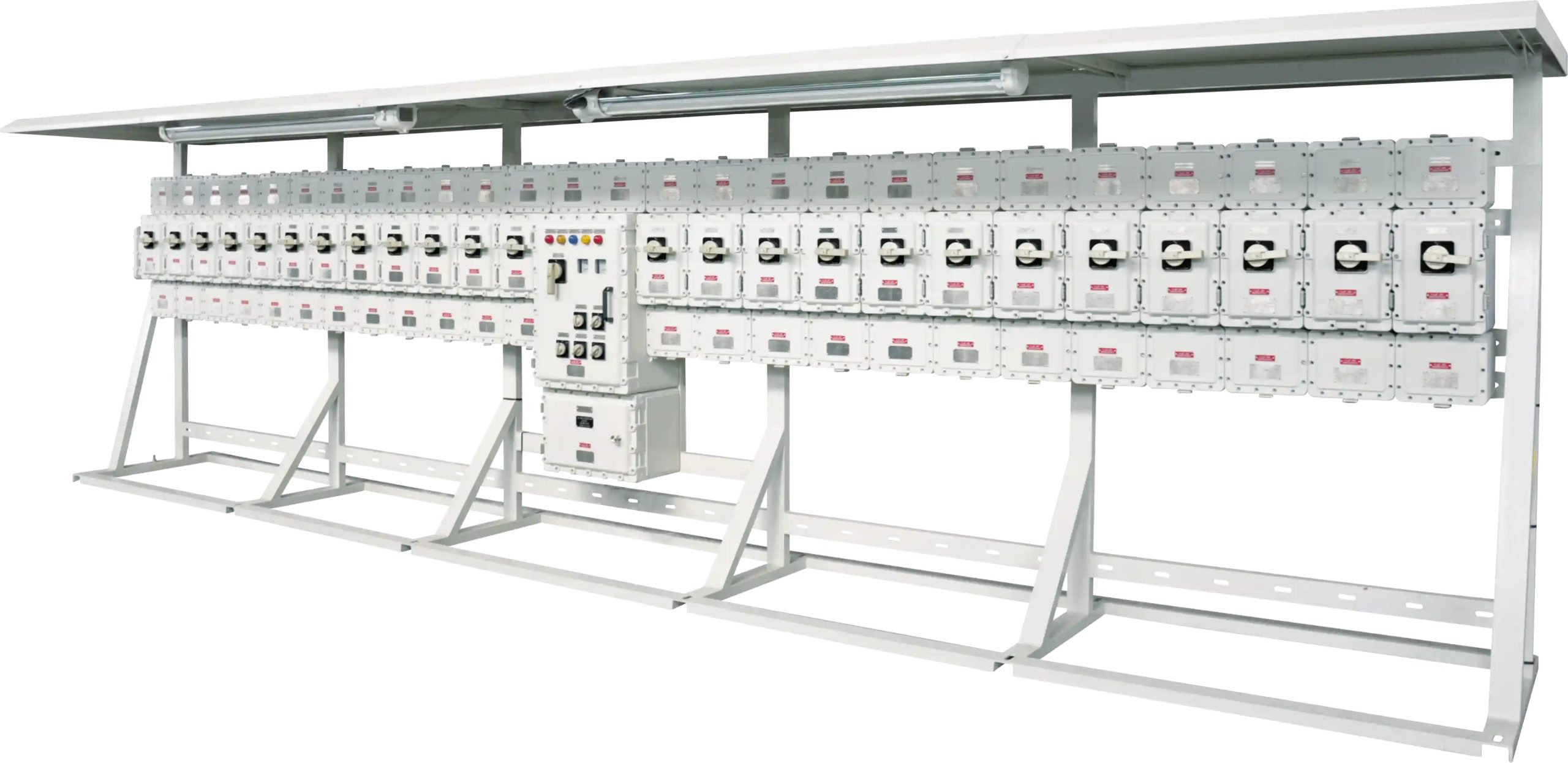
Specialized explosion-proof lighting and distribution equipment complete the electrical infrastructure. These aren’t simply ruggedized versions of standard products. They’re engineered from the ground up to prevent the specific ignition mechanisms that grain dust environments present.
What Makes Grain Facility Ignition Sources Particularly Dangerous
Flour mills and grain silos face ignition risks that differ from petrochemical or pharmaceutical facilities. Fine flour dust is highly explosible when suspended in air, requiring minimal energy to ignite. The particles are small enough to remain airborne for extended periods and fine enough to present large surface area relative to mass, which accelerates combustion.
Static electricity represents one of the most persistent hazards. Material flowing through pneumatic conveying systems, grain dropping into silos, and flour moving across surfaces all generate electrostatic charges. Without proper grounding and bonding, these charges accumulate until they discharge as sparks, potentially into a dust cloud.
Mechanical sparks from grinding equipment, conveying systems, and bucket elevators create another ignition pathway. Metal-to-metal contact, tramp metal entering the process stream, and bearing failures all produce sparks or hot surfaces capable of igniting dust.
Overheated bearings deserve particular attention. A bearing running hot in a dusty environment can reach ignition temperatures while appearing to function normally. By the time operators notice a problem, conditions for ignition may already exist.
Our diagnostic process examines each of these pathways in the context of specific facility operations. The goal is identifying not just obvious hazards but the overlooked conditions that accumulate risk over time.
Which Equipment Specifications Matter Most for Grain Facilities
Selecting explosion-proof equipment for grain facilities requires matching product specifications to actual operating conditions. The equipment we supply for these environments reflects the same engineering standards we applied to the Tilenga project, where reliability under extreme conditions was non-negotiable.
Explosion-proof luminaires like the BAT86 LED Floodlights provide safe illumination with IP66 ingress protection and WF2 corrosion resistance. The IP66 rating means dust-tight construction and protection against powerful water jets, both relevant in facilities that combine fine particles with periodic washdown requirements. LED modules offer extended service life, reducing the frequency of maintenance activities in hazardous locations.
Motor starters and control panels rated for hazardous areas ensure safe machinery operation. These units contain any internal faults while maintaining the control functions that keep processes running.
Safety switches and explosion-proof plugs prevent accidental disconnections that could create arcing. The BCZ8060 Series uses GRP (glass-reinforced polyester) construction with interlocking switches that prevent plug removal under load.
Junction boxes provide secure cable connections in locations where standard enclosures would present ignition risks. The BHD91 Series uses copper-free aluminum construction with IP66 sealing, meeting ATEX certification requirements for dust environments.
Static electricity discharge devices address one of the most common ignition sources in grain handling. These devices provide controlled paths for charge dissipation, preventing the uncontrolled discharges that ignite dust clouds.
| Equipment Type | Key Features | Application in Grain Facilities |
|---|---|---|
| BAT86 Floodlights | IP66, WF2, LED module | Illumination in silos, processing areas |
| BCZ8060 Plugs/Sockets | GRP material, interlocking switch | Power connections for portable equipment |
| BHD91 Junction Boxes | Copper-free aluminum, IP66 | Secure wiring connections |
| BXM(D)8050 Distribution Boxes | Ex d/Ex e compound design, IP66 | Power distribution to machinery |
How Flameproof and Intrinsically Safe Systems Actually Prevent Ignition
Explosion-proof electrical systems prevent ignition through engineered barriers between potential ignition sources and explosive atmospheres. The specific mechanism depends on the protection technique applied.
Flameproof enclosures, designated Ex d, are designed to contain any internal explosion. The enclosure’s construction includes flame paths, precisely machined gaps that cool hot gases as they escape. By the time combustion products reach the external atmosphere, their temperature has dropped below the ignition point of the surrounding dust or gas mixture. The explosion stays contained rather than propagating.
Intrinsic safety, designated Ex i, takes a fundamentally different approach. Rather than containing explosions, intrinsically safe circuits prevent them from occurring. Barrier devices limit the electrical energy available in hazardous area circuits to levels below what’s needed to ignite the specific atmosphere. Even under fault conditions, the circuit cannot produce sparks or temperatures capable of ignition.
Increased safety protection, designated Ex e, applies to equipment that doesn’t normally produce arcs or sparks. The technique involves enhanced construction standards that prevent excessive temperatures and reduce the probability of arc or spark generation. Terminal blocks, junction boxes, and certain lighting fixtures commonly use this approach.
Each technique has appropriate applications. Flameproof enclosures suit power equipment where significant electrical energy is present. Intrinsic safety works for instrumentation and control circuits. Increased safety applies to passive components. Effective system design matches techniques to applications rather than applying a single approach throughout.
What Certifications Actually Indicate About Equipment Safety
For agricultural processing facilities, ATEX directive compliance and IECEx scheme certification are the primary indicators that explosion-proof equipment meets recognized safety standards. These aren’t marketing claims. They represent third-party verification that equipment has been tested and approved for specific hazardous area classifications.
ATEX certification applies within the European Union and indicates compliance with the ATEX directive (2014/34/EU). Equipment carries markings indicating the specific protection techniques used, the equipment group, and the category (which relates to the level of protection provided).
IECEx certification provides international recognition through the International Electrotechnical Commission’s system for certification of equipment used in explosive atmospheres. This scheme facilitates acceptance of equipment across multiple countries without redundant testing.
In North America, UL certification for hazardous locations and CSA approval serve similar functions. Equipment intended for global deployment often carries multiple certifications to satisfy requirements in different jurisdictions.
These certifications matter because they provide independent verification of safety claims. A manufacturer stating that equipment is “suitable for hazardous areas” without recognized certification is making an unverified claim. Certified equipment has been tested against specific standards by accredited bodies.
For flour mills and grain silos, look for certifications that specifically cover dust atmospheres (Group III under IECEx, or dust-specific ATEX categories). Equipment certified only for gas atmospheres may not be appropriate for combustible dust environments.
What the Tilenga and General Paint Projects Revealed About Real-World Performance
Our explosion protection expertise shows most clearly in completed projects where equipment has operated under demanding conditions. The Tilenga project in Uganda and the General Paint installation represent different aspects of what effective protection requires.
Tilenga involved supplying explosion-proof lighting and electrical systems for wellpads, a central processing facility, and pipelines within Murchison Falls National Park. The project achieved zero safety incidents across the installation, demonstrating that properly specified equipment performs reliably even in remote locations with limited maintenance access. The energy efficiency and low maintenance characteristics we designed for proved out in actual operation.
General Paint presented a different challenge: an existing chemical plant with flammable gas and dust risks that had accumulated over years of operation. Our on-site diagnosis identified electrical safety hazards that plant personnel had normalized. The solution included gas detectors, explosion-proof plugs, junction and distribution boxes, static electricity discharge devices, and anti-corrosion equipment. The installation significantly improved safety conditions and addressed fire and explosion risks that had been present but unrecognized.
The Fushilai Pharmaceutical CM/CDMO construction project demonstrated our capabilities in new construction, supplying explosion-proof distribution boxes for workshops, warehouses, and tank farms. The project established a replicable model for complex industrial installations where multiple hazardous area classifications exist within a single facility.
Each project reinforced the same lesson: effective explosion protection requires matching equipment to actual conditions, not simply installing certified products and assuming safety follows automatically.
How Compliance and Maintenance Sustain Protection Over Time
Installing certified equipment is necessary but not sufficient for long-term safety. Compliance with ATEX, IECEx, NFPA, and OSHA requirements establishes a baseline. Maintaining that baseline requires ongoing attention to equipment condition and operational changes.
Preventative maintenance for explosion-proof equipment follows different protocols than standard electrical maintenance. Flameproof enclosures require inspection of flame paths for damage or corrosion that could compromise their ability to contain explosions. Intrinsic safety barriers need verification that they haven’t been bypassed or modified. Seals and gaskets that maintain ingress protection ratings degrade over time and require replacement.
Equipment lifecycle management in hazardous areas accounts for the fact that explosion-proof equipment eventually reaches end of service life. Replacement planning prevents situations where failed equipment gets temporarily replaced with non-certified alternatives, creating the very hazards the original installation was designed to prevent.
Regular safety audits verify that operational changes haven’t introduced new hazards or altered hazardous area classifications. A facility that adds a new conveying system or changes grain types may need to reassess its explosion protection approach.
If your facility’s last comprehensive hazard assessment predates significant operational changes, it may be worth scheduling a review before those changes create unrecognized risks. Our technical team can discuss what a reassessment would involve for your specific situation.
Frequently Asked Questions About Explosion Protection
How often should explosion-proof equipment be inspected in flour mills?
Inspection frequency depends on hazardous area classification and operational intensity, but annual or bi-annual inspections represent typical practice for most flour mill installations. These inspections verify enclosure integrity, seal condition, and proper function of safety devices. High-wear locations or equipment subject to vibration, moisture, or corrosive conditions may require more frequent attention. The inspection protocol should include both visual examination and functional testing where applicable.
Can existing electrical systems be upgraded to explosion-proof standards?
Existing systems can often be upgraded through strategic component replacement rather than complete overhaul. The process begins with hazardous area classification to identify which locations require explosion-proof equipment. Components in those areas get replaced with certified alternatives: lighting fixtures, junction boxes, control panels, and power distribution equipment. Wiring may need replacement if existing cable types don’t meet requirements. The upgrade scope depends on current installation condition and the specific hazardous area classifications involved.
What is the lifespan of typical explosion-proof lighting in grain silos?
LED explosion-proof lighting commonly exceeds 50,000 hours of operation, which translates to many years of service in typical grain facility applications. Products like the BAT86 Explosion-proof LED Floodlights use sealed construction with high-quality materials selected for moisture, vibration, and corrosion resistance. Actual lifespan depends on operating conditions, particularly ambient temperature and exposure to corrosive atmospheres. The extended service life reduces maintenance frequency in hazardous locations, which itself improves safety by limiting the need for work in classified areas. To discuss specific lighting requirements for your facility, contact our technical team for recommendations matched to your operating conditions.
If you’re interested, you may want to read the following articles:
Warom at 40th ADIPEC 2024
WAROM at SOGCE 2025
APPEA 2024
Class 1 Division 1 vs Division 2 Lighting: 2025 Safety Guide
Day 4 of 136th Canton Fair 2024
With over a decade of experience, he is a seasoned Explosion-Proof Electrical Engineer specializing in the design and manufacture of safety and explosion-proof products. He possesses in-depth expertise across key areas including explosion-proof systems, nuclear power lighting, marine safety, fire protection, and intelligent control systems. At Warom Technology Incorporated Company, he holds dual leadership roles as Deputy Chief Engineer for International Business and Head of the International R&D Department, where he oversees R&D initiatives and ensures the precise delivery of design documentation for international projects. Committed to advancing global industrial safety, he focuses on translating complex technologies into practical solutions, helping clients implement safer, smarter, and more reliable control systems worldwide.

Qi Lingyi