
Drillships and jack-up rigs operate where flammable hydrocarbons, corrosive saltwater, and unpredictable weather converge. A single ignition source in these environments can trigger catastrophic failure. Explosion-proof marine products exist to eliminate that risk, protecting both crews and continuous drilling operations. The equipment discussed here reflects what we have supplied to offshore projects, including the Tilenga development in Uganda, where explosion-proof lighting and electrical systems contributed to zero safety incidents across the installation.
What Makes Offshore Drilling Environments So Hazardous
Offshore platforms handle volatile hydrocarbons under pressure while exposed to salt spray, humidity extremes, and mechanical vibration from waves and equipment. Flammable gas accumulation in enclosed spaces creates Zone 1 conditions, where explosive atmospheres are likely during normal operation. Even Zone 2 areas, where such atmospheres are unlikely but possible, demand equipment that cannot become an ignition source.
The combination of corrosive marine air and continuous equipment vibration accelerates wear on electrical connections and enclosures. Standard industrial equipment fails prematurely under these conditions. Drilling rig safety equipment must withstand both the chemical environment and the mechanical stresses of offshore operation while maintaining explosion protection throughout its service life.
How Explosion Protection Technologies Actually Work
Different protection methods address different hazard scenarios. Flameproof enclosures, designated Ex d, contain any internal explosion and cool escaping gases below ignition temperature. This approach suits motors and switchgear where internal arcing might occur. Intrinsically safe circuits, designated Ex i, limit available electrical and thermal energy below the ignition threshold of surrounding gases, making them standard for sensors and instrumentation.
Increased safety construction, Ex e, eliminates potential spark sources through enhanced insulation and terminal spacing. Pressurized enclosures, Ex p, maintain positive internal pressure with clean air or inert gas, preventing hazardous atmosphere ingress. Each method applies to specific equipment types and zone classifications.
| Protection Method | Principle | Typical Application |
|---|---|---|
| Flameproof (Ex d) | Contains explosion | Motors, switchgear |
| Intrinsically Safe (Ex i) | Limits energy | Sensors, instrumentation |
| Increased Safety (Ex e) | Prevents sparks | Terminal boxes |
| Pressurization (Ex p) | Maintains overpressure | Control rooms |
Certification bodies verify these protection methods through standardized testing. ATEX certification covers European requirements, while IECEx provides international recognition. Marine class societies including DNV and ABS add vessel-specific requirements for explosion-proof electrical enclosures and other equipment installed on drillships and jack-up rigs.
Why Drillships Present Unique Electrical Safety Challenges
Drillships combine deep-water drilling capability with vessel mobility, creating electrical safety challenges that fixed platforms do not face. Dynamic positioning systems maintain station over the wellhead using continuous thruster adjustments, generating electrical loads that vary constantly. The drilling floor handles hydrocarbons while the vessel moves in response to waves and currents.
This motion affects cable routing, connector integrity, and equipment mounting. Electrical systems must accommodate movement without loosening connections or damaging insulation. Hazardous area classifications extend throughout the drilling package and moonpool area, requiring explosion-proof construction for all electrical equipment in these zones. Power distribution, lighting, and control systems must all meet the same protection standards while handling the mechanical stresses of a moving vessel.
Selecting Lighting and Power Equipment for Drillship Applications
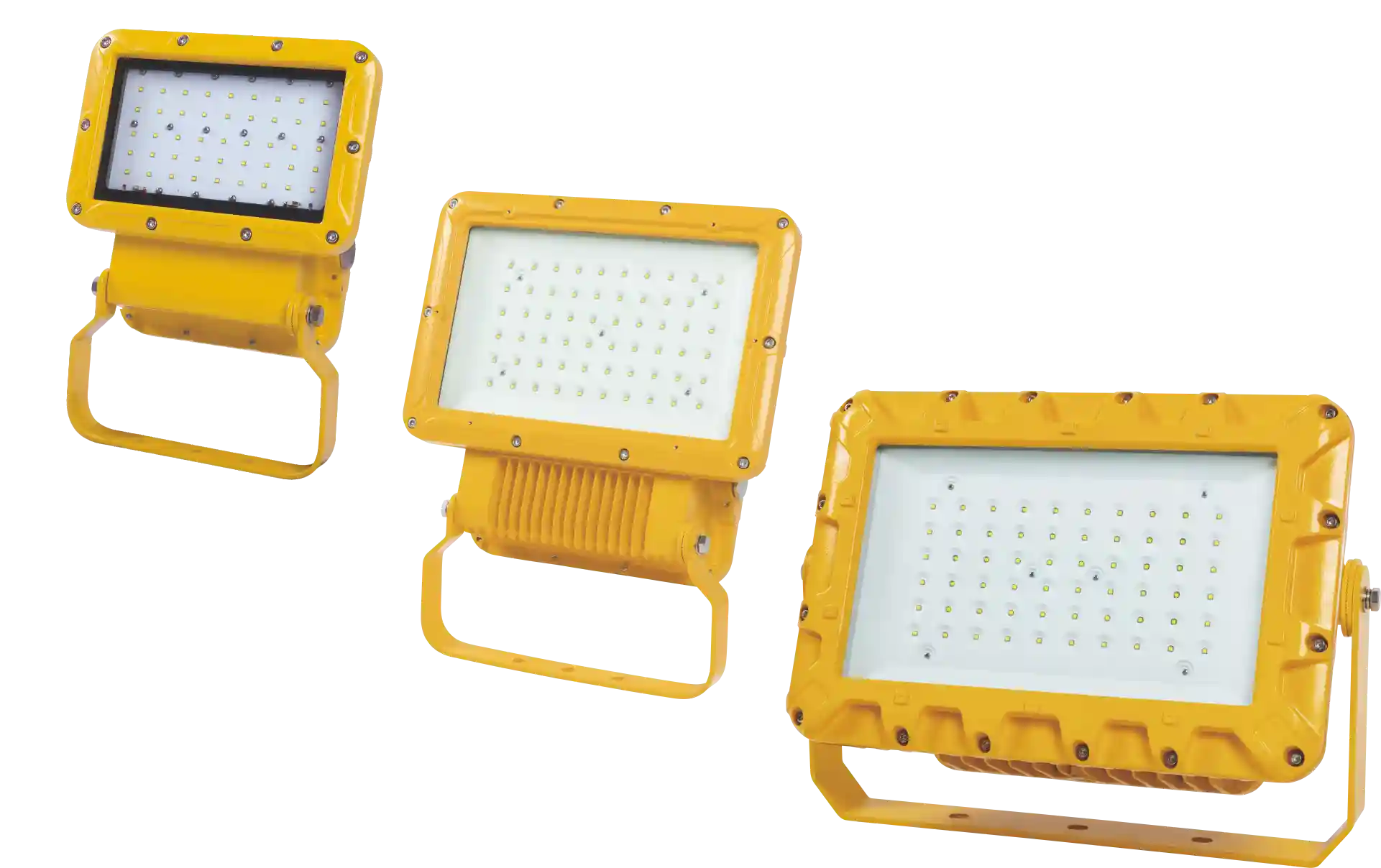
Drillship lighting operates in zones where flammable gas presence is possible or likely. LED floodlights designed for these applications use flameproof enclosures with corrosion-resistant coatings. Our BAT86 Explosion-proof LED Floodlights feature steel lamp bodies with powder coating that resists salt spray degradation. The HRNT95 Series provides both spotlight and floodlight configurations with wide voltage input tolerance, accommodating the power quality variations common on vessel electrical systems.
Marine power distribution systems route electrical supply through explosion-proof switchgear and distribution panels. These systems must handle the starting currents of large drilling motors while maintaining protection integrity. Control panels for hazardous areas incorporate intrinsically safe circuits for instrumentation signals and flameproof construction for power switching. If your drillship electrical upgrade involves replacing aging distribution equipment, discussing the specific zone classifications and load requirements with the supplier before specifying products avoids costly rework.
Addressing Jack-Up Rig Electrical System Requirements
Jack-up rigs present different challenges than drillships. The leg-jacking system that raises and lowers the hull creates significant electrical loads and mechanical vibration. Deck height changes as legs extend or retract, affecting cable runs and equipment access. The cantilever drilling package extends over the wellhead, placing electrical equipment in areas exposed to drilling fluids and potential hydrocarbon releases.
Explosion-proof plugs and sockets handle the frequent connection and disconnection of portable equipment on these rigs. The BCZ8060 Series uses glass fiber-reinforced polyester resin construction, providing corrosion resistance without the weight of metal enclosures. The interlocking switch mechanism prevents disconnection under load, eliminating arc flash hazards at the connection point.
Gas detection systems monitor for hydrocarbon accumulation in enclosed spaces and around the drilling floor. These systems use intrinsically safe sensors connected to control panels that can initiate ventilation increases or equipment shutdown when gas concentrations approach dangerous levels. Junction boxes and distribution equipment throughout the rig must maintain explosion protection while providing accessible connection points for maintenance.
What Determines Equipment Durability in Marine Service
Material selection drives long-term performance in offshore environments. Copper-free aluminum alloys resist the galvanic corrosion that occurs when dissimilar metals contact saltwater. Glass fiber-reinforced polyester provides strength comparable to metal with inherent corrosion resistance. Surface treatments including powder coating, anodizing, and specialized marine paints add additional protection layers.
The BHD91 Series Explosion-proof Junction Boxes use copper-free aluminum alloy construction with IP66 ingress protection. This rating indicates complete dust exclusion and resistance to powerful water jets, addressing both the particulate contamination from drilling operations and the wash-down procedures used for deck cleaning.
Seal integrity determines whether enclosures maintain their protection ratings over time. Gaskets and cable glands must resist UV degradation, ozone attack, and the compression set that occurs under continuous clamping pressure. Maintenance schedules should include seal inspection and replacement before degradation compromises protection.
Planning for Maintenance and Expected Service Life
Explosion-proof marine equipment typically provides 10 to 20 years of service depending on specific conditions and maintenance practices. Annual inspections should verify enclosure integrity, gasket condition, and electrical connection tightness. Corrosion on external surfaces requires attention before it penetrates to structural material.
Simplified maintenance access reduces the time equipment spends open to the environment during service. Hinged covers, captive fasteners, and modular internal components allow faster inspection and repair. Spare parts availability affects maintenance planning, particularly for older equipment where original components may no longer be manufactured.
Documentation of maintenance activities supports regulatory compliance and helps identify equipment approaching end of service life. Trending inspection results over time reveals degradation patterns that inform replacement scheduling before failures occur.
How Regulatory Requirements Shape Equipment Selection
International Maritime Organization conventions establish baseline safety requirements for vessels, including drillships. Flag state administrations enforce these requirements and may add national standards. Class societies including DNV and ABS survey vessels during construction and periodically throughout operation, verifying that installed equipment meets applicable standards.
ATEX certification satisfies European Union requirements for equipment used in explosive atmospheres. IECEx certification provides mutual recognition across participating countries, simplifying equipment approval for rigs operating in multiple jurisdictions. Class society type approval confirms that specific equipment models meet marine installation requirements.
These overlapping requirements mean that equipment selection must consider all applicable standards. A product certified to ATEX standards may still require class society approval for installation on a classed vessel. Working with suppliers who understand these regulatory frameworks avoids procurement delays and installation complications.
What WAROM Brings to Offshore Project Execution
WAROM TECHNOLOGY INCORPORATED COMPANY has supplied explosion-proof equipment to offshore and industrial projects for over 35 years. The Tilenga project in Uganda demonstrated our capability to deliver complete explosion-proof lighting and electrical systems for a major development with zero safety incidents during installation. The Fushilai Pharmaceutical CM/CDMO construction project showed our ability to coordinate with multiple contractors while supplying explosion-proof distribution equipment to demanding schedules.
Our approach begins with understanding the specific hazardous area classifications and operational requirements of each installation. This diagnostic phase identifies the protection methods, certifications, and material specifications appropriate for the application. Customized solutions address the particular challenges of each drillship or jack-up rig rather than forcing standard products into non-standard situations.
To discuss explosion-proof equipment requirements for your offshore project, contact WAROM at gm*@***om.com or +86 21 39977076.
Frequently Asked Questions About Offshore Explosion Protection
What distinguishes offshore explosion-proof equipment from onshore industrial versions?
Offshore equipment faces saltwater corrosion, continuous vibration from waves and machinery, and tighter space constraints than most onshore installations. Materials must resist marine atmosphere attack, and designs must accommodate the movement inherent to floating vessels. Marine class society approvals add requirements beyond standard ATEX or IECEx certification, covering installation methods and integration with vessel systems.
How does WAROM verify that products will perform in extreme marine conditions?
Material selection starts with alloys and polymers proven in marine service. Testing protocols simulate salt spray exposure, temperature cycling, and mechanical vibration at levels exceeding typical offshore conditions. Certification processes verify that protection methods function correctly after environmental exposure. Field performance data from installed equipment informs ongoing design improvements.
Can older drilling rigs be upgraded with current explosion-proof technology?
Upgrading existing rigs is common practice as equipment ages or regulations change. The process begins with assessing current installations and identifying equipment that no longer meets requirements or has reached end of service life. Replacement products must fit existing mounting locations and integrate with remaining systems. WAROM provides assessment services and customized solutions that minimize installation time and operational disruption while bringing older rigs to current safety standards.
If you’re interested, you may want to read the following articles:
OSHA Guide: Essential Construction Site Lighting Compliance
Special Report Of Warom Explosion-Proof 2025 Supplier Conference
Guide to Hazardous Location Lighting: Standards and Selection
With over a decade of experience, he is a seasoned Explosion-Proof Electrical Engineer specializing in the design and manufacture of safety and explosion-proof products. He possesses in-depth expertise across key areas including explosion-proof systems, nuclear power lighting, marine safety, fire protection, and intelligent control systems. At Warom Technology Incorporated Company, he holds dual leadership roles as Deputy Chief Engineer for International Business and Head of the International R&D Department, where he oversees R&D initiatives and ensures the precise delivery of design documentation for international projects. Committed to advancing global industrial safety, he focuses on translating complex technologies into practical solutions, helping clients implement safer, smarter, and more reliable control systems worldwide.
Qi Lingyi