

Offshore wind installation vessels work in conditions where a single electrical fault can trigger catastrophic outcomes. Flammable fuels, lubricants, and gases are present throughout the vessel, and combustible dusts accumulate in enclosed machinery spaces. Explosion-proof marine products—lighting, junction boxes, distribution panels, and terminal enclosures—certified to ATEX and IECEx standards form the primary barrier against ignition. Selecting equipment that meets both regulatory requirements and the physical demands of offshore operations determines whether a vessel completes its service life without incident.
Why Explosion Protection Matters on Offshore Wind Installation Vessels
Electrical failures in marine hazardous areas carry consequences that extend beyond equipment damage. A spark in a zone containing fuel vapors or lubricant mists can escalate to fire or explosion within seconds. The Tilenga project in Uganda, which involved extensive wellpads, a central processing facility, and pipeline infrastructure, demonstrated what rigorous product selection achieves: zero safety incidents across the entire installation phase. That outcome resulted from matching explosion-proof lighting and electrical systems to the specific hazard classifications of each zone.
Combustible dusts present a parallel risk that operators sometimes underestimate. Enclosed spaces on installation vessels accumulate particulates from grinding, cutting, and material handling. These dusts, when suspended at the right concentration, become explosive. Effective risk mitigation begins with classifying every hazardous zone on the vessel, then deploying equipment rated for the specific gas groups and dust categories present. Vessel safety protocols must account for both permanent hazards and transient conditions created during installation operations.
Compliance and Certification for Marine Explosion-Proof Equipment
International certifications establish the baseline for equipment deployed in explosive atmospheres. ATEX, the European directive governing equipment for potentially explosive environments, and IECEx, the international certification scheme facilitating global equipment trade, represent the two primary frameworks. Equipment carrying both certifications can be deployed across European and international projects without additional testing.
Marine classification societies add a verification layer specific to maritime applications. DNV, ABS, and Lloyd’s Register review product designs, manufacturing processes, and quality management systems before granting type approvals. These approvals confirm that explosion-proof marine products meet the structural and performance requirements unique to shipboard installation.
The Fushilai Pharmaceutical project illustrated how certification translates to execution. Technical support and professional services ensured that every explosion-proof component met regulatory requirements before delivery, eliminating delays during installation and commissioning.
Specific Standards Governing Offshore Wind Installation Vessels
The EN 60079 series defines general requirements, equipment protection levels, and specific protection types for electrical apparatus in explosive atmospheres. These standards specify enclosure construction, internal clearances, and temperature class ratings that prevent equipment surfaces from reaching ignition temperatures.
IMO codes and maritime safety conventions, particularly SOLAS, impose additional electrical safety requirements for vessels. These regulations address equipment design, installation methods, and maintenance procedures across different hazardous zone classifications. Applying these standards correctly requires understanding how vessel operations create and modify hazardous areas during different phases of wind turbine installation.
Durability Requirements for Harsh Marine Environments
Saltwater corrosion attacks unprotected metals within weeks of offshore deployment. High humidity accelerates degradation of seals and electrical insulation. Constant vibration from vessel propulsion and dynamic positioning systems fatigues mechanical connections. Temperature fluctuations between tropical operations and North Sea conditions stress materials through repeated thermal cycling.
The BAT86 Explosion-proof LED Floodlights address these conditions with a high-quality steel lamp body and powder-coated surface treatment. This construction maintains reliable operation in environments where moisture, vibration, and corrosive atmospheres are continuous rather than occasional. The BAY51-Q Explosion-proof Corrosion-proof Plastic Light Fitting achieves IP66 ingress protection and WF2 corrosion resistance, preventing saltwater and airborne contaminants from reaching internal components.
| Feature | BAT86 Explosion-proof LED Floodlights | BAY51-Q Explosion-proof Corrosion-proof Plastic Light Fitting |
|---|---|---|
| Product Type | LED Floodlight | Fluorescent Lamp Fitting |
| Standards | IEC 60079, EN 60079, CCS | IEC 60079, EN 60079, GB/T 3836, CCS |
| Ambient Temp. | -60℃~+40℃/60℃ | -40℃~+55℃ |
| Light Source | LED module | T8 Fluorescent tube |
| Protection | IP66, WF2 | IP66, WF2 |
| Cable Entries | 2×M25×1.5 plug, 2×M25×1.5 gland | 4×Φ26 hole, 4×M25×1.5 plug, 2×M25×1.5 gland |
Material selection determines service life more than any other factor. The Tilenga project confirmed that explosion-proof equipment designed for extreme conditions maintains performance throughout extended deployment periods, validating the investment in marine-grade construction.
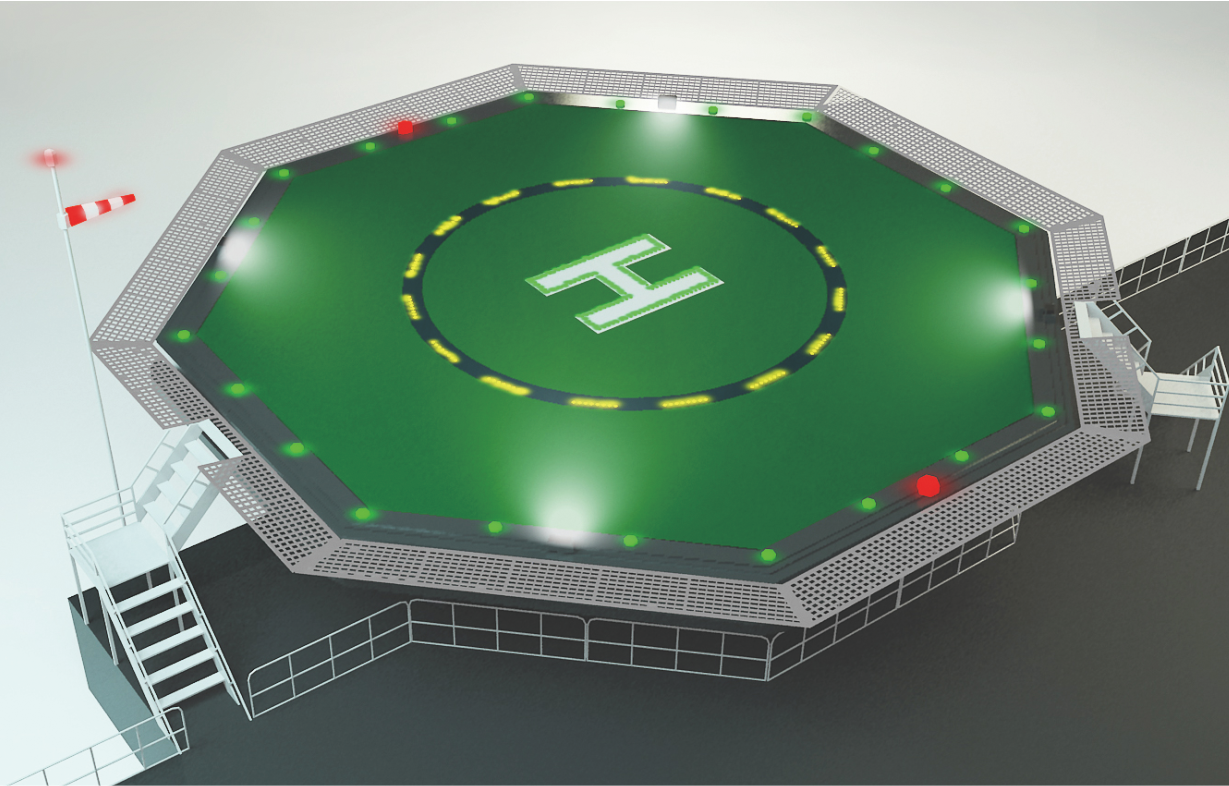
Integrated Explosion-Proof Systems for Vessel Electrical Infrastructure
Offshore wind installation vessels require electrical systems where lighting, power distribution, and control mechanisms operate as a unified architecture. Treating these as separate procurement categories creates interface problems and increases the risk of incompatible protection methods.
The BXM(D)8050 Explosion-proof Illumination Distribution Boxes combine flameproof (Ex d) and increased safety (Ex e) chambers within a single enclosure. This dual-protection approach provides flexibility for different circuit types while maintaining consistent safety levels. Modular configurations allow scaling to match vessel electrical loads without redesigning the protection scheme.
The General Paint chemical plant project demonstrated integrated system benefits. That facility handled flammable gases and combustible dusts, requiring gas detectors, explosion-proof plugs, junction boxes from the BHD91 Series, and distribution boxes working together. The comprehensive approach eliminated gaps between protection zones and simplified commissioning.
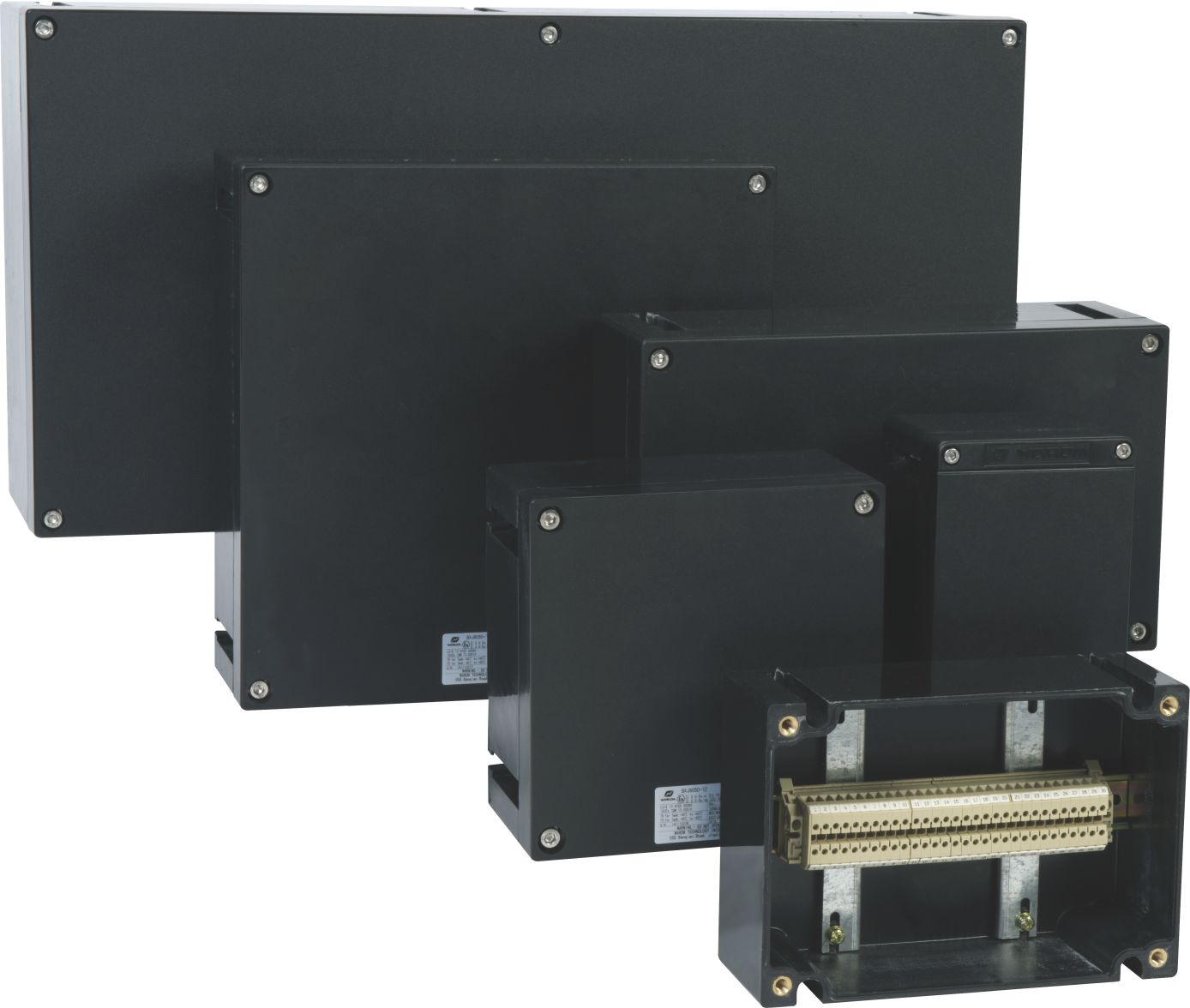
Terminal boxes like the BXJ8050 Series centralize cabling and connection management. Consolidating field wiring at defined junction points reduces installation labor and simplifies future maintenance access.
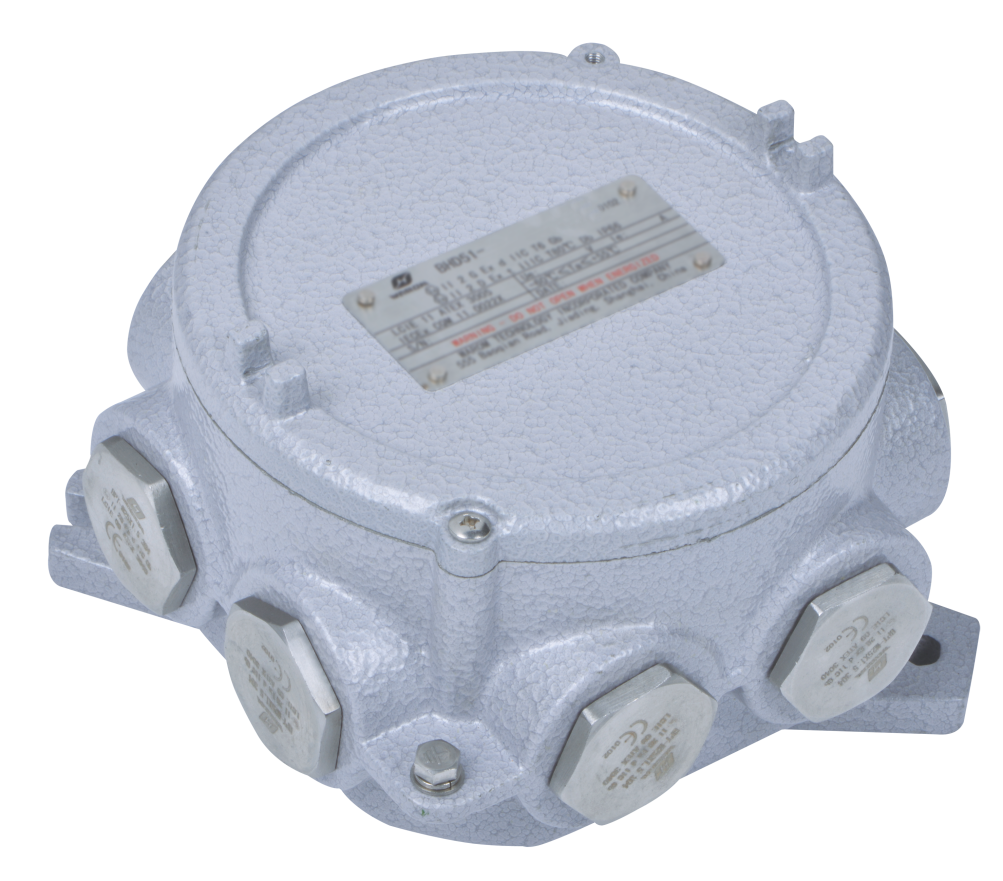
Maintaining Electrical System Reliability in Corrosive Marine Conditions
Long-term reliability in marine environments depends on material specifications that exceed minimum certification requirements. Marine-grade aluminum and stainless steel enclosures, such as the high-strength stainless steel construction used in the BXJ-S Series Terminal Boxes, resist pitting and crevice corrosion that attacks standard materials.
Advanced anti-corrosion coatings provide secondary protection when the primary enclosure material contacts saltwater spray or condensation. Sealed enclosures with IP66 ratings prevent ingress of contaminants that would otherwise degrade internal connections over time.
If your vessel electrical systems require extended service intervals between maintenance opportunities, specifying enclosure materials and sealing methods during the design phase prevents premature failures that disrupt operations.
Preventative maintenance protocols remain necessary even with robust equipment. Regular inspections identify seal degradation, fastener loosening from vibration, and coating damage before these conditions compromise protection integrity.
Project Management and Technical Partnership
Successful explosion-proof system deployment begins before equipment arrives on site. Early coordination with project promoters, design institutes, and vessel owners aligns product specifications with installation sequences and operational requirements.
The Fushilai Pharmaceutical CM/CDMO construction project required phased delivery of explosion-proof distribution boxes for workshops, warehouses, and tank farms. Aligning delivery schedules with construction progress prevented storage damage and ensured equipment was available when installation crews needed it. Professional services and technical support during installation resolved field questions without delaying subsequent trades.
Customized solutions address vessel-specific requirements that standard products cannot meet. Engineering services include detailed risk assessment, hazardous area classification review, and design integration to ensure explosion-proof equipment fits within allocated spaces and interfaces correctly with vessel electrical systems.
After-sales support maintains operational integrity throughout the equipment service life. Access to technical documentation, spare parts, and field service personnel ensures that maintenance crews can address issues without extended vessel downtime.
Energy Efficiency and Reduced Maintenance for Sustainable Operations
High-quality explosion-proof products reduce total cost of ownership through lower energy consumption and extended replacement intervals. The Tilenga project demonstrated that explosion-proof lighting and electrical systems designed for efficiency maintain performance while minimizing power draw from vessel generators.
The HRNT95 Series Explosion Proof LED Light Fittings achieve high lighting efficiency with extended service life. LED technology reduces power consumption compared to traditional light sources, and solid-state construction eliminates filament and tube failures that require maintenance interventions.
Reduced maintenance frequency delivers benefits beyond direct labor savings. Fewer interventions mean fewer opportunities for installation errors, reduced exposure of maintenance personnel to hazardous areas, and less disruption to vessel operations. Long-life components also decrease waste generation and the environmental impact associated with manufacturing and transporting replacement parts.
Contact Information for Project Consultation
To discuss explosion-proof marine product requirements for offshore wind installation vessels, contact the engineering team at +86 21 39977076 or +86 21 39972657. Email inquiries can be directed to gm*@***om.com for technical specifications and project-specific quotations.
Frequently Asked Questions About Marine Explosion Protection
What operational advantages do integrated explosion-proof systems provide for offshore wind vessels?
Integrated explosion-proof systems reduce installation complexity by ensuring all components share compatible protection methods and interface specifications. This compatibility eliminates field modifications that can compromise certification validity. Unified systems also simplify spare parts inventory and maintenance training, since crews work with consistent equipment across the vessel. The result is fewer unplanned maintenance events, optimized power distribution, and continuous operations during installation campaigns.
How does equipment testing verify performance in offshore wind conditions?
Products undergo testing for corrosion resistance, vibration endurance, and temperature cycling before receiving ATEX and IECEx certification. These tests simulate years of exposure to marine conditions in compressed timeframes. Marine-grade materials and advanced sealing technologies, validated through accelerated aging protocols, confirm that equipment maintains protection integrity throughout its rated service life. Features like reinforced enclosures and specialized coatings resist the specific degradation mechanisms present in offshore environments.
Are customized explosion-proof solutions available for non-standard vessel configurations?
Tailored explosion-proof solutions address vessel designs where standard products cannot meet space constraints or interface requirements. Collaboration with naval architects and project engineers during the design phase ensures that custom systems fit specific layouts and operational needs. Engineering teams adapt standard product platforms and develop purpose-built solutions when existing designs cannot satisfy project specifications. For vessels with unique hazardous area configurations, contact the technical team to discuss requirements before finalizing electrical system designs.
If you’re interested, you may want to read the following articles:
OGI 2023, Indonesia
PETROLEUM ENERGY SHOW 2024
Warom Invites You to 2025 China International Maritime Technology & Academic Conference and Exhibition
WAROM AT OIL&GAS INDONESIA 2025
With over a decade of experience, he is a seasoned Explosion-Proof Electrical Engineer specializing in the design and manufacture of safety and explosion-proof products. He possesses in-depth expertise across key areas including explosion-proof systems, nuclear power lighting, marine safety, fire protection, and intelligent control systems. At Warom Technology Incorporated Company, he holds dual leadership roles as Deputy Chief Engineer for International Business and Head of the International R&D Department, where he oversees R&D initiatives and ensures the precise delivery of design documentation for international projects. Committed to advancing global industrial safety, he focuses on translating complex technologies into practical solutions, helping clients implement safer, smarter, and more reliable control systems worldwide.

Qi Lingyi