
BNG Series Stainless Steel...
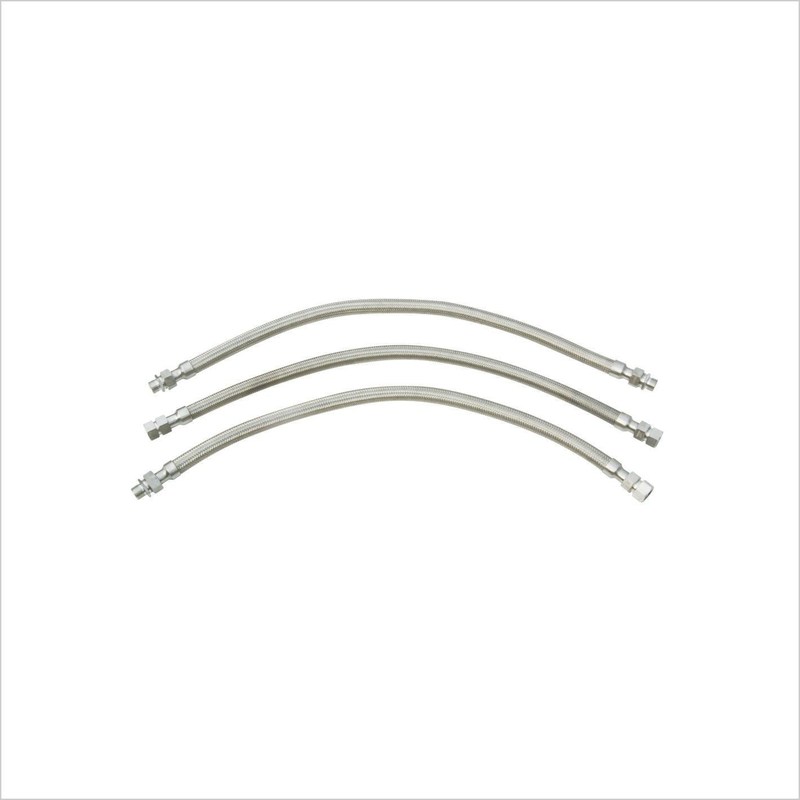
- ◆ The flexible tube at the center of this explosion-proof flexible conduit is made of stainless steel mesh, with stainless steel fittings at both ends.
- ◆ Featured with an explosion-proof structure of flameproof type, it is suitable for environments with high protection requirements, high temperature, and high humidity.
- ◆ The flameproof flexible conduits protect the cable from damage, withstands strong corrosion, and has an IP66 protection rating.
- ◆ Widely used for flexible connection between explosion-proof boxes or explosion-proof light fittings and pipes
TECHNICAL DATA
Explosion Protection Type
- Standards: CENELEC, IEC, NEC
- Hazardous Area Zones: * Gas: Zone 1 and Zone 2
- Dust: Zone 20, Zone 21, and Zone 22
- Classified Locations: Class I, Zone 1 and Zone 2; Class I, Division 1, Groups A, B, C, D
Product Parameters
- Explosion Protection Ratings: * IECEx: Ex d IIC Gb, Ex tD A21 IP66
- ATEX: II 2 G Ex d IIC Gb, II 2 D Ex tD A21 IP66
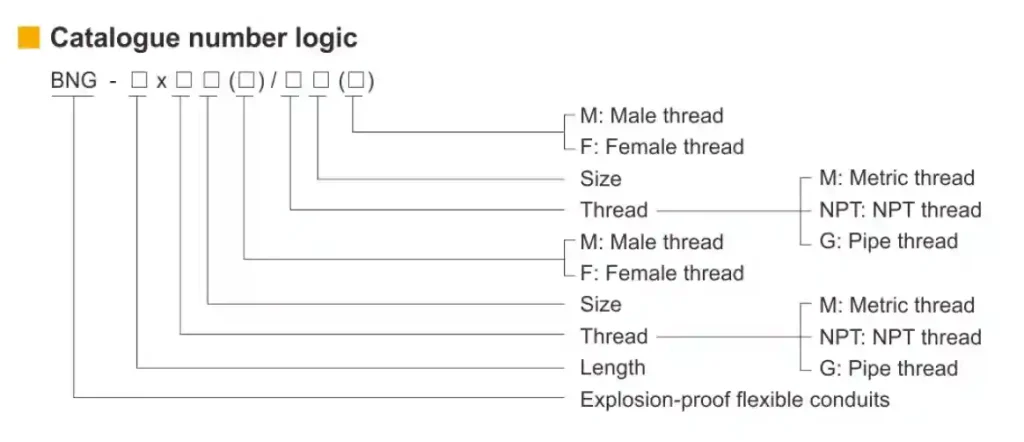
- Product Type: BNG
- Material: Stainless steel body with stainless steel connectors
- Degree of Protection: IP66
- Ambient Temperature: -60°C to +55°C
- Connection Thread: Metric thread (Standard); G thread or NPT thread (Optional)
Classification & Origin
- HS Code: 400911 (Flexible Conduit)
- Country of Origin: China
Industry & Application
- Core Function: Engineered for hazardous locations to ensure secure and adaptable connections, absorbing movement and vibration.
- Applicable Industries: Petroleum, chemical, pharmaceutical, natural gas, coal mining, metallurgy, military, nuclear power, shipbuilding, ports, and railways.
- Certifications: Holds certificates from authorized bodies including ATEX, IECEx, and EAC.
FAQ (Frequently Asked Questions)
- Q1: What is the main function of the Explosion-Proof Flexible Conduit?
- A1: It acts as an essential flexible link that ensures physical connectivity and safety integrity by absorbing movement while keeping explosion protection guaranteed.
- Q2: How do I choose the right Flameproof Flexible Conduit?
- A2: Certify for the Hazard (Zone, Gas Group, Temperature Class) and Fit the Purpose (optimal size, length, material, and IP rating).
- Q3: What is the importance of correct installation for flexible conduits?
- A3: Always respect its flexibility—never force it. Install loosely to allow for natural flexing and torque fittings correctly to preserve safety ratings.
- Q4: Can the flexible connection be used in non-hazardous areas?
- A4: Yes, it offers extreme durability against impact, corrosion, and weather, though it may not always be cost-effective for simple environments.