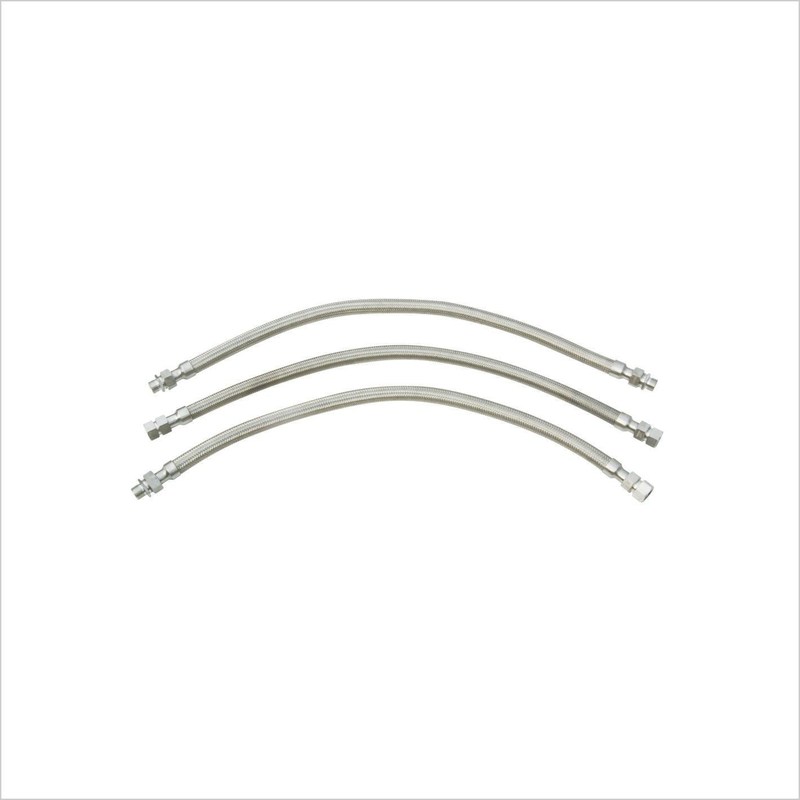
BNG Series Stainless Steel...
- ◆ The flexible tube at the center of this explosion-proof flexible conduit is made of stainless steel mesh, with stainless steel fittings at both ends.
- ◆ Featured with an explosion-proof structure of flameproof type, it is suitable for environments with high protection requirements, high temperature, and high humidity.
- ◆ The flameproof flexible conduits protect the cable from damage, withstands strong corrosion, and has an IP66 protection rating.
- ◆ Widely used for flexible connection between explosion-proof boxes or explosion-proof light fittings and pipes
TECHNICAL DATA
Explosion Protection Type
Standards: CENELEC, IEC, NEC
Zones:
Zone 1 and Zone 2
Zone 21 and Zone 22
Class I, Zone 1 and Zone 2
Class I, Division 1, Groups A , B, C, D
Product Parameters
Explosion Protection Ratings:
IECEx(Gas and dust): Ex db IIC Gb; Ex eb IIC Gb; Ex tb IIIC Db
ATEX(Gas and dust): Ex II 2 G Ex db IIC Gb; Ex II 2 G Ex eb IIC Gb; Ex II 2 D Ex tb IIIC Db
Product Type: BNG
Material: Stainless steel body; connectors at both ends in stainless steel
Degree of Protection: IP66
Ambient Temperature: -60℃~+150℃
Connection Thread: Metric thread is standard type; G thread or NPT thread is optional
Type: F/F,M/F or M/M
Classification & Origin
HS Code: 400911
Country of Origin: China
Applicable Industries
As a critical safety component engineered for hazardous locations with potentially explosive atmospheres, our Explosion-Proof Flexible Conduit ensures secure and adaptable connections for your critical equipment. It serves to interconnect explosion-proof electrical apparatus (e.g., enclosures, luminaires) and fixed wiring conduits, offering safe and reliable linkage at points requiring flexibility or compensation for installation stress. More than just a conduit, the Flexible Connection for Hazardous Areas delivers exceptional flexibility paired with durability—offering proven resistance to fire, harsh chemicals, moisture, and aging. From upstream oil & gas and chemical plants to ports, grain silos, and naval vessels, it safeguards operations wherever flammable gases or combustible dust pose a risk. By choosing this component, you invest not only in reliable passive protection but also in the active enhancement of your facility’s overall safety performance and operational continuity.
Credibility
The explosion-proof flexible conduit is a critical component and an integral part of electrical installations in high-risk industries such as petroleum, chemical, pharmaceutical, offshore platforms, military amd son on.
Globally, flexible conduit used in hazardous locations are governed by stringent regulations and standards. Our certified explosion-proof flexible conduit hold certificates of conformity issued by authorized bodies, including ATEX, IECEx, and EAC. These certifications ensure the explosion-protection marking, ingress protection rating, and other key parameters are fully compatible with your specific application environment.
CTA
For more detailed information on our explosion-proof flexible conduit customized solutions, or to request a quote, please do not hesitate to contact us. We are committed to providing you with professional lighting solutions and comprehensive technical service support.
FAQ
Q1: What is the main function of Explosion-Proof Flexible Conduit?
A1: It acts as the essential, flexible link that ensures both physical connectivity and safety integrity in explosive atmospheres. It securely connects equipment while safely absorbing movement and vibration, keeping the explosion protection guaranteed.
Q2: How do I choose the right Flameproof Flexible Conduit for my application?
A2: Follow two rules: 1) Certify for the Hazard: Your choice must be certified for the specific Zone, Gas Group, and Temperature Class of your location. 2) Fit the Purpose: Select the optimal size, length, material (like stainless steel for corrosion), and IP rating (e.g., IP66 for outdoor use) for your environmental challenges.
Q3: What is the import for correct installation? How to avoide?
A3: Respect its Flexibility. Never force it. Install it loosely to allow for natural flexing—its job is to absorb stress, not to be strained by it. Always torque the fittings correctly and verify seal installation to preserve its safety rating.
A4: Can the Flexible Connection for Hazardous Areas be used in non-hazardous areas? What are the advantages?
Q4: Yes, but it may not be cost-effective. Extreme durability against impact, crush, corrosion, and weather (high IP rating), ideal for harsh conditions.