
PXB Series Explosion Proof...
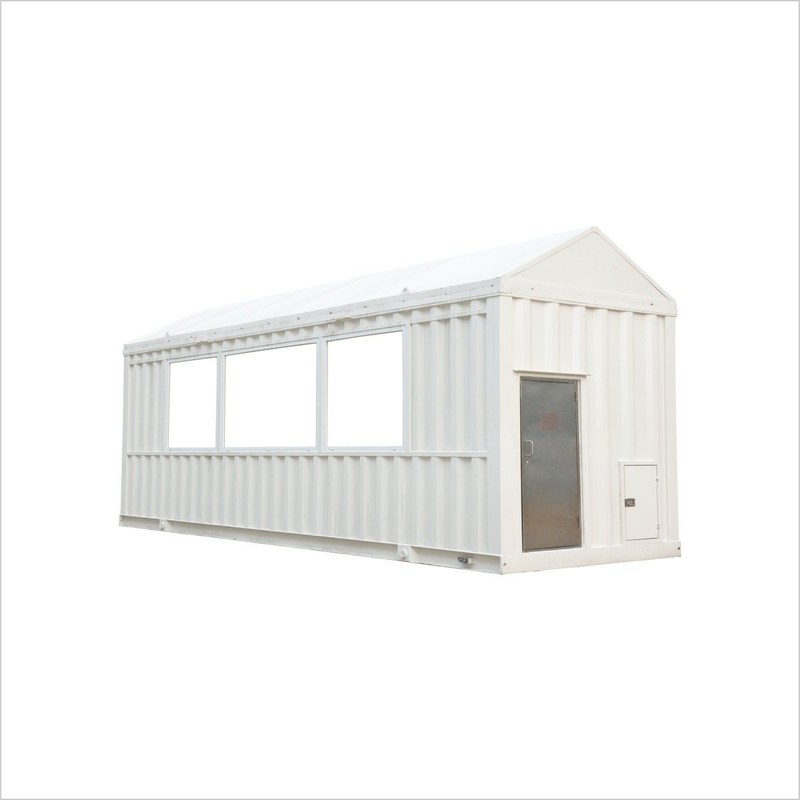
- ◆ The explosion-proof engineering cabins is constructed with a welded steel frame structure. The exterior walls are made of corrugated paneling, and the interior insulation layer utilizes rock wool color steel sandwich panels.
- ◆ Inter of the explosion-protected Container is equipped with an explosion-proof air conditioning unit capable of regulating the indoor climate, providing constant temperature and humidity control.
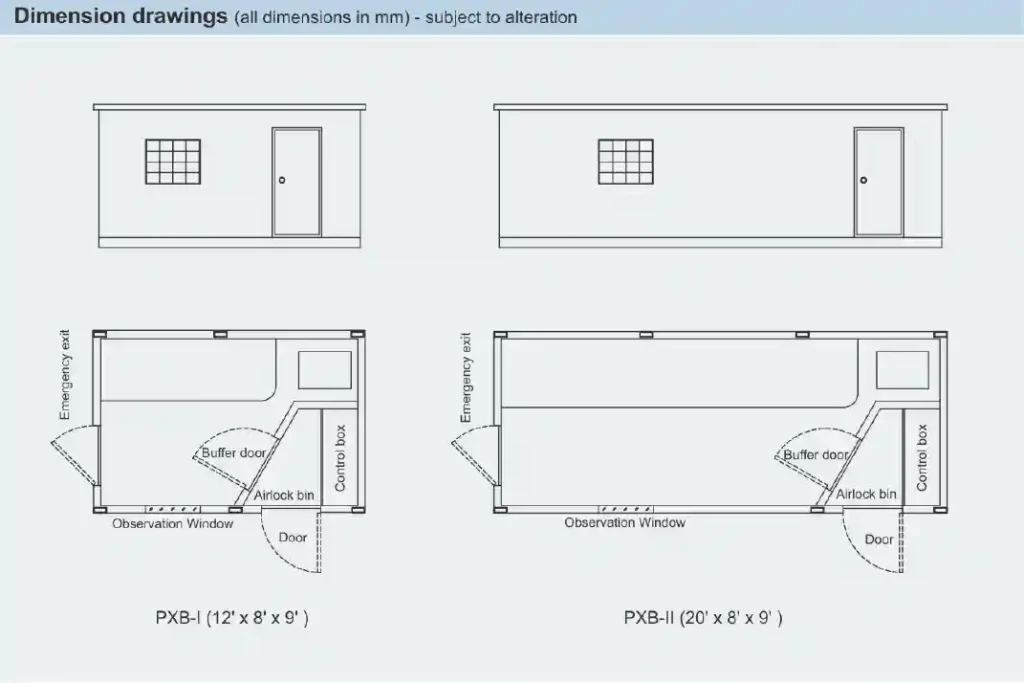
- ◆ Ex engineering cabins feature with a double-sealed access door fitted with an inspection glass window and an emergency escape door, ensuring protection against dust and water ingress.
- ◆ The entire system of hazardous area safe house is fully enclosed, offering integrated functionalities including anti-static properties, spark prevention, contamination-free environment, corrosion resistance, and electromagnetic interference shielding.
TECHNICAL DATA
Explosion Protection
- Standards: CENELEC, IEC
- Zones: * Gas: Zone 1 and Zone 2
- Dust: Zone 21 and Zone 22
- Ex Protection (Gas and Dust):
- IECEx: Ex px IIB T4 Gb / Ex px IIIC T130°C Db
- ATEX: II 2 G Ex px IIB T4 Gb / II 2 D Ex px IIIC T130°C Db
Product Parameters
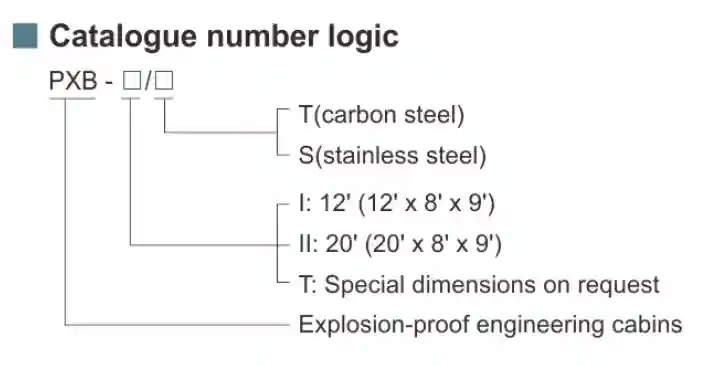
- Product Type: PXB
- Material: Enclosure: Powder coated carbon steel or stainless steel
- Air Pressure: 0.4MPa ~ 0.8MPa (4bar ~ 8bar)
- Rated Voltage (User System): 220V / 380V / 400V / 440V / 460V / 660V / 690V AC
- Rated Voltage (Pressurized Control System): 220V / 380V AC 50/60Hz
- Rated Current (Pressurized Control System): 10A
- Degree of Protection: IP66
- Ambient Temperature: -20°C to +55°C
Classification & Origin
- HS Code: 853710
- Country of Origin: China
Applicable Industries
The Ex p cabinet is the standard control box or PLC programmed control box. Combustible gas detectors and toxic gas detectors are modular designed. The thermal detector, smoking detector, and pressure transmitter are intrinsic safety explosion-proof components. The power of the explosion-proof centrifugal fan and explosion-proof air conditioner is subject to the room size. Features an audio and visual alarm interlock system. The illumination system uses explosion-proof fluorescent lamps and LED explosion-proof emergency lamps.
Industries: Petrochemical, natural gas, coal, metallurgy, military, nuclear power, aerospace, firefighting, pharmaceuticals, textiles, grain & oil, municipal services, public security, shipping, ports, railways, and more.
Credibility & Engineering
An explosion-proof engineering cabin is an integrated solution designed to provide a safe operating space for precision instruments and control systems within explosive hazardous atmospheres. It employs the “active defense” principle of pressurized explosion protection by creating a continuously stable, safe microenvironment, thereby eliminating the risk of explosion at its source. Our certified cabinets for hazardous areas are backed by international certifications (ATEX, IECEx, EAC).
Frequently Asked Questions (FAQ)
Q1: What is the principle of an Explosion-Proof Engineering cabin? How does it ensure safety?
A1: It uses “Positive Pressure.” Clean air is pumped in to keep the inside pressure slightly higher than the dangerous outside air. This air wall blocks explosive gases or dust from entering, making the inside a safe zone for people and normal equipment.
Q2: Where can I use this explosion-proof pressurized distribution cabinet? Is Zone 0 okay?
A2: The differences are between protection IP, space, and functionality. Our Ex p cabinets like a safe, explosion-proof shipping container, provides a walk-in, environmentally controlled protected space for an entire system. The traditional control cabinet is akin to a single explosion-proof safe inside it.
Q3: Can standard (non-explosion-proof) air conditioners, computers, or PLCs be installed inside the Ex p cabinets?
A3: Yes, this is one of its key advantages. Under the condition that the pressurized protection is effectively established and continuously maintained, standard commercial or industrial equipment can be installed inside. This significantly reduces the overall system cost and maintenance complexity. However, it is critical that all installed equipment complies with the temperature class (T-rating) certified for the shelter itself.
Q4: How to verify that certified cabinets for hazardous area are truly compliant and safe?
A4: Verification requires checking three essential elements:
- Complete Explosion-Proof Marking & Nameplate: Must clearly display the Ex marking (e.g., Ex px IIC T4 Gb), manufacturer details, certificate number, maximum allowable pressure, purge time, and other critical parameters.
- Valid Certification Documents: Obtain the official ATEX or IECEx certificate specifically issued for the shelter’s model.
- Comprehensive Technical Documentation: This must include the Installation, Operation, and Maintenance manual, electrical schematics, pneumatic flow diagrams, and hazardous area classification drawings.