
Explosion proof electrical equipment lifespan is not stated on any nameplate, and no certificate carries an expiry date. What the marking tells you is the protection concept, gas group, temperature class, equipment protection level and ambient range that the design was tested to [1]. How long that equipment stays compliant depends on the environment around it, the way it is opened and maintained, and whether the parts inside it can still be sourced. Age is the weakest of all replacement triggers, and it is the one most often used. A defensible replacement case rests on four conditions instead: whether the protection can still be restored to its certified dimensions, whether the fitting still performs its lighting or switching duty, whether gaskets, glands and modules remain available, and whether the paperwork still describes the equipment actually installed.
Why explosion proof electrical equipment has no fixed service life
A certificate is evidence about a design, not a countdown timer. Type examination fixes the materials, flamepath dimensions, internal clearances and thermal behaviour of a representative sample. Under ATEX, conformity is assessed when the equipment is placed on the market [2]. After that point, continued conformity is a maintenance outcome. Nothing in the certificate guarantees that the particular unit hanging in a coastal pump house for nine years still matches the sample that was examined.
Three different lives run in parallel inside one fitting. The enclosure has a mechanical and ingress life set by gaskets, threads, coatings and corrosion. The electronics have a thermal life set by driver temperature and duty cycle. The light source has a photometric life set by lumen depreciation. Whichever reaches its limit first drives the first replacement, and they rarely coincide.
That mismatch creates two opposite mistakes. A fitting can be optically finished but structurally sound, which is a lighting problem rather than a safety problem. It can also be bright and apparently healthy while its gasket has hardened and its cover no longer seals, which is a safety problem no one notices. Calendar-based replacement produces both waste and risk because it ignores which clock has actually run out.
What actually ages inside an explosion proof enclosure
Heat and thermal margin
LED drivers carry electrolytic capacitors, and capacitor life falls steeply as operating temperature rises. A rule of thumb used in power electronics is that life halves for roughly every 10 °C increase. Treat that as engineering reasoning rather than a test result for a specific product, but the direction holds. An ambient rating of +60 °C is a limit for rated operation, not a comfortable setpoint. A fitting running continuously at 50 to 55 °C, sealed and under a dusty ceiling, is spending its margin year by year. Dust on the housing reduces convection. A failed room ventilation fan removes it entirely.
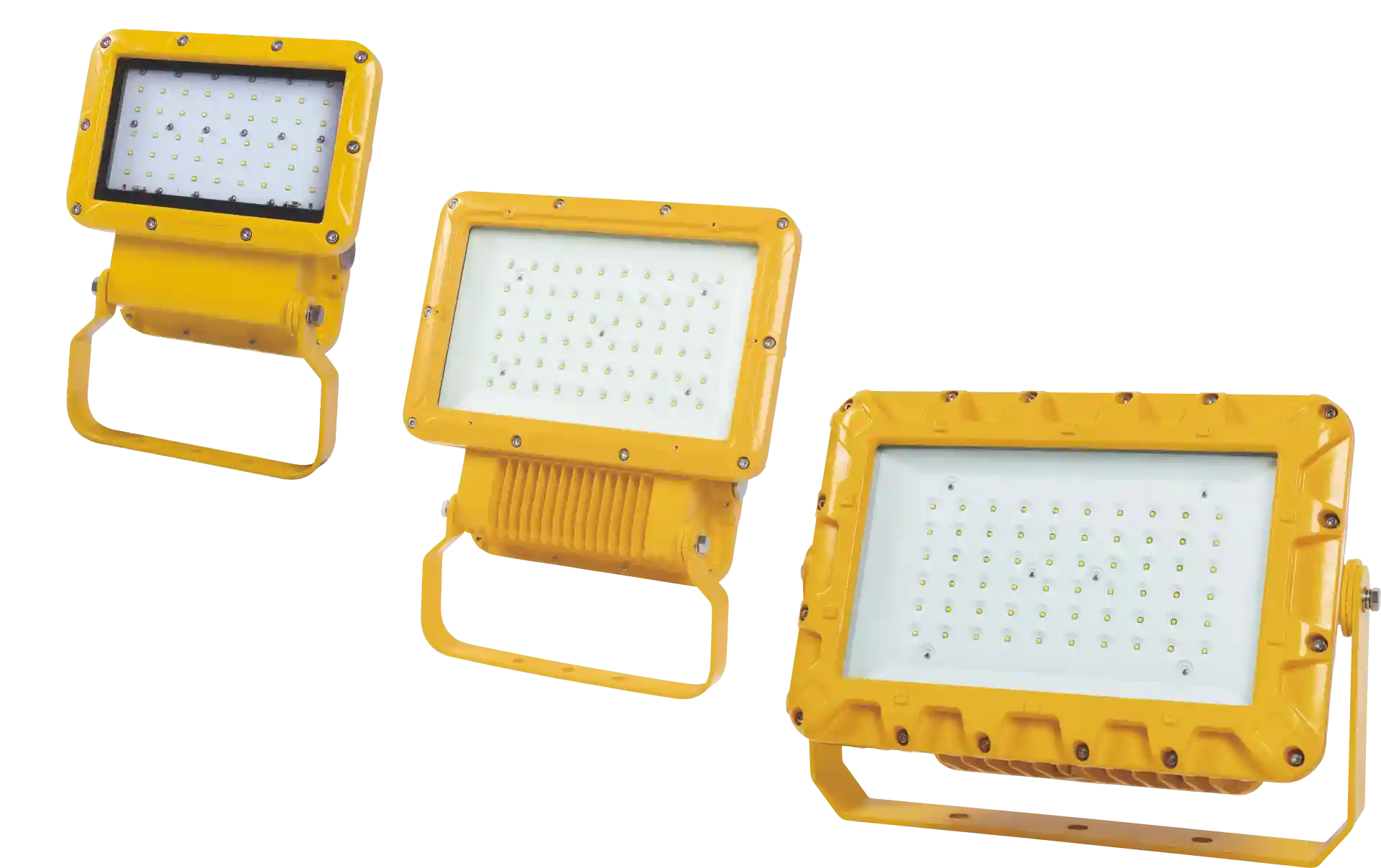
A floodlight built for that duty carries its limits on the label: an ambient range from -60 °C to +60 °C, IP66 protection and a WF2 corrosion category describe what the housing was tested against. They do not tell you how much thermal margin remains after six summers at the top of that range.
Corrosion at the sealing interface
Powder-coated aluminium and stainless fasteners handle most kimyasal atmospheres. The sealing interface is where corrosion decides the outcome: the gasket groove, the cover face and the entry threads. Once coating is broken at the groove, pitting lifts the gasket off its seat and the enclosure leaks without looking damaged. Coastal chloride, acid vapour and wash-down chemicals each attack different points, which is why a corrosion category alone cannot predict the day a specific box starts taking water.
Cable entries and mechanical wear
Most water ingress enters through the cable entry rather than the cover. Gland selection has to match the cable, not approximate it. A gland rated for a cable diameter of 12.5 to 20.5 mm fitted to a 12 mm cable leaves the seal uncompressed and looks perfectly tight. Vibration from nearby compressors works on threads, and repeated opening for inspection compresses gaskets until they take a permanent set.
Light source, driver, and enclosure age on different clocks
Rated LED life is usually a photometric projection to L70 or L80 at a stated ambient, often 25 °C. It is not a safety limit, and it says nothing about the driver behind it. For lighting performance, the useful comparison is measured illuminance against the maintained level the task requires, not the number on the datasheet.
Retrofits deserve particular care. Fitting an LED tube into a certified fluorescent enclosure changes the thermal and electrical conditions inside a flameproof or increased safety housing. Unless the manufacturer lists that conversion for that enclosure, the fitting has moved outside its certification, and the marking on the cover now describes something the equipment no longer is.
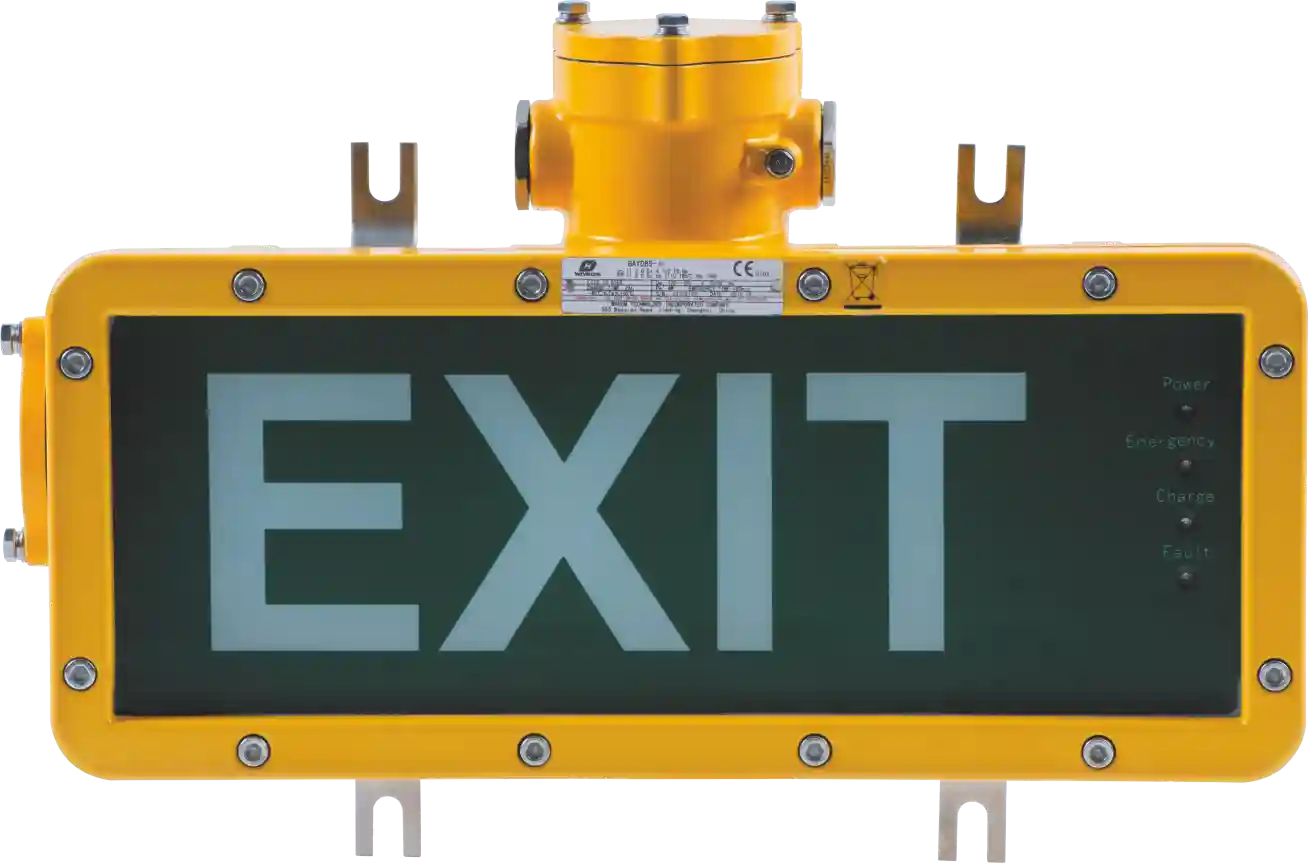
Emergency luminaires add a second clock, because the battery pack ages faster than the enclosure around it. A rated emergency duration, for example 120 minutes, is verified on a healthy pack. Capacity fades with age, charge cycles and elevated temperature, so the replacement trigger is a measured duration test that falls below the rated value, not a service anniversary.
Emergency lighting adds a second replacement clock, because the battery pack ages faster than the enclosure around it. <Endüstriyel Güvenlik İçin Patlamaya Dayanıklı Acil Çıkış Işıkları Fittingleri> covers explosion proof emergency exit light fittings for industrial safety applications.
How inspection grades turn observations into replacement triggers
Visual, close, and detailed inspection
IEC 60079-17 sets out three inspection grades [3]. A visual inspection is carried out without tools and without opening the enclosure. A close inspection uses tools and may involve removing covers, but stays short of measurement. A detailed inspection adds measurement and thorough examination. Each grade answers a different question, and this is where many replacement decisions go wrong: a visual pass recorded as “satisfactory” says nothing about terminal torque, flamepath gap or gasket compression, yet it is often filed as if it did.
Setting intervals that fit the site
The same standard requires the user to establish the inspection schedule from equipment type, environment, duty and previous results. It does not hand down a universal interval. Copying another plant’s six-month cycle, or a supplier’s recommended calendar, without feeding your own findings back into it is how a corroded flamepath survives three inspections in a row.
Two habits make the grades useful. First, record what was measured, not that someone looked: gap readings, torque values, insulation resistance, illuminance, emergency duration. Second, escalate on findings. A visual check that shows coating damage at the gasket groove should trigger a close inspection of that enclosure, and a close inspection that shows gasket deformation should put that gasket on a replacement list with a date.
What a certificate, an IP rating, and a life rating each prove
Each record used to justify keeping or replacing equipment has a boundary. The table below sets out what four common records legitimately support and where they stop.
| Kayıt | Method or scope | Sorumlu kullanım | İnferans yapmayın |
|---|---|---|---|
| Nameplate IP66 | Type test on the enclosure design | The design passed dust and water jet testing | That the gasket still seals today, or that the coating resists a specific chemical |
| ATEX or IECEx certificate | Type examination of a design sample [1], [2] | The design met the standard when examined | That the installed unit is unmodified and still within tolerance |
| Rated LED life, often 50,000 h | Manufacturer photometric projection to L70 or L80 at a stated ambient | Expected lumen depreciation under those conditions | That the driver, gasket or flamepath lasts the same period |
| Visual inspection pass | Visual grade under IEC 60079-17, no tools [3] | No visible damage was present at that time | That terminal torque, gap or internal condition is acceptable |
| Repair with a similar part | Work carried out on site | Function was restored | That the protection concept and temperature class are unchanged |
| Ambient rating of +60 °C | Upper limit for rated operation | The operating limit covered by the certification | That running at 55 °C leaves component life unaffected |
The boundaries matter because the equipment market is not uniform. A replacement has to be judged inside the framework the installation was originally approved under, and those frameworks do not read the same way.
The approval route shapes which marking a replacement must carry, even when two fittings do the same job. <Patlamaya Dayanıklı Motor Bağlantı Kesiciler: ATEX ve NEC Uyumu> covers ATEX and NEC compliance for explosion proof motor disconnects.
When repair stops being viable
IEC 60079-19 covers repair, overhaul and reclamation of explosion proof equipment, and its guiding principle is that the type of protection must be maintained [4]. That principle draws a practical line. Gaskets, glands, batteries, lenses and listed driver modules are normally field-replaceable where the manufacturer’s instructions permit it. Repairs that alter flamepath surfaces, threads or welded structures generally belong with the manufacturer or a recognised repair facility, because the certified dimensions cannot be re-established by eye.
The hard stops are physical. Pitting or corrosion on a flamepath, damaged threads on a cover, a cracked toughened glass, enclosure deformation, or a marking that can no longer be read all end the repair argument. Once the certified geometry or identity of the equipment cannot be verified, replacement is the compliant path rather than the expensive one.
Non-original internals are the quieter risk. A third-party driver with a different thermal profile or different creepage distances changes the thermal calculation the certificate was based on, even if it fits the space and works. The same applies to a higher-output LED module in an unchanged housing: light output rises, surface temperature rises with it, and a T6 rating can quietly become a T5 claim that nobody wrote down.
The quality of the request decides the quality of the answer. “The fitting is eight years old, send a quotation” produces a price. A request that states the marking data, the latest inspection grade and its finding, the measured light level, and whether the failure is the gasket, the flamepath or the driver produces a technical answer, and sometimes that answer is a gasket kit and a gland rather than a new fitting.
Building a replacement case that survives review
Replacement decisions fail review for the same reason maintenance decisions do: the evidence is scattered. The table below converts the common failure points into checks with a clear trigger.
| Bileşen | Wear mechanism | Check you can run | Replace when |
|---|---|---|---|
| Cover gasket | Compression set, chemical swell, heat ageing | Inspect for hardening, cracks and permanent deformation; check the groove for pitting | The gasket no longer seals or stays deformed after removal |
| Flamepath surfaces | Corrosion, paint build-up, mechanical damage, repeated assembly | Gap and surface condition against the manufacturer’s stated limits, with a feeler gauge and close inspection | Pitting, corrosion or thread damage cannot be restored to certified dimensions |
| LED module and driver | Capacitor ageing, thermal cycling, dust build-up | Measured illuminance against the maintained requirement; driver output and current check | Light level falls below the task requirement, flicker appears, or no listed replacement module exists |
| Emergency battery | Kapasite kaybı, kendi kendine deşarj, yüksek sıcaklık | Nominal acil durum çalışma süresine göre zamanlı süre testi | Ölçülen çalışma süresinin nominal değerin altında kalması |
| Kablo glandı | Conta sıkışması, korozyon, kablo çapı uyumsuzluğu | Kablo çapının kablo rakoru aralığına uygunluğu, contanın durumu ve sıkılığı | Contanın sertleşmiş olması, kablonun belirtilen aralığın dışında kalması veya dişlerin hasar görmesi |
| Muhafaza ve işaretleme | Kaplama hasarı, darbe, etiket aşınması | İşaretlerin sertifika verilerine uygunluğu ve okunabilirliği, çatlaklar, deformasyon | İşaretlerin okunaksız olması veya muhafazanın deforme olması |
Eksiksiz bir değerlendirme dört sorunun yanıtlanmasını gerektirir. Koruma: Sertifikalı boyutlar yeniden sağlanıp belgelendirilebilir mi? Performans: Ekipman aydınlatma, anahtarlama veya çalışma süresi gerekliliklerini hâlâ karşılıyor mu? Desteklenebilirlik: Contalar, kablo rakorları ve modüller hâlâ temin edilebiliyor mu ve nereden? Uygunluk: Onarım plakası veya yedek parça dâhil olmak üzere belgeler, sahadaki üniteyle hâlâ örtüşüyor mu? Bu dört koşulun tamamı sağlandığında onarım genellikle bütçenin daha verimli kullanılmasını sağlar. Desteklenebilirlik koşulu karşılanmadığında ise ekipman hâlâ çalışıyor olsa bile değiştirilmesi gerekir; çünkü bir sonraki arızanın çözümü olmayacaktır.
Arıza meydana gelmeden önce değişimi planlamak
Gerçek hayattaki en yaygın sınırlayıcı faktör muhafaza korozyonu değil, elektronik bileşenlerin kullanım ömrünü tamamlamasıdır. Altıncı yılda üretimi durdurulan bir sürücü kartı, muhafazanın faydalı ömrü henüz sona ermeden, sekizinci yılda armatürün tamamının değiştirilmesini zorunlu kılabilir. Bu durumu önceden planlayan tesisler daha az sayıda ürün ailesini standartlaştırır, her tip için bir yedek armatür bulundurur ve batarya paketlerinin yanında conta ve kablo rakoru kitleri de stoklar.
Depolama koşulları yedek parçaların kendisini de etkiler. Elastomer contalar, özellikle UV ışınlarına, ozona ve ısıya maruz kaldıklarında rafta beklerken eskir. Bu nedenle güneş ışığı alan bir konteynerde dört yıl bekletilen bir conta kiti, ihtiyaç duyulduğunda kullanılamaz durumda olabilir. Sızdırmaz, serin ve karanlık bir depolama ortamı, aksi takdirde acilen sipariş edilmesi gerekecek parçaları korur.
Durum izleme, ilk belirtinin ortaya çıkması ile arızanın meydana gelmesi arasındaki süreyi kısaltır. Dağıtım panolarında ve aydınlatma devrelerinde yapılan termal görüntüleme, ekipman hâlâ çalışırken gevşek bağlantıları ve arızalanmak üzere olan sürücüleri tespit eder. Ulaşılması zor alanlarda sabit izleme sistemleri, muhafazaların sık sık açılması ihtiyacını ortadan kaldırır. Muhafazaların sık açılması ise contaların ve dişlerin aşınmasına neden olan bir faktördür.
Son olarak, değiştirme takvimini kurulum tarihlerine değil, muayene geçmişine göre oluşturun. İki yıl içinde üç kez yakın takip gerektiren muayene bulgusu tespit edilen bir devre, kalan kullanım ömrü hakkında satın alma siparişindeki tarihten çok daha fazla bilgi verir.
Değişim değerlendirmesi için gönderilmesi gereken bilgiler
Onarım ile değiştirme arasında karar vermeye çalışıyorsanız, kararı gerçekten etkileyen bilgileri gönderin: koruma konsepti, gaz grubu, sıcaklık sınıfı ve ekipman koruma seviyesi dâhil olmak üzere işaretleme kodunun tamamı; sertifika numarası ve ortam sıcaklığı aralığı; en son muayene derecesi ve tespit edilen bulgu; ilgili durumlarda ölçülen aydınlatma seviyesi veya acil durum çalışma süresi; kablo girişi tipi ve kablo çapı; montaj düzeni; ayrıca ihtiyaç duyduğunuz teslimat süresiyle birlikte miktar bilgisi.
Warom Technology Incorporated Company, sunulan bu bilgileri kurulu konfigürasyona göre inceleyerek bir onarım çözümü veya değiştirme önerisi sunabilir. E-posta gm*@***om.com, veya +86 21 39977076 ya da +86 21 39972657 numaralı telefonları arayın.
SSS
Patlamaya karşı korumalı elektrikli ekipmanların kullanım ömrü ne kadardır?
Tek bir süre belirtmek mümkün değildir, çünkü üç farklı kullanım ömrü paralel olarak işler. Muhafaza genellikle en uzun ömürlü parçadır; sürücü veya batarya ise genellikle en kısa ömürlü bileşendir. Yedek modüllerin bulunabilirliği de çoğu zaman bu iki parçadan önce ekipmanın hizmet ömrünü sona erdirir. Uygulamada temel kural, kanıtlara dayanarak değiştirme kararı vermektir: giderilemeyen bir koruma arızası, ölçülen performansın gerekli seviyenin altında kalması veya artık sertifikalı biçimde temin edilemeyen bir parça.
Patlamaya karşı korumalı ekipmanları onarmak mı yoksa değiştirmek mi daha ekonomiktir?
Bu, dört koşuldan hangisinin başarısız olduğuna bağlıdır ve maliyet karşılaştırması çoğu zaman satın alma fiyatının düşündürdüğünden daha yakındır. Conta, kablo rakoru veya listelenmiş bir sürücü modülü genellikle yeni bir armatürden çok daha ucuzdur ve mevcut sertifikasyonun ve kablo girişine ilişkin çalışmaların korunmasını sağlar. Ancak orijinal olmayan bir parçaya ihtiyaç duyulduğunda veya işçilik ve yeniden denetim maliyetleri, güncel yedek parça desteğine sahip standartlara uygun yeni bir ekipmanın maliyetine yaklaştığında onarım artık daha ekonomik olmaktan çıkar.
Patlamaya karşı korumalı bir aydınlatma armatürünü farklı bir modelle değiştirebilir miyim?
Evet. Ancak yeni ekipmanın, alan sınıflandırmasının gerektirdiği tüm parametreleri karşılaması veya iyileştirmesi gerekir: koruma konsepti ve ekipman koruma seviyesi, gaz veya toz grubu, sıcaklık sınıfı, ortam sıcaklığı aralığı, IP koruma derecesi ve kablo girişi. Yalnızca watt değerinin aynı olması yeterli değildir. Daha küçük bir muhafaza içine yerleştirilen daha yüksek çıkış gücüne sahip bir modül, yüzey sıcaklığını artırabilir ve sıcaklık sınıfını değiştirebilir. Ayrıca kurulum belgeleri, mevcut ekipmanı yansıtacak şekilde güncellenmelidir.
Değiştirme kararını desteklemek için hangi kayıtlar tutulmalıdır?
Dört kayıt grubunu saklayın: kurulum sırasında mevcut olan işaretleme ve sertifika bilgileri, görüşler yerine ölçüm sonuçlarını belirten denetim raporları, onarım ve parça geçmişi (varsa onarım plakası dâhil) ve aydınlık düzeyi veya acil durum çalışma süresi gibi ölçülmüş performans verileri. Bu dört kayıt sayesinde değiştirme kararı somut kanıtlara dayanarak değerlendirilebilir. Bunlar olmadan karar, mevcut en az güvenilir ölçüt olan ekipmanın yaşına göre verilir.
Kaynaklar
[1] IEC 60079-0:2017, “Patlayıcı ortamlar, Bölüm 0: Ekipmanlar için genel gereklilikler”, Uluslararası Elektroteknik Komisyonu, 2017.
[2] 2014/34/AB Direktifi, “Potansiyel olarak patlayıcı ortamlarda kullanılmak üzere tasarlanmış ekipman ve koruyucu sistemlere ilişkin Üye Devlet yasalarının uyumlaştırılması”, Avrupa Parlamentosu ve Konsey, 2014.
[3] IEC 60079-17:2013, “Patlayıcı ortamlar, Bölüm 17: Elektrik tesisatlarının denetimi ve bakımı”, Uluslararası Elektroteknik Komisyonu, 2013.
[4] IEC 60079-19:2019, “Patlayıcı ortamlar, Bölüm 19: Ekipmanların onarımı, revizyonu ve yenilenmesi”, Uluslararası Elektroteknik Komisyonu, 2019.
İlginizi çekiyorsa, bu ilgili makalelere göz atabilirsiniz:
ACHEMA 2024 sürüyor
SMM Hamburg'da Warom
On yılı aşkın deneyime sahip olan o, güvenlik ve patlamaya dayanıklı ürünlerin tasarımı ve üretimi konusunda uzmanlaşmış deneyimli bir Patlamaya Dayanıklı Elektrik Mühendisidir. Patlama dayanıklı sistemler, nükleer güç aydınlatması, deniz güvenliği, yangın koruması ve akıllı kontrol sistemleri dahil olmak üzere ana alanlarda derin uzmanlığa sahiptir. Warom Teknoloji Enstitüsü Şirketi’nde Uluslararası İşlerden Sorumlu Baş Mühend, Uluslararası Ar-Ge Departmanı Başkanı olarak çift liderlik rolüne sahiptir; burada Ar-Ge girişimlerini denetler ve uluslararası projeler için tasarım dokümantasyonunun kesin teslimatını sağlar. Küresel endüstriyel güvenliği ilerletmeye kendini adayan, karmaşık teknolojileri pratik çözümlere dönüştürmeye ve müşterilerin dünyanın dört bir yanındaki daha güvenli, akıllı ve daha güvenilir kontrol sistemlerini uygulamasına yardımcı olmaya odaklanır.

Qi Lingyi