

Industrial facilities handling flammable gases or combustible dusts operate under conditions where a single electrical fault can trigger catastrophic consequences. Explosion-proof motor disconnects serve as the primary isolation point between energized circuits and hazardous atmospheres, allowing maintenance crews to de-energize motors without introducing ignition risk. The regulatory landscape governing these devices splits along geographic lines: ATEX certification dominates European and many international markets, while NEC requirements apply throughout North America. Projects spanning multiple jurisdictions, such as the Tilenga oil development in Uganda, require equipment certified to both frameworks simultaneously. This dual-compliance demand shapes procurement decisions, installation practices, and long-term maintenance planning for facilities operating in Zone 1 or Division 1 environments.
How Hazardous Area Classifications Determine Equipment Requirements
Hazardous location classification establishes the baseline for all equipment selection decisions. Two parallel systems exist: the IEC-based Zone system adopted by ATEX, and the NEC Class/Division/Group system used in North America. Zones categorize areas by how frequently explosive atmospheres occur. Zone 0 indicates continuous presence of flammable gas concentrations, Zone 1 covers intermittent presence during normal operations, and Zone 2 applies only to abnormal conditions. The NEC Division system takes a different approach, distinguishing between Division 1 (hazardous conditions expected during normal operations) and Division 2 (hazardous conditions only under fault or abnormal circumstances).
| Classification System | Gas/Vapor/Mist | Dust/Fibers |
|---|---|---|
| Zone 0 / Division 1 | Continuous/Long | Continuous/Long |
| Zone 1 / Division 1 | Intermittent | Intermittent |
| Zone 2 / Division 2 | Abnormal | Abnormal |
The practical consequence of classification appears immediately in equipment specifications. A motor disconnect installed in Zone 1 requires protection methods capable of containing internal ignition events, typically flameproof enclosure (Ex d) construction. The same disconnect in Zone 2 might qualify with increased safety (Ex e) or non-sparking (Ex nA) protection. Classification errors propagate through entire installations, potentially invalidating certifications and creating liability exposure that persists for the operational life of the facility.
What Separates ATEX and NEC Certification Pathways
The certification process for explosion-proof motor disconnects follows fundamentally different paths depending on the target market. ATEX certification requires assessment by a Notified Body, an organization designated by EU member states to evaluate conformity with the ATEX Directive 2014/34/EU. The assessment examines design documentation, manufacturing quality systems, and prototype testing against harmonized standards such as EN IEC 60079 series. Successful certification results in an EU-type examination certificate and permits application of the CE marking with the specific explosion protection symbol.
NEC compliance operates through Nationally Recognized Testing Laboratories (NRTLs), with UL and FM Global being the most prominent. These laboratories test equipment against standards including UL 1203 for explosion-proof electrical equipment and ANSI/ISA 60079 series. The resulting listing or approval authorizes specific Class, Division, and Group ratings that appear on equipment nameplates.
Equipment marking conventions differ substantially between systems. An ATEX-marked disconnect displays the explosion protection symbol (Ex), equipment group (II for surface industries), category (1, 2, or 3 indicating protection level), gas or dust designation (G or D), and detailed protection type codes. A typical marking might read “Ex II 2G Ex d IIB T4 Gb,” indicating a flameproof enclosure suitable for Zone 1 gas atmospheres in Group IIB with a T4 temperature class. NEC markings specify Class I, Division 1, Groups C and D, for example, providing information in a format familiar to North American installers but requiring translation when equipment crosses regulatory boundaries.
Matching Explosion-Proof Disconnect Specifications to Motor Requirements
The selection process for explosion-proof motor disconnects begins with the hazardous area classification but extends through multiple technical parameters. Electrical ratings must match or exceed motor nameplate values: voltage, full-load current, and horsepower. Undersized disconnects create overheating risks that compromise enclosure integrity. Oversized units waste capital and may not provide appropriate fault protection.
Gas group and temperature class compatibility requires careful verification. Group IIC gases (hydrogen, acetylene) demand more robust protection than Group IIA (propane, methane), and equipment certified for IIB cannot be substituted in IIC applications. Temperature class ratings (T1 through T6) indicate the maximum surface temperature the equipment will reach during operation. A T4-rated disconnect (135°C maximum) cannot serve in areas where auto-ignition temperatures fall below that threshold.
Environmental factors often determine long-term reliability more than electrical specifications. Coastal refineries and offshore platforms require enclosures with enhanced corrosion resistance, typically achieved through marine-grade coatings or stainless steel construction. Ingress protection ratings (IP66 or higher for most industrial applications) prevent moisture and dust intrusion that could degrade internal components. The General Paint electrical safety upgrade project demonstrated how environmental assessment influences equipment selection, with explosion-proof plugs and distribution boxes specified for specific corrosion and washdown requirements.
Why Installation Quality Determines Certification Validity
Explosion-proof equipment certification applies to the device as manufactured and tested. Installation practices either preserve or void that certification. Cable entry points represent the most common failure mode in field installations. Every unused entry must be closed with certified blanking plugs, and every cable must pass through glands rated for the same protection level as the enclosure. A flameproof enclosure fitted with a non-certified cable gland loses its Ex d rating entirely.
Conduit sealing requirements under NEC mandate seals within 18 inches of enclosure entries in Division 1 locations. These seals prevent flame propagation through conduit systems and block the migration of gases between areas with different classifications. Seal fittings must be poured with approved compounds and allowed to cure completely before energization.
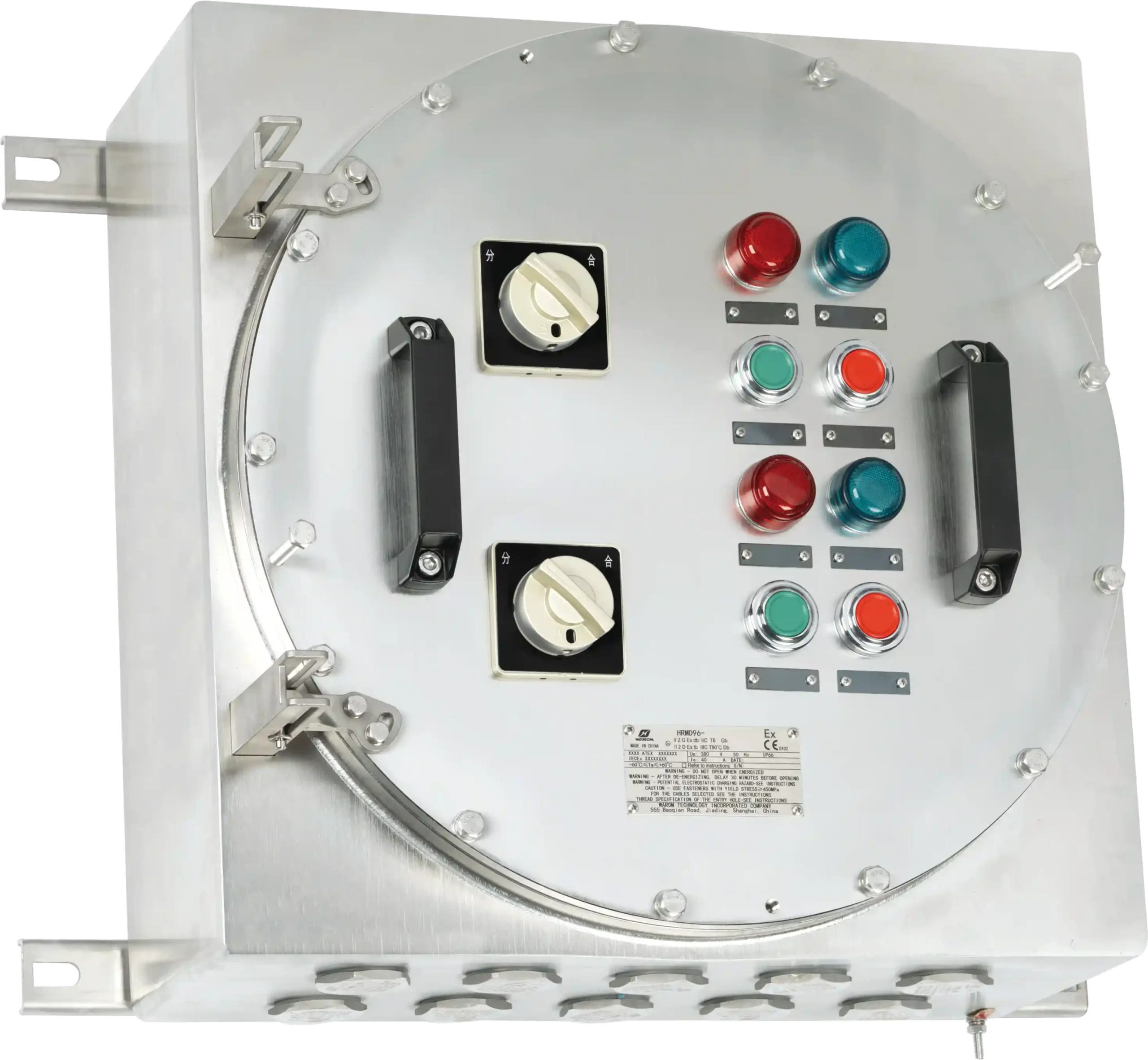
Grounding and bonding practices take on additional significance in hazardous areas. Static discharge from ungrounded equipment can ignite flammable atmospheres at energy levels far below those required for electrical arcing. Bonding jumpers must maintain continuity across flexible connections, and ground resistance measurements should verify values below 1 ohm for most applications. The Fushilai Pharmaceutical project required particular attention to these details, with explosion-proof distribution boxes serving areas where solvent vapors created continuous ignition risks.
Non-compliance consequences extend beyond regulatory penalties. Insurance coverage may be voided for incidents traceable to installation deficiencies. Personal liability can attach to engineers and supervisors who approved non-compliant work. Most significantly, the fundamental purpose of explosion protection, preventing injuries and fatalities, fails when installation quality falls short of certification requirements.
What Drives Long-Term Reliability in Demanding Environments
Material selection determines whether explosion-proof motor disconnects will maintain their protection ratings over operational lifetimes measured in decades. Copper-free aluminum alloys resist the corrosion that would otherwise compromise enclosure integrity in chemical processing environments. Powder coating provides additional barrier protection against aggressive atmospheres. Stainless steel construction, while more expensive, offers superior performance in marine and offshore applications where salt spray accelerates degradation.
Temperature cycling creates mechanical stresses that can loosen fasteners and degrade gasket seals over time. Equipment rated for wide temperature ranges (typically -40°C to +60°C for industrial applications) incorporates design features that accommodate thermal expansion without compromising protection. Vibration resistance matters in applications near rotating machinery, pumps, or compressors, where continuous mechanical stress can fatigue electrical connections and enclosure joints.
Maintenance intervals should follow manufacturer recommendations, but environmental conditions often dictate more frequent inspection. Visual examination of enclosure surfaces, gasket condition, and cable gland integrity can identify developing problems before they compromise protection. Electrical testing, including insulation resistance and ground continuity measurements, verifies that internal components remain within specification. The Tilenga project established maintenance protocols that account for the challenging environmental conditions of equatorial Africa, where temperature extremes and humidity levels exceed typical industrial assumptions.
How Integrated Safety Systems Multiply Protection Effectiveness
Explosion-proof motor disconnects function most effectively as components within layered safety architectures. Gas detection systems provide early warning of developing hazardous conditions, allowing operators to de-energize equipment before concentrations reach explosive levels. Integration between detection and control systems can automate this response, removing human reaction time from the safety equation.
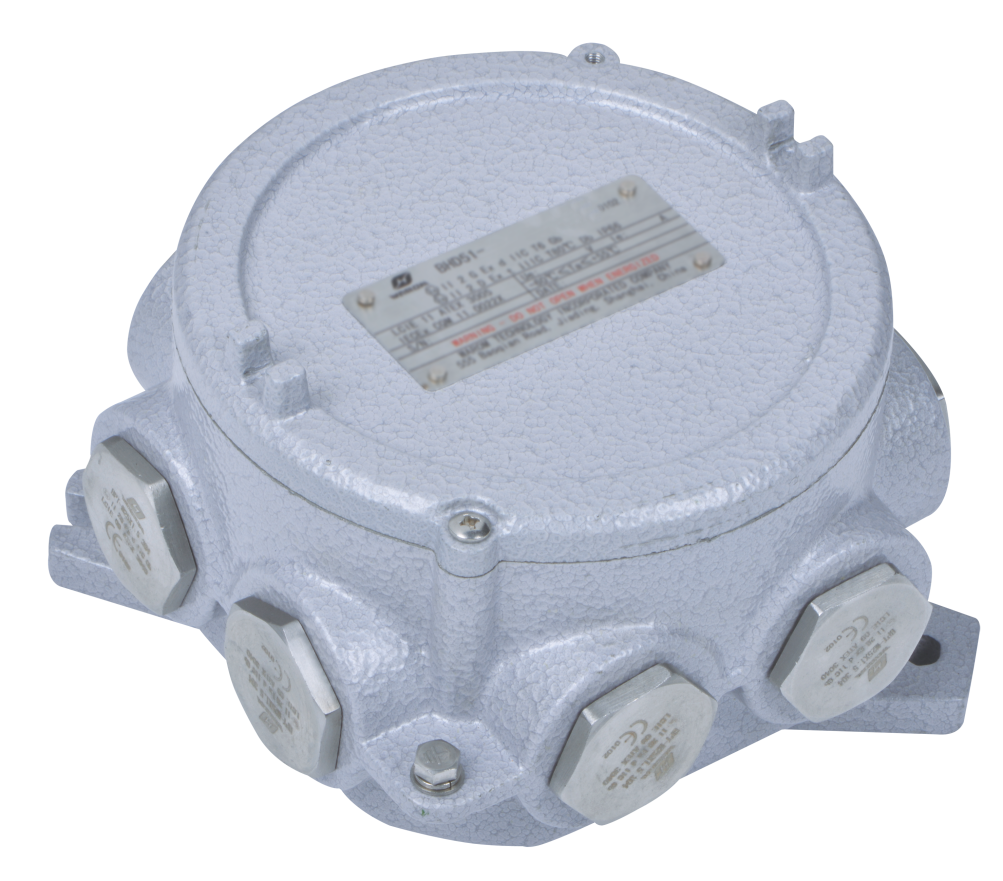
Distribution panels such as the BXM(D)8050 Explosion-proof Illumination Distribution Boxes centralize circuit protection and switching functions, simplifying maintenance access while maintaining zone integrity. Junction boxes, including the BHD91 Series, provide secure termination points for field wiring, preventing the cable damage that could otherwise create ignition sources. Cable glands rated for the installation environment, such as the DQM-III/II Series, complete the protection chain from equipment to equipment.
Static electricity control deserves particular attention in dust-handling applications and facilities processing low-conductivity liquids. Bonding and grounding alone may not dissipate charge accumulation rapidly enough to prevent discharge events. Dedicated static control devices, ionizers, and conductive materials in conveying systems address these risks. The General Paint project integrated static electricity discharge devices specifically to address ignition risks from solvent handling operations.
If your facility requires equipment certified to both ATEX and NEC standards, or if you’re planning installations in multiple regulatory jurisdictions, discussing specific protection requirements and certification documentation before procurement prevents costly rework.
Frequently Asked Questions About Explosion-Proof Motor Disconnects
What is the primary function of an explosion-proof motor disconnect switch?
An explosion-proof motor disconnect switch provides a safe means of isolating power to a motor in hazardous locations, preventing ignition of flammable gases or combustible dusts during maintenance or emergencies. The disconnect allows maintenance personnel to verify zero-energy state before working on motor circuits, a fundamental requirement of lockout/tagout procedures. Beyond routine maintenance, these devices enable rapid de-energization during emergency conditions when continued motor operation could contribute to developing hazards.
How does WAROM ensure its explosion-proof motor disconnects meet stringent ATEX and NEC requirements?
WAROM maintains dual certification pathways, with products assessed by European Notified Bodies for ATEX compliance and tested by NRTLs including UL for NEC listings. Manufacturing quality systems follow ISO 9001 requirements, with additional controls specific to explosion-proof equipment production. Component traceability, in-process testing, and final inspection protocols verify that production units match the certified design. Third-party audit programs provide ongoing verification that quality systems remain effective.
Can explosion-proof motor disconnects be customized for unique industrial applications?
Customization options address voltage and current requirements outside standard ranges, specialized enclosure materials for aggressive chemical environments, and integration with facility-specific control architectures. The General Paint and Fushilai Pharmaceutical projects both required modifications to standard product configurations, including specific cable entry arrangements and mounting provisions. Customization requests should specify the hazardous area classification, environmental conditions, and electrical requirements to ensure the modified product maintains appropriate certifications. To discuss customization requirements for your specific application, contact WAROM’s technical team at gm*@***om.com or +86 21 39977076.
If you’re interested, you may want to read the following articles:
Day 4 of 136th Canton Fair 2024
WAROM at OTC 2025
Warom at OIL&GAS ASIA
Guide to Hazardous Location Lighting: Standards and Selection
With over a decade of experience, he is a seasoned Explosion-Proof Electrical Engineer specializing in the design and manufacture of safety and explosion-proof products. He possesses in-depth expertise across key areas including explosion-proof systems, nuclear power lighting, marine safety, fire protection, and intelligent control systems. At Warom Technology Incorporated Company, he holds dual leadership roles as Deputy Chief Engineer for International Business and Head of the International R&D Department, where he oversees R&D initiatives and ensures the precise delivery of design documentation for international projects. Committed to advancing global industrial safety, he focuses on translating complex technologies into practical solutions, helping clients implement safer, smarter, and more reliable control systems worldwide.

Qi Lingyi