

Explosion proof electrical equipment lifespan is not stated on any nameplate, and no certificate carries an expiry date. What the marking tells you is the protection concept, gas group, temperature class, equipment protection level and ambient range that the design was tested to [1]. How long that equipment stays compliant depends on the environment around it, the way it is opened and maintained, and whether the parts inside it can still be sourced. Age is the weakest of all replacement triggers, and it is the one most often used. A defensible replacement case rests on four conditions instead: whether the protection can still be restored to its certified dimensions, whether the fitting still performs its lighting or switching duty, whether gaskets, glands and modules remain available, and whether the paperwork still describes the equipment actually installed.
Why explosion proof electrical equipment has no fixed service life
A certificate is evidence about a design, not a countdown timer. Type examination fixes the materials, flamepath dimensions, internal clearances and thermal behaviour of a representative sample. Under ATEX, conformity is assessed when the equipment is placed on the market [2]. After that point, continued conformity is a maintenance outcome. Nothing in the certificate guarantees that the particular unit hanging in a coastal pump house for nine years still matches the sample that was examined.
Three different lives run in parallel inside one fitting. The enclosure has a mechanical and ingress life set by gaskets, threads, coatings and corrosion. The electronics have a thermal life set by driver temperature and duty cycle. The light source has a photometric life set by lumen depreciation. Whichever reaches its limit first drives the first replacement, and they rarely coincide.
That mismatch creates two opposite mistakes. A fitting can be optically finished but structurally sound, which is a lighting problem rather than a safety problem. It can also be bright and apparently healthy while its gasket has hardened and its cover no longer seals, which is a safety problem no one notices. Calendar-based replacement produces both waste and risk because it ignores which clock has actually run out.
What actually ages inside an explosion proof enclosure
Heat and thermal margin
LED drivers carry electrolytic capacitors, and capacitor life falls steeply as operating temperature rises. A rule of thumb used in power electronics is that life halves for roughly every 10 °C increase. Treat that as engineering reasoning rather than a test result for a specific product, but the direction holds. An ambient rating of +60 °C is a limit for rated operation, not a comfortable setpoint. A fitting running continuously at 50 to 55 °C, sealed and under a dusty ceiling, is spending its margin year by year. Dust on the housing reduces convection. A failed room ventilation fan removes it entirely.
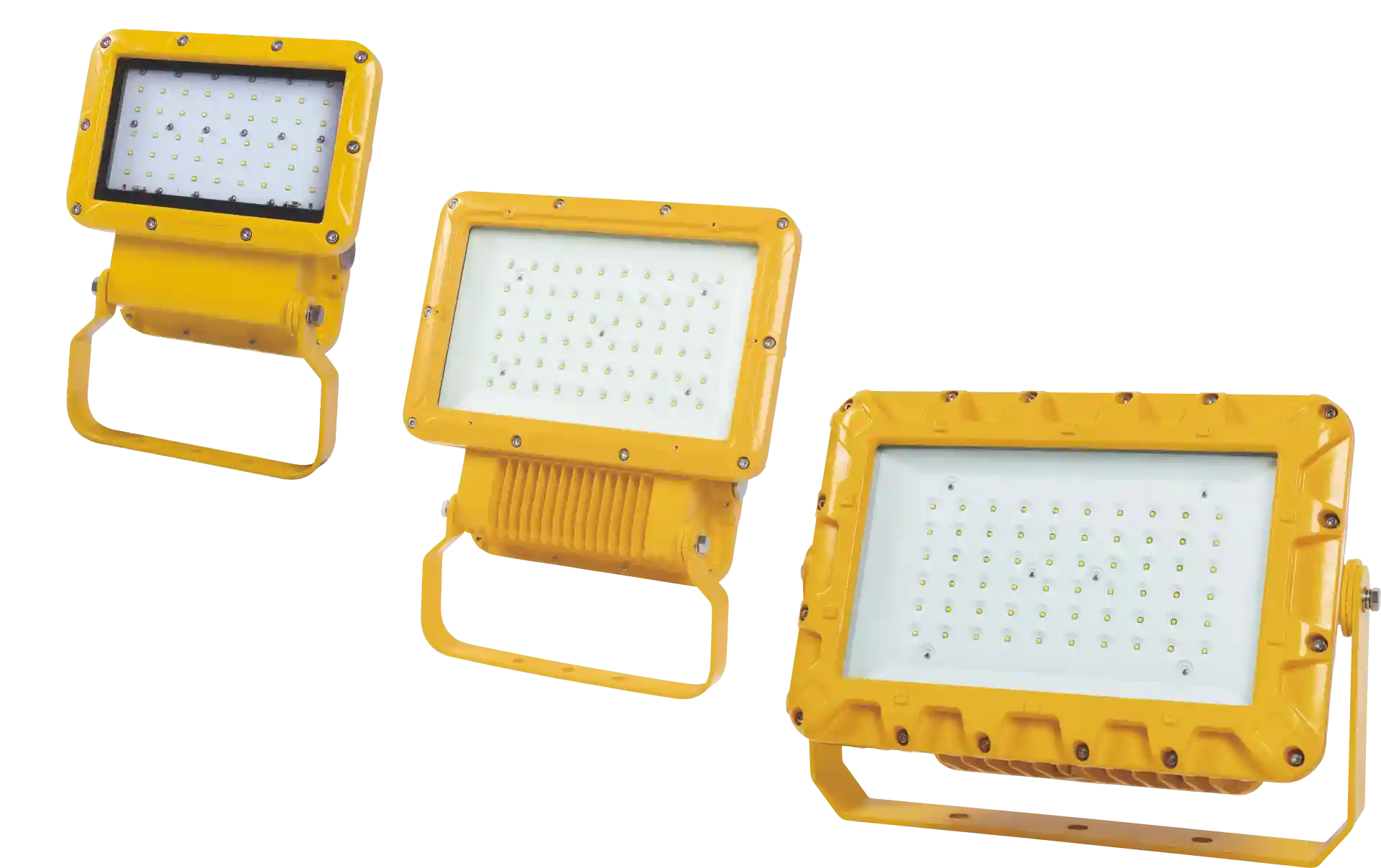
A floodlight built for that duty carries its limits on the label: an ambient range from -60 °C to +60 °C, IP66 protection and a WF2 corrosion category describe what the housing was tested against. They do not tell you how much thermal margin remains after six summers at the top of that range.
Corrosion at the sealing interface
Powder-coated aluminium and stainless fasteners handle most chemical atmospheres. The sealing interface is where corrosion decides the outcome: the gasket groove, the cover face and the entry threads. Once coating is broken at the groove, pitting lifts the gasket off its seat and the enclosure leaks without looking damaged. Coastal chloride, acid vapour and wash-down chemicals each attack different points, which is why a corrosion category alone cannot predict the day a specific box starts taking water.
Cable entries and mechanical wear
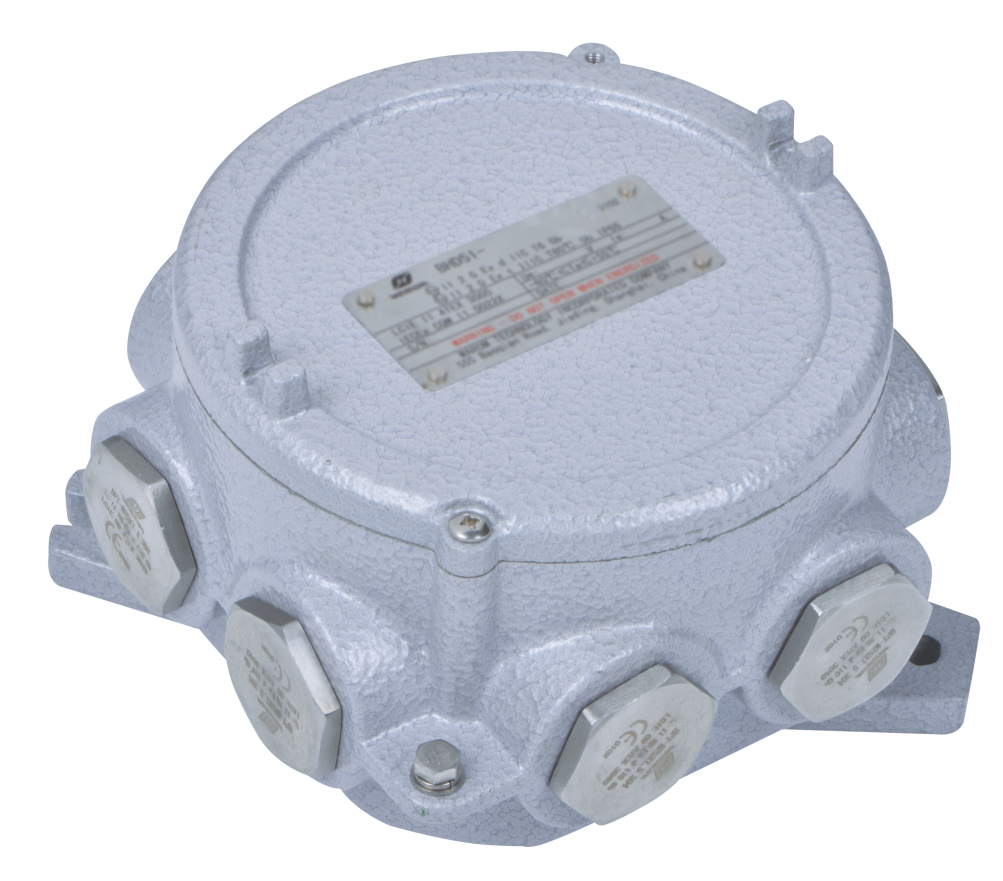
Most water ingress enters through the cable entry rather than the cover. Gland selection has to match the cable, not approximate it. A gland rated for a cable diameter of 12.5 to 20.5 mm fitted to a 12 mm cable leaves the seal uncompressed and looks perfectly tight. Vibration from nearby compressors works on threads, and repeated opening for inspection compresses gaskets until they take a permanent set.
Light source, driver, and enclosure age on different clocks
Rated LED life is usually a photometric projection to L70 or L80 at a stated ambient, often 25 °C. It is not a safety limit, and it says nothing about the driver behind it. For lighting performance, the useful comparison is measured illuminance against the maintained level the task requires, not the number on the datasheet.
Retrofits deserve particular care. Fitting an LED tube into a certified fluorescent enclosure changes the thermal and electrical conditions inside a flameproof or increased safety housing. Unless the manufacturer lists that conversion for that enclosure, the fitting has moved outside its certification, and the marking on the cover now describes something the equipment no longer is.
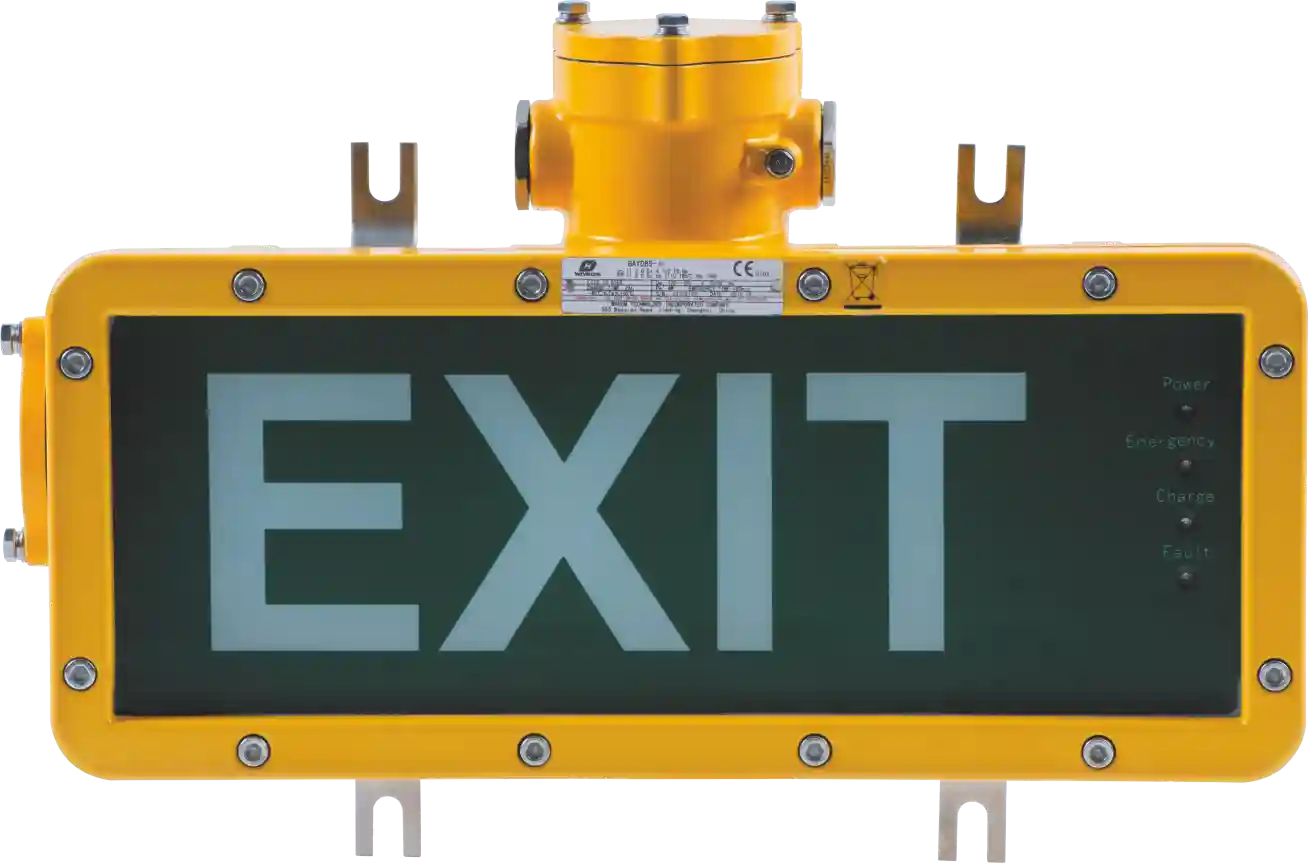
Emergency luminaires add a second clock, because the battery pack ages faster than the enclosure around it. A rated emergency duration, for example 120 minutes, is verified on a healthy pack. Capacity fades with age, charge cycles and elevated temperature, so the replacement trigger is a measured duration test that falls below the rated value, not a service anniversary.
Emergency lighting adds a second replacement clock, because the battery pack ages faster than the enclosure around it. <Explosion Proof Emergency Exit Light Fittings for Industrial Safety> covers explosion proof emergency exit light fittings for industrial safety applications.
How inspection grades turn observations into replacement triggers
Visual, close, and detailed inspection
IEC 60079-17 sets out three inspection grades [3]. A visual inspection is carried out without tools and without opening the enclosure. A close inspection uses tools and may involve removing covers, but stays short of measurement. A detailed inspection adds measurement and thorough examination. Each grade answers a different question, and this is where many replacement decisions go wrong: a visual pass recorded as “satisfactory” says nothing about terminal torque, flamepath gap or gasket compression, yet it is often filed as if it did.
Setting intervals that fit the site
The same standard requires the user to establish the inspection schedule from equipment type, environment, duty and previous results. It does not hand down a universal interval. Copying another plant’s six-month cycle, or a supplier’s recommended calendar, without feeding your own findings back into it is how a corroded flamepath survives three inspections in a row.
Two habits make the grades useful. First, record what was measured, not that someone looked: gap readings, torque values, insulation resistance, illuminance, emergency duration. Second, escalate on findings. A visual check that shows coating damage at the gasket groove should trigger a close inspection of that enclosure, and a close inspection that shows gasket deformation should put that gasket on a replacement list with a date.
What a certificate, an IP rating, and a life rating each prove
Each record used to justify keeping or replacing equipment has a boundary. The table below sets out what four common records legitimately support and where they stop.
| Record | Method or scope | Responsible use | Do not infer |
|---|---|---|---|
| Nameplate IP66 | Type test on the enclosure design | The design passed dust and water jet testing | That the gasket still seals today, or that the coating resists a specific chemical |
| ATEX or IECEx certificate | Type examination of a design sample [1], [2] | The design met the standard when examined | That the installed unit is unmodified and still within tolerance |
| Rated LED life, often 50,000 h | Manufacturer photometric projection to L70 or L80 at a stated ambient | Expected lumen depreciation under those conditions | That the driver, gasket or flamepath lasts the same period |
| Visual inspection pass | Visual grade under IEC 60079-17, no tools [3] | No visible damage was present at that time | That terminal torque, gap or internal condition is acceptable |
| Repair with a similar part | Work carried out on site | Function was restored | That the protection concept and temperature class are unchanged |
| Ambient rating of +60 °C | Upper limit for rated operation | The operating limit covered by the certification | That running at 55 °C leaves component life unaffected |
The boundaries matter because the equipment market is not uniform. A replacement has to be judged inside the framework the installation was originally approved under, and those frameworks do not read the same way.
The approval route shapes which marking a replacement must carry, even when two fittings do the same job. <Explosion Proof Motor Disconnects: ATEX and NEC Compliance> covers ATEX and NEC compliance for explosion proof motor disconnects.
When repair stops being viable
IEC 60079-19 covers repair, overhaul and reclamation of explosion proof equipment, and its guiding principle is that the type of protection must be maintained [4]. That principle draws a practical line. Gaskets, glands, batteries, lenses and listed driver modules are normally field-replaceable where the manufacturer’s instructions permit it. Repairs that alter flamepath surfaces, threads or welded structures generally belong with the manufacturer or a recognised repair facility, because the certified dimensions cannot be re-established by eye.
The hard stops are physical. Pitting or corrosion on a flamepath, damaged threads on a cover, a cracked toughened glass, enclosure deformation, or a marking that can no longer be read all end the repair argument. Once the certified geometry or identity of the equipment cannot be verified, replacement is the compliant path rather than the expensive one.
Non-original internals are the quieter risk. A third-party driver with a different thermal profile or different creepage distances changes the thermal calculation the certificate was based on, even if it fits the space and works. The same applies to a higher-output LED module in an unchanged housing: light output rises, surface temperature rises with it, and a T6 rating can quietly become a T5 claim that nobody wrote down.
The quality of the request decides the quality of the answer. “The fitting is eight years old, send a quotation” produces a price. A request that states the marking data, the latest inspection grade and its finding, the measured light level, and whether the failure is the gasket, the flamepath or the driver produces a technical answer, and sometimes that answer is a gasket kit and a gland rather than a new fitting.
Building a replacement case that survives review
Replacement decisions fail review for the same reason maintenance decisions do: the evidence is scattered. The table below converts the common failure points into checks with a clear trigger.
| Component | Wear mechanism | Check you can run | Replace when |
|---|---|---|---|
| Cover gasket | Compression set, chemical swell, heat ageing | Inspect for hardening, cracks and permanent deformation; check the groove for pitting | The gasket no longer seals or stays deformed after removal |
| Flamepath surfaces | Corrosion, paint build-up, mechanical damage, repeated assembly | Gap and surface condition against the manufacturer’s stated limits, with a feeler gauge and close inspection | Pitting, corrosion or thread damage cannot be restored to certified dimensions |
| LED module and driver | Capacitor ageing, thermal cycling, dust build-up | Measured illuminance against the maintained requirement; driver output and current check | Light level falls below the task requirement, flicker appears, or no listed replacement module exists |
| Emergency battery | Capacity fade, self-discharge, elevated temperature | Timed duration test against the rated emergency duration | Measured duration falls below the rated value |
| Cable gland | Seal compression, corrosion, cable diameter mismatch | Cable diameter against the gland range, seal condition and tightness | Seal is hardened, cable sits outside the range, or the thread is damaged |
| Enclosure and marking | Coating damage, impact, label wear | Marking legibility against certificate data, cracks, deformation | Marking is illegible or the enclosure is deformed |
A complete case assembles four answers. Protection: can the certified dimensions be restored and documented? Performance: does the equipment still meet its lighting, switching or duration duty? Supportability: are gaskets, glands and modules still available, and from where? Conformity: does the paperwork still match the unit on site, including any repair plate or replacement part? Where all four hold, repair is usually the better use of budget. Where supportability fails, the equipment is on a replacement path even if it still works, because the next failure will have no remedy.
Planning replacement before the failure
The most common real limit is not enclosure corrosion. It is electronics obsolescence. A driver board discontinued in year six forces a whole-fitting replacement in year eight, long before the housing has finished its useful life. Sites that plan around this standardise on fewer product families, keep one spare fitting per type, and stock gasket and gland kits alongside battery packs.
Storage conditions affect the spares themselves. Elastomer gaskets age on the shelf, especially under UV, ozone and heat, so a gasket kit left in a sunlit container for four years may be unusable when it is finally needed. Sealed, cool, dark storage protects the parts that will otherwise be ordered in a hurry.
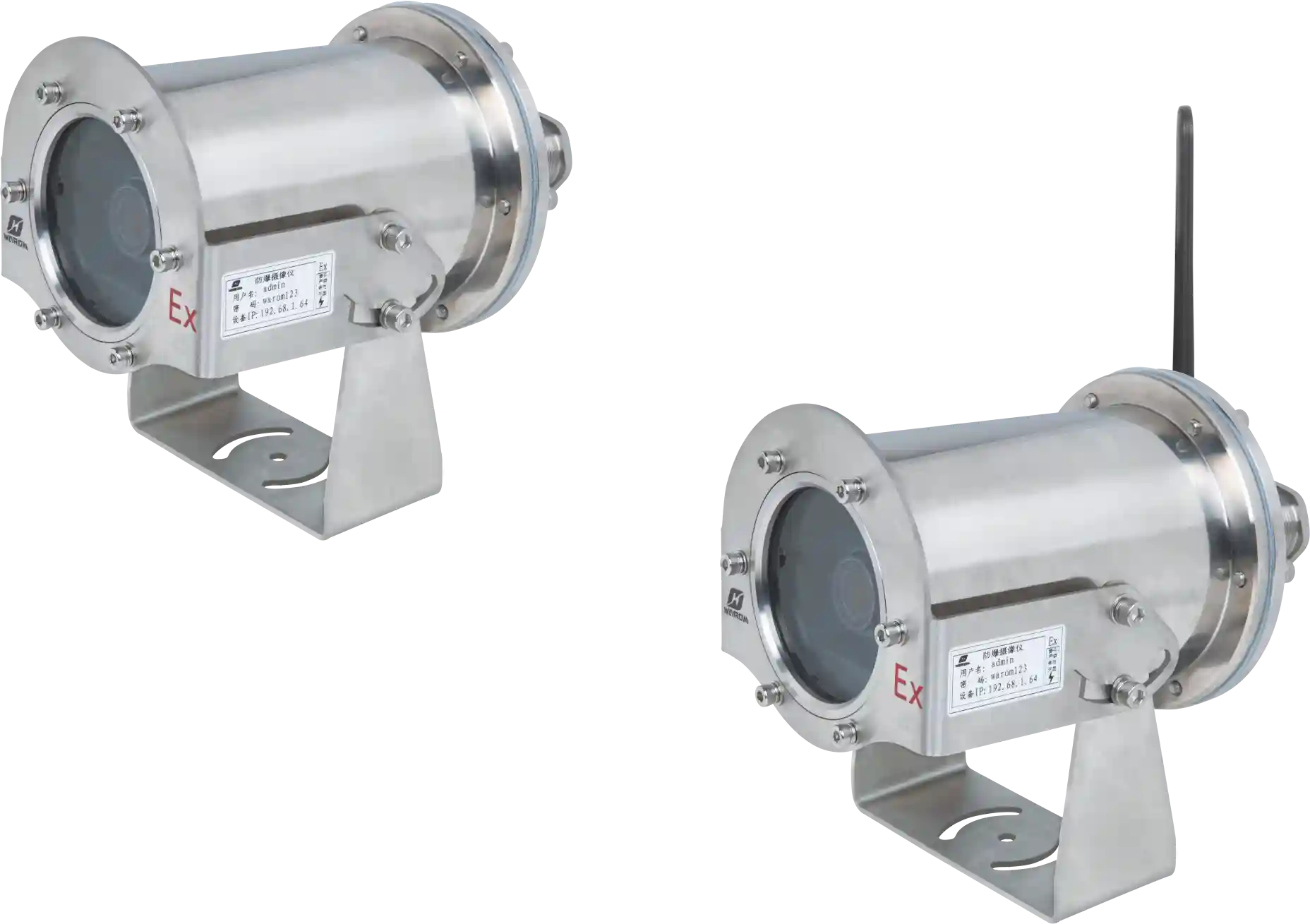
Condition monitoring shortens the gap between the first symptom and the failure. Thermal imaging on distribution cabinets and lighting circuits finds loose terminations and failing drivers while the equipment is still working. In hard-to-reach areas, fixed monitoring removes the need to open enclosures frequently, which is itself a wear mechanism on gaskets and threads.
Finally, build the replacement schedule from inspection history rather than installation dates. A circuit with three close-inspection findings in two years is telling you more about its remaining life than the date stamp on the purchase order.
What to send for a replacement assessment
If you are weighing repair against replacement, send the information that actually decides it: the full marking string, including protection concept, gas group, temperature class and equipment protection level; the certificate number and ambient range; the latest inspection grade and its finding; the measured light level or emergency duration where relevant; the cable entry type and cable diameter; the mounting arrangement; and the quantity with the delivery window you need.
Warom Technology Incorporated Company can review that package against the installed configuration and respond with a repair path or a replacement recommendation. Email gm*@***om.com, or call +86 21 39977076 or +86 21 39972657.
FAQ
How long does explosion proof electrical equipment last
There is no single figure, because three lives run in parallel. The enclosure is usually the longest lived part, the driver or battery is usually the shortest, and the availability of spare modules often ends the service life before either does. The practical rule is to replace on evidence: a protection failure that cannot be restored, a measured performance shortfall, or a part that can no longer be sourced in a certified form.
Is it cheaper to repair or replace explosion proof equipment
It depends on which of the four conditions has failed, and the comparison is often closer than the purchase price suggests. A gasket, gland or listed driver module is usually far cheaper than a new fitting, and it preserves the existing certification and cable entry work. A repair stops being cheaper once a non-original part would be needed, or once labour and re-inspection approach the cost of a compliant replacement with a current spare-parts position.
Can I replace an explosion proof light fitting with a different model
Yes, provided the replacement matches or improves every parameter the area classification requires: protection concept and equipment protection level, gas or dust group, temperature class, ambient range, IP rating and cable entry. Matching wattage is not enough. A higher-output module in a smaller housing can raise surface temperature and change the temperature class, and the installation documentation has to be updated to reflect what is now fitted.
What records should support a replacement decision
Keep four sets: the marking and certificate data as installed, inspection reports that state measurements rather than opinions, the repair and parts history including any repair plate, and the measured performance data such as illuminance or emergency duration. With those four, a replacement case can be reviewed on evidence. Without them, the decision defaults to age, which is the least reliable input available.
References
[1] IEC 60079-0:2017, “Explosive atmospheres, Part 0: Equipment, general requirements,” International Electrotechnical Commission, 2017.
[2] Directive 2014/34/EU, “Harmonisation of the laws of the Member States relating to equipment and protective systems intended for use in potentially explosive atmospheres,” European Parliament and Council, 2014.
[3] IEC 60079-17:2013, “Explosive atmospheres, Part 17: Electrical installations inspection and maintenance,” International Electrotechnical Commission, 2013.
[4] IEC 60079-19:2019, “Explosive atmospheres, Part 19: Equipment repair, overhaul and reclamation,” International Electrotechnical Commission, 2019.
If you’re interested, check out these related articles:
ACHEMA 2024 is Underway
Warom at SMM Hamburg
With over a decade of experience, he is a seasoned Explosion-Proof Electrical Engineer specializing in the design and manufacture of safety and explosion-proof products. He possesses in-depth expertise across key areas including explosion-proof systems, nuclear power lighting, marine safety, fire protection, and intelligent control systems. At Warom Technology Incorporated Company, he holds dual leadership roles as Deputy Chief Engineer for International Business and Head of the International R&D Department, where he oversees R&D initiatives and ensures the precise delivery of design documentation for international projects. Committed to advancing global industrial safety, he focuses on translating complex technologies into practical solutions, helping clients implement safer, smarter, and more reliable control systems worldwide.

Qi Lingyi