

Portable explosion-proof lighting exists because standard lights can kill people in the wrong environment. When flammable gases, vapors, or combustible dusts fill a workspace, a single spark from an ordinary fixture can trigger catastrophic explosions. These specialized lights contain any internal ignition event and prevent heat or sparks from reaching the surrounding atmosphere. Getting this right matters in oil and gas facilities, chemical plants, mines, and pharmaceutical operations where the margin for error is essentially zero.
How Hazardous Zone Classifications Shape Equipment Selection
The entire framework for portable explosion-proof lighting rests on understanding where explosive atmospheres exist and how often they occur. International standards like ATEX, IECEx, and UL divide hazardous locations into zones based on the probability of encountering ignitable concentrations of gases, vapors, or dusts.
Zone 0 indicates continuous presence of explosive atmospheres. Zone 1 covers intermittent occurrence during normal operations. Zone 2 applies to areas where explosive concentrations appear only under abnormal conditions. The North American system uses Class I, Division 1 for locations where ignitable concentrations exist under normal operating conditions, with Division 2 covering abnormal situations.
These classifications directly determine what equipment can be safely deployed. A light rated for Zone 2 cannot be used in Zone 1 without creating unacceptable risk. The classification also considers the specific hazardous material present, its gas group, and temperature class. A T6 temperature class rating, for example, limits the equipment’s maximum surface temperature to 85°C, which prevents ignition of many common flammable substances whose autoignition temperatures exceed this threshold.
The consequences of getting this wrong are severe. A non-certified light in a classified area can trigger explosions that cause fatalities, severe injuries, and massive property damage. This is why intrinsically safe lighting and explosion proof LED work lights function as essential safety components rather than optional accessories.
Real-world performance validates these principles. The Tilenga project in Uganda required portable explosion-proof lighting and electrical systems for wellpads, a Central Processing Facility, and pipelines, with some installations located within Murchison Falls National Park. The project achieved zero safety incidents while meeting demanding requirements for energy efficiency and low maintenance in remote operational settings.
Certification Requirements That Determine Equipment Suitability
Compliance with international and national safety standards separates equipment that can be safely deployed from equipment that creates liability. ATEX certified lamps meet European Union directives specifying essential health and safety requirements for potentially explosive atmospheres. IECEx standards provide a globally recognized certification framework that facilitates international trade while maintaining consistent safety levels. UL hazardous location certifications address North American requirements for Class I Division 1 lighting and related gas and dust ignition protection.
These certifications categorize equipment by gas groups, dust groups, and temperature classes. The ratings indicate which hazardous substances the equipment can safely withstand and what maximum surface temperatures it will generate during operation. Matching these ratings to the actual hazards present in a facility is not optional.
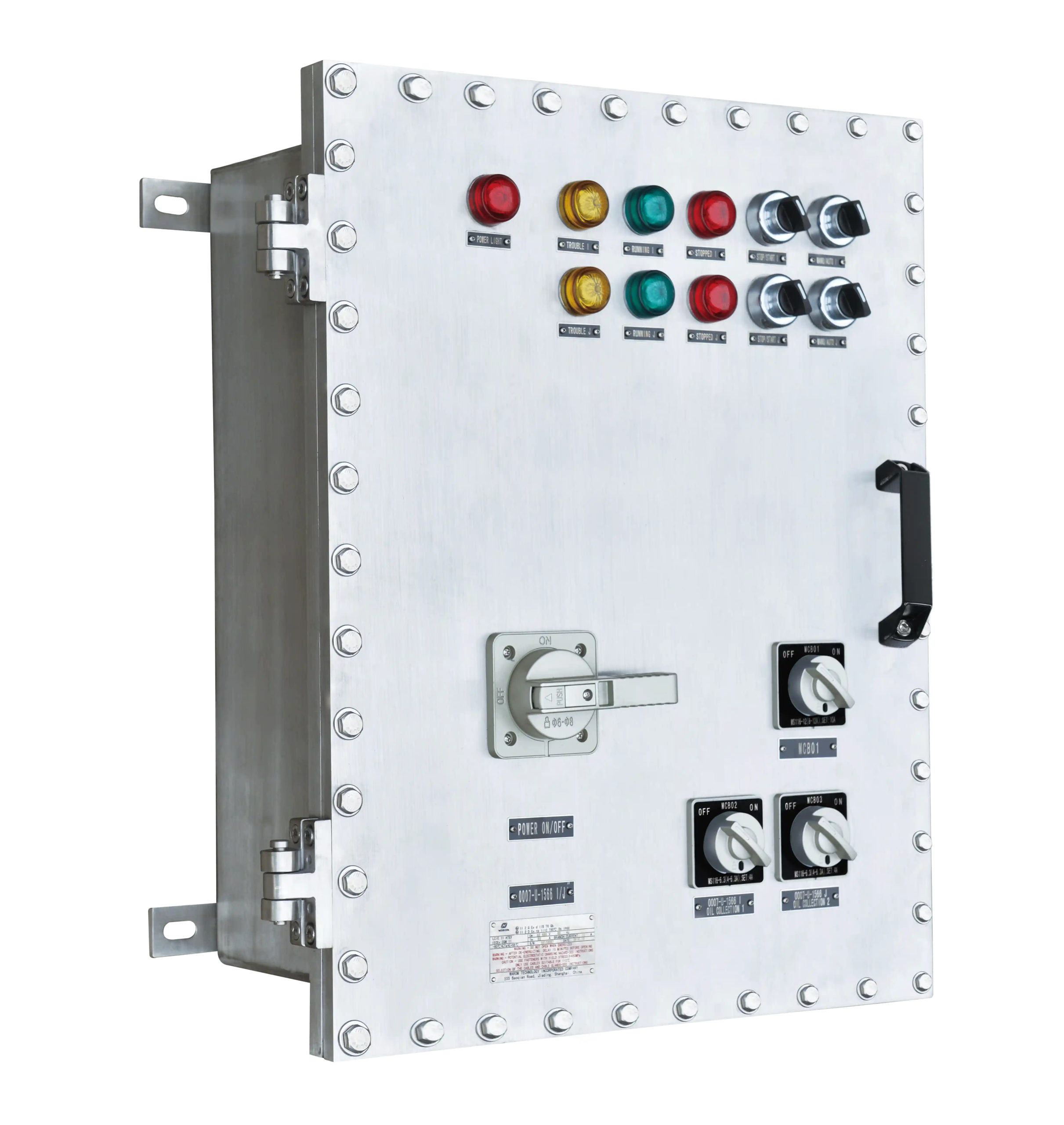
WAROM’s approach to meeting these global standards shows in projects like the General Paint electrical safety upgrade in Mexico. The facility faced flammable gas and dust risks that required customized portable explosion-proof lighting solutions. The project included explosion-proof plugs and illumination distribution boxes, ensuring enhanced safety and compliance with stringent regulations.
What is the difference between intrinsically safe and explosion-proof lighting?
Intrinsically safe lighting limits electrical and thermal energy to levels too low to ignite a hazardous atmosphere. This makes it suitable for Zone 0 environments where explosive atmospheres are continuously present. Explosion-proof lighting takes a different approach. It contains any explosion that may occur within its enclosure, preventing ignition of the external atmosphere. This design is typically more robust and works well for Class I, Division 1, or Zone 1/2 hazardous locations where explosive concentrations are less frequent but still present significant risk. The choice between intrinsically safe vs explosion proof depends on the specific hazardous zone classification and operational requirements.
For further insights into specialized lighting, consider reading 《Explosion Proof LED Lighting Solutions for Hazardous Areas》.
Matching Portable Explosion-Proof Lighting to Specific Applications
Selecting the correct portable explosion-proof lighting requires detailed assessment of the application environment, operational needs, and specific hazardous zone classifications. Several factors determine whether a particular light will perform safely and effectively.
Start with the hazardous zone classification. Whether the area is Zone 0, Zone 1, Zone 2, Class I Division 1, or Class I Division 2 dictates the required certification level. This determines the level of protection against flammable gases, vapors, or dusts that the equipment must provide.
The type of hazardous material present matters equally. Gas group and temperature class must match the equipment’s ratings. The light’s surface temperature cannot exceed the autoignition temperature of the surrounding atmosphere under any operating condition.
Illumination requirements vary by task. Portable floodlights for hazardous areas need broad, powerful illumination for general work. Explosion proof hand lamps may require focused beams for detailed inspection tasks. The application determines the appropriate beam pattern and lumen output.
Power source and battery life become critical for portable safety lights. Rechargeable explosion proof lights with extended battery life are essential for operations in remote areas where frequent recharging or battery replacement is impractical.
Durability and material construction must match environmental conditions. Corrosion resistance, vibration tolerance, and temperature range all affect whether equipment will survive in a particular setting. Marine explosion proof lighting requires enhanced corrosion resistance due to saltwater exposure.
The Fushilai Pharmaceutical project demonstrated the importance of matching portable explosion-proof lighting to specific operational needs. The project required robust solutions for workshops, warehouses, and tank farms that could withstand harsh chemical environments while ensuring safety and operational continuity.
| Feature | Portable Explosion Proof LED Floodlight (e.g., BAT86) | Portable Explosion Proof Fluorescent Light (e.g., BAY51-Q) |
|---|---|---|
| Light Source | LED module | T8 Fluorescent tube |
| Ambient Temperature | -60℃~+60℃ | -40℃~+55℃ |
| Degree of Protection | IP66 | IP66 |
| Corrosion-proof | WF2 | WF2 |
| Primary Application | Wide-area illumination, industrial portable lighting | General area lighting, confined spaces |
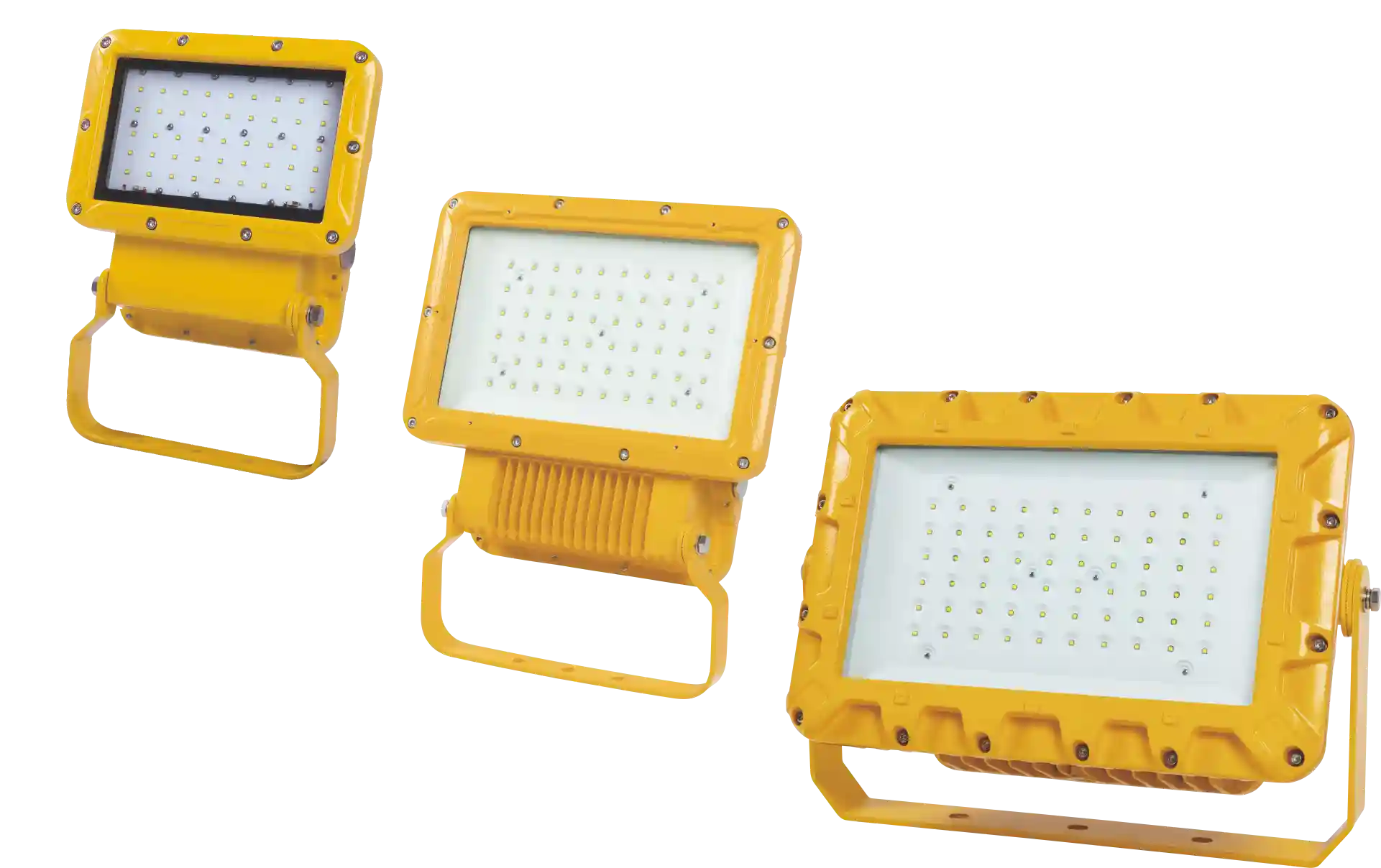
For wide-area illumination, the BAT86 Explosion-proof LED Floodlights feature high-quality steel construction and powder-coated surfaces that ensure reliable operation in severe environments exposed to moisture, vibration, or corrosion. These floodlights incorporate a constant current/voltage driver with overload protection and EOL functions. For general area lighting, the BAY51-Q Explosion-proof Corrosion-proof Plastic Light Fitting For Fluorescent Lamp provides a durable solution with a high-quality steel body suited to similar challenging conditions.
LED Technology and Smart Features in Modern Hazardous Area Lighting
The shift toward explosion proof LED technology has fundamentally changed what portable explosion-proof lighting can deliver. LEDs provide superior energy efficiency, longer lifespan, and instant illumination. These advantages translate directly to reduced maintenance requirements and lower operational costs over the equipment’s service life.
Energy efficient explosion proof designs minimize heat generation. This serves two purposes. Lower surface temperatures reduce ignition risk, and reduced power consumption extends battery life for portable units. Both outcomes improve safety margins in hazardous environments.
Smart hazardous area lighting and wireless hazardous location lighting are emerging capabilities that allow remote monitoring and control. These systems can integrate with broader safety networks, providing real-time status updates and automated responses to changing conditions. Flexible deployment in complex industrial settings becomes more practical when lighting can be monitored without physical access.
Manufacturers are also developing maintenance-free hazardous lighting solutions. Robust materials, sealed enclosures, and self-diagnostic capabilities reduce the need for frequent inspections and component replacements. The Tilenga project prioritized reliability and low maintenance under extreme conditions, leveraging advanced LED technology to ensure consistent performance in remote locations.
Maintaining Portable Explosion-Proof Lighting for Long-Term Safety
Proper installation, regular maintenance, and adherence to inspection protocols determine whether portable explosion-proof lighting continues to provide protection over its service life. Incorrect installation can compromise the integrity of explosion protection, rendering equipment unsafe regardless of its certification.
All installation procedures must follow manufacturer guidelines and relevant electrical codes for hazardous locations. This often involves specialized wiring techniques and certified cable glands and junction boxes to maintain explosion-proof integrity throughout the electrical system.
Once installed, routine visual inspections should check for damage, corrosion, or wear. Seals, lenses, and enclosures must remain intact to provide adequate protection. For portable units, the battery compartment and charging mechanisms require particular attention. Battery life in explosion proof lights depends on proper charging cycles and timely battery replacement to ensure emergency readiness.
Preventative maintenance extends operational life. Cleaning external surfaces, tightening connections, and verifying emergency hazardous area lighting functionality all contribute to sustained performance. WAROM’s involvement in projects like Fushilai Pharmaceutical, where timely and high-quality execution for portable explosion-proof lighting was essential, demonstrates the value of expert support in maintaining safety standards.
How often should portable explosion-proof lights be inspected and maintained?
Portable explosion-proof lights should undergo regular inspections at least annually, with more frequent checks depending on the operating environment and manufacturer recommendations. Preventative maintenance should align with these inspection cycles, addressing any identified issues promptly. For units used in particularly harsh conditions or those critical for emergency hazardous area lighting, monthly or quarterly checks are advisable. This proactive approach ensures optimal performance and adherence to explosion proof light inspection frequency guidelines.
WAROM’s Track Record in Portable Explosion-Proof Lighting Projects
WAROM TECHNOLOGY INCORPORATED COMPANY, founded in 1987, brings over 35 years of experience to explosion-proof solutions. The company integrates product research and development, manufacturing, and sales, with explosion-proof industrial products at its core.
Project implementations demonstrate capability and commitment to client safety. The Tilenga project in Uganda required comprehensive portable explosion-proof lighting and electrical systems for wellpads, a CPF, and pipelines. The project was partly located within a national park, adding environmental constraints to the technical requirements. Zero safety incidents and compliance with stringent environmental and performance requirements validated the approach.
The General Paint electrical safety upgrade in Mexico involved on-site diagnosis and customized explosion-proof solutions, including explosion proof plugs and sockets and illumination distribution boxes. The project significantly improved safety and integrated WAROM products into the client’s procurement system, establishing a replicable technical-marketing model.
In the pharmaceutical sector, the Fushilai Pharmaceutical CM/CDMO construction project required portable explosion-proof lighting for workshops, warehouses, and tank farms. Multi-party coordination and professional support ensured timely and high-quality execution across all critical areas.
Elevate Your Industrial Safety Standards with WAROM
Elevate your industrial safety standards with WAROM TECHNOLOGY INCORPORATED COMPANY’s expertise in explosion-proof solutions. Contact us at +86 21 39977076 or gm*@***om.com for a consultation on how certified portable explosion-proof lighting can safeguard your operations and personnel.
Frequently Asked Questions About Portable Explosion-Proof Lighting
Can portable explosion-proof lights be used in all hazardous zones?
Portable explosion-proof lights must be specifically rated for the hazardous zone classification where they will be used. Different zones have varying requirements based on the presence and type of flammable substances. Zone 0 demands different protection than Zone 2. Class I, II, and III divisions each address specific hazard types. Always verify the ATEX rating or IECEx certification to ensure compatibility and safety for the specific environment before deployment.
What are the common power sources for portable explosion-proof lighting?
Rechargeable batteries, typically lithium-ion for extended battery life, power most portable explosion-proof lighting. Alkaline batteries serve simpler applications. Some portable units are corded explosion proof lights designed for connection to a safe power supply outside the hazardous area or through certified power packs. The choice depends on required run-time, portability needs, and power availability at the work location.
How does WAROM ensure the reliability of its portable explosion-proof lighting?
WAROM ensures reliability through rigorous testing, stringent quality control, and adherence to international industry certifications like ATEX and IECEx. Products are engineered with durable materials such as copper-free aluminum alloy and GRP to withstand harsh industrial environments. Expert engineering combined with comprehensive customer support ensures consistent, long-term safety and performance across diverse operating conditions.
With over a decade of experience, he is a seasoned Explosion-Proof Electrical Engineer specializing in the design and manufacture of safety and explosion-proof products. He possesses in-depth expertise across key areas including explosion-proof systems, nuclear power lighting, marine safety, fire protection, and intelligent control systems. At Warom Technology Incorporated Company, he holds dual leadership roles as Deputy Chief Engineer for International Business and Head of the International R&D Department, where he oversees R&D initiatives and ensures the precise delivery of design documentation for international projects. Committed to advancing global industrial safety, he focuses on translating complex technologies into practical solutions, helping clients implement safer, smarter, and more reliable control systems worldwide.

Qi Lingyi