
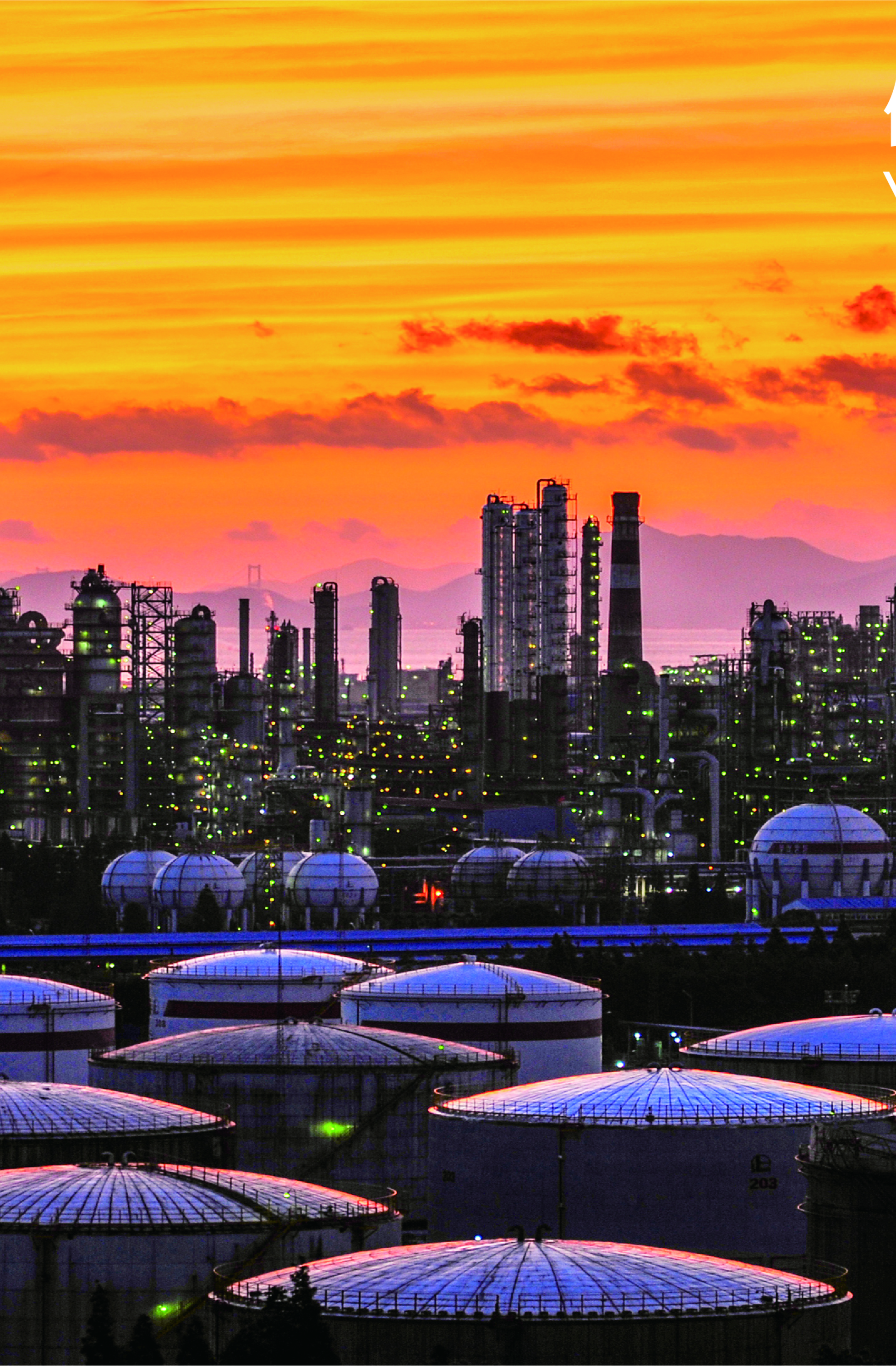
Instrument cables in hazardous areas carry signals that control processes worth millions in uptime and, more critically, protect lives. The junction where these cables terminate—inside an explosion proof terminal box—is where electrical integrity meets atmospheric risk. A single compromised connection in a Zone 1 environment can propagate an arc into a flammable vapor cloud. The engineering challenge is straightforward in principle: contain ignition sources while preserving signal fidelity. Execution demands precision in material selection, certification compliance, and installation practice.
Hazardous Area Classification Determines Protection Requirements
Hazardous locations are classified by the probability and duration of explosive atmospheres. International standards, including ATEX certification and IECEx standards, define zones based on whether flammable gases or combustible dusts are present continuously, intermittently, or rarely. Zone 0 indicates a continuous explosive gas atmosphere, such as the interior of a fuel storage tank. Zone 2 describes conditions where ignitable concentrations occur only under abnormal circumstances. Dust classifications follow a parallel structure: Zone 20 for continuous presence, Zone 22 for infrequent accumulation.
The classification directly dictates which protection methods are permissible. A Zone 1 gas environment requires equipment certified for that level of risk, not merely Zone 2 rated devices. Misclassification, whether through incomplete risk assessment or procurement shortcuts, creates exposure that no amount of subsequent maintenance can correct.
| Zone | Type of Hazard | Example |
|---|---|---|
| 0 | Continuous gas | Inside a fuel tank |
| 1 | Intermittent gas | Near a volatile chemical vent |
| 2 | Rare gas | Storage area for flammable liquids |
| 20 | Continuous dust | Inside a grain silo |
| 21 | Intermittent dust | Near a powder processing machine |
| 22 | Rare dust | Warehouse for combustible dust |
The Tilenga project in Uganda maintained zero safety incidents across its explosion-proof electrical systems, a result attributable to correct zone classification followed by appropriate equipment selection. Financial and human costs of electrical failures in these environments extend beyond the immediate blast radius to regulatory penalties, production losses, and reputational damage that persists for years.
Protection Methods Inside Explosion Proof Terminal Boxes
Three primary technologies govern how explosion proof terminal boxes prevent ignition of surrounding atmospheres. Flameproof enclosures, designated Ex d, contain any internal explosion and cool escaping gases below ignition temperature through precisely machined flame paths. The enclosure does not prevent an internal arc; it prevents that arc from reaching the external atmosphere.
Increased safety construction, Ex e, takes a different approach. It eliminates conditions that could produce arcs or excessive temperatures during normal operation and specified fault conditions. Terminal blocks, insulation, and internal wiring are designed with enhanced clearances and creepage distances.
Intrinsic safety, Ex i, limits circuit energy to levels incapable of igniting the atmosphere even under fault conditions. This method is particularly suited to instrumentation circuits where signal levels are inherently low. A 4-20mA loop, properly designed with certified barriers, cannot release sufficient energy to ignite methane or propane vapors.
Selection among these methods depends on the zone classification, the instrument signal requirements, and practical installation constraints. A flameproof enclosure suits power distribution in Zone 1, while intrinsic safety often proves more practical for field instrument connections where frequent access is required.
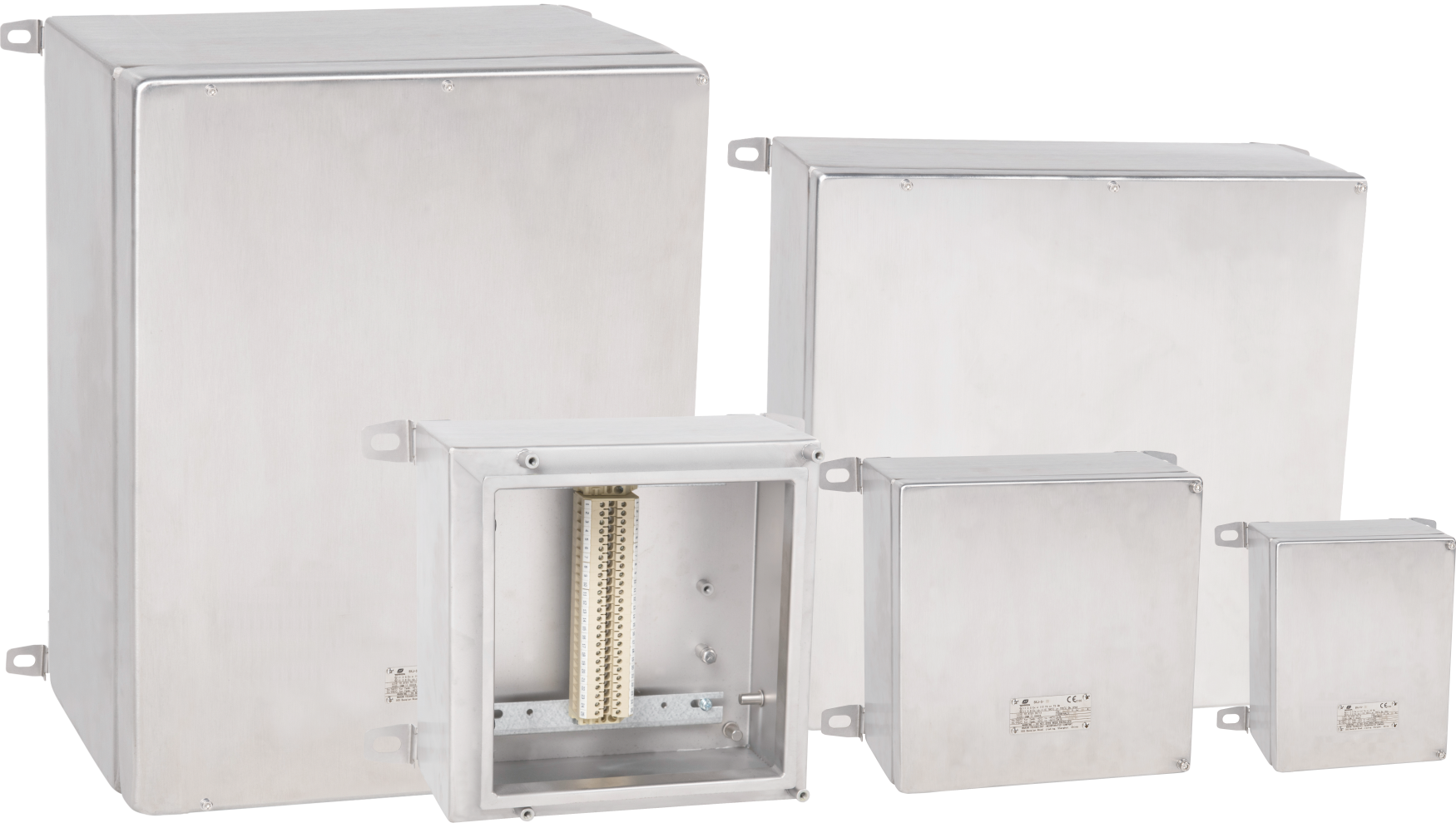
Cable glands provide the sealed entry point that maintains the enclosure’s protection rating. A flameproof gland must match the enclosure’s certification, not merely its thread size. Terminal blocks inside the box organize connections and must themselves be rated for the protection concept, whether Ex d, Ex e, or Ex i.
Which Certifications Apply to Explosion Proof Terminal Boxes in International Projects?
International projects require explosion proof terminal boxes carrying certifications recognized in the destination jurisdiction. ATEX certification applies throughout the European Union. IECEx provides a framework accepted in most countries outside North America. UL certification governs installations in the United States and Canada. EAC certification covers the Eurasian Economic Union.
Dual certification, typically ATEX and IECEx, simplifies procurement for multinational projects. Equipment certified under IECEx can often be accepted in ATEX jurisdictions with minimal additional documentation, though the reverse is not always true. Verification of certification authenticity matters: certificates should be traceable to the issuing notified body, and equipment markings must match certificate details exactly.
Material Selection Determines Long-Term Enclosure Performance
The physical durability of an explosion proof terminal box depends on material compatibility with the installation environment. High-strength copper-free aluminum alloys offer favorable strength-to-weight ratios and resist corrosion in many industrial atmospheres. Stainless steel, typically 316L grade, provides superior resistance to chloride-induced pitting and is preferred for marine or chemical processing environments where aluminum would degrade.
Ingress protection ratings quantify resistance to dust and water. An IP66 rating indicates complete dust tightness and protection against powerful water jets, suitable for outdoor installations subject to cleaning operations. IP67 adds protection against temporary immersion. The rating must match actual site conditions, not merely the minimum required by the hazardous area classification.
| IP Rating | Protection from Solids | Protection from Liquids |
|---|---|---|
| IP0X | No protection | No protection |
| IP1X | >50mm | Dripping water |
| IP2X | >12.5mm | Dripping water (tilted) |
| IP3X | >2.5mm | Spraying water |
| IP4X | >1mm | Splashing water |
| IP5X | Dust protected | Water jets |
| IP6X | Dust tight | Strong water jets |
UV resistance matters for outdoor installations where polymer components or gaskets face prolonged sun exposure. Vibration resistance becomes critical near rotating equipment or in mobile applications. The Fushilai Pharmaceutical project specified anti-corrosion equipment throughout its chemical plant, recognizing that material degradation over a 15-year service life would compromise both safety and signal reliability.
How Environmental Conditions Affect Terminal Box Service Life
Corrosion and temperature extremes degrade enclosure materials and sealing components over time. Aluminum alloys exposed to acidic atmospheres develop surface pitting that can eventually penetrate the wall thickness. Gasket materials harden and crack under sustained high temperatures or repeated thermal cycling, compromising the IP rating and potentially the explosion protection.
Selecting enclosures rated for the actual ambient temperature range, not merely the process temperature, prevents premature seal failure. Corrosion protection ratings such as WF2 indicate suitability for environments with specific chemical exposures. The investment in appropriate materials at procurement reduces replacement frequency and avoids the safety risk of operating degraded equipment.
Installation Practices That Preserve Explosion Protection
Correct installation determines whether certified equipment actually provides its rated protection. Cable glands must match both the cable outer diameter and the enclosure’s protection concept. A flameproof gland installed in an increased safety enclosure does not upgrade the enclosure; it creates a potential failure point where the gland’s flame path may not align with the enclosure’s design assumptions.
Wire termination within terminal blocks requires attention to torque specifications. Under-tightened connections create resistance that generates heat during current flow. Over-tightened connections damage conductor strands or terminal components. Both conditions can produce the arcs or hot surfaces that the enclosure is designed to contain.
Grounding follows specific requirements that vary by protection concept and local electrical codes. Intrinsically safe circuits require dedicated ground connections separate from power system grounds. Flameproof enclosures must be bonded to the plant grounding system to prevent static charge accumulation.
Unused cable entries require certified blanking plugs, not field-fabricated closures. A drilled entry that remains open, even temporarily, voids the enclosure’s certification. If your installation involves multiple instrument types with different cable diameters, discussing gland selection with the equipment supplier before procurement prevents field modifications that compromise protection.
Custom Terminal Box Configurations for Specific Instrument Layouts
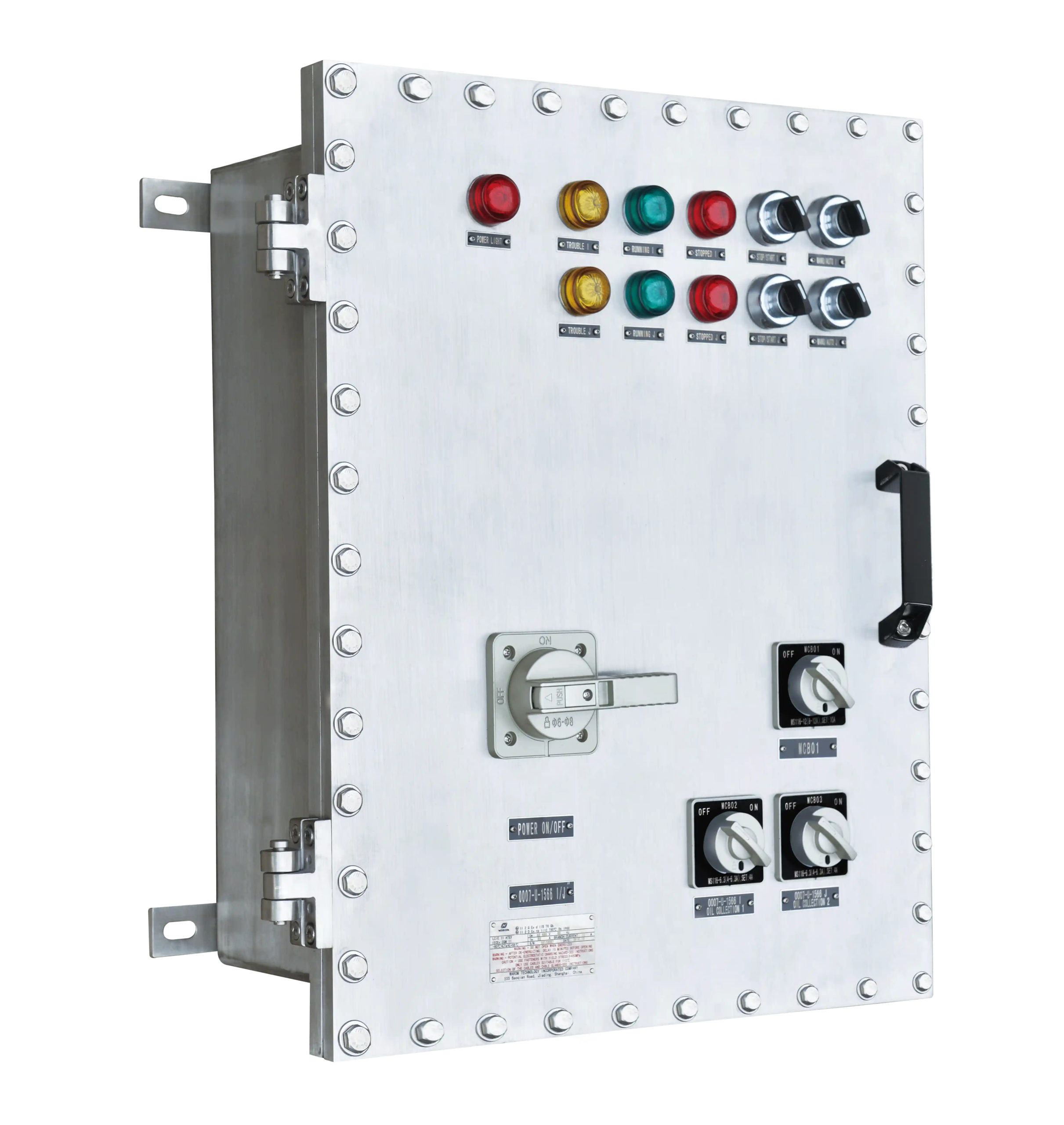
Standard catalog terminal boxes suit many applications, but complex instrumentation systems often require customized configurations. Custom drilling patterns accommodate specific cable entry positions that align with cable tray routing. Terminal block arrangements can match instrument wiring diagrams, reducing field wiring errors and simplifying commissioning.
Integration with specific field devices, whether temperature transmitters, pressure sensors, or analytical instruments, may require specialized terminal types or internal barriers. The General Paint project utilized customized explosion-proof junction boxes configured for the specific hazards and instrument layout of their coating operations, an approach that prevented potential fires while streamlining installation.
Can Terminal Boxes Be Customized for Unique Instrumentation Requirements?
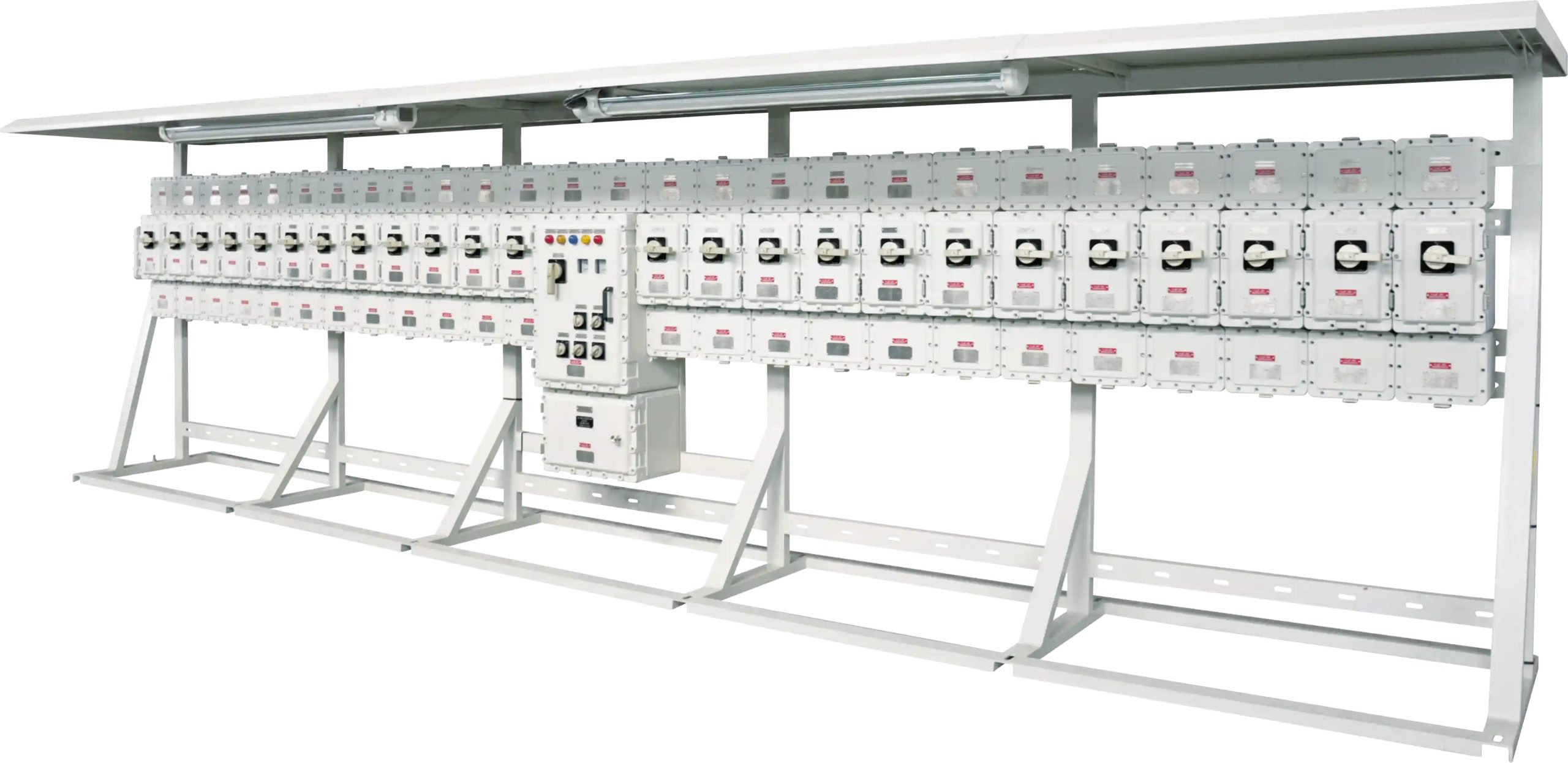
Manufacturers offer design flexibility for bespoke terminal box requirements. Specialized drilling accommodates non-standard cable entry positions. Custom terminal configurations match specific instrument wiring diagrams, whether for thermocouples, RTDs, or 4-20mA loops. Direct integration with field devices can include internal mounting provisions or pre-wired connections.
Early coordination during the design phase allows optimization that would be impossible or expensive to achieve through field modification. The certification process for custom configurations follows the same rigor as standard products, ensuring that modifications do not compromise explosion protection.
Why Explosion Proof Terminal Boxes Protect Instrumentation Integrity
Explosion proof terminal boxes serve two functions that are equally critical. The obvious function is preventing ignition of flammable atmospheres. The less visible function is protecting the instrument connections themselves from environmental damage and electrical interference.
Instrumentation in hazardous areas monitors and controls processes where failure consequences are severe. A temperature transmitter in a reactor vessel provides data that prevents thermal runaway. A level sensor in a storage tank prevents overfill conditions that could release flammable materials. The terminal box where these instruments connect to the control system must maintain signal integrity under conditions that would destroy unprotected wiring.
Compliance with safety mandates is not optional, but the business case extends beyond regulatory requirements. The cost of compliant terminal boxes is a small fraction of the potential losses from a single explosion or extended production outage due to instrument failure. The Tilenga project’s safety record demonstrates that proper equipment selection and installation produce measurable results.
Partner with Us for Hazardous Area Safety
Ensure the highest level of safety and operational integrity for your hazardous area projects. To discuss requirements for your specific application, contact WAROM TECHNOLOGY INCORPORATED COMPANY for consultation and bespoke explosion-proof solutions.
Tel: +86 21 39977076 +86 21 39972657
Email: gm*@***om.com
What is the typical lifespan of an explosion proof terminal box in a chemical plant environment?
Service life in chemical plant environments typically ranges from 10 to 20 years, depending on material selection, IP rating, and the specific corrosive agents present. Stainless steel enclosures in moderately corrosive atmospheres reach the upper end of this range. Aluminum enclosures exposed to chlorinated solvents or strong acids may require replacement sooner. Regular inspection of gaskets and cable glands extends service life by identifying degradation before it compromises protection.
How do I ensure my explosion proof terminal boxes comply with both ATEX and IECEx standards?
Select terminal boxes carrying dual ATEX and IECEx certification from the manufacturer. Verify that certificates are current and that equipment markings match certificate details. Dual-certified equipment meets the testing requirements of both frameworks, eliminating the need for separate product lines for European and international projects. Certificate authenticity can be verified through the issuing notified body’s online database.
Can explosion proof terminal boxes be used for both power and instrumentation cables?
Terminal boxes accommodate both power and instrumentation cables when properly configured. Segregation between power and signal circuits prevents electromagnetic interference that could corrupt instrument readings. Separate terminal blocks or physical barriers within the enclosure maintain this segregation. Grounding arrangements differ between power and instrumentation circuits; following the manufacturer’s installation instructions ensures both circuit types function correctly without compromising explosion protection. For applications requiring both power distribution and instrument termination, discussing the specific requirements with the supplier ensures appropriate internal configuration.
If you’re interested, you may want to read the following articles:
CANTON FAIR 2023
MED ENERGY CONFERENCE & EXHIBITION
Explosion-Proof CCTV for Zone 1: Hazardous Area Surveillance
Warom won the title of Excellent Purveyor
SOGCE 2025 is Underway
With over a decade of experience, he is a seasoned Explosion-Proof Electrical Engineer specializing in the design and manufacture of safety and explosion-proof products. He possesses in-depth expertise across key areas including explosion-proof systems, nuclear power lighting, marine safety, fire protection, and intelligent control systems. At Warom Technology Incorporated Company, he holds dual leadership roles as Deputy Chief Engineer for International Business and Head of the International R&D Department, where he oversees R&D initiatives and ensures the precise delivery of design documentation for international projects. Committed to advancing global industrial safety, he focuses on translating complex technologies into practical solutions, helping clients implement safer, smarter, and more reliable control systems worldwide.

Qi Lingyi