

Underground mining demands electrical equipment that won’t become the spark that ends everything. The atmosphere down there doesn’t forgive mistakes—methane seeping from coal seams, fine dust suspended in confined spaces, and machinery that must keep running regardless. Explosion proof motor switches exist precisely for this reality, controlling essential equipment while ensuring the electrical system itself never triggers the disaster it’s meant to prevent.
The Atmosphere Below Ground Creates Constant Ignition Risk
The air in underground mines carries threats that surface operations rarely encounter. Methane released from coal seams mixes with oxygen in concentrations that can detonate with minimal energy input. Coal dust, when suspended and ignited, produces secondary explosions that often cause more destruction than the initial event. These aren’t theoretical concerns—they’re the baseline conditions that mining electrical systems must accommodate every shift.
Hazardous area classification systems exist because not every section of a mine presents identical risk levels. International frameworks like ATEX directives and IECEx certification divide spaces into zones based on how often explosive atmospheres occur and how long they persist. Zone 0 for gases and Zone 20 for dusts represent continuous or near-continuous exposure to explosive conditions. Zone 1 and Zone 21 cover areas where hazardous atmospheres appear occasionally during normal operations. Zone 2 and Zone 22 apply where explosive conditions are unlikely or brief.
Getting this classification right determines which equipment can operate where. Flammable gas detection systems provide real-time monitoring, but the electrical infrastructure itself must be designed assuming detection might fail. WAROM’s involvement in the Tilenga project in Uganda—spanning wellpads, a central processing facility, and pipeline infrastructure—demonstrated what zero safety incidents looks like when classification and equipment selection align properly.
| Zone Type | Hazard Type | Description |
|---|---|---|
| Zone 0 | Gas | Continuous or long-term presence of explosive gas atmosphere. |
| Zone 1 | Gas | Occasional presence of explosive gas atmosphere. |
| Zone 2 | Gas | Unlikely presence of explosive gas atmosphere, or for short periods. |
| Zone 20 | Dust | Continuous or long-term presence of combustible dust cloud. |
| Zone 21 | Dust | Occasional presence of combustible dust cloud. |
| Zone 22 | Dust | Unlikely presence of combustible dust cloud, or for short periods. |
Certification Requirements That Cannot Be Negotiated
Explosion proof motor switches entering underground mining operations must carry specific certifications—there’s no workaround here. ATEX certification covers equipment destined for European markets and has become a de facto global benchmark. IECEx standards provide international recognition that simplifies deployment across multiple jurisdictions. Operations in the United States require MSHA compliance, which adds mining-specific requirements beyond general industrial standards.
These certifications dictate protection techniques down to component level. Intrinsic safety principles limit electrical energy so that even a fault condition cannot produce sufficient heat or spark energy for ignition. Flameproof enclosures take a different approach, containing any internal explosion and cooling escaping gases below ignition temperature. Dust ignition protection addresses the particle size and accumulation patterns unique to mining environments.
WAROM’s work on projects like General Paint and Fushilai required meeting stringent safety criteria where regulatory compliance wasn’t just about passing inspection—it determined whether operations could proceed at all.
What certifications are required for explosion proof motor switches in underground mines?
Explosion proof motor switches for underground mining need ATEX certification for European deployment and IECEx certification for international recognition. Equipment markings indicate the specific protection method: Ex d designates flameproof enclosures that contain internal explosions, while Ex ia indicates intrinsic safety where energy levels are limited below ignition thresholds. IP ratings like IP66 confirm protection against dust infiltration and water exposure. MSHA compliance becomes mandatory for U.S. mining operations. These markings aren’t just labels—they represent tested performance against specific failure scenarios.
Engineering That Anticipates Failure Modes
The design philosophy behind explosion proof motor switches assumes that electrical faults will occur. The question isn’t whether a short circuit or arc will happen, but whether the enclosure and circuit design prevent that event from reaching the surrounding atmosphere.
Flameproof enclosures work through geometry and material properties. When an internal explosion occurs, the enclosure contains the pressure while flame paths—precisely machined gaps between mating surfaces—cool escaping gases below the ignition temperature of the external atmosphere. The gap dimensions, surface finish, and path length all factor into this cooling effect.
Increased safety ‘e’ protection takes a preventive approach, eliminating conditions that could produce sparks or excessive temperatures during normal operation. This method suits equipment where internal arcing isn’t expected but where additional safety margins provide confidence.
Intrinsic safety ‘i’ represents the most restrictive approach, limiting circuit energy so that even a worst-case fault cannot release enough energy for ignition. This technique works well for instrumentation and control circuits where power requirements are modest.
Material selection matters as much as electrical design. Corrosion resistance determines whether enclosure integrity holds up over years of exposure to mine atmospheres. WAROM’s products deployed in the Tilenga project demonstrated that reliability under extreme operational demands requires getting both the electrical and mechanical engineering right.
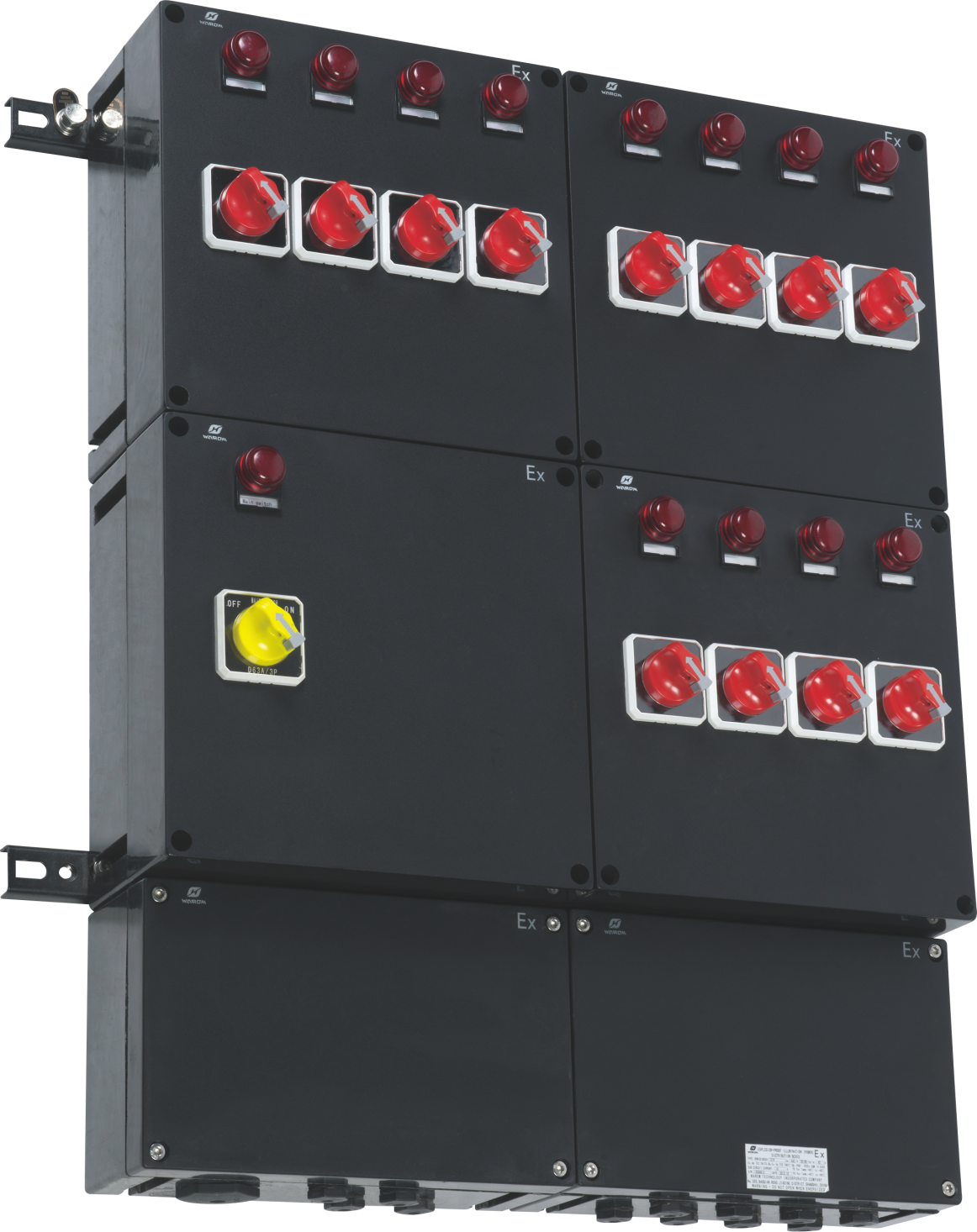
Operational Benefits Beyond Preventing Catastrophe
Explosion proof motor switches deliver value beyond their primary safety function. When electrical equipment cannot become an ignition source, operations continue without the interruptions that follow near-miss incidents or equipment failures. Downtime in underground mining carries costs that extend beyond lost production—it affects ventilation schedules, personnel deployment, and the complex logistics of moving materials through confined spaces.
The robust construction required for explosion protection also produces equipment that tolerates the physical abuse of mining environments. Vibration, impact, moisture, and temperature cycling all stress electrical components. Switches built to contain explosions handle these conditions better than standard industrial equipment.
Emergency stop systems and ventilation fan controls depend on motor switches that respond reliably under all conditions. When methane concentrations rise, ventilation systems must increase airflow immediately. When conditions deteriorate beyond safe limits, emergency stops must function without hesitation. The Tilenga project highlighted how WAROM’s explosion-proof electrical systems contributed to both energy efficiency and low maintenance requirements while supporting these critical functions.
For additional perspective on hazardous environment lighting requirements, consider reading 《Ensuring Safety: The Indispensable Role of Explosion Proof Fluorescent Lamps》.
How often should explosion proof motor switches be inspected in hazardous environments?
Inspection intervals typically range from six months to annually, though specific schedules depend on environmental severity, equipment type, and regulatory requirements. Inspections verify enclosure integrity by checking for cracks, corrosion, or damage that could compromise flame paths. Seal condition determines whether dust and moisture protection remains effective. Electrical connections require testing for looseness or degradation that could produce arcing. These equipment inspection protocols catch deterioration before it creates failure conditions, maintaining the protection margin that explosion proof design provides.
Why Energy Limitation Works in Coal Mining Applications
Intrinsic safety achieves protection through a fundamentally different mechanism than containment-based approaches. By limiting electrical energy below ignition thresholds, intrinsically safe circuits cannot cause ignition even when faults occur. This makes the approach particularly suitable for instrumentation and control circuits where power requirements are low and where the complexity of flameproof enclosures would be impractical.
The physics behind intrinsic safety involves both spark energy and thermal effects. Circuits must limit current and voltage so that any spark produced during a fault dissipates insufficient energy to ignite the specific gas or dust mixture present. Temperature limits ensure that component surfaces cannot reach ignition temperatures even under fault conditions.
Intrinsically safe barriers separate hazardous area circuits from non-IS equipment, ensuring that faults in safe-area equipment cannot inject excessive energy into hazardous zones. This barrier approach allows standard instrumentation and control systems to interface with hazardous area sensors and actuators while maintaining protection integrity.
Underground coal mining benefits particularly from intrinsic safety because methane-air mixtures have relatively low ignition energy requirements. The margin between safe operation and potential ignition is narrow, making energy limitation an effective strategy for circuits where it can be applied.
Selection Factors That Determine Field Performance
Choosing the right explosion proof motor switch requires matching equipment capabilities to specific site conditions. Hazardous area classification establishes the baseline protection level required. Motor type compatibility ensures the switch can handle the starting current, running current, and duty cycle of the connected load. Power rating selection must account for both normal operation and transient conditions.
Environmental factors often prove decisive in long-term reliability. Moisture exposure varies dramatically between different mining operations. Corrosive agents in mine atmospheres attack materials that perform well in other industrial settings. Temperature ranges in underground environments can stress seals and lubricants designed for surface conditions.
WAROM provides custom explosion proof solutions when standard products don’t match specific requirements. The General Paint and Fushilai projects demonstrated this capability, delivering customized solutions for complex industrial applications where off-the-shelf equipment couldn’t address all site-specific factors. Technical support services and project consultation help ensure that vendor selection criteria align with actual operational needs. The company’s range of explosion-proof electrical equipment includes robust motor switches designed for the reliability that mining operations demand.
What are the common failure modes of motor switches in underground mining and how are they prevented?
Corrosion attacks enclosure integrity over time, particularly in mines with acidic water or aggressive atmospheric conditions. Anti-corrosion materials and protective coatings extend service life, though material selection must match the specific corrosive agents present. Dust ingress defeats protection if seals degrade, making high IP ratings and regular seal inspection essential. Electrical faults including short circuits and overloads stress both the switch mechanism and the enclosure’s containment capability. Advanced circuit protection, proper grounding, and adherence to intrinsic safety principles where applicable prevent electrical failures from escalating. Predictive maintenance using vibration analysis, thermal imaging, and electrical testing identifies degradation before it produces failure.
Working with WAROM on Underground Mining Projects
WAROM TECHNOLOGY INCORPORATED COMPANY has engineered explosion-proof solutions since 1987, developing expertise that spans the full range of hazardous environment applications. Underground mining projects benefit from this accumulated experience, particularly when site conditions present challenges that standard approaches don’t address.
The Tilenga project demonstrated WAROM’s capability to deliver comprehensive electrical systems for critical infrastructure while maintaining zero safety incidents. Custom solutions for industrial plants like General Paint and Fushilai showed flexibility in adapting to specific operational requirements.
Contact WAROM specialists to discuss your underground mining requirements. Reach the team at +86 21 39977076 or email gm*@***om.com for consultation on motor switch selection, system integration, and certification requirements.
Frequently Asked Questions About Explosion Proof Motor Switches
What is the primary difference between flameproof and intrinsically safe motor switches for mining?
Flameproof motor switches allow internal explosions to occur but contain them within enclosures engineered to prevent flame propagation to the external atmosphere. The enclosure survives the explosion and cools escaping gases below ignition temperature. Intrinsically safe switches prevent ignition entirely by limiting electrical energy below the threshold required to produce a spark or heat sufficient for ignition. Selection between these approaches depends on power requirements, hazardous area classification, and practical installation considerations. Higher-power motor circuits typically require flameproof protection because intrinsic safety energy limits are too restrictive.
How do explosion proof motor switches contribute to overall mine worker safety?
These switches eliminate electrical equipment as a potential ignition source for methane and combustible dust. When motor controls cannot produce sparks or excessive heat, one major explosion pathway closes. Reliable control of critical machinery—ventilation fans, conveyors, pumps—maintains the environmental conditions that keep workers safe. Emergency shutdown capability ensures that deteriorating conditions trigger immediate equipment response. Arc flash prevention protects workers performing maintenance or troubleshooting. The cumulative effect significantly reduces catastrophic accident potential in environments where multiple hazards already demand constant attention.
Are WAROM’s explosion proof motor switches compliant with international mining safety standards?
WAROM’s explosion proof motor switches carry ATEX and IECEx certifications, meeting the requirements for deployment in hazardous locations globally. Products can also be configured to meet MSHA requirements for U.S. underground mining operations. This certification coverage reflects design and manufacturing processes that satisfy multiple regulatory frameworks simultaneously. Global project implementations—including the Tilenga project and various industrial plant installations—demonstrate practical compliance under actual operating conditions rather than just laboratory testing.
With over a decade of experience, he is a seasoned Explosion-Proof Electrical Engineer specializing in the design and manufacture of safety and explosion-proof products. He possesses in-depth expertise across key areas including explosion-proof systems, nuclear power lighting, marine safety, fire protection, and intelligent control systems. At Warom Technology Incorporated Company, he holds dual leadership roles as Deputy Chief Engineer for International Business and Head of the International R&D Department, where he oversees R&D initiatives and ensures the precise delivery of design documentation for international projects. Committed to advancing global industrial safety, he focuses on translating complex technologies into practical solutions, helping clients implement safer, smarter, and more reliable control systems worldwide.

Qi Lingyi