
Offshore wind substations sit at the intersection of two unforgiving realities: they handle massive power loads, and they do so in atmospheres that can turn explosive without warning. Flammable vapors from hydraulic systems, lubricants leaking during maintenance, combustible dust accumulating in confined spaces—these aren’t theoretical risks. They’re daily operational conditions. A single arc from standard electrical equipment can ignite what’s already present in the air. That’s why explosion-proof electrical distribution systems aren’t optional upgrades for these installations. They’re the baseline requirement for keeping people alive and infrastructure intact.
Why Hazardous Zone Classification Demands Specialized Equipment
Offshore wind substations earn their hazardous area classifications honestly. The combination of enclosed spaces, rotating machinery, and the chemicals required to keep everything running creates persistent exposure to flammable gases and vapors. Hydraulic fluid mist, lubricant vapors, even cleaning solvents used during scheduled maintenance—all contribute to an atmosphere where conventional electrical equipment becomes a liability.
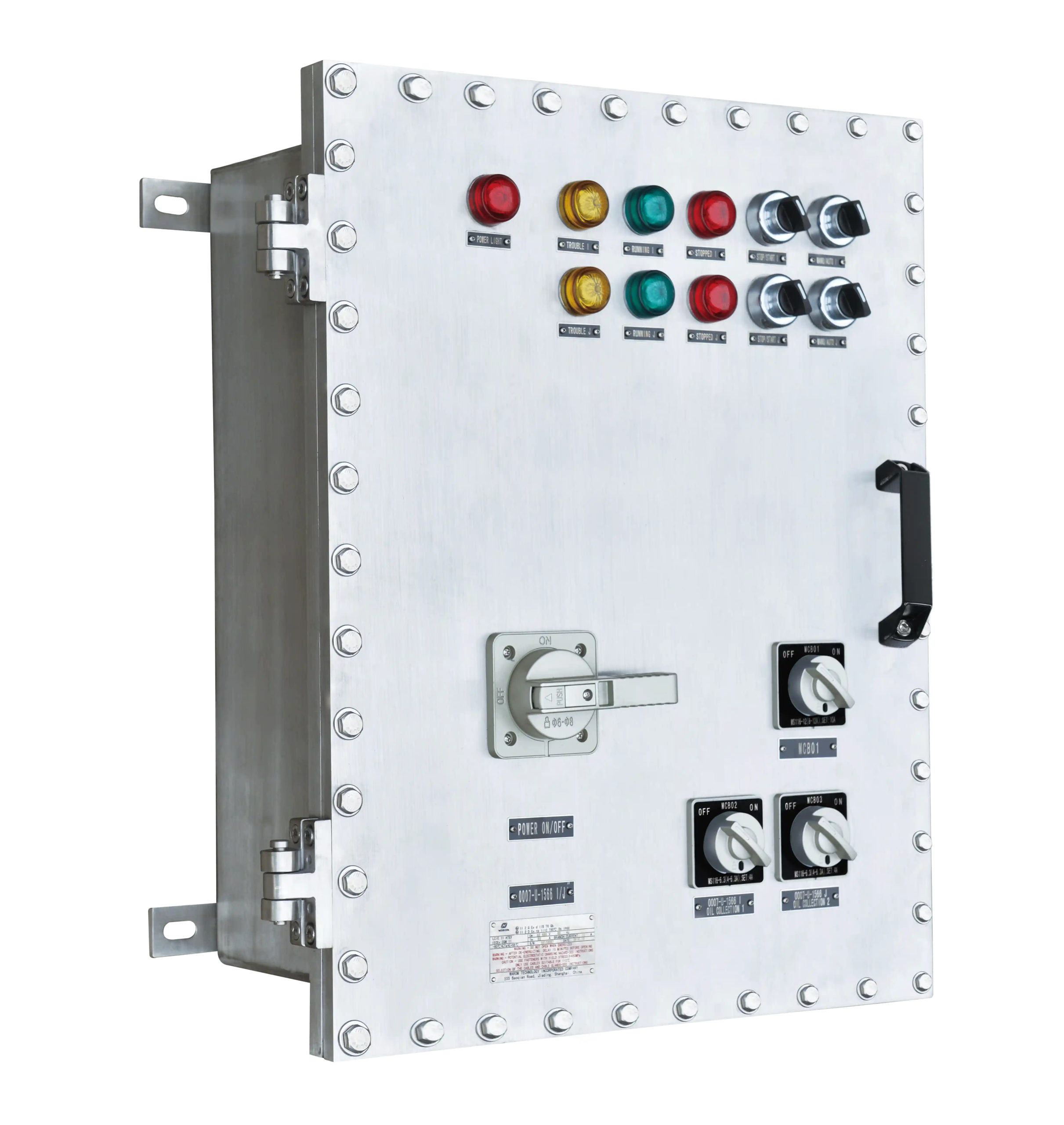
Explosion proof distribution boxes address this through containment engineering. The enclosure itself is designed to withstand an internal ignition event, preventing flame propagation to the surrounding atmosphere. This isn’t about hoping sparks don’t happen. It’s about ensuring that when electrical faults occur—and they will—the consequences stay contained within the box rather than spreading through the platform.
The Tilenga project demonstrated this principle under real-world pressure. WAROM supplied explosion-proof lighting and electrical systems for that installation, and the project completed with zero safety incidents despite operating conditions that would challenge any equipment. That outcome wasn’t luck. It reflected proper certification, appropriate material selection, and installation practices that matched the equipment’s design intent.
ATEX certification offshore and IECEx compliance marine aren’t bureaucratic checkboxes. They represent engineering validation that equipment will perform as specified when exposed to the conditions it’s rated for. The certification process tests enclosure integrity, thermal performance, and spark containment under controlled conditions that simulate actual hazardous atmospheres. Equipment that passes these tests has demonstrated its ability to prevent ignition sources from reaching explosive mixtures.
Material Selection and Compliance for Marine Conditions
Marine environments attack electrical equipment through multiple pathways simultaneously. Salt spray corrodes metal surfaces. Humidity penetrates seals and condenses on internal components. Temperature cycling stresses gaskets and creates opportunities for moisture ingress. Vibration from wind turbine operation and wave action loosens connections over time. Equipment designed for onshore industrial applications often fails within months when deployed offshore.
Material selection for explosion proof distribution boxes in these environments starts with the enclosure itself. Marine-grade stainless steel resists chloride-induced corrosion far better than standard carbon steel or aluminum. Specialized alloys containing molybdenum provide additional protection against pitting corrosion, which can compromise enclosure integrity at specific points rather than degrading surfaces uniformly.
IP ratings quantify ingress protection, and offshore applications demand the higher end of the scale. IP66 and IP67 ratings indicate enclosures tested against powerful water jets and temporary immersion, respectively. These ratings matter because offshore platforms experience conditions that exceed normal industrial exposure—wave spray during storms, high-pressure washdown during maintenance, and humidity levels that approach saturation.
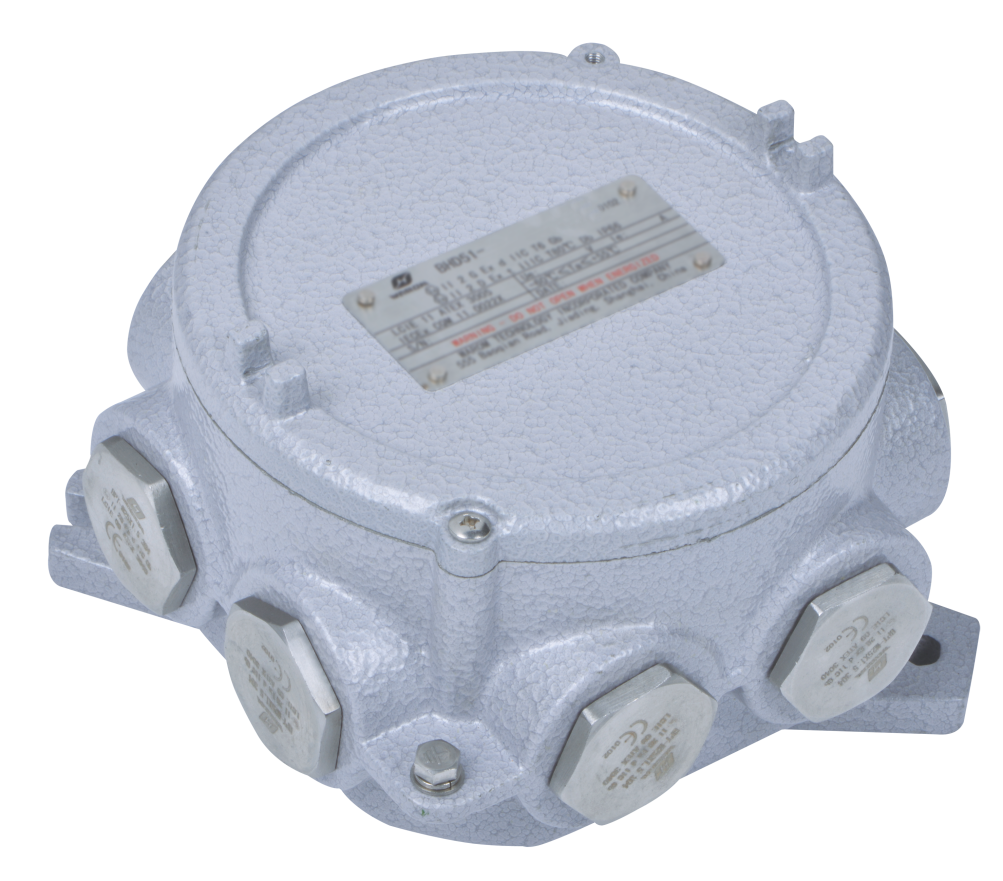
Compliance extends beyond explosion protection to marine-specific requirements. DNV certification validates that equipment meets standards developed specifically for maritime applications, including shock and vibration resistance that reflects actual vessel and platform movement. The General Paint upgrade project illustrated how these requirements come together in practice. WAROM provided customized explosion-proof solutions including junction and distribution boxes that addressed both flammable gas risks and the corrosive industrial environment. The project required equipment that could handle multiple hazard types simultaneously while maintaining long-term reliability.
Proper selection of cable glands hazardous areas deserves particular attention because they represent potential weak points in enclosure integrity. A distribution box with excellent certification means nothing if cable entry points allow moisture ingress or fail to maintain the explosion-proof rating. Glands must match both the cable specifications and the enclosure’s protection class.
| Feature | Standard Offshore Electrical Enclosure | WAROM Explosion-Proof Distribution Box |
|---|---|---|
| Corrosion Resistance | Moderate | High (Marine-grade materials) |
| IP Rating | Typically IP54 | IP66/IP67 |
| Explosion Protection | None | Certified (ATEX, IECEx) |
| Temperature Range | Limited | Extended (-60°C to +60°C) |
| Vibration Resistance | Standard | Enhanced |
Adapting Power Distribution to Offshore Wind Farm Requirements
Offshore wind farms present power distribution challenges that differ substantially from onshore installations. The distances involved, the number of turbines feeding into collection systems, and the need for redundancy all drive requirements toward flexible, modular solutions. Customizable distribution boxes become essential because no two projects share identical configurations.
Modular designs allow operators to scale systems as wind farms expand. Initial installations might serve a dozen turbines, with plans to add capacity over subsequent phases. Distribution equipment that accommodates this growth without complete replacement reduces both capital costs and installation complexity. The alternative—oversizing initial installations to accommodate future expansion—ties up capital in unused capacity and increases the footprint of equipment that must be maintained.
Integrated control systems within distribution boxes enable remote monitoring, which matters enormously for assets located hours from shore by boat. Operators need visibility into electrical parameters, fault conditions, and environmental factors without dispatching technicians for every data point. This capability supports predictive maintenance approaches that identify developing problems before they cause outages.
WAROM’s approach to power distribution units offshore emphasizes coordination with all project stakeholders. The Fushilai Pharmaceutical project demonstrated this multi-party coordination model, bringing together promoters, design institutes, and facility owners to ensure customized solutions arrived on schedule and met specific operational requirements. This coordination matters because offshore wind projects involve numerous contractors and tight installation windows dictated by weather.
The connection between distribution equipment and broader substation electrical infrastructure affects overall offshore wind farm grid connection reliability. Distribution boxes that integrate poorly with upstream and downstream components create operational headaches that persist throughout the installation’s service life. Proper integration improves operational efficiency wind farms achieve by reducing the troubleshooting burden on maintenance teams.
Maintaining Equipment Reliability in Remote Locations
Installation quality determines much of what happens over the following decades of operation. Explosion proof equipment requires specialized installation knowledge because the protection rating depends on proper assembly. Gasket surfaces must be clean and undamaged. Fasteners must be torqued to specification. Cable glands must be installed with appropriate compression. Shortcuts during installation compromise the certification that makes the equipment suitable for hazardous areas in the first place.
Once installed, routine inspection and preventative maintenance offshore wind becomes the primary tool for ensuring continued reliability. The Tilenga project experience highlighted how equipment designed for low maintenance requirements performs under extreme conditions. But low maintenance doesn’t mean no maintenance. It means the maintenance that is required can be performed efficiently and at reasonable intervals.
Inspection protocols for explosion proof junction boxes and distribution equipment follow predictable patterns. Seal integrity verification catches degradation before moisture ingress causes electrical faults. Corrosion inspection identifies surface damage that could eventually compromise enclosure strength. Electrical connection testing confirms that vibration hasn’t loosened terminals or degraded contact surfaces. These checks extend equipment lifespan and prevent the unplanned outages that cost far more than scheduled maintenance.
Lifecycle management strategies account for the reality that even well-maintained equipment eventually requires replacement. Tracking equipment age, maintenance history, and performance trends allows operators to plan replacements during scheduled maintenance windows rather than responding to failures. This approach keeps all components compliant and operational throughout their service life while avoiding emergency procurement and installation under time pressure.
If you’re interested, check 《Explosion Proof LED Lighting Solutions for Hazardous Areas》.
Evaluating Suppliers for Offshore Electrical Safety Projects
Supplier selection for offshore electrical safety equipment involves more than comparing specifications and prices. The manufacturer’s experience with similar projects, their technical support capabilities, and their ability to deliver on schedule all affect project outcomes. Equipment that meets specifications on paper but arrives late or requires extensive field modifications creates problems that ripple through construction schedules.
Experienced explosion proof equipment suppliers bring project knowledge that extends beyond their own products. They understand how their equipment interfaces with other systems, what installation challenges commonly arise, and how to resolve problems that emerge during commissioning. This expertise proves valuable during the inevitable moments when something doesn’t go according to plan.
WAROM’s 35 years of experience in explosion protection translates into practical knowledge about what works under real conditions. The General Paint upgrade and Fushilai Pharmaceutical projects represent different application types, but both required the same fundamental capability: delivering compliant, reliable equipment that performed as specified in challenging environments.
Integrated solutions offshore reduce coordination burden by providing multiple system components from a single source. When distribution boxes, junction boxes, lighting, and control equipment all come from one manufacturer, compatibility issues become the supplier’s problem rather than the project team’s problem. This integration simplifies both procurement and long-term maintenance.
Access to offshore wind project expertise and electrical safety consulting adds value beyond the equipment itself. Projects benefit from supplier involvement during design phases, when equipment selection decisions have the greatest impact on long-term performance and maintenance requirements.
Secure Your Offshore Investment with WAROM
Protect your offshore wind substation projects with WAROM TECHNOLOGY INCORPORATED COMPANY. Our 35+ years of explosion protection experience, demonstrated through successful deployments in extreme environments, delivers compliant, durable, and high-performance electrical distribution solutions. Contact our engineering team at +86 21 39977076 or gm*@***om.com for a tailored consultation.
Frequently Asked Questions About Offshore Wind Substation Electrical Systems
What specific certifications are required for explosion proof equipment on offshore wind platforms?
Explosion proof equipment on offshore wind platforms needs ATEX certification for European Union markets and IECEx certification for international applications. These certifications validate that distribution boxes and other electrical equipment can safely contain internal ignition events without propagating flames to surrounding explosive atmospheres. Marine-specific certifications from organizations like DNV or Lloyd’s Register add another layer of validation, confirming that equipment meets performance standards for maritime conditions including shock, vibration, and corrosive exposure. The specific certifications required depend on the installation location and the regulatory framework governing that jurisdiction.
If you’re interested, check 《Explosion Proof Floodlights for Hazardous Industrial Areas》.
How does salt spray and humidity affect the longevity of electrical distribution boxes in offshore wind environments?
Salt spray and humidity work together to accelerate corrosion on electrical enclosures. Salt deposits on metal surfaces create electrochemical cells that pit and degrade material even when the surface appears dry. High humidity keeps these deposits active and promotes condensation inside enclosures when temperatures drop. Standard industrial equipment often shows visible corrosion within months of offshore deployment. Explosion proof distribution boxes designed for marine service counter these effects through material selection—marine-grade stainless steel or molybdenum-containing alloys resist chloride attack—and through high IP ratings that prevent moisture and salt particle ingress. Protective coatings provide additional defense, but the underlying material choice determines long-term durability.
What are the typical maintenance intervals for explosion proof distribution boxes in remote offshore locations?
Maintenance intervals depend on environmental severity, operational intensity, and regulatory requirements, but general practice suggests visual inspections every 6 to 12 months with more thorough electrical and mechanical evaluations every 2 to 3 years. Visual inspections catch obvious problems like external corrosion, damaged seals, or loose covers. Detailed inspections verify seal integrity through pressure testing or close examination, check electrical connections for tightness and signs of heating, and confirm that all safety mechanisms function correctly. Remote offshore locations make access expensive, so maintenance planning often coordinates multiple inspection and service activities into single site visits to reduce vessel costs while maintaining equipment reliability.
With over a decade of experience, he is a seasoned Explosion-Proof Electrical Engineer specializing in the design and manufacture of safety and explosion-proof products. He possesses in-depth expertise across key areas including explosion-proof systems, nuclear power lighting, marine safety, fire protection, and intelligent control systems. At Warom Technology Incorporated Company, he holds dual leadership roles as Deputy Chief Engineer for International Business and Head of the International R&D Department, where he oversees R&D initiatives and ensures the precise delivery of design documentation for international projects. Committed to advancing global industrial safety, he focuses on translating complex technologies into practical solutions, helping clients implement safer, smarter, and more reliable control systems worldwide.
Qi Lingyi