
BZM Series Explosion-proof Illumination...
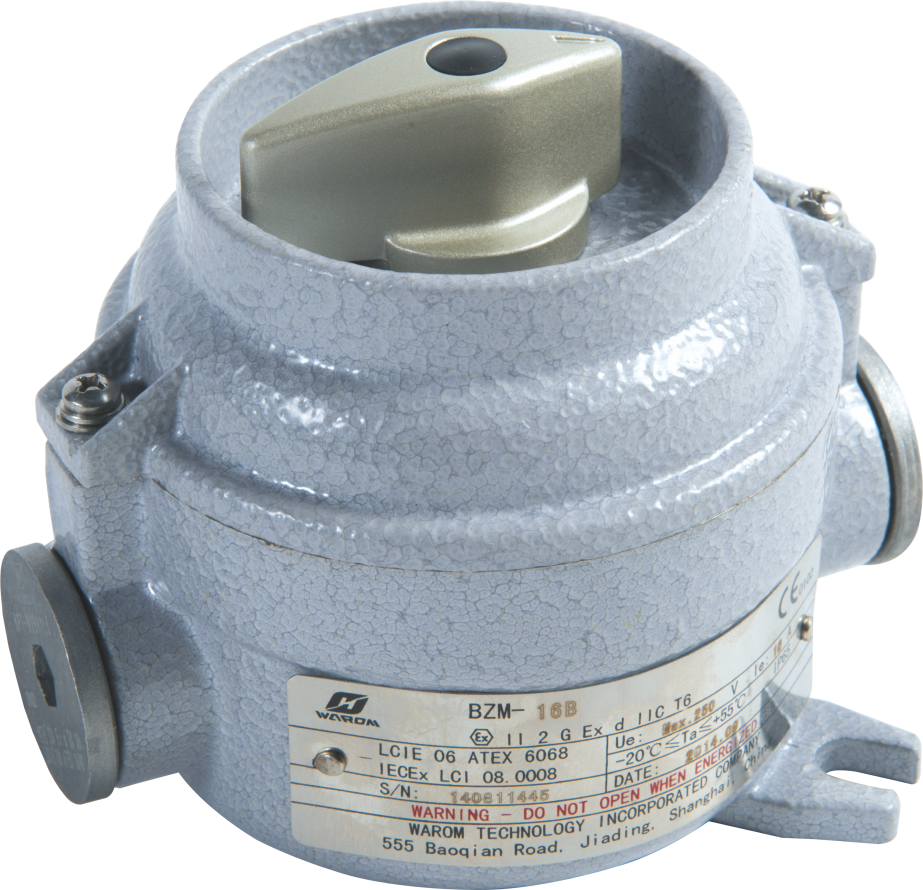
- ◆ This explosion proof Illumination Switches features a high-strength copper-free aluminum alloy housing with a specialized flameproof surface.
- ◆ Explosion proof limit switch withstands internal explosion pressure while cooling flames and reducing gas temperature through narrow gaps, preventing ignition of external hazardous atmospheres.
- ◆ The explosion proof enclosure includes anti-static coating and all fasteners are anti-loosening.
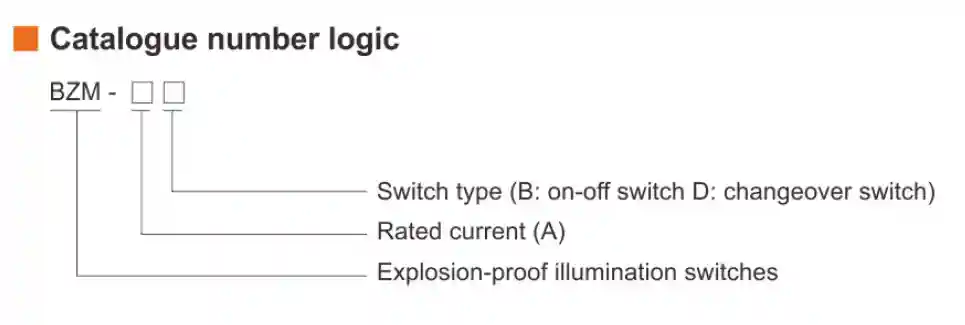
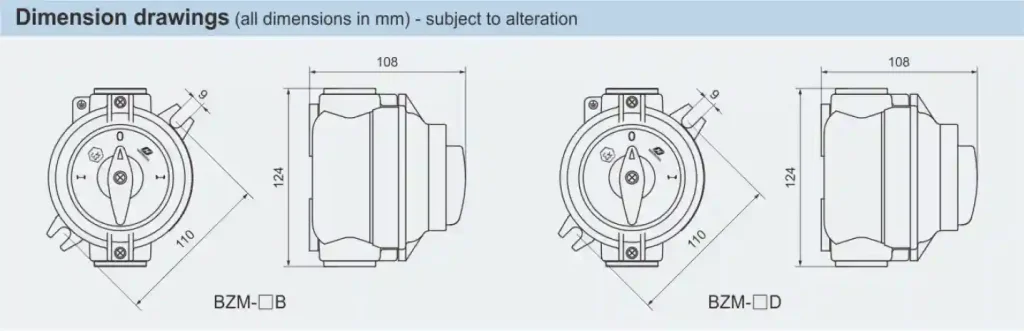
- ◆ Switches are available in both power ON/OFF and two-way control configurations.
TECHNICAL DATA
Product Parameters
- Product Type: BZM
- Standards: CENELEC, IEC, NEC
- Zones: Zone 1 and Zone 2; Zone 21 and Zone 22; Class I, Zone 1 and Zone 2; Class I,
- Division 1, Groups A, B, C, D
- Explosion Protection Ratings:
- IECEx (Gas and dust): Ex db IIC T6 Gb; Ex tb IIIC T80°C Db
- ATEX (Gas and dust): II 2 G Ex db IIC T6 Gb; II 2 D Ex tb IIIC T80°C Db
- Material:
- Enclosure: Copper-free Aluminium Alloy, powder coated surface
- Exposed fastener: Stainless steel
- Enclosure Color: Window grey (RAL7040)
- Switch functions: On-off switch or changeover switch.
- Rated voltage: Max. 250V AC
- Rated current: 16A, 25A
- Degree of protection: IP66
- Ambient temperature: -60°C ~ +60°C
- Internal/external earthing: M4/M5
- Cable entries: Standard 2 x M25 x 1.5 plugs; 2 x NPT3/4″ plugs on request.
- Cable glands: DQM-II (Ex d) or DQM-III (Ex d) is recommended.
- HS code: 853650
- Country of origin: China
Applicable Industries
Explosion-Proof Illumination Switches is specifically engineered for a wide range of industries and hazardous environments, including petrochemical, natural gas, coal, metallurgy, military, nuclear power, aerospace, firefighting, pharmaceuticals, textiles, grain & oil, municipal services, public security, shipping, ports, railways and so on. Engineered with a robust explosion-proof structure, it delivers long-lasting, corrosion-resistant performance and reliable operation in harsh conditions including high temperatures, heavy dust, and corrosive gases.
These explosion-proof lighting switches secure safety in hazardous areas by locking away potential ignitions within a robust enclosure. This critical design preempts accidents by eliminating the risk at the switch operation level.
Credibility
Warom Explosion-Proof Switches are fully certified to ATEX, IECEx, and EAC standards for global compliance. Our swithes are built to withstand extreme conditions, including a wide operating temperature range (-60°C to +60°C), corrosion resistance against chemicals, and an IP66 rating. This is a authentically certified “Flameproof Switches” (Ex d) switch, backed by a complete scientific assurance system.
FAQ
Q1: What is an explosion-proof switch? How does it differ from a standard switch?
A1: An explosion-proof switch is specifically designed for hazardous environments with flammable substances. While standard switches expose electrical arcs during operation, explosion-proof switches use a flameproof enclosure to contain internal sparks or explosions, preventing ignition of the external atmosphere.
Q2: What does the marking “Ex db IIC T6” on the surface mean?
A: This is the explosion-proof certification:
Ex: Explosion-protected.
db: Flameproof enclosure (Enhanced Safety).
IIC: Suitable for IIC gas groups (e.g., hydrogen, acetylene), the highest risk category.
T6: Maximum surface temperature ≤85°C under worst-case conditions.
Q3: What does the IP66 rating signify?
A3: First “6”: Dust-tight (no ingress of dust);Second “6”: Protected against powerful water jets. This ensures reliability in dusty or wet outdoor environments.
Q4: Can the same Explosion-Proof Illumination Switches be used in chemical plants and flour mills?
A4: Not always. Chemical plants typically require gas protection (e.g., Ex db), while flour mills need dust protection (Ex tD). Some switches offer dual certification for both.
Q5: What are critical installation precautions for Flameproof Switches?
A5: Proper installation is essential: fully tighten bolts, use certified cable glands with correct sealing, ensure reliable grounding to prevent static buildup, and strictly prohibit modifications.
Q6: What does regular maintenance involve?
A6: Key tasks include: inspecting the housing for damage/corrosion, cleaning flameproof joint surfaces, and checking fastener tightness. All must be performed by qualified personnel.