Over three decades of designing explosion-proof electrical systems for ships and offshore platforms, I have seen more failures from under-seal corrosion than from electrical faults. Salt-laden air reaches every exposed metal surface, and an IP66 rating only delays the inevitable if the enclosure alloy and coating are not matched to the marine environment. Corrosion resistant explosion proof light fittings must combine material selection with proven salt-spray protection to deliver reliable long-term service. When specified correctly, stainless steel 316 with a high-durability powder coating and nickel-plated brass cable glands consistently outperforms powder-coated aluminium in continuous saltwater exposure.
Enclosure and Component Materials for Marine Service
The enclosure material sets the baseline for how long the fitting will survive in a salt-laden atmosphere. Three general options dominate the market: copper-free aluminium alloy with organic powder coating, 316-grade stainless steel, and glass-fibre reinforced polyester (GRP). Each presents a different trade-off between corrosion resistance, mechanical robustness, weight, and cost.
| Material | Corrosion Resistance | Weight | Relative Cost | Typical Marine Application |
|---|---|---|---|---|
| Copper-free Aluminium, powder coated | Moderate; life depends on coating integrity | Low | Low | Sheltered decks, accommodation areas, offshore cabins |
| Stainless Steel 316 | High; inherent passivation, resists pitting better than 304 | Medium | High | Open decks, splash zones, helicopter landing platforms |
| GRP | Excellent; fully immune to corrosion | Low | Medium | Corrosive chemical atmospheres, Zone 2 locations where impact is low |
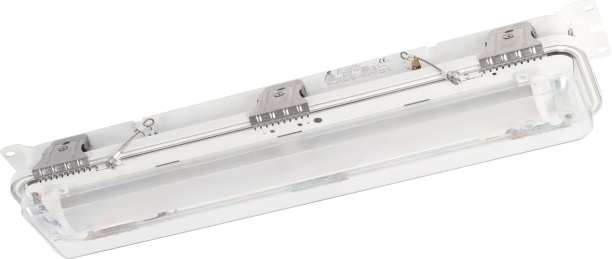
A crew inspection on an FPSO after eighteen months of service revealed a pattern we have observed many times: powder-coated aluminium fittings developed pinhole rust at the welded mounting-bracket joints, where coating thickness was thinnest. Stainless steel fittings on the same deck showed only superficial tea-staining that was easily removed with a wet cloth. The difference was not the IP rating (both were IP66) but the base metal and the coating adhesion at edges.
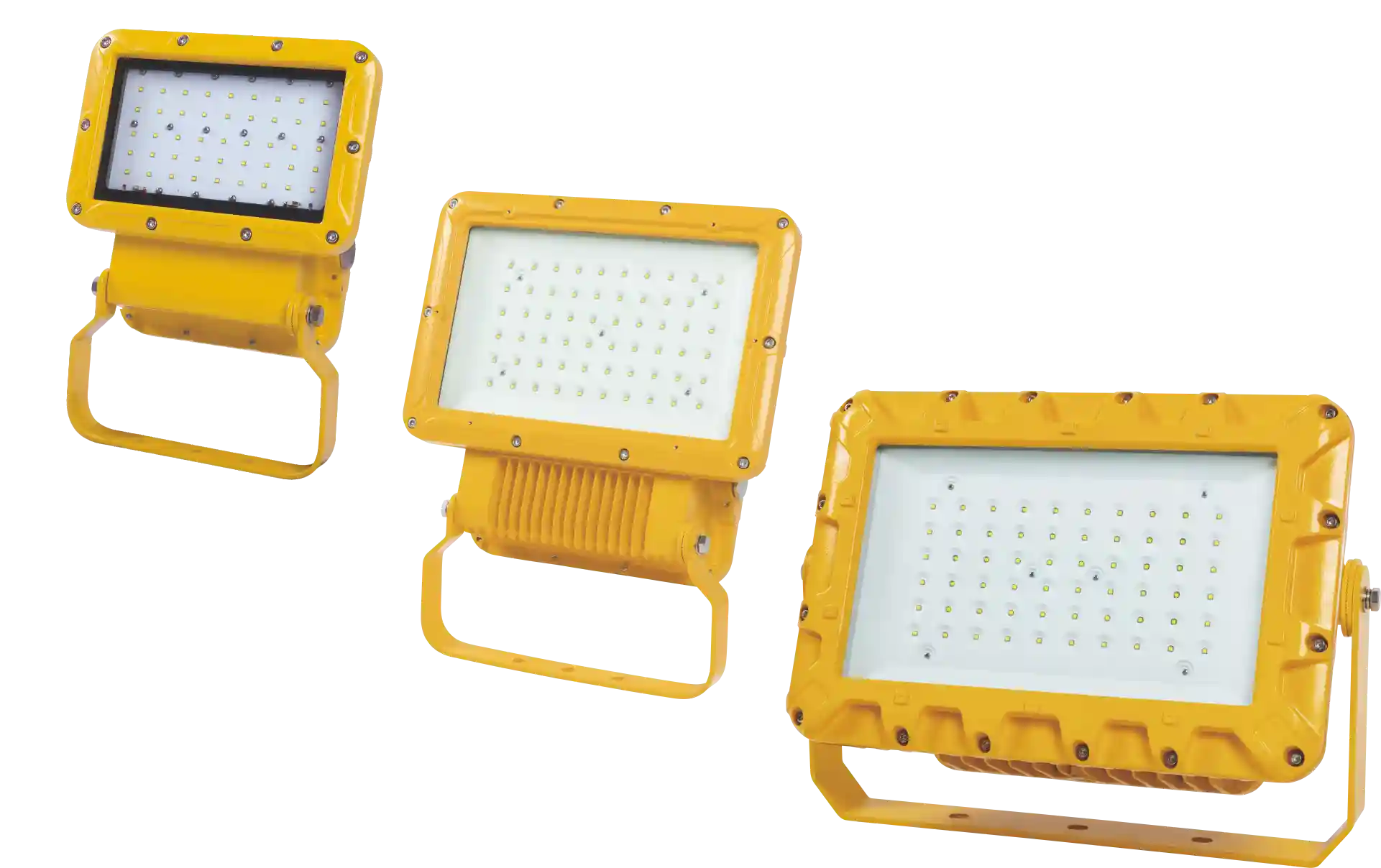
Cable glands are the component that most frequently introduces corrosion into an otherwise well-protected enclosure. Nickel-plated brass glands offer good galvanic protection and are standard on many marine-certified luminaires, including the WAROM BAT86 floodlight, which uses M25 nickel-plated brass glands rated IP66. For areas that see continuous green-water wash or acidic exhaust deposits, a full stainless steel 316 gland body, sealing washer, and locknut is a more robust choice. In all cases, the gland must be correctly sized to the cable outer diameter to maintain the flameproof joint and avoid moisture wicking through the armour interstices.
Corrosion Protection Validation Beyond IP Ratings
IP66 and IP67 tell you the enclosure can withstand powerful water jets or temporary immersion. They do not measure long-term degradation from a saline atmosphere. For that, the IEC 60079 series introduces the WF2 corrosion-proof rating, which requires surviving a 480‑hour salt spray test followed by a humid atmosphere test without cracking, blistering, or corrosion that could impair safety.
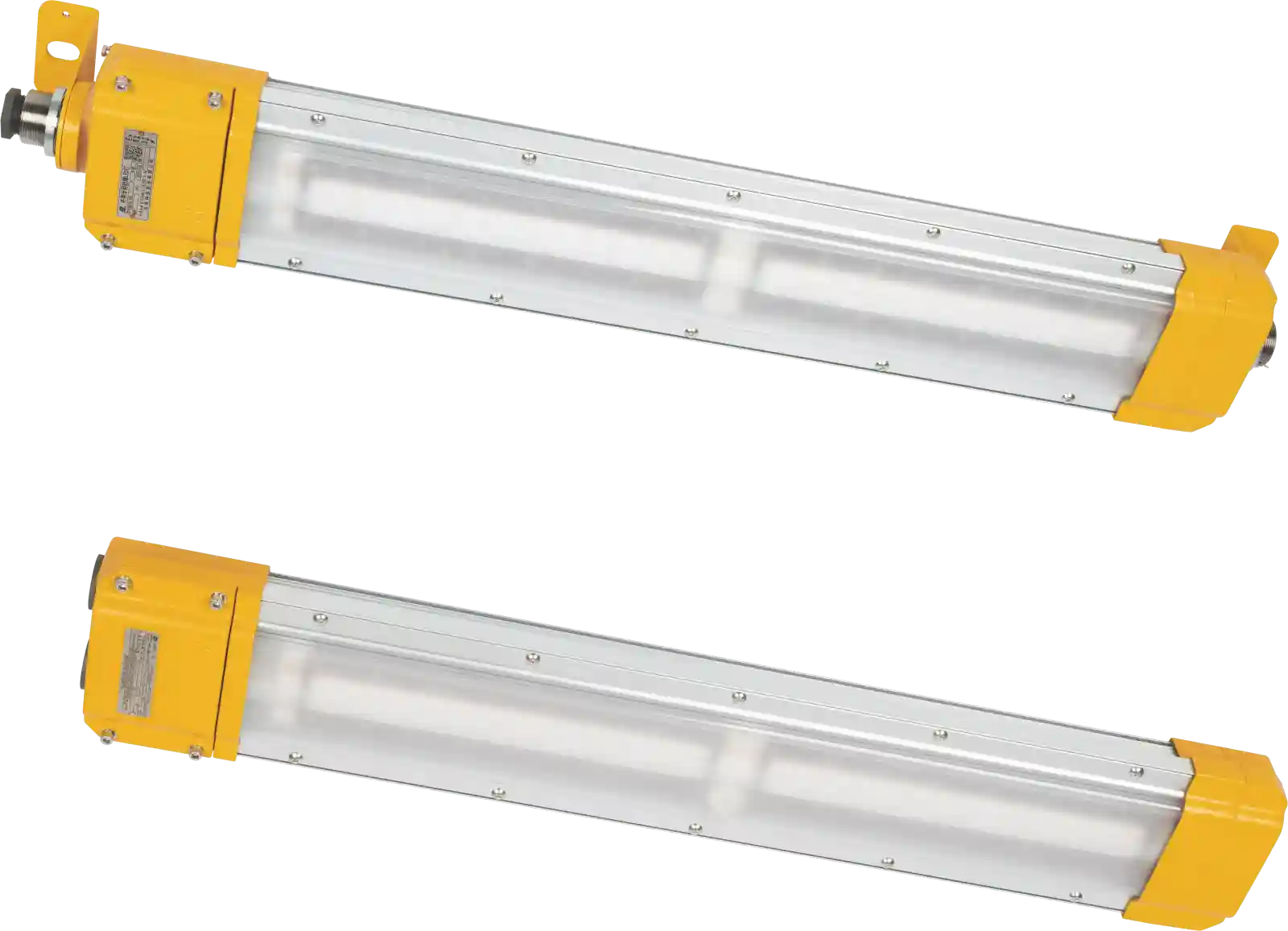
WAROM’s explosion-proof light fittings are tested to WF2 and combine a copper-free aluminium body with an anti-static powder coating that resists under-film creep. Stainless steel variants are also available for applications where even minor tea-staining is unacceptable. The salt-spray test, however, tests a new product in a controlled chamber. On a real vessel, cyclic heating, vibration, and cleaning chemicals accelerate coating breakdown.
If your vessel operates in heavy salt spray and you need a material suitability analysis for your lighting specification, send your deck layout and exposure details to gm*@***om.com. That one decision often determines whether the lights survive until the next dry-dock survey.
Lifecycle Cost Comparison of Material Options
Procurement teams often compare initial purchase price, but the maintenance burden changes the arithmetic quickly in a marine environment. A comparison over a ten‑year survey cycle illustrates the gap.
| Cost Element | Copper-free Aluminium (powder coated) | Stainless Steel 316 |
|---|---|---|
| Unit purchase price | Lower | Higher (approximately 1.8–2.5×) |
| Typical re-coating interval in marine exposure | 2–3 years | Not required under normal service |
| Annual inspection and touch-up | Required; coating repairs needed at bracket welds and entry threads | Only visual check for tea-staining |
| Replacement rate over 10 years in splash zone | 15–30% due to corrosion beyond repair | Less than 5% |
When labour cost for re-coating and the risk of unplanned outage are added, the total cost of ownership for stainless steel fittings is often lower after the fifth or sixth year. Aluminium remains a perfectly valid choice for sheltered interior locations where salt aerosol concentration is lower and coating damage is rare.
International Certifications for Marine Explosion Proof Lighting
Explosion proof light fittings intended for installation on ships and mobile offshore units must carry more than the base IECEx or ATEX certificate. The vessel’s classification society (CCS, BV, DNV, LR, ABS, etc.) requires its own type‑approval mark, which verifies that the product meets the society’s rules for construction, fire safety, and environmental testing. SOLAS convention requirements for emergency lighting and navigation signal lights add further layers.
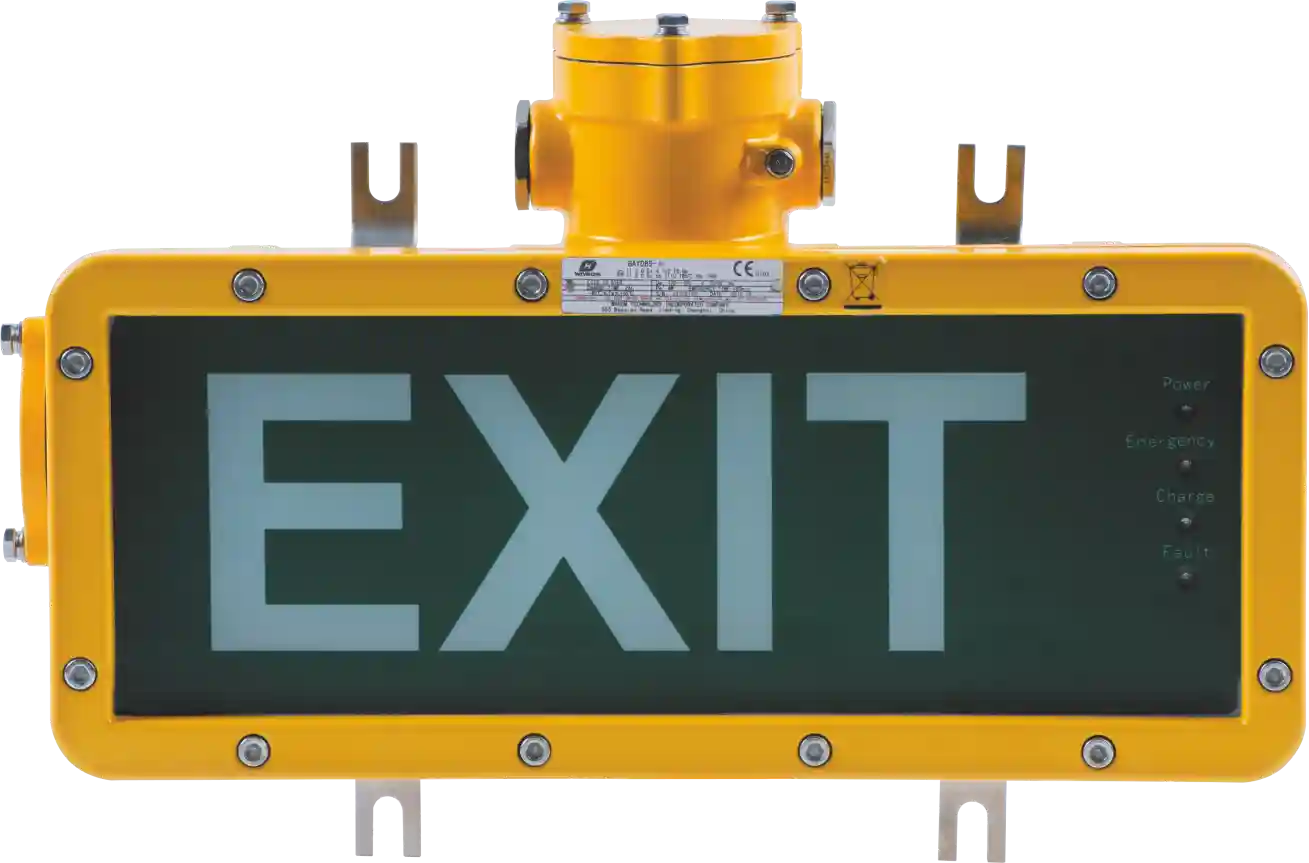
WAROM designs light fittings to IECEx and ATEX standards, and can supply products with the additional classification-society certificates needed for a specific flag state. For Zone‑1 marine locations, temperature class T6 (maximum surface temperature 85 °C) is the most commonly specified because it covers hydrogen, acetylene, and other IIC gases, giving the widest safety margin. The combination of an IECEx‑certified Ex db IIC T6 Gb luminaire with a classification‑society approval creates a documentation package that simplifies acceptance during newbuild commissioning and periodic survey.
Specifying Corrosion Resistant Light Fittings for Your Vessel
Every marine lighting specification encounters the same question: how to balance budget, corrosion resistance, and certification. The answer lies not in guessing but in matching the material and the certification package precisely to the zone description and exposure conditions on the vessel. A deck that is washed with green water every watch cycle demands a different solution than an interior engine‑room escape route.
We work with shipyards and fleet operators to review hazardous area plans, identify the worst-case exposure points, and propose light fitting configurations that meet both the explosion‑protection standard and the lifecycle cost targets. For a detailed material‑and‑certification review of your next project, send the zone plan and the required lamp wattages to gm*@***om.com or call +86 21 39977076.
Common Questions About Marine Explosion Proof Lighting
What is the best material for an explosion proof light fitting exposed to direct saltwater?
For open decks and splash zones where the fitting is wetted frequently, 316 stainless steel gives the longest service life with minimal maintenance. Copper-free aluminium with a high-quality powder coating is entirely adequate for sheltered locations such as inside accommodation modules or underneath deckheads that are protected from direct spray.
How often should marine explosion proof lights be inspected for corrosion?
We recommend a visual inspection every six months, paying particular attention to threaded entries, bracket welds, and the area where the cable gland meets the enclosure. Once a year, a more thorough inspection should assess coating adhesion, especially near any mechanical damage, and replace any gland sealing washers that show signs of compression set or salt crystal buildup.
Can I use a standard industrial IP66 fitting on a marine vessel?
IP66 protects against water and dust ingress but does not include any corrosion resistance requirement. A marine-certified fitting must additionally have a corrosion‑proof rating such as WF2 and use materials that are compatible with the local salt‑laden atmosphere. Using a non‑marine fitting may work for a short period but will lead to rapid corrosion at threaded joints and mounting points.
What does the WF2 rating actually mean for corrosion resistance?
WF2 is defined in IEC 60079‑0 for equipment intended for use in outdoor locations with heavy corrosive pollution. To achieve WF2, the enclosure must pass a 480‑hour salt spray test (5 % NaCl at 35 °C) followed by a humid atmosphere test without cracking, blistering, or corrosion that would weaken the flameproof integrity or prevent entry opening.
If the fitting already has IECEx and ATEX, why does the classification society need to approve it?
IECEx and ATEX confirm that the product meets the explosion protection requirements. Classification societies such as CCS, BV, and DNV also verify that the product complies with their rules for marine installations, which include additional vibration testing, fire resistance, and installation requirements. The flag state typically mandates type approval from the recognized classification society before the vessel can be registered. To confirm which certificates your project requires and to request type approval documents, email your vessel class and hazardous area plan to gm*@***om.com.
If you’re interested, check out these related articles:
Explosion-Proof Hand Lamps: Essential Safety for Hazardous Areas
Happy New Year
Warom Technology Awarded CMMI International Certification for Software Capability Maturity
Specifying Explosion-Proof Electricals for EPC Projects: Safety & Compliance
With over a decade of experience, he is a seasoned Explosion-Proof Electrical Engineer specializing in the design and manufacture of safety and explosion-proof products. He possesses in-depth expertise across key areas including explosion-proof systems, nuclear power lighting, marine safety, fire protection, and intelligent control systems. At Warom Technology Incorporated Company, he holds dual leadership roles as Deputy Chief Engineer for International Business and Head of the International R&D Department, where he oversees R&D initiatives and ensures the precise delivery of design documentation for international projects. Committed to advancing global industrial safety, he focuses on translating complex technologies into practical solutions, helping clients implement safer, smarter, and more reliable control systems worldwide.
Qi Lingyi