

Most project engineers discover too late that the factory testing an explosion proof control panel receives before shipment makes the difference between a smooth commissioning and weeks of field troubleshooting. A panel that passes a thorough pre-shipment test program arrives ready to connect. After thirty years of designing and testing these panels for oil, gas, pharmaceutical, and marine installations, I have watched rushed internal checks miss problems that a structured factory acceptance test would have caught while they were still easy to fix. Here is what those tests cover—visual inspection, dielectric and insulation resistance verification, earth continuity, and certification review—so you know what to specify and what to verify before your equipment leaves the factory.
What Factory Testing Covers for an Explosion Proof Control Panel
Factory testing for an explosion proof control panel is not a single event. It follows a sequence that starts with a dead-panel visual inspection and ends with a documentation review confirming the panel matches both the purchase order and the certified design. I break it into four categories: visual and mechanical checks, electrical integrity tests, explosion protection verification, and documentation assembly. Each category catches different failure modes.
For the Fushilai Pharmaceutical CM/CDMO project in Suzhou, our team supplied distribution boxes for workshops, tank farms, and pump controls across a 48,000 square meter facility with 15 production lines. Every panel went through the full test sequence before phased delivery. The project involved APIs and intermediates exported worldwide, so the testing documentation also had to satisfy multiple regulatory reviewers. The sequence we used there is the same sequence I recommend for any hazardous area panel: inspect cold, energize step by step, verify, document.
A factory test program does not replace the site commissioning tests you will run after installation. What it does is confirm that the panel leaves the factory with no wiring errors, no damaged components, correct protection ratings, and valid certification. When a panel arrives on site and the first thing you find is a loose terminal or a nameplate that does not match the certified design, the factory test was incomplete.
Visual and Mechanical Inspection Before Power Is Applied
Before anyone connects test power, the panel gets a detailed physical inspection under good lighting. We check the enclosure for casting defects, weld quality, and surface finish. For aluminium alloy enclosures like our HRMD91 and HRMD93 series, the powder-coated surface must be free of scratches that could become corrosion initiation points. Stainless steel enclosures get checked for passivation quality and any signs of contamination from fabrication.
The gasket inspection is critical. A flameproof enclosure relies on precisely machined flame paths. If a gasket is pinched, missing, or the wrong material, the explosion protection is compromised before the panel is even energized. I have rejected panels at this stage for gasket damage that happened during assembly—a five-minute fix in the factory that would have required a certified repair on site.
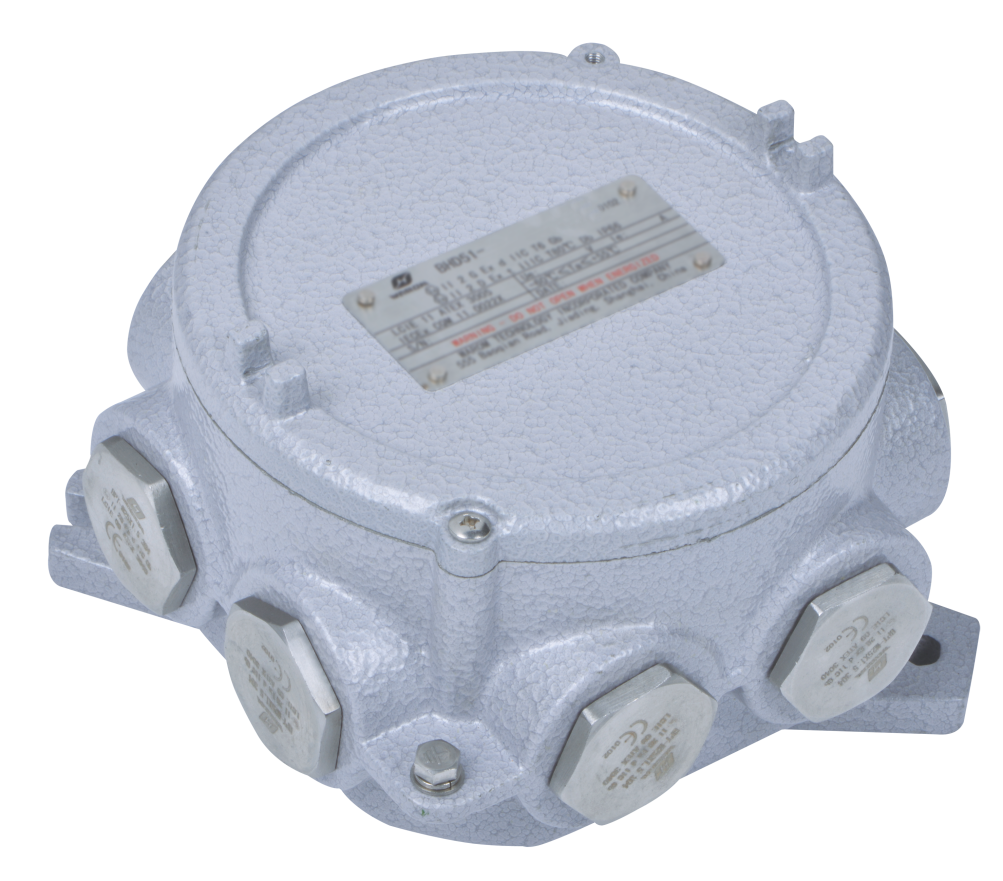
Cable entry points get the same scrutiny. Each gland plate and cable entry must match the certified drawing. If the drawing calls for M25 nickel-plated brass glands and someone substituted a different type during assembly, that substitution must be documented and re-evaluated or corrected. We verify thread type—metric or NPT—because mixing thread standards on a single panel creates installation problems that the site electrician should not have to solve.
All fasteners are checked for tightness and anti-loosening features. Nameplates and warning labels are verified for legibility, correct material, and proper attachment. For panels destined for corrosive environments, we confirm that exposed fasteners are stainless steel. A missing earth label or an illegible temperature class marking fails the inspection.
Dielectric, Insulation Resistance, and Earth Continuity Tests
Once the panel passes visual inspection, the electrical tests begin. The three core tests are dielectric strength, insulation resistance, and earth continuity. They answer three questions: can the insulation withstand voltage stress, is the insulation degrading, and is every conductive part properly bonded to earth.
The dielectric test applies a high voltage between live conductors and the enclosure for a specified duration—typically 2U + 1000V for one minute, where U is the rated operational voltage. For a 690V AC panel, that means a test voltage approaching 2400V. The test verifies that clearances and creepage distances are adequate and that no insulation weakness exists. A panel that passes dielectric testing has proven its insulation system can handle transient overvoltages without breakdown.
Insulation resistance testing uses a megohmmeter, typically at 500V DC for low-voltage panels. We measure between phases, between each phase and neutral, and between all live conductors and earth. The minimum acceptable value depends on the standard—IEC 60079 requires values consistent with the equipment design, and we typically look for readings in the hundreds of megohms. A low reading suggests moisture ingress, contamination, or insulation damage that requires investigation before the panel ships.
Earth continuity testing verifies that every accessible conductive part has a low-resistance path to the main earth terminal. We measure from the farthest point on the enclosure—a door, a gland plate, a mounting bracket—back to the earth bar. The resistance should be a fraction of an ohm. For panels we supplied to the Tilenga project in Uganda, which included wellpads and CPF installations inside Murchison Falls National Park, earth continuity was non-negotiable. The site conditions included extreme temperatures and high humidity, and a compromised earth bond in those conditions creates a shock hazard that no amount of routine maintenance would catch before someone got hurt.
If your program involves panels with multiple flameproof compartments interconnected by busbars or wiring, it is worth confirming that the factory tests earth continuity across every compartment boundary before finalizing your BOM. Enclosure joints can develop resistance over time, and a pre-shipment measurement establishes the baseline you will compare against during future maintenance. Reach out at gm*@***om.com with your panel configuration and we can advise on the specific earth continuity acceptance criteria for multi-compartment designs.
Explosion Protection Verification and Certification Review
The electrical tests confirm the panel functions. The explosion protection verification confirms it is safe to install in a hazardous area. This step checks three things: that the nameplate data matches the certified design, that the certification is valid for the intended gas group and temperature class, and that all components inside the enclosure carry appropriate certification themselves.
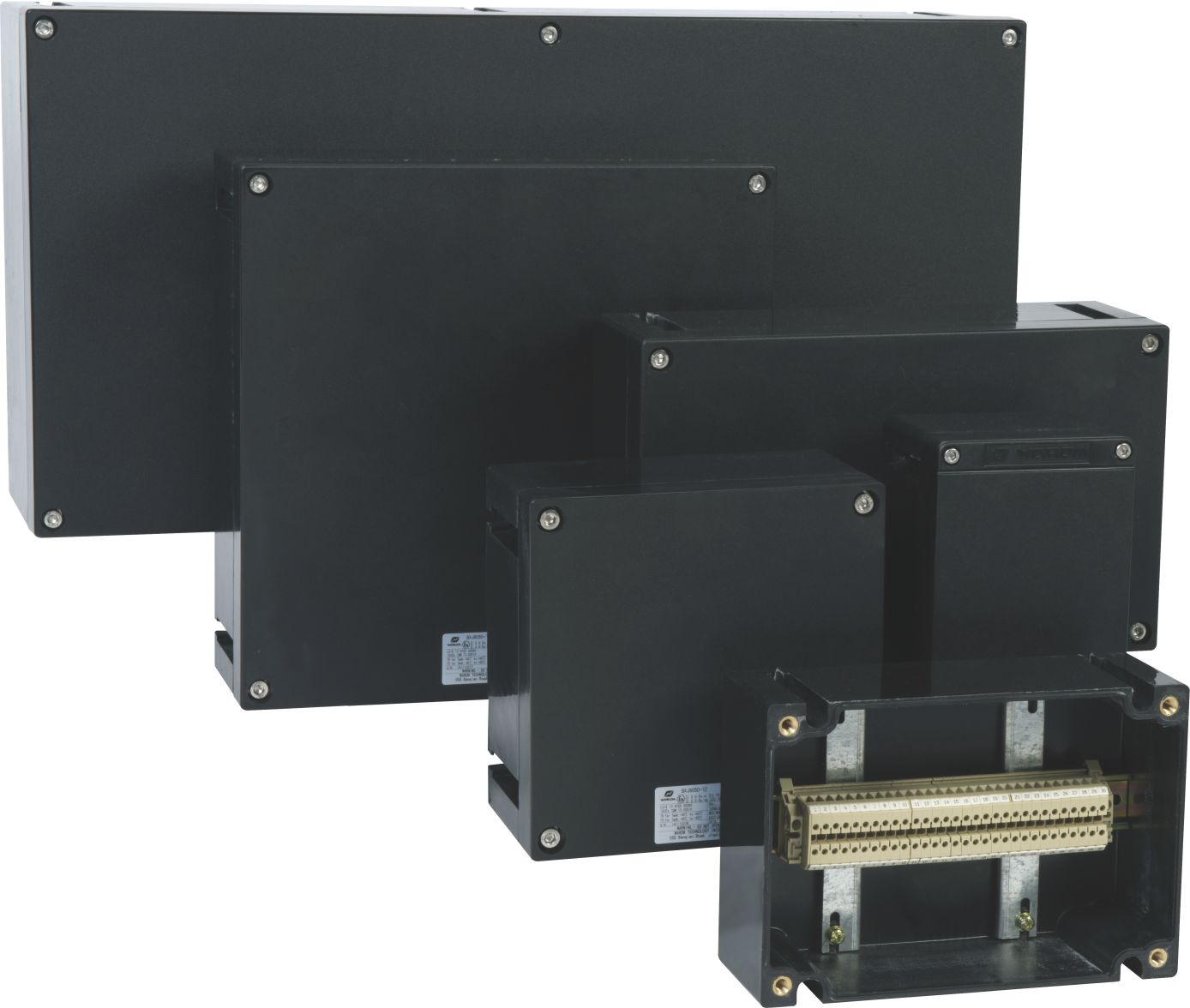
The nameplate on an explosion proof control panel carries information that the site safety team will check before permitting installation. Protection method—Ex d, Ex e, or a combination—gas group IIA, IIB, or IIC, temperature class T1 through T6, ambient temperature range, certificate number, and notified body identification. Every line on that nameplate must be traceable to the certificate. When I audit a panel before shipment, I compare the nameplate against the ATEX or IECEx certificate directly, line by line. A mismatch that seems minor—a temperature class marked T4 when the certificate says T5—means the panel cannot be installed until the discrepancy is resolved.
Component-level certification is equally important. A control panel may contain terminal blocks, contactors, relays, indicators, and cable glands from multiple suppliers. Each component installed inside a flameproof enclosure must carry its own certification or be covered by the panel’s overall certification through a component schedule. During pre-shipment review, we verify that every internal component on the bill of materials has a valid certificate and that the certificate conditions of use are compatible with how the component is installed.
For the General Paint electrical safety upgrade in Mexico, the panel certification review was the step that gave the plant safety manager confidence to sign off. The plant had flammable gas and dust risks, and the previous electrical installation had serious safety hazards we identified during the site audit. When the new explosion proof distribution boxes, gas detectors, and junction boxes arrived, the documentation package showed a clean chain from product certificate to panel assembly to shipment. That traceability is what a proper certification review delivers.
The gas group and temperature class verification deserves particular attention. A panel certified for IIB gases cannot be installed where IIC gases are present. A panel with a T4 temperature class cannot be used where the gas ignition temperature requires T5 or T6. These are binary decisions with no room for interpretation. We confirm gas group compatibility against the purchase order and the site hazardous area classification drawing before the panel leaves the factory.
Documentation You Should Receive with the Panel
The documentation package that ships with an explosion proof control panel is not an afterthought. It is part of the product. Every certified panel must be accompanied by documents that allow the site team to install, commission, inspect, and maintain it correctly.
At minimum, the package should include the certificate of conformity from the notified body—ATEX, IECEx, or both—covering the exact panel model and configuration you ordered. A copy of the factory test report showing the actual measured values from dielectric, insulation resistance, and earth continuity tests, not just a pass/fail statement. As-built wiring diagrams and layout drawings that reflect any changes made during production. A bill of materials listing every certified component inside the panel. Installation and maintenance instructions specific to the panel, not a generic manual. And for panels with Ex e components, the increased safety design verification documentation.
I have been on the receiving end of panel documentation that was incomplete, and I have seen what happens. A site electrician needs to verify the flame path gap on a flanged cover during periodic inspection, and the maintenance manual does not specify the gap. The electrician either guesses, which is unsafe, or the inspection stalls while someone contacts the manufacturer. Include the gap measurement in the documentation.
For panels shipped internationally, confirm that the documentation includes the certificate in a format accepted by the destination country. Some Middle Eastern regulators require the IECEx certificate with a specific additional national endorsement. Some Southeast Asian authorities want the full technical dossier. Our team learned this during the Tilenga Uganda delivery, where the project spanned multiple regulatory jurisdictions and the documentation package had to satisfy all of them simultaneously.
Before accepting shipment, ask the manufacturer to send the documentation package electronically for review. You want to confirm completeness before the crate leaves the factory floor. Missing documentation found after arrival means delays that are avoidable.
How to Confirm Your Panel Test Program Is Adequate
Procurement teams and project engineers often ask how to evaluate whether a manufacturer’s factory testing is thorough enough. The answer starts with the test plan. Ask the manufacturer to provide a factory acceptance test procedure specific to your panel before production begins. A credible manufacturer will have a documented procedure and will welcome the request. If the response is vague—”we test all our panels to standard”—ask for the specific test voltages, durations, and acceptance criteria.
When the Tilenga project required explosion proof lighting and electrical systems for installations inside a national park with zero tolerance for safety incidents, the factory test documentation was part of the compliance package the operator reviewed before accepting delivery. Every panel had traceable test results. That is the standard you should expect.
If your project involves a panel configuration that combines multiple protection methods—for example, an Ex d main enclosure with Ex e terminal chambers—the test plan must address each protection method separately. The dielectric test voltage for the Ex e chamber may differ from the flameproof chamber. The earth continuity path through an Ex e gland plate requires a different measurement approach than through a flameproof spigot joint. A single-pass test procedure that treats the entire panel as one electrical assembly will miss these distinctions.
Share your panel specification and site conditions at gm*@***om.com or call +86 21 39977076, and we can review what tests your particular configuration should include before shipment.
Common Questions About Explosion Proof Control Panel Testing
Does a factory test replace the site acceptance test after installation?
No. Factory testing confirms the panel is built correctly and meets its certified design before it leaves the manufacturer. The site acceptance test confirms the panel survived transport, was installed correctly, and functions properly within the site electrical system. Both are required. Skipping the factory test because a site test is planned later is a mistake—finding a wiring error or a damaged component at the factory costs hours. Finding it on site after installation costs days and may require a certified repair.
How long should a factory test take for a standard control panel?
A complete test sequence for a single panel with four to six outgoing circuits typically takes four to eight hours, depending on complexity. This includes visual inspection, electrical tests, and documentation review. Panels with PLC integration, safety instrumented functions, or communication systems add time because the functional tests become more involved. If a manufacturer tells you they test every panel in under an hour, ask what they are not testing.
What temperature class and gas group should my panel test verify?
The panel must be tested against the temperature class and gas group specified on your purchase order, which should match the site hazardous area classification. The test itself does not change based on gas group—dielectric and insulation resistance tests are the same—but the certification review must confirm the panel’s markings match the required group and class. If you ordered a panel rated for IIC T4 and the nameplate says IIB T3, the test program caught a serious problem before shipment.
Can the factory test be witnessed remotely?
Remote witness testing has become more common and is practical for many projects. We set up video conferencing that shows the panel, the test equipment displays, and the nameplate simultaneously. The client sees the measurements in real time and can request specific verification steps. For critical panels on large projects, remote witness testing gives the project team confidence without travel costs. If you want to witness the factory tests on your panels, coordinate with the manufacturer at least two weeks before the scheduled test date so they can prepare the video setup and schedule the session.
What happens if a panel fails a factory test?
A failure at the factory test stage is a quality control success, not a failure of the process. The whole point of testing before shipment is to find problems while the panel is still in the factory. When a panel fails, we document the failure, identify the root cause, correct it, and re-run the full test sequence, not just the failed test. The failure and correction are recorded in the test report. I have seen projects where a panel failed dielectric testing because a wire was pinched during assembly. The wire was re-routed, the test repeated, and the panel shipped with a clean report. If that panel had shipped without testing, the pinched wire would have caused an insulation breakdown in service. Share your panel specifications and we will confirm what the test failure protocol covers before production begins—send your requirements to gm*@***om.com.
If you’re interested, check out these related articles:
WAROM is heading to the Australian Energy Producers Conference & Exhibition in Perth!
GRP Fiberglass Enclosures: Ultimate Corrosion Protection
Explosion Proof Terminal Boxes: Securing Instrument Cable Connections
Warom at Australian Energy Producers Conference & Exhibition 2025
With over a decade of experience, he is a seasoned Explosion-Proof Electrical Engineer specializing in the design and manufacture of safety and explosion-proof products. He possesses in-depth expertise across key areas including explosion-proof systems, nuclear power lighting, marine safety, fire protection, and intelligent control systems. At Warom Technology Incorporated Company, he holds dual leadership roles as Deputy Chief Engineer for International Business and Head of the International R&D Department, where he oversees R&D initiatives and ensures the precise delivery of design documentation for international projects. Committed to advancing global industrial safety, he focuses on translating complex technologies into practical solutions, helping clients implement safer, smarter, and more reliable control systems worldwide.

Qi Lingyi