
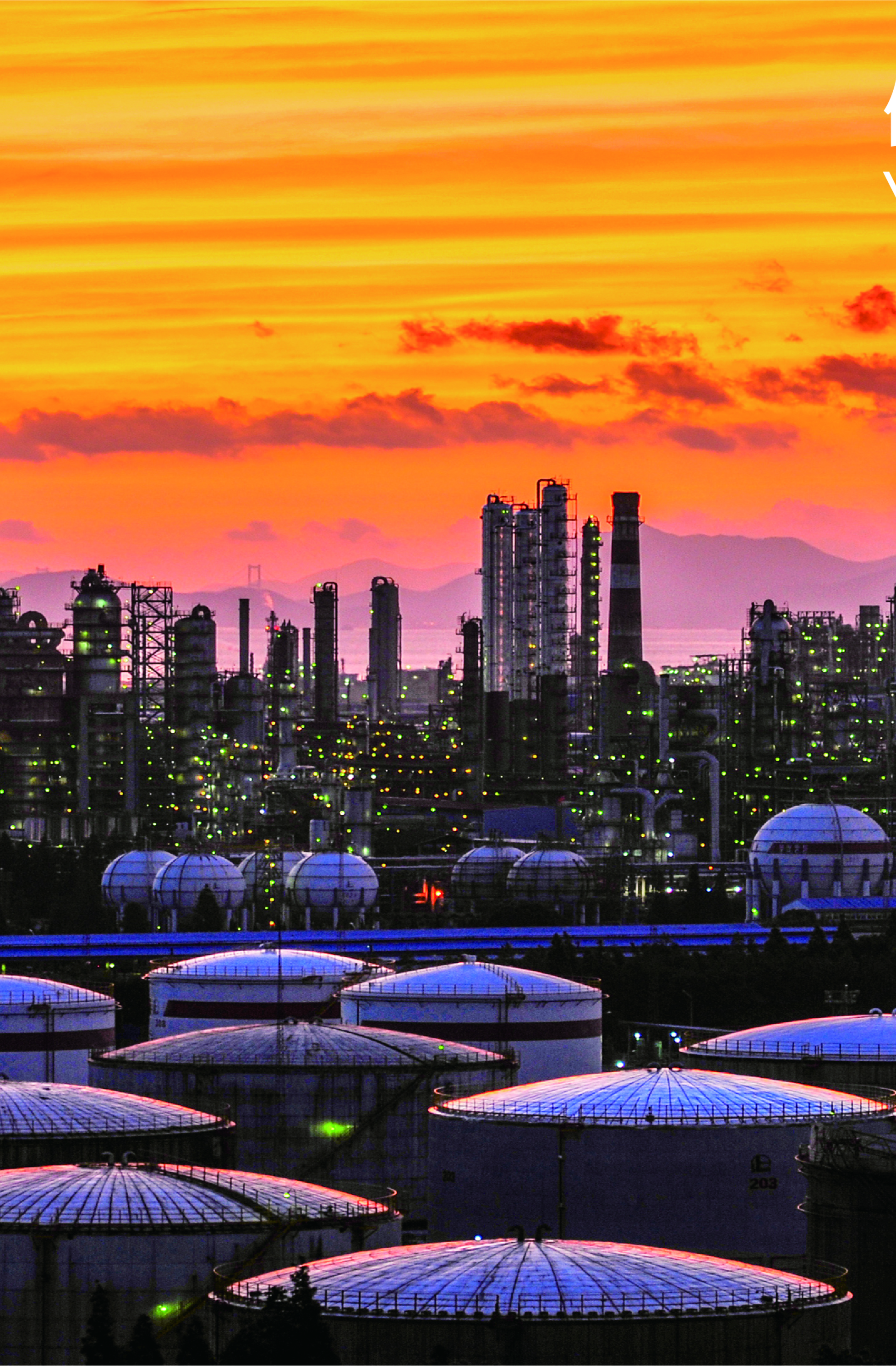
Water treatment plants subject weatherproof control panels to some of the most persistently corrosive conditions in industrial operations. Chlorine vapors, treatment chemical aerosols, high humidity, and outdoor temperature swings combine to attack enclosure materials in ways that standard commercial panels are not designed to handle. Having spent over three decades specifying and troubleshooting electrical enclosures across industrial environments, I have seen control panel failures that trace directly to material choices made without accounting for the specific degradation mechanisms at work in water and wastewater facilities. This article walks through the enclosure material, IP rating, and internal protection decisions that determine whether a control panel lasts five years or twenty in a water treatment environment.
Why Standard Enclosures Fail in Water Treatment Environments
Most electrical enclosure failures in water treatment plants follow a predictable pattern, and the root cause is rarely a single catastrophic event. It is gradual material degradation driven by the specific chemistry of the plant environment.
Water treatment facilities generate airborne chemical compounds that settle on enclosure surfaces. Chlorine-based disinfectants release low concentrations of chlorine gas and hypochlorous acid vapor, which accelerate corrosion on metals and can embrittle certain polymers over time. In wastewater plants, hydrogen sulfide adds another aggressive corrosion vector, attacking copper components and degrading many standard gasket materials. These chemical agents work in combination with near-constant humidity, often above 80% in enclosed process buildings and consistently present outdoors.
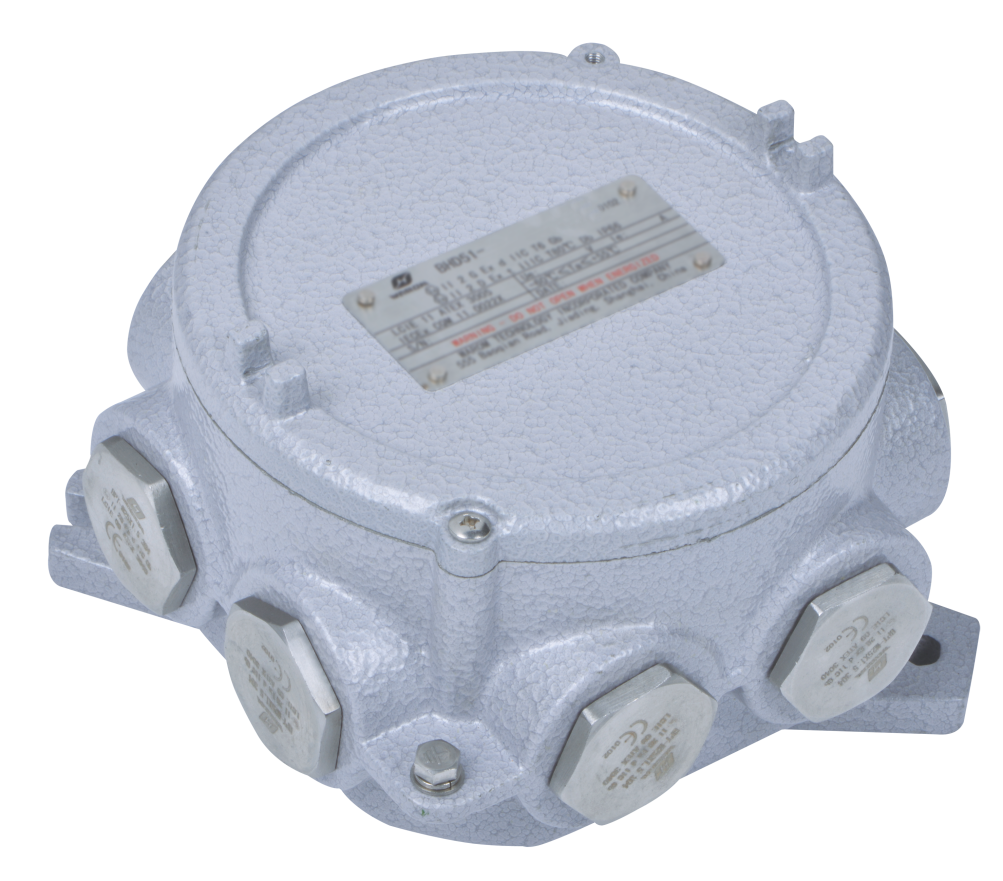
Powder-coated mild steel enclosures, common in commercial and light industrial applications, typically show first signs of failure at cut edges, mounting holes, and around cable entry points where the coating has been compromised during installation. Once corrosion starts at these points, it spreads under the coating, lifting it from the substrate at a rate that accelerates as more surface area becomes exposed. Within two to three years in an unheated outdoor location at a water treatment plant, a standard powder-coated steel enclosure can develop through-wall corrosion at these vulnerable points.
I have also seen gasket degradation cause failures that operators misdiagnose as electrical faults. Neoprene and standard EPDM gaskets absorb chlorine compounds, swell, and lose compression set. The result is a seal that looks intact during a visual inspection but no longer prevents moisture ingress during pressure differentials caused by temperature cycling. Water enters, condenses on internal components, and eventually causes ground faults or contactor coil failures. The panel is then blamed for poor reliability when the real issue is a gasket material incompatible with the operating environment.
This is not a theoretical concern. It is the pattern we have observed repeatedly when replacing failed third-party enclosures at industrial facilities. The replacement panels we supply for these sites use materials and gaskets selected specifically for the chemical exposure profile of the application, and the difference in service life is measured in decades rather than years.
Enclosure Material Selection: GRP vs Stainless Steel vs Aluminum
Material selection is the single most consequential decision in specifying a weatherproof control panel for a water treatment plant. Three materials dominate the market, each with distinct tradeoffs that must be evaluated against the specific exposure conditions at the installation location.
| Material | Corrosion Resistance | Mechanical Strength | Weight | Relative Cost | Best Application |
|---|---|---|---|---|---|
| GRP (Glass Reinforced Polyester) | Excellent chemical resistance; immune to chloride attack | Moderate; sufficient for most installations | Low | Moderate | High chemical exposure areas; chlorine buildings; coastal plants |
| 316L Stainless Steel | Excellent; resistant to most treatment chemicals | High; very rigid | Heavy | High | Heavy mechanical load; security-sensitive; high impact risk |
| Powder-Coated Aluminum | Good with intact coating; vulnerable at cut edges | Moderate to high | Low to moderate | Moderate to high | General outdoor use; low chemical exposure zones |
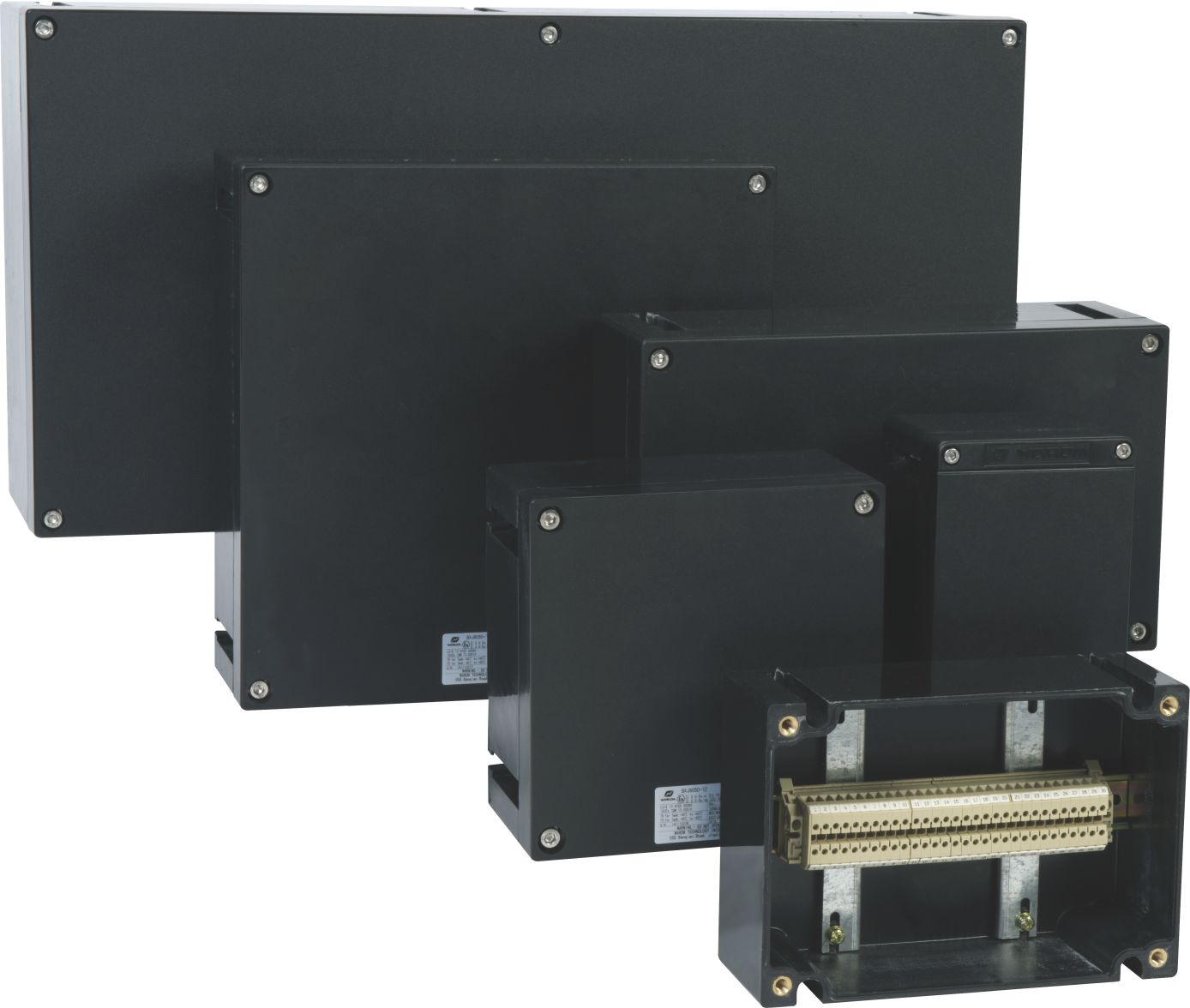
GRP enclosures have become the default choice for water treatment plants in chemically aggressive zones for good reason. The material is inherently immune to chloride-induced corrosion, does not require protective coatings that can be compromised during installation, and maintains its mechanical properties across the full ambient temperature range encountered in water treatment facilities. We manufacture GRP enclosures rated to IP66 for these applications, and the material does not care whether it is installed next to a chlorine storage tank or exposed to coastal salt spray. There is no coating to scratch, no cut edge to rust, and no galvanic compatibility concern when mounting stainless steel components inside.
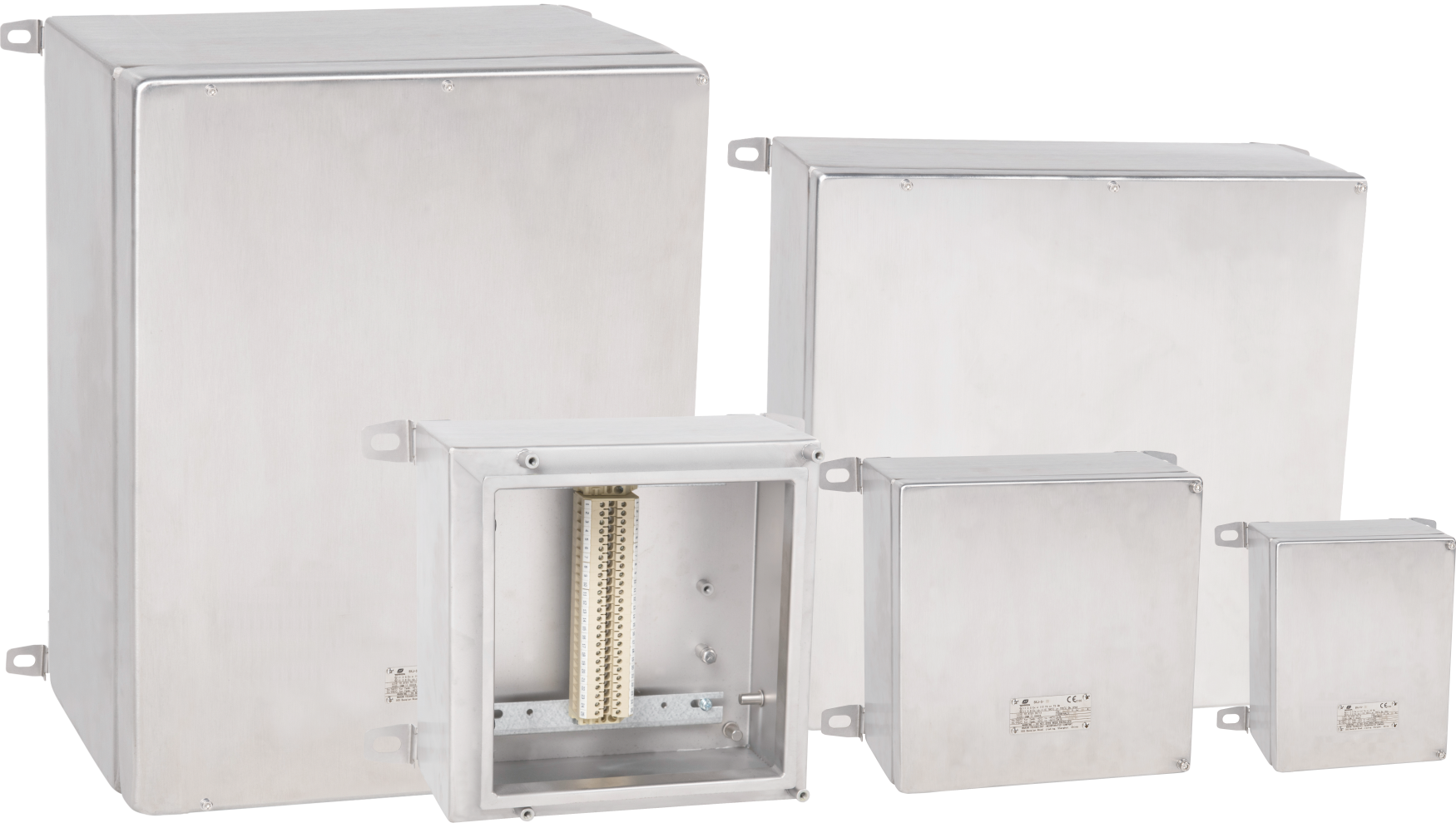
316L stainless steel remains the correct choice where mechanical demands exceed what GRP can provide. If the control panel will be mounted in a location subject to occasional impact from vehicles or maintenance equipment, or if it must support heavy cable loads entering from overhead trays, the rigidity of a 1.5 mm or 2 mm stainless steel enclosure justifies the additional weight and cost. We produce stainless steel distribution panels for these applications, particularly in plants where security is also a consideration since stainless steel enclosures are more resistant to unauthorized access attempts than polymer alternatives.
Aluminum with high-quality powder coating occupies the middle ground. It offers good corrosion resistance at a lower weight than stainless steel, and modern polyester powder coatings provide excellent UV stability for outdoor installations. However, aluminum enclosures require disciplined installation practices. Every cable entry, every mounting hole, and every modification made on site becomes a potential corrosion initiation point if the cut edge is not properly treated. In our experience, the gap between theoretical performance and real-world service life for aluminum enclosures in water treatment plants is almost always driven by installation quality rather than material deficiency.
IP Rating Requirements for Different Plant Zones
IP ratings define protection against solid objects and water ingress, but applying them correctly to a water treatment plant requires looking past the two-digit code to understand what each rating actually means for the specific exposure conditions in each plant zone.
IP65 is the minimum rating I would accept for any outdoor control panel at a water treatment facility. The 6 indicates complete protection against dust ingress, which matters because airborne treatment chemical dust and lime particles are present in many plant areas and can be conductive when combined with moisture. The 5 indicates protection against water jets from any direction, which covers rain, hose-down cleaning, and incidental spray from nearby processes.
IP66 adds protection against powerful water jets and is the standard we recommend for most water treatment plant control panel installations. The difference between IP65 and IP66 is not subtle in practice. IP65 testing uses a 6.3 mm nozzle at 12.5 liters per minute from 3 meters. IP66 uses a 12.5 mm nozzle at 100 liters per minute from 3 meters, roughly eight times the water volume. For control panels mounted outdoors in plants that use high-pressure washdown systems, or in areas near pumps and pipe flanges that can develop leaks under pressure, IP66 is worth the incremental cost.
For panels installed inside chemical dosing buildings, particularly where chlorine gas or hypochlorite solutions are handled, IP66 is also the correct minimum. The airborne chemical concentration in these buildings means that any moisture ingress carries dissolved corrosive agents directly to internal components. An IP65 panel that survives a rainstorm without issue can fail within months in a chlorine storage building because the small amount of vapor that eventually diffuses through seals carries a much higher corrosion potential.
There is one zone where IP67 or IP68 may be justifiable: control panels installed in below-grade vaults or sump areas that can experience temporary immersion during flooding events. However, these applications are rare for control panels specifically, as electrical codes generally prohibit control equipment in areas subject to regular immersion regardless of enclosure rating. For junction boxes and terminal boxes in these locations, specifying IP67 provides an additional margin.
If your plant specification involves IP rating selection across zones with significantly different chemical exposure risk, it is worth confirming that the enclosure material matches the chemical environment before finalizing your equipment schedule. The same IP rating on two different enclosure materials will produce very different service lives in a chlorine-handling area.
Control Panel Internal Protection: Condensation and Chemical Ingress
An IP66 enclosure keeps liquid water out. It does nothing to address condensation that forms inside the enclosure due to temperature and humidity cycling, and this internal moisture is responsible for more control panel failures in water treatment plants than direct water ingress.
The mechanism is straightforward. During the day, the air inside a sealed enclosure warms up and its capacity to hold moisture increases. At night, the enclosure cools and the internal humidity condenses on the coldest available surface, typically the enclosure walls and any metal components with high thermal conductivity. In a water treatment plant where ambient humidity rarely drops below 70%, the absolute quantity of moisture cycled through condensation and evaporation inside a sealed enclosure is substantial.
The first line of defense is a properly specified enclosure breather drain. These devices allow pressure equalization while blocking liquid water ingress and provide a path for accumulated condensate to exit the enclosure. For water treatment plant applications, breather drains with PTFE membrane elements are preferred over sintered metal types because the PTFE membrane resists clogging from the airborne chemical residues common in these environments.
The second line of defense, and one that is surprisingly often overlooked, is an anti-condensation heater. A small resistive heater, typically 10 W to 30 W depending on enclosure volume, maintains the internal air temperature slightly above ambient, preventing the temperature from dropping to the dew point. The heater is controlled by a thermostat set to activate when the internal temperature falls within a few degrees of the expected dew point. For water treatment plants in temperate or tropical climates, I consider anti-condensation heaters standard equipment, not optional accessories.
Internal component selection also matters. Control relays, terminal blocks, and PLC modules specified for the panel should have conformally coated circuit boards if the enclosure will be installed outdoors or in unheated buildings. The incremental cost of conformal coating on control electronics is small relative to the cost of a service call to replace a corroded PLC CPU that failed three years into service because repeated condensation cycles bridged traces on an uncoated board.
Cable entry sealing completes the internal protection strategy. Every cable gland must match the cable diameter within the gland’s specified sealing range. A gland specified for 12 mm to 18 mm cable will not seal reliably on a 9 mm cable, regardless of how much the compression nut is tightened. In water treatment plants, I recommend using glands with dual sealing mechanisms: a primary compression seal on the cable outer sheath and a secondary O-ring seal on the gland body threads. This dual barrier approach addresses the reality that cable entries are the most common path for moisture ingress in otherwise well-specified enclosures.
Specification Checklist for Long-Service-Life Panels
If your project requires weatherproof control panels that will perform reliably for 15 years or more in a water treatment plant environment, the following specification points should be addressed in your procurement documentation.
Enclosure material specified by plant zone, not as a blanket requirement. GRP for chemical dosing areas, chlorine buildings, and coastal plants. 316L stainless steel for high-impact or security-sensitive locations. Powder-coated aluminum acceptable for general outdoor areas with low chemical exposure.
IP66 minimum for all outdoor and chemical exposure locations. IP65 acceptable only for indoor areas in buildings with climate control. IP67 for below-grade junction boxes.
Cable glands specified by individual cable diameter with dual sealing mechanisms. Do not accept generic gland sizing or single-seal designs.
Anti-condensation heaters included as standard on all outdoor panels with thermostat control. Specify heater wattage based on enclosure internal volume.
Breather drains with PTFE membrane elements on all outdoor enclosures. Quantity and location to be determined by enclosure size.
Conformally coated circuit boards on all electronic components including PLC modules, communication interfaces, and protection relays.
Gasket material verified compatible with chlorine compounds, with peroxide-cured EPDM or silicone gaskets preferred. Standard neoprene and sulfur-cured EPDM should be excluded.
Internal component spacing must allow air circulation around heat-generating devices. Packing components tightly into the smallest possible enclosure saves money on the purchase order and guarantees condensation problems in service.
Cable entry plates must be removable for future modifications. Welded or bonded entry plates that cannot accept additional glands later in the panel’s service life force operators to field-modify enclosures, compromising the IP rating.
Factory testing of the fully assembled panel to the specified IP rating before shipment, not just an IP-rated enclosure with untested field modifications.
These specification points come from direct experience with panels that have succeeded and panels that have failed in water treatment service. They add modest cost to the initial procurement and eliminate a much larger cost in premature replacement, unplanned downtime, and emergency service calls over the installation’s operating life.
If your plant operates in a region with temperatures below freezing for extended periods, verify that the enclosure material retains impact resistance at low temperatures. Some polymers become brittle below -20°C, and an enclosure that survives a wrench dropped during summer maintenance may crack from the same impact in winter. This is generally not a concern with GRP or stainless steel, but it is worth confirming with the manufacturer if your specification includes polycarbonate or other thermoplastic enclosures.
Selecting the right weatherproof control panel is not about finding the highest IP rating or the lowest price. It is about matching enclosure material, sealing strategy, and internal protection to the specific chemical and environmental conditions at each installation point. When the material is right for the chemistry and the condensation management is built in from the start, a control panel will run reliably for 15 to 20 years with routine maintenance. When those decisions are deferred or genericized, the panel becomes a recurring maintenance headache that costs far more over its service life than the initial procurement saving. For procurement teams and plant engineers specifying control panels for new water treatment facilities or upgrade projects, send your panel quantity, plant zone descriptions, and preferred enclosure material to gm*@***om.com or call +86 21 39977076, and we will confirm the correct configuration for each installation point before you finalize your order.
Common Questions About Weatherproof Control Panel Selection
Does an IP66 rating cover chemical vapor exposure?
No. IP ratings only address solid particle and liquid water ingress. Chemical vapor resistance is a material property, not an ingress protection property. An IP66 enclosure made from a material that degrades when exposed to chlorine vapor will fail despite its IP rating. This is why enclosure material selection must be driven by the chemical exposure profile of the installation location, not by the IP rating alone. In practice, for water treatment plants with chlorine-based disinfection, GRP enclosures with peroxide-cured EPDM or silicone gaskets provide the right combination of IP protection and chemical compatibility.
In programs we have supported, the difference between wastewater and drinking water plant panel requirements is often underestimated. Can the same specification work for both?
The enclosure requirements are similar but not identical. Wastewater plants add hydrogen sulfide exposure, which attacks copper and copper alloys aggressively. If your specification calls for copper busbars or uncoated copper terminals, they will degrade noticeably faster in a wastewater environment. Wastewater plants also tend to have higher humidity levels in process buildings and may require more aggressive anti-condensation measures. The core material selection and IP rating logic is the same, but the internal component metallurgy and condensation management strategy should be adjusted for wastewater service.
It depends on where the panel is installed and what it controls. How often should weatherproof control panel gaskets be replaced?
Gasket replacement interval depends on the gasket material and the chemical exposure, not on a fixed calendar schedule. For peroxide-cured EPDM gaskets in a water treatment plant with moderate chlorine exposure, expect 10 to 15 years of service before compression set reaches a level that compromises sealing. Silicone gaskets can last longer but are mechanically softer and more easily damaged during panel opening and closing. I recommend including gasket condition inspection in annual preventive maintenance procedures. If the gasket shows visible swelling, cracking, or no longer springs back when compressed, replace it regardless of age. Keep a spare gasket set on site for each enclosure type. The cost is trivial compared to the damage caused by a single moisture ingress event.
A common misconception is that IP rating alone determines panel longevity. What is the most commonly overlooked specification item for water treatment control panels?
It is the cable entry sealing specification. Most project specifications include detailed enclosure material and IP rating requirements, then add a single line for cable glands that says something like IP66 cable glands to suit installed cables. This delegates the entire moisture ingress risk at cable entries to the panel assembler, who is working to a price and may use the cheapest gland that meets the letter of the specification. A better approach is to list the actual cable types and diameters that will enter the panel, specify dual-seal glands with the correct sealing range for each cable, and require the gland manufacturer’s installation instructions to be followed and documented. The best enclosure and gasket combination is irrelevant if water enters through poorly specified cable glands.
Our team has seen panels fail within two years of installation despite having the correct IP rating on paper. How do I avoid the same problem on my project?
The failure is almost never the IP rating itself. It is almost always a combination of material incompatibility with site chemistry, missing condensation management, or cable entry sealing that was specified generically rather than cable by cable. Before ordering, confirm that the enclosure material matches the chemical exposure at each installation point, anti-condensation heaters are included on outdoor panels, and every cable entry is sized and sealed for the actual cable it will carry. Share your panel specifications and site conditions with us at gm*@***om.com and we will confirm the enclosure material, gasket type, and gland selection before your order is released to production.
If you’re interested, check out these related articles:
MED ENERGY CONFERENCE & EXHIBITION
CANTON FAIR 2023
With over a decade of experience, he is a seasoned Explosion-Proof Electrical Engineer specializing in the design and manufacture of safety and explosion-proof products. He possesses in-depth expertise across key areas including explosion-proof systems, nuclear power lighting, marine safety, fire protection, and intelligent control systems. At Warom Technology Incorporated Company, he holds dual leadership roles as Deputy Chief Engineer for International Business and Head of the International R&D Department, where he oversees R&D initiatives and ensures the precise delivery of design documentation for international projects. Committed to advancing global industrial safety, he focuses on translating complex technologies into practical solutions, helping clients implement safer, smarter, and more reliable control systems worldwide.

Qi Lingyi