

An ethanol plant is not one hazardous area. It is a chain of zones that changes as the process moves from fermentation through distillation, dehydration, storage, and loadout, with dried distillers grains adding combustible dust risk along the way. Selecting explosion proof equipment for ethanol and biofuel production therefore has to begin with area classification and fluid group data, not with a lighting schedule or a generic chemical plant checklist. I have spent more than thirty years designing and manufacturing hazardous area electrical systems, and on biofuel projects I see the same three specification gaps: temperature class assumptions, dust-rated enclosures treated as optional, and cable glands left until after the order is placed.
Which Areas in an Ethanol and Biofuel Plant Require Explosion Proof Equipment?
Four groups of locations repeat across dry mill and wet mill biofuel plants. Fermentation and distillation release ethanol vapor around fermenters, pumps, sample valves, and distillation columns. Molecular sieve dehydration adds continuous vapor lines and high temperature regeneration equipment. Storage and loadout create vapor releases at fill points, vents, and truck racks that travel along grade and can collect in low spots. Solids handling then introduces a separate dust hazard at DDGS drying, grinding, conveying, and bagging. Each group selects equipment differently because the protection concept changes from gas containment to dust exclusion.
| Process Area | Typical Hazard Zone | Key Equipment |
|---|---|---|
| Fermentation and distillation | Zone 1 / Class I Division 1 near vents and pump seals | LED floodlights, control stations, terminal boxes |
| Molecular sieve dehydration | Zone 1 / Class I Division 1 around regeneration vents | Ex e terminal boxes, instruments, lighting |
| Denatured ethanol storage and loadout | Zone 1 / Class I Division 1 at fill points | Static grounding systems, cameras, plugs and sockets |
| DDGS drying and conveying | Zone 21 / Class II Division 1 | Dust-rated LED fixtures, terminal boxes, motor switches |
| Boiler and biogas support areas | Zone 2 / Class I Division 2 where leak frequency is low | Floodlights, distribution boxes, monitoring equipment |
Process area lighting in these zones is usually resolved with an LED floodlight such as the BAT86, rated IP66 and built for wet, vibration-prone service. Lighting is not the first equipment category to specify, but it often appears early in the architectural package and the specification has to be corrected to the hazardous area drawing.

Process area tables simplify the first cut. They do not replace the area classification drawing, because the boundary of Zone 1 around a pump seal may extend only a few meters, while a ventilation failure can shift the same area from Zone 2 to Zone 1. Equipment placed outside the classified boundary still needs the correct cable glands and earthing practice to avoid becoming a secondary risk.
How Do Zone and Division Ratings Apply to Explosion Proof Equipment in Biofuel Plants?
Two certification frameworks appear on ethanol and biofuel projects. IEC 60079 and ATEX use Zone 0, 1, and 2 for gas and Zone 20, 21, and 22 for dust. The North American system uses Class and Division. A buyer can convert between them only when the same process condition is carried across the table. Ethanol vapor in normal operation is the driver for Zone 1 or Class I Division 1 equipment, while a rarely opened valve inside a ventilated room may fall to Zone 2 or Class I Division 2. The gas group and temperature class add the remaining constraints. Ethanol belongs to gas group IIA in the IEC world and Group D under the NEC, and the temperature class must stay below the ignition temperature of the specific fluid mixture applied.
| Selection Factor | Ethanol Vapor | DDGS Dust |
|---|---|---|
| Primary risk | Flammable vapor accumulation | Combustible dust cloud and layers |
| Typical gas or dust zone | Zone 1 / Class I Division 1 | Zone 21 / Class II Division 1 |
| Marking path | Ex d or Ex e in Zone 1, Ex n in Zone 2 | Ex tb IIIC or dust-ignition proof |
| Temperature concern | T3 or lower depending on trace solvents | Surface temperature below dust ignition |
| Material exposure | Washdown, weak acids, moist product | Abrasive dust, elevated temperatures |
If your biofuel project includes fuel ethanol distillation and DDGS handling in the same process building, the gas and dust classifications have to be reconciled before the package is locked. Send the area classification drawing, the complete fluid list, and the motor schedule to gm*@***om.com and I will cross-check the proposed markings against the certificate schedules before your team places the order.
What Should a Biofuel Project Specify First for Explosion Proof Equipment?
Specification should follow the classification documents, not the site lighting layout. I use the following sequence for ethanol and biofuel packages because it forces the technical decisions before the commercial ones.
- Confirm hazardous area classification drawings with the process and safety engineers.
- Lock the gas group, temperature class, and dust group from the full chemical inventory, including denaturants and cleaning solvents.
- Register each active load: motor starters, disconnect switches, distribution boards, lighting, and monitoring.
- Fix cable entry type and gland selection at the same time as the enclosure. Armored cable, unarmored cable, and compound barrier requirements change the gland body and thread.
- Match enclosure material and finish to each location before pricing, not after.
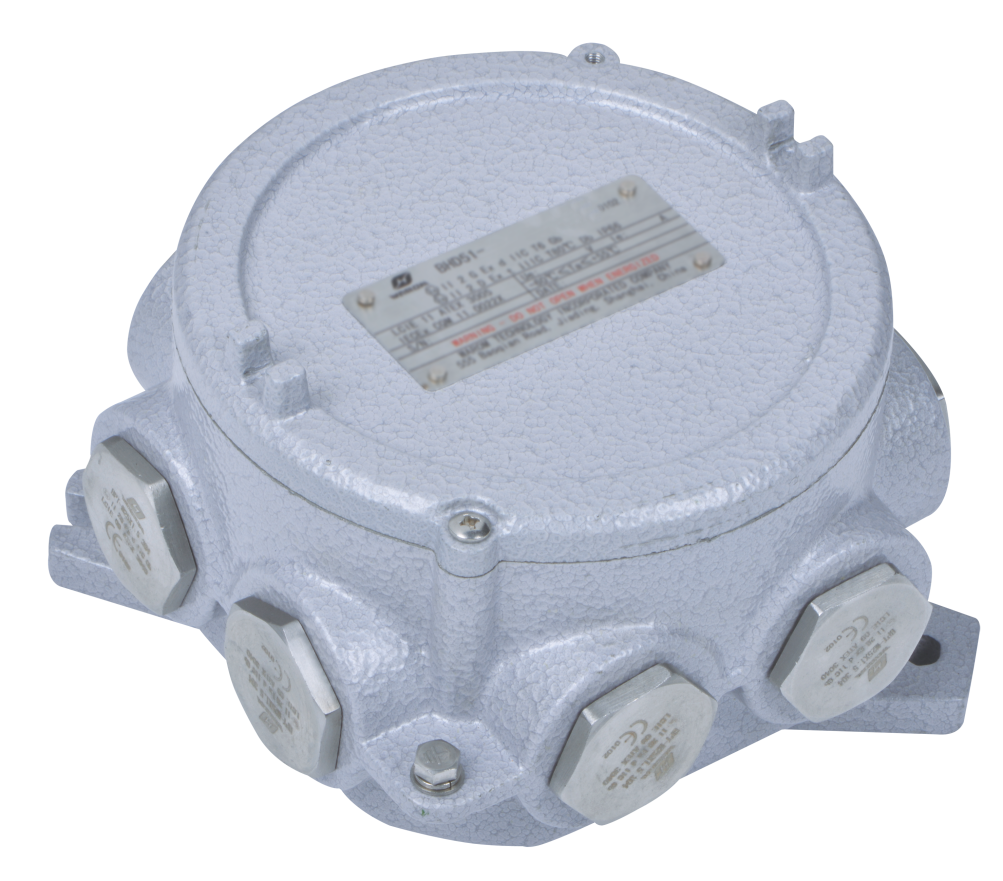
Junction boxes, terminal boxes, and control stations sit at the connection points where most site failures occur, so I treat them as the backbone of the package. For terminal connections in Zone 1, a GRP terminal box such as the BXJ8050 can carry Ex e current ratings and IP66 protection, but the deciding factor is still the certificate conditions for the cable entry selected. A box with an IP66 flameproof enclosure and correctly matched Ex d glands removes the weakest points. A lighting fixture selected from a different certificate series creates a documentation mismatch.

Armored cable is common at ethanol loadout racks and tank farm installations because the cable may be exposed to mechanical damage. <Explosion Proof Cable Glands for SWA Armored Cable Safety> covers why the gland has to be selected against the actual cable construction, including the bedding layer, and what happens when the drawing lists only the thread size.
How Do Material and Certification Choices Affect Explosion Proof Equipment Lifecycle Cost?
Initial purchase price hides most of the cost difference between a package that stays in service and one that needs a mid-life replacement. Ethanol plants combine water, weak acids from fermentation, fine dust, and periodic hot washdown. Copper-free aluminum works in general process areas, but it becomes a maintenance problem where sanitizing chemicals or washdown water collect. Stainless steel suits loadout and cleaning zones. GRP enclosures perform well in corrosion and dust exposure but require careful gland earthing. I compare these choices by where the equipment sits, not by the first quote.
In one biofuel upgrade, the initial package selected cast aluminum enclosures across the loadout area because the first cost was lower. The area used washdown procedures, and the enclosures began showing surface corrosion inside the first year. The replacement forced a shutdown, which cost more than the material upgrade would have cost at the start. When we reworked the package, we put stainless steel in washdown locations and retained GRP for the dust sections. That split changed the price modestly and removed a predictable failure point.
Enclosure material choice is part of supplier capability, not a simple line item. <Evaluating Weatherproof Electrical Suppliers in China for Industrial Safety> covers the checks that separate documented weatherproof and explosion proof suppliers from catalog resellers, including certification access and production records.
Certification affects cost in a different way. An IECEx or ATEX certificate with a full set of conditions of use is worth more than a lower-price product with a thin document set. For ethanol and biofuel buyers, I request the actual certificate number, the conditions of use, the test report for temperature class, and the production batch record before shipment. This paperwork is the only evidence that the equipment still matches the classification drawing when the site auditor arrives.
What Should You Do Next With Your Ethanol Plant Equipment Package?
Most ethanol plant equipment packages reach the quote stage without every rating decision completed. The buyer has a list of enclosures, but the gland types, temperature classes, and dust ratings still show as open notes. That gap is what turns a fixed-price quote into change orders.
Warom works on biofuel packages from three documents: the area classification drawing, the motor and heater schedule, and the cable schedule. With those three documents, the engineering team can check each enclosure, gland, luminaire, and monitoring device against the actual zone, gas group, and temperature class.
Send those three documents and your required delivery window to gm*@***om.com or call +86 21 39977076 or +86 21 39972657. We will return a line-by-line rating check and a package proposal before you commit to the build.
What Do Buyers Ask About Explosion Proof Equipment for Ethanol and Biofuel Plants?
Does an ethanol plant need Zone 1 equipment everywhere?
Not necessarily. The plant is divided by area classification, so Zone 1 equipment is required only where ethanol vapor is present in normal operation, such as around distillation pumps, sample points, and loading racks. Ventilated rooms away from process equipment may fall to Zone 2. Buying Zone 1 equipment across the entire site increases cost without improving safety, but the classification drawing must support every Zone 2 decision. When a ventilation fan fails, some areas may lose their Zone 2 classification for the outage period, and that operating condition has to be captured in the specification.
Can the same enclosure serve ethanol vapor and DDGS dust zones?
Only if the marking covers both. A flameproof Ex d enclosure for gas does not automatically carry a dust rating, and a dust-tight enclosure is not automatically gas flameproof. The enclosure must be marked for both protection concepts, for example Ex db for gas and Ex tb for dust, with a temperature class appropriate for both the vapor and the dust cloud. In cereal dust environments, the surface temperature limit can be the more difficult requirement because dust accumulations burn at lower temperatures than many gas mixtures. If the same building contains both hazards, we check the dual marking on the certificate schedule first.
What documentation should a buyer request before shipment?
In biofuel packages I have reviewed, documentation is where site acceptance either passes quickly or stalls for weeks. Before shipment, request the certificate of conformity, the conditions of use, the temperature class test evidence, the material certificate, the gland torque records, and the batch production records. Compare the certificate marking to the equipment nameplate, not just to the quotation. Buyers sometimes catch a mismatch in the terminal capacity or cable entry size that the quotation page did not show. A complete document set also shortens the local inspection process because the auditor does not need to go back to the manufacturer for missing sheets.
How far ahead should explosion proof equipment be ordered for an ethanol plant upgrade?
It depends on the package. Standard catalog products such as LED floodlights, junction boxes, and cable glands can often be allocated from production quickly. Custom distribution cabinets, pressurized panels, or nonstandard cable entries add weeks because they are built after the enclosure drawing is approved. We ask buyers to book standard products early and leave the long-lead items for a second release only when the technical definition is final. Share your equipment list and delivery window and we will confirm what can be held from stock and what must enter production.
If you’re interested, check out these related articles:
Warom at Australian Energy Producers Conference & Exhibition 2025
Warom at 2025 ADIPEC
CANTON FAIR 2023
WAROM “INNOVATION” Unveils a New Era of Precision Medicine
2023 Merry Christmas
With over a decade of experience, he is a seasoned Explosion-Proof Electrical Engineer specializing in the design and manufacture of safety and explosion-proof products. He possesses in-depth expertise across key areas including explosion-proof systems, nuclear power lighting, marine safety, fire protection, and intelligent control systems. At Warom Technology Incorporated Company, he holds dual leadership roles as Deputy Chief Engineer for International Business and Head of the International R&D Department, where he oversees R&D initiatives and ensures the precise delivery of design documentation for international projects. Committed to advancing global industrial safety, he focuses on translating complex technologies into practical solutions, helping clients implement safer, smarter, and more reliable control systems worldwide.

Qi Lingyi