
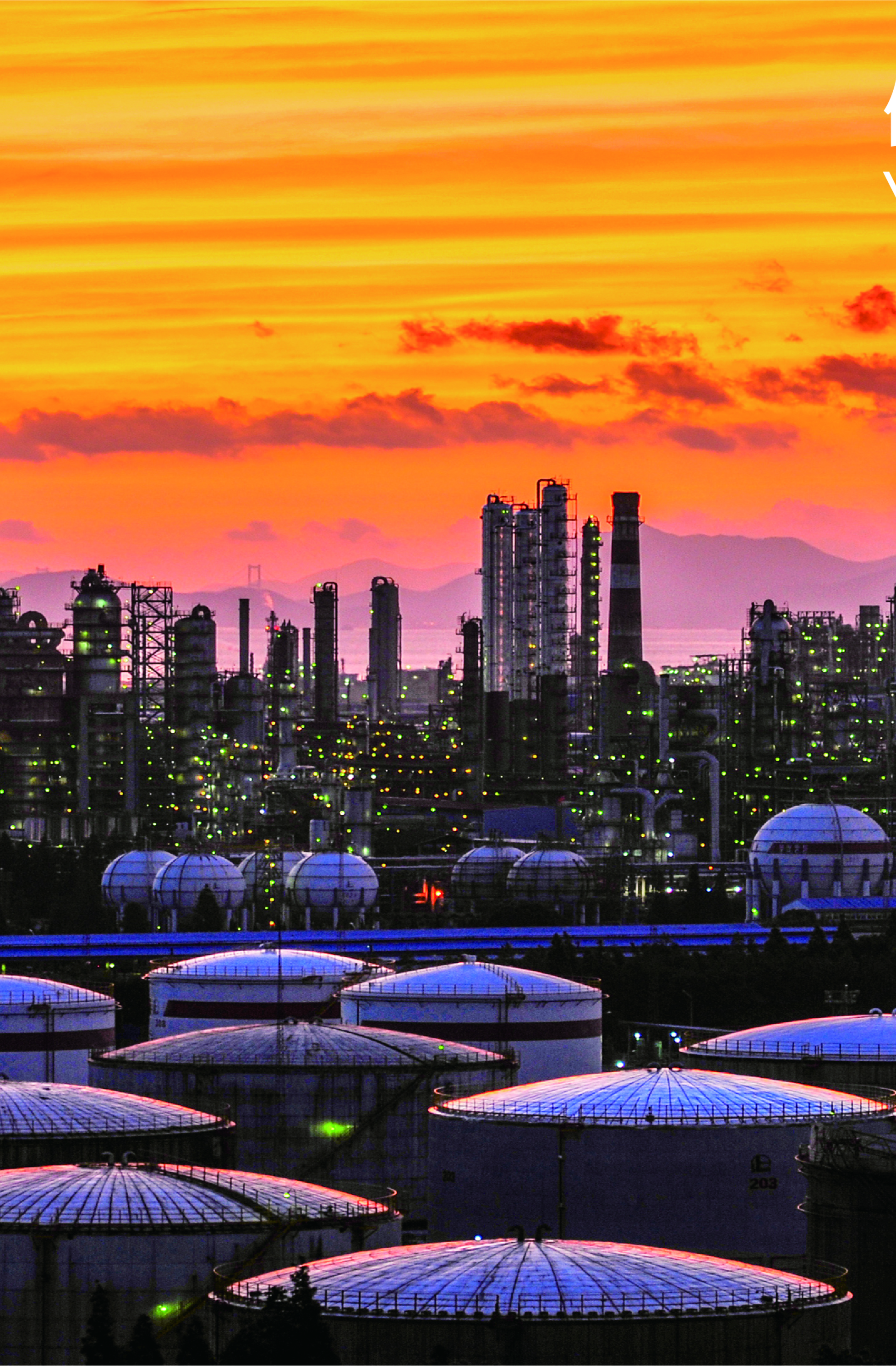
The safe operation of a gas compression station depends on the reliability of every electrical component installed in a hazardous area. Explosion proof equipment is not a one-size-fits-all solution; mismatched protection can lead to catastrophic failures. As an explosion-proof electrical engineer with more than thirty years of experience, I have seen projects where a simple oversight in gas group classification or temperature rating forced an expensive shutdown and retrofit. This guide draws on real-world project experience and product-level knowledge to help engineers and project managers select, specify, and integrate the right explosion proof equipment for gas compression stations, from lighting and power distribution to controls and cable glands.
What Are the Hazardous Area Requirements for Gas Compression Stations?
Gas compression stations handle natural gas, methane, and often heavier hydrocarbons that create a permanently or intermittently explosive atmosphere. The first step is classifying the hazardous zones according to IEC 60079-10-1 or NEC Article 500. Most compressor buildings and gas processing areas fall into Zone 1 or Zone 2 (IEC) or Division 1 or Division 2 (NEC), depending on the likelihood of a gas release and ventilation adequacy.
You cannot guess the classification. A detailed hazard assessment must consider gas composition, operating pressure, release sources, and ventilation rates. Natural gas is typically grouped as IIA or IIB, but if hydrogen is present in the stream, you move up to IIC, which imposes stricter flame path and gap requirements on all enclosures.
The station also integrates multiple functions: inlet receiving, compression, dehydration, and metering. Each sub-area may have a different classification. Lighting, junction boxes, and distribution panels must be individually matched to the zone. For instance, a BXM8050 explosion-proof illumination distribution box rated for Zone 1 and Zone 2, with its combination of Ex d and Ex e chambers, is suitable for mounting in areas where the gas group and temperature class align. Confirm the exact rating before specification.
How to Match Explosion Proof Equipment to Gas Groups and Temperature Classes
Gas group and temperature class selection is where many projects lose weeks during commissioning. I have seen a contractor install a full set of lighting fixtures rated for T4, only to discover during an audit that the compressor seals generated a surface temperature above 135°C under fault conditions, requiring T3 equipment.
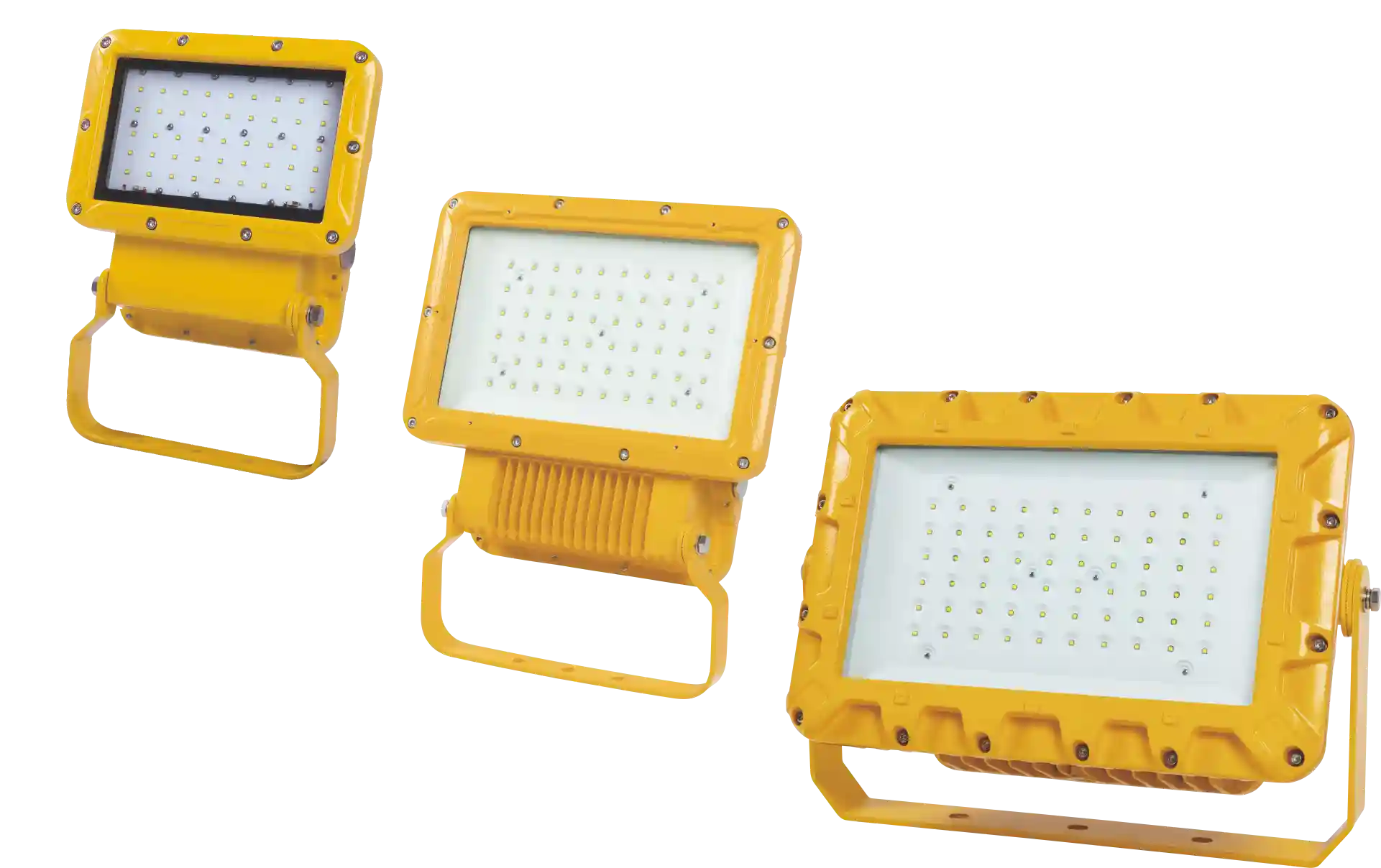
If your gas analysis shows a hydrocarbon mix, the standard recommendation is IIB T3. However, lighter fractions or high ambient temperatures in desert or tropical installations can push the requirement to T4 or T5. Always request the worst-case auto-ignition temperature from the process engineer and add a safety margin. Equipment such as the HRNT95 series LED floodlight is available in temperature classes up to T6, providing headroom for nearly any gas environment.
Different protection methods also affect thermal behavior. Flameproof Ex d enclosures contain an explosion and cool the escaping gases below the ignition temperature of the surrounding atmosphere. Increased safety Ex e designs prevent arcs and hot spots by robust construction. For a compressor station, a mix is common: Ex d for switchgear and control stations where arcing is unavoidable, Ex e for terminal boxes and junction boxes where the internal components are non-sparking under normal operation.
If your station handles gas streams with variable composition (for example, seasonal changes in H2S content), it is worth confirming the temperature class requirement with the equipment supplier before ordering. Send your gas analysis data to gm*@***om.com and we can recommend the correct temperature rating for your specific conditions.
Which Explosion Proof Equipment Types Are Essential for Compressor Stations?
A complete compressor station electrical package spans several equipment families. Every category must carry the correct certification, not just the major components.
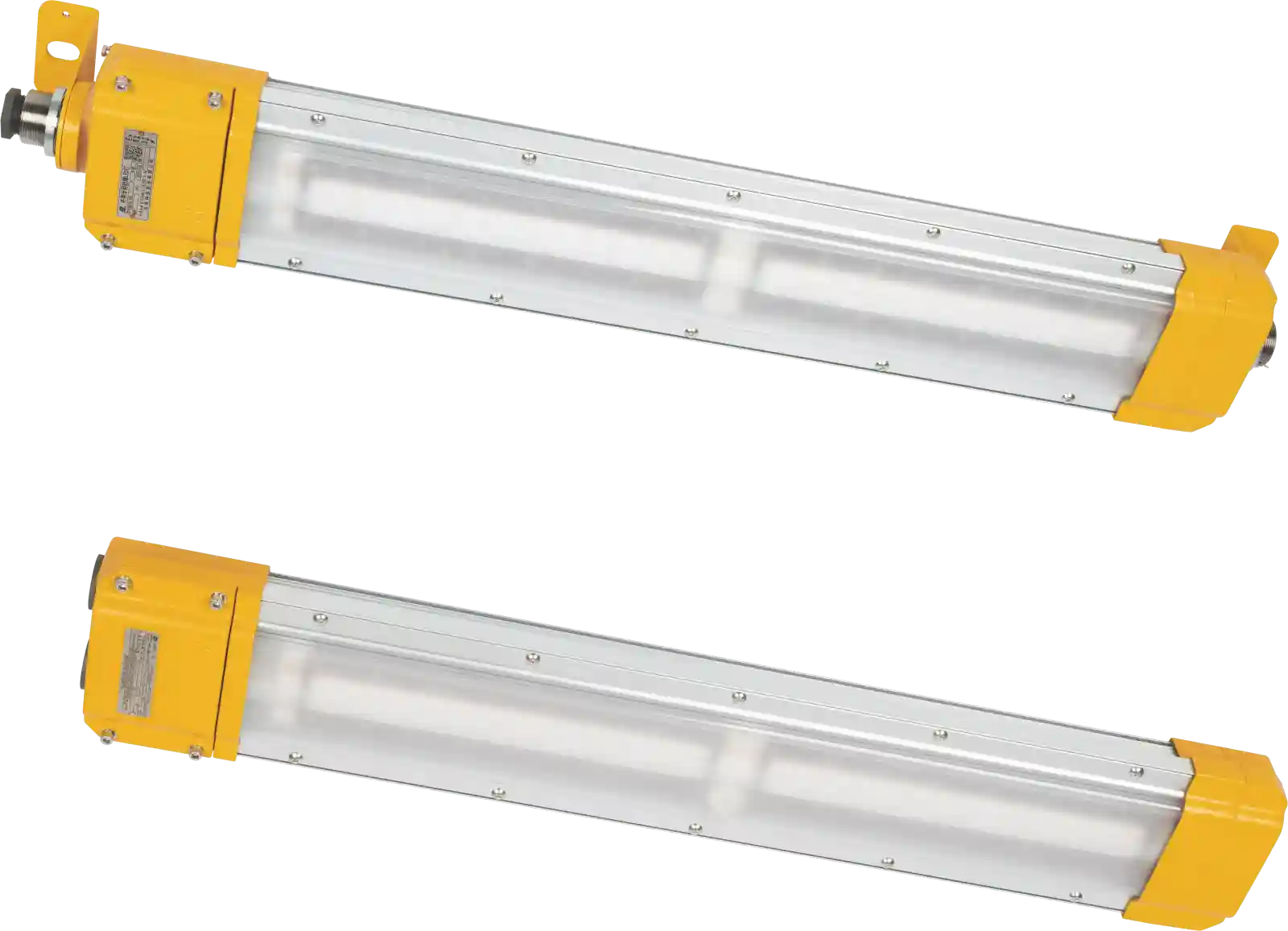
Lighting: LED floodlights are the standard for outdoor process areas and compressor sheds. The BAT86 explosion-proof LED floodlight, rated IP66 and capable of operating from -60°C to +60°C, has been deployed in projects from African pipelines to arctic gas fields. For linear lighting inside compressor halls, BAY51-Q or HRY97 explosion-proof LED fluorescent lights offer uniform illumination with T8 LED tubes. Emergency lighting with battery backup is also mandatory in many jurisdictions; a combination of maintained and non-maintained fittings should be specified.
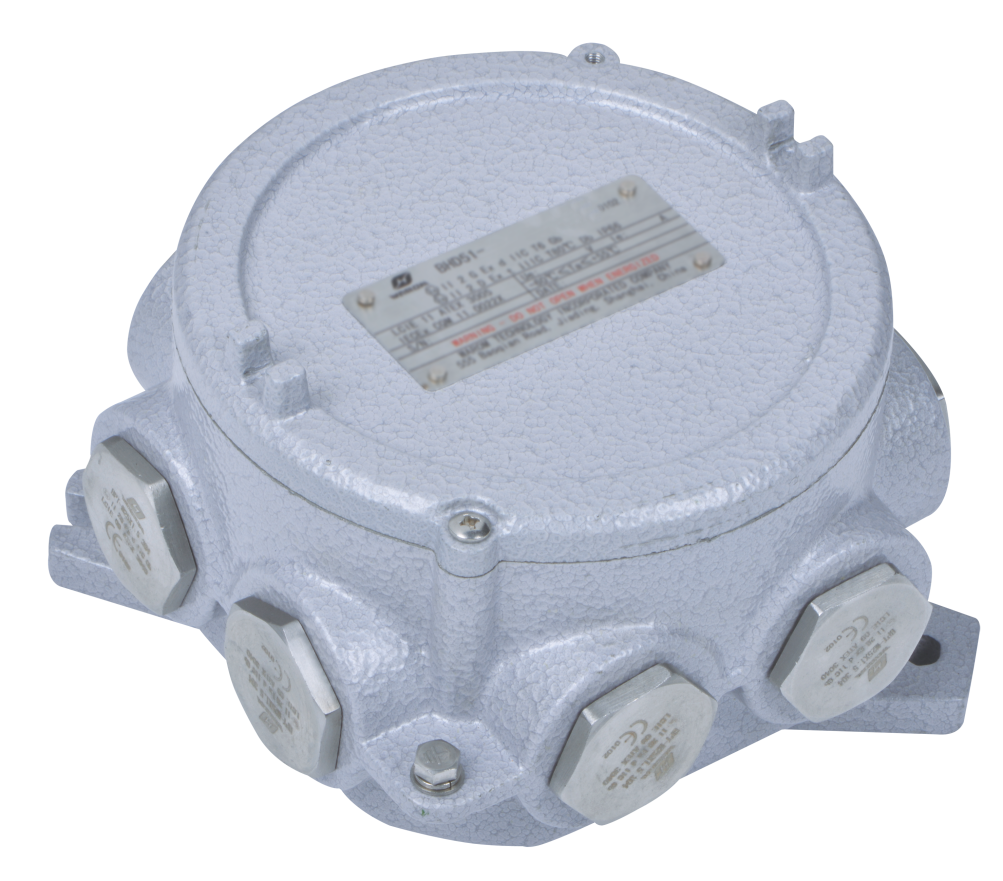
Distribution panels and junction boxes: The station will have multiple motor loads (compressor auxiliaries, lube oil pumps, cooling fans) plus lighting circuits. HRMD92 or HRMD93 explosion-proof distribution panels, available in copper-free aluminium alloy with IP66 protection, provide bus bar distribution and modular circuit configurations. For cable terminations and branch connections, the BHD91 explosion-proof junction box accommodates terminals up to 16 mm² and multiple M25 cable entries, simplifying wiring in congested areas.
Control stations and cable glands: Motor starters, push-button stations, and selector switches must carry the same gas group and temperature class as the area. DQM-III explosion-proof cable glands, certified for Ex db IIC, are essential for maintaining the flameproof integrity of each enclosure entry. The wrong gland destroys the entire protection concept. Braided armored cable requires a specific gland assembly to terminate the armor and seal the inner sheath; Warom’s DQM-III accepts cable diameters from 12.5 mm to 20.5 mm and includes a flameproof barrier compound.
Monitoring and detection: Fixed gas detectors tied to a central alarm system are a typical requirement. CCTV cameras, such as the BJK-S/G explosion-proof camera with IP66/IP68 rating and H.265 video compression, allow remote surveillance of unmanned stations.
What Environmental and Integration Factors Should You Consider?
Certification alone does not guarantee long-term performance. Gas compressor stations in coastal or offshore environments face salt spray corrosion that rapidly degrades standard aluminium enclosures. Stainless steel or GRP enclosures, like the BCZ8060 explosion-proof plugs and sockets made from glass fibre-reinforced polyester, resist corrosion without additional coating. Specifying a corrosion-resistant material from the start reduces maintenance and extends the installation life beyond 15 years.
Ambient temperature extremes affect both equipment ratings and cable gland performance. In cold climates down to -60°C, standard sealing compounds stiffen and crack. The DQM-III gland is rated to -60°C, so it maintains elasticity. Conversely, in desert installations with 50°C ambient, the temperature rise inside a sealed enclosure can push internal components beyond their declared temperature class. A thermal study of the enclosure’s internal heat dissipation should be part of the detailed design.
Cable entry planning is another integration headache. An explosion-proof distribution board that arrives with fixed entry positions may not match the contractor’s conduit layout. Modular designs such as the BXM(D)8050 allow flexible entry drilling on site, but the flameproof integrity of every entry must be recalculated. I recommend finalizing the cable schedule before order placement and requesting the manufacturer to drill entries to specification, with plugs fitted for unused openings. This avoids field modifications that can void the certificate.
8050 Illumination Distribution Boxes)
In major projects, coordinating equipment from multiple vendors creates compatibility gaps: a junction box from one supplier with a cable gland from another may have mating thread or flamepath length mismatches. Sourcing a full package from a single manufacturer that provides IECEx and ATEX certified distribution cabinets, lighting, glands, and control stations eliminates these interface problems. On the Tilenga project in Uganda, Warom supplied a complete explosion-proof electrical package for wellpads and the central processing facility, meeting all schedule milestones with zero safety incidents and confirming that an integrated supply approach reduces commissioning delays.
How to Source and Specify Explosion Proof Equipment for Your Project
Writing a clear technical specification is the most effective way to control quality and cost. The specification should define the hazardous area drawings, gas group, temperature class, required third-party certification (IECEx, ATEX, or NEC), cable entry sizes and types, enclosure material, and any special environmental conditions like UV exposure or seismic requirements.
When evaluating suppliers, verify the certification body and certificate validity. IECEx certificates can be checked online through the IECEx system. A genuine ATEX certificate references a notified body such as TÜV, LCIE, or DNV. Do not accept a supplier’s own declaration without independent testing evidence.
Lead times for custom explosion-proof distribution cabinets range from 8 to 14 weeks, depending on the complexity of the busbar arrangement and the number of circuits. Starting early engagement with the supplier during the detailed engineering phase is a low-cost way to prevent schedule slippage later. I always advise project managers to place long-lead items (distribution cabinets and special lighting fittings) before releasing the main cable tray and conduit purchase orders.
Factory acceptance testing is another critical step. A standard FAT for a distribution panel should include a high-potential test on all busbars and outgoing circuits, verification of the interlock mechanism on flameproof doors, and a visual inspection of all flame path gaps and cable gland entries. Warom conducts FATs on every HRMD series panel before shipment, and I recommend that the project’s electrical inspector attend the final FAT or receive a detailed test report with photographs before the equipment leaves the factory.
Total cost of ownership extends beyond the purchase price. Energy-efficient LED lighting reduces generator fuel consumption on unmanned sites. Stainless steel enclosures eliminate repainting cycles. A higher upfront investment in certified, corrosion-resistant equipment pays back within the first five years of operation through reduced maintenance and avoided production interruptions.
Questions Engineers Ask About Explosion Proof Equipment for Gas Compression Stations
Does every light fixture in the station need to be explosion proof?
Every fixture within the classified hazardous area, including emergency and exit lights, must carry the appropriate explosion protection. Outside the classified boundary, standard industrial fittings may be used, but the boundary must be clearly defined on the hazardous area drawings.
What is the most common certification mistake in compressor station projects?
Using an ATEX-certified device in an NEC-governed installation without a dual-certified label. The two systems have different wiring requirements and enclosure construction rules. I always confirm the local electrical code before specifying a product’s certification.
How do I choose between Ex d and Ex e for a terminal box?
If the terminal box contains only terminals with no arcing or sparking components, Ex e increased safety is sufficient and generally less expensive. If the box also houses contactors or relays, Ex d flameproof is required. In practice, we often supply hybrid boxes with an Ex d compartment for the components and an Ex e compartment for the terminals, such as the BXJ8050 terminal boxes.
Can I use the same cable gland for armoured and unarmoured cables?
No. The DQM-III gland has specific versions for armoured cable (with armour clamping and a seal around the inner sheath) and unarmoured cable. Using the wrong version compromises the flameproof seal and voids the certification.
How do I plan spare parts for a remote compressor station?
Stock at least two complete sets of gaskets and seals for every flanged enclosure, plus spare LED modules for lighting fixtures and spare explosive-protection fuses for distribution panels. Warom can provide a recommended spares list based on the installed equipment, and we keep most components available for 10 years after the initial delivery. Share your equipment list and we’ll prepare a spares quotation for your remote site.
Getting explosion proof equipment right for a gas compression station is not just a procurement task; it is a safety-critical engineering decision. Every misplaced gland or mismatched temperature class can become the weak point that fails under an upset condition. I encourage you to treat equipment selection as an engineering discipline, not a commodity purchase. Send your project requirements, area classification drawings, and equipment schedule to gm*@***om.com, or call +86 21 39977076 to discuss the technical package. Our engineering team will review the specification and provide a compliant quotation with full certification documentation, supported by more than 30 years of experience in hazardous area electrical systems.
If you’re interested, check out these related articles:
Pendant Light Fittings: Essential Safety for Hazardous Areas
Explosion Proof Cable Glands for SWA Armored Cable Safety
Evaluating Weatherproof Electrical Suppliers in China for Industrial Safety
With over a decade of experience, he is a seasoned Explosion-Proof Electrical Engineer specializing in the design and manufacture of safety and explosion-proof products. He possesses in-depth expertise across key areas including explosion-proof systems, nuclear power lighting, marine safety, fire protection, and intelligent control systems. At Warom Technology Incorporated Company, he holds dual leadership roles as Deputy Chief Engineer for International Business and Head of the International R&D Department, where he oversees R&D initiatives and ensures the precise delivery of design documentation for international projects. Committed to advancing global industrial safety, he focuses on translating complex technologies into practical solutions, helping clients implement safer, smarter, and more reliable control systems worldwide.

Qi Lingyi