
After thirty years engineering explosion-proof systems for oil, gas, chemical and pharmaceutical facilities worldwide, I can tell you that sourcing explosion proof equipment from China is less about finding the lowest price and more about identifying a manufacturer whose engineering capability, certification integrity and project track record you trust — because in hazardous areas, equipment failure is not an option. Most guides offer a checklist: check certificates, ask for samples. A certificate can be faked, though, and a sample tells you nothing about the supplier’s ability to deliver consistent quality across a large order. In this article I’ll share the evaluation framework I use when assessing an explosion proof equipment manufacturer, drawing on actual projects our company Warom has delivered from Africa to Latin America.
What You Must Verify Before Sourcing Explosion Proof Equipment from China
Certification is the starting point, not the finish line. For global projects you will see ATEX, IECEx, UL, and for projects inside China the CNEX mark. A supplier might present a certificate with an impressive logo, but you need to verify three things: the certificate’s scope, its validity, and the issuing lab. I have seen certificates that are genuine but limited to a specific enclosure size or temperature class; if your equipment falls outside that scope, the certificate offers no protection. Check the certificate number against the IECEx or ATEX online database and confirm that the product type matches what you are buying.
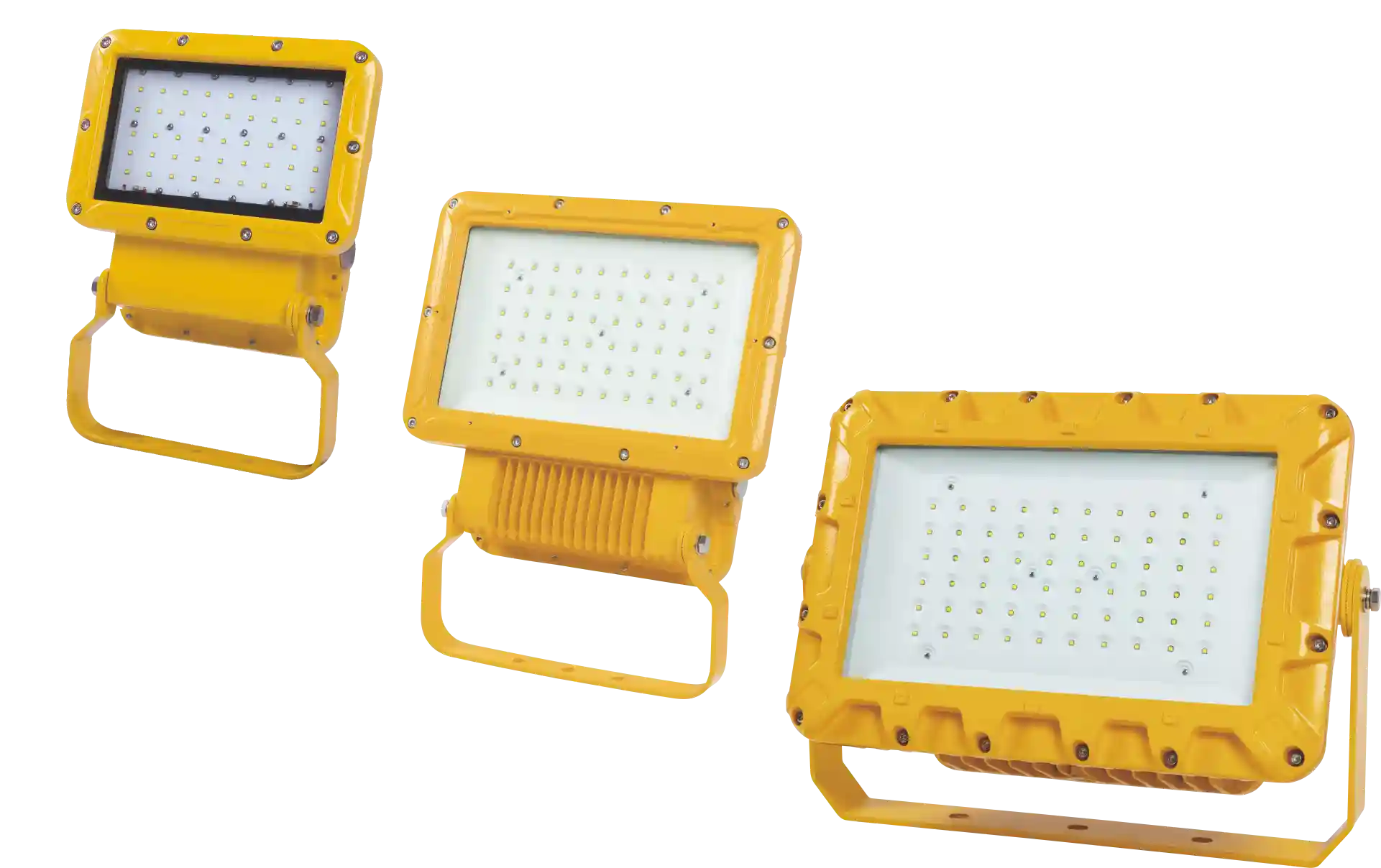
In our own product lines, for example, the BAT86 LED floodlight holds both IECEx and ATEX certification through TÜV, and the test reports are available on request. When suppliers hesitate to share the full test report, treat that as a red flag. For marine projects you may need additional classification society approval from CCS, BV or DNV; confirm whether the manufacturer has delivered to similar vessel requirements before.
How to Audit a Chinese Manufacturer’s Design and Testing Capability
A certificate proves that one sample passed a test. It does not prove the manufacturer can repeat that result on every unit. That is why I look beyond the catalog and examine the engineering infrastructure. Ask for the in-house test equipment list: does the factory have an IP test chamber, temperature cycling capability, pressure test rigs for flamepaths? Request a sample factory acceptance test report for a recent similar project so you can assess the thoroughness of the inspection. A capable manufacturer will also walk you through its design process, showing how it handles cable entry layouts, thermal calculations and spare part interchangeability.
The table below lists a few Warom product series and their key characteristics to illustrate what a technically competent manufacturer should be able to deliver as standard.
| Product | Type | Certifications | IP Rating | Ambient Temperature |
|---|---|---|---|---|
| HRNT95 LED Floodlight | Ex d floodlight | IEC 60079, ATEX | IP66 | -40°C to +58°C |
| BXM(D)8050 Illumination Distribution Box | Ex d/e distribution box | IEC 60079 | IP66 | -40°C to +55°C |
| DQM-III Cable Gland | Ex d cable gland | IEC 60079, ATEX | IP66 | -60°C to +90°C |
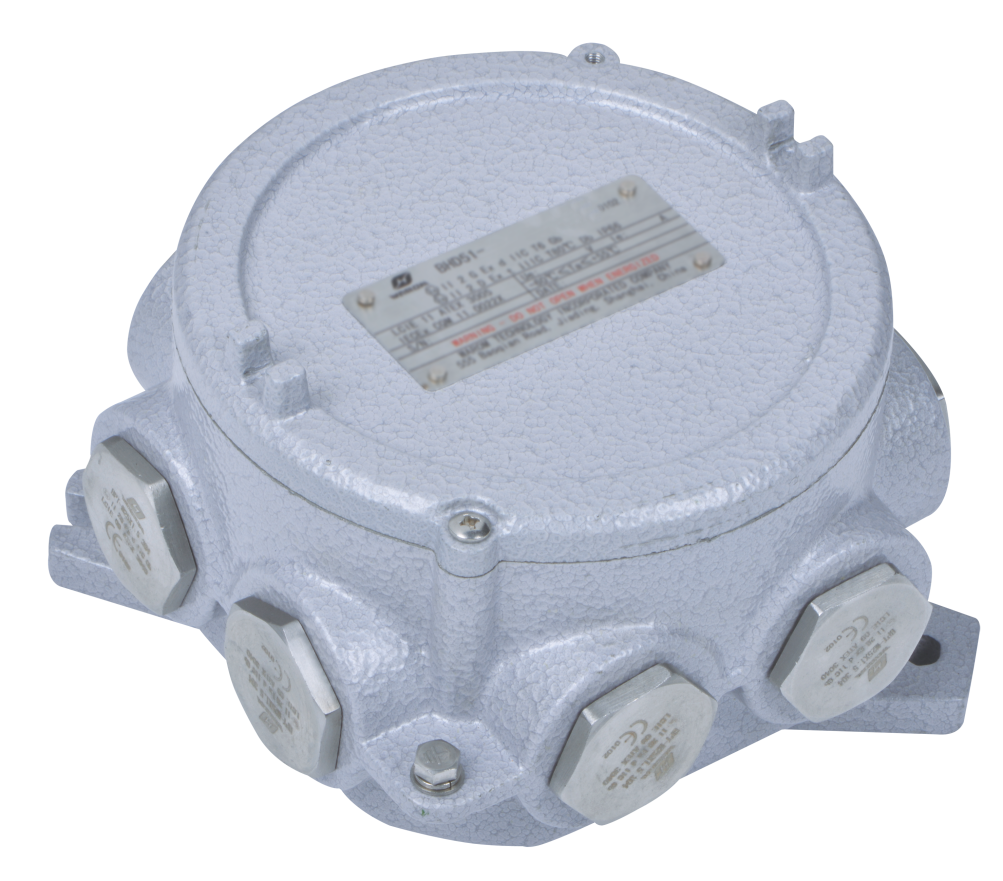
| BHD91 Junction Box | Ex d junction box | IEC 60079 | IP66 | -60°C to +60°C |
If your project requires a specific combination of protection methods or unusual temperature classes, verify the manufacturer’s current certification scope before you commit to an RFQ. Send your requirements to gm*@***om.com and we will confirm what is technically feasible and documented.
Project Track Record: Why Case Studies Matter More Than Catalogs
A manufacturer that has repeatedly delivered under tough conditions builds reliability into its systems. When we supplied explosion-proof lighting and electrical distribution for Uganda’s Tilenga project — wellpads, a Central Processing Facility and pipelines, partly inside Murchison Falls National Park — the challenge was not just product certification but maintaining zero safety incidents and compliance across a remote, environmentally sensitive site. The equipment had to cope with high ambient temperatures and logistics constraints while meeting international specifications. We met every milestone on schedule.
In a different sector, the General Paint chemical plant in Mexico had serious flammable gas and dust risks that its existing electrical installation did not address. Our team conducted an on-site hazard assessment, educated the customer’s maintenance staff, and deployed a tailored package that included gas detectors, explosion-proof plugs, junction boxes and anti-corrosion fixtures. Over three months the plant’s safety posture went from reactive risk to systematic protection, and the customer integrated our products into its procurement process. In a pharmaceutical CDMO facility in Suzhou, where solvent handling and fine powder zones create multiple explosion risks, we coordinated early with the design institute and EPC, delivered distribution boxes for workshops, tank farms and pump controls, and aligned delivery with the construction phases. The project launched on time and set a repeatable model for multi-party coordination.
Each example reinforces the same point: a manufacturer that can point to real projects in your industry sector — oil, chemical, pharmaceutical — has already proven what a catalog cannot.
Managing Lead Times and Placing Your First Order
Lead time depends on enclosure material, certification complexity and whether the design is standard or custom. A basic cast aluminum distribution box might ship in six to eight weeks; a stainless steel pressurized cabinet with a busbar system can take ten to fourteen weeks, especially if it requires additional ATEX or IECEx testing. Early technical alignment removes most of the uncertainty. In your RFQ, specify the gas group (IIA, IIB or IIC), temperature class (T4 or T6), cable entry type and size, and any marine certification requirements. Your RFQ should also state whether you need a factory acceptance test and who will witness it.
A professional manufacturer will not simply quote a price. It will ask clarifying questions about your single-line diagram, ambient conditions and local authority approval needs. That back-and-forth is a good sign; it means the supplier is thinking about the installation, not just the sale.
Starting Your Sourcing Process
Sourcing explosion proof equipment from China becomes a structured process, not a gamble, when you anchor decisions to certification verification, engineering capability and proven project delivery. That shift from price comparison to supplier qualification is what we have seen produce reliable outcomes on every continent. If you are ready to begin, send your equipment list with required certifications and a target delivery date to gm*@***om.com. Our engineering team will respond with a technical compliance statement, a preliminary lead time estimate, and a proposal based on your specific site conditions. You can also reach us by phone at +86 21 39977076.
Common Questions About Sourcing Explosion Proof Equipment from China
How can I verify an ATEX certificate from a Chinese manufacturer?
Check the certificate number against the issuing body’s online database — TÜV, PTB or other notified body — and confirm that the product type and the manufacturer’s legal name match exactly. I have encountered certificates that are authentic but cover only one enclosure size; if your order includes larger versions, the certificate may not apply. Always ask for the full test report, not just the certificate page.
What lead time should I expect for custom explosion-proof distribution cabinets?
It depends on the enclosure material, certification scope and whether we already hold a similar certified design. In projects we have supported, standard aluminum distribution cabinets ship in six to eight weeks, while stainless steel units with pressurized protection and bespoke busbar layouts typically require ten to fourteen weeks. Early technical alignment, including sharing your single-line diagram before the RFQ, reduces both lead time and the risk of rework.
Is it safe to order explosion-proof equipment from China without visiting the factory?
It can be, provided you verify certifications, request recent test reports and ask for reference projects in your industry. A factory visit is not always practical, but you can reduce risk by requiring a factory acceptance test report, third-party inspection or even video evidence of the testing. Reputable manufacturers welcome these transparency measures; reluctance is a signal to dig deeper.
What documentation should I request before shipment?
At minimum request the certificate of conformity, the final test report and the installation manual. For equipment like distribution cabinets also ask for the internal wiring diagram and the bill of materials. I advise requiring a copy of the FAT protocol signed by the inspector; this set of documents will be essential for local authority inspection and for your maintenance records.
What happens if I need after-sales support for a remote site?
The deeper question is whether the manufacturer can support you with spares and technical guidance after delivery, not just during the warranty window. For sites far from supply chains, we recommend ordering a commissioning support package and a critical spares kit with the main shipment. If your equipment will run in a remote desert or offshore environment, contact our team at gm*@***om.com with your site details. We can advise on a spare parts strategy and a remote support plan that matches your operational reality.
If you’re interested, check out these related articles:
Offshore Wind Substations: Explosion Proof Electrical Distribution Solutions
WAROM at MARINTEC CHINA 2025
With over a decade of experience, he is a seasoned Explosion-Proof Electrical Engineer specializing in the design and manufacture of safety and explosion-proof products. He possesses in-depth expertise across key areas including explosion-proof systems, nuclear power lighting, marine safety, fire protection, and intelligent control systems. At Warom Technology Incorporated Company, he holds dual leadership roles as Deputy Chief Engineer for International Business and Head of the International R&D Department, where he oversees R&D initiatives and ensures the precise delivery of design documentation for international projects. Committed to advancing global industrial safety, he focuses on translating complex technologies into practical solutions, helping clients implement safer, smarter, and more reliable control systems worldwide.
Qi Lingyi