

Explosion proof LED light fittings rarely fail at the LED chip. In our experience, the practical service life is decided by the driver, the enclosure seals, and the installation environment. A fixture in a clean indoor Zone 1 area can stay serviceable for more than a decade, while the same model on a hot offshore deck may need inspection and component replacement much earlier. That is why I treat the L70 rating as a starting point, not a maintenance interval. The more important question is whether the complete fitting remains certifiably safe, not simply whether it still lights.
How Long Do Explosion Proof LED Light Fittings Last in Practice?
Maintenance planners often want one number. The realistic answer is a range shaped by three service life definitions. The LED module itself is typically the longest lived component. The driver is the electrical life limit. The enclosure, glass, gasket, and cable glands form the certification life limit. I use these three definitions when we review replacement plans with a plant owner.
| Life definition | What it governs | What ends it first |
|---|---|---|
| LED module | Light output above L70 | Thermal stress, poor driver output |
| Driver | Stable current and startup | Capacitor aging, surge or overcurrent events |
| Enclosure and seals | Flame path and IP rating | Corrosion, UV aging, mechanical damage, incorrect reassembly |
| Cable glands and entries | Ingress protection and earth continuity | Loosening, hardening, impact damage |
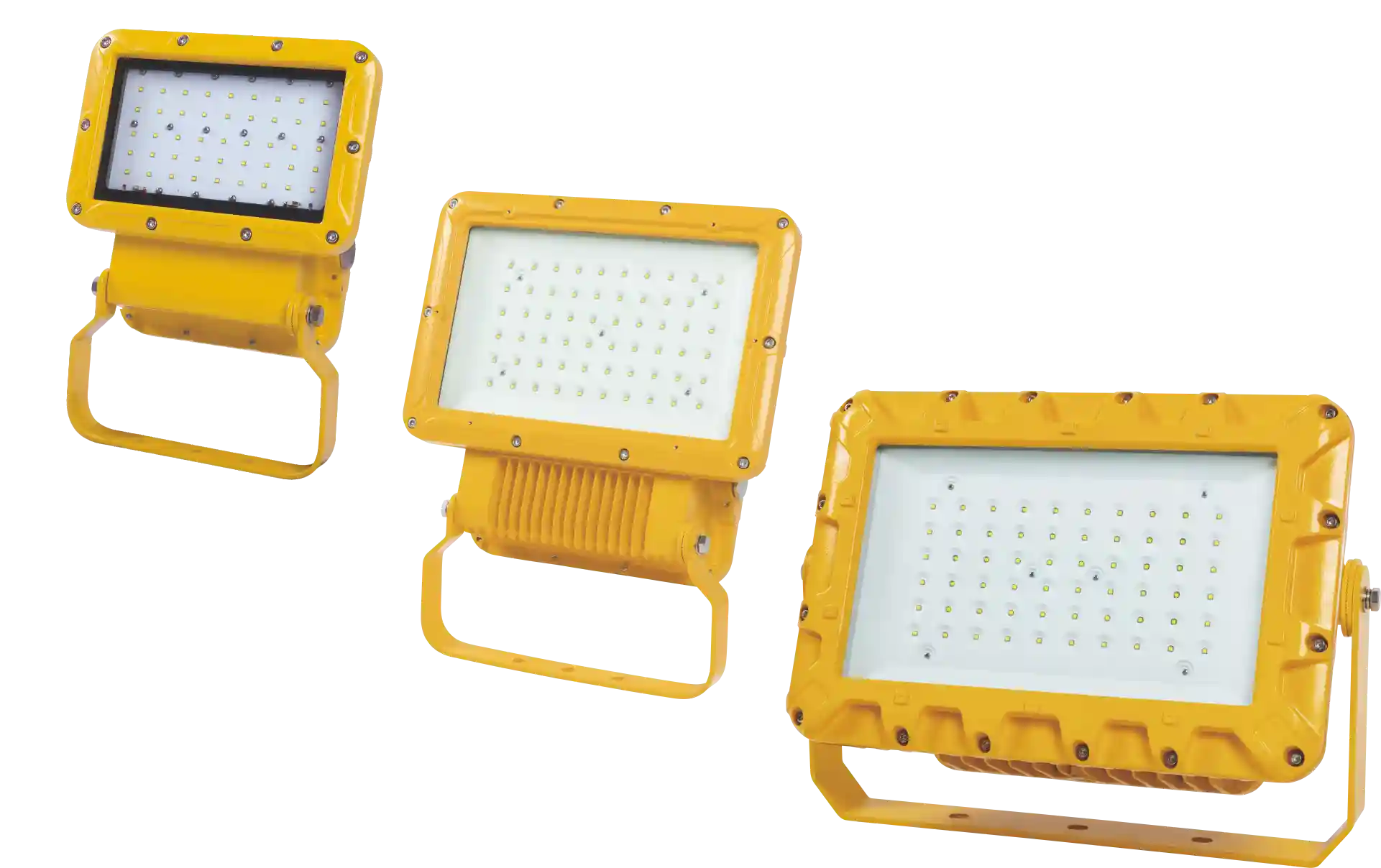
What Usually Fails Before the LED Chips Do?
In our audits, the driver and the sealing system fail before the chip in most cases. Electrolytic capacitors inside the driver degrade faster at elevated temperature, and every thermal cycle advances that aging. A fitting can still produce full output while the enclosure coating has begun to crack around the fasteners. During the General Paint electrical safety audit in Mexico, the lighting output was not the decisive problem; the surrounding electrical installation and exposure conditions were. We re-scoped the solution around the site’s flammable gas and dust risks instead of the lamps alone.
That experience changed how I read lifetime claims. A data sheet can state a long L70 figure for the LED module, but it says nothing about whether the driver remains safe after six years of voltage fluctuations or whether the gasket still seats correctly after maintenance. I have seen fittings opened for relamping and not re-secured by the same method. The light works. The flame path no longer has its original integrity.
Which Site Conditions Shorten Explosion Proof LED Light Fitting Service Life Most?
Temperature is usually the fastest aging force. A fitting mounted near a compressor or on an unshaded structure in the Gulf runs far warmer than the same model in a conditioned pharmaceutical corridor. Salt, humidity, chemical vapors, vibration, frequent switching, and unstable supply voltage follow close behind. Solar radiation degrades powder coatings and polymer components over time. If the fitting is opened for routine maintenance in a dusty area, ingress protection depends on how carefully the gasket and fasteners are restored.
If your site combines any two of these conditions, I would not rely on a generic lifetime claim. Send the installation location, zone classification, and measured ambient range to gm*@***om.com and we can confirm the right driver and enclosure combination before you issue the order.
If you are still mapping which areas in the plant need certified fixtures and how zones apply, <Where Explosion Proof Lighting is Required: Critical Safety Standards> covers the zone and division distinctions that drive the original specification.
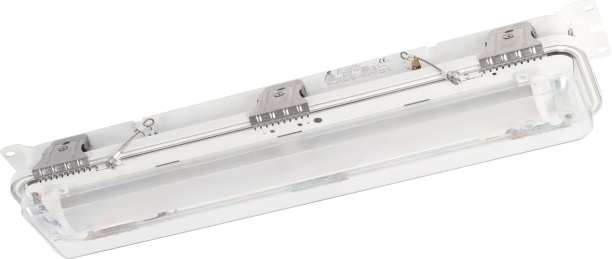
How Do Thermal Design and Driver Quality Change the Answer?
Driver quality separates fittings that remain serviceable for years from those that fail shortly after installation. I look at the ambient temperature rating before the headline power. The BAT86 floodlight is specified for operation up to 60°C ambient, while the HRNT95 series is rated up to 58°C ambient. Both use drivers with overload protection, open circuit protection, short circuit protection, and end of life rectification effect protection.
The HRNT95 design illustrates why the full fitting matters. Its Ex e enclosure contains explosion proof components, and an interlock between the enclosure and diffuser switches the unit off during opening. That interlock is a lifetime feature because it removes one common route to careless live access during maintenance. Thermal design also includes the LED board arrangement and enclosure material. Copper free aluminium alloy powder coated bodies dissipate heat differently from corrosion resistant alternatives, so the same wattage can have different service outcomes in a chemical plant compared with a marine platform.
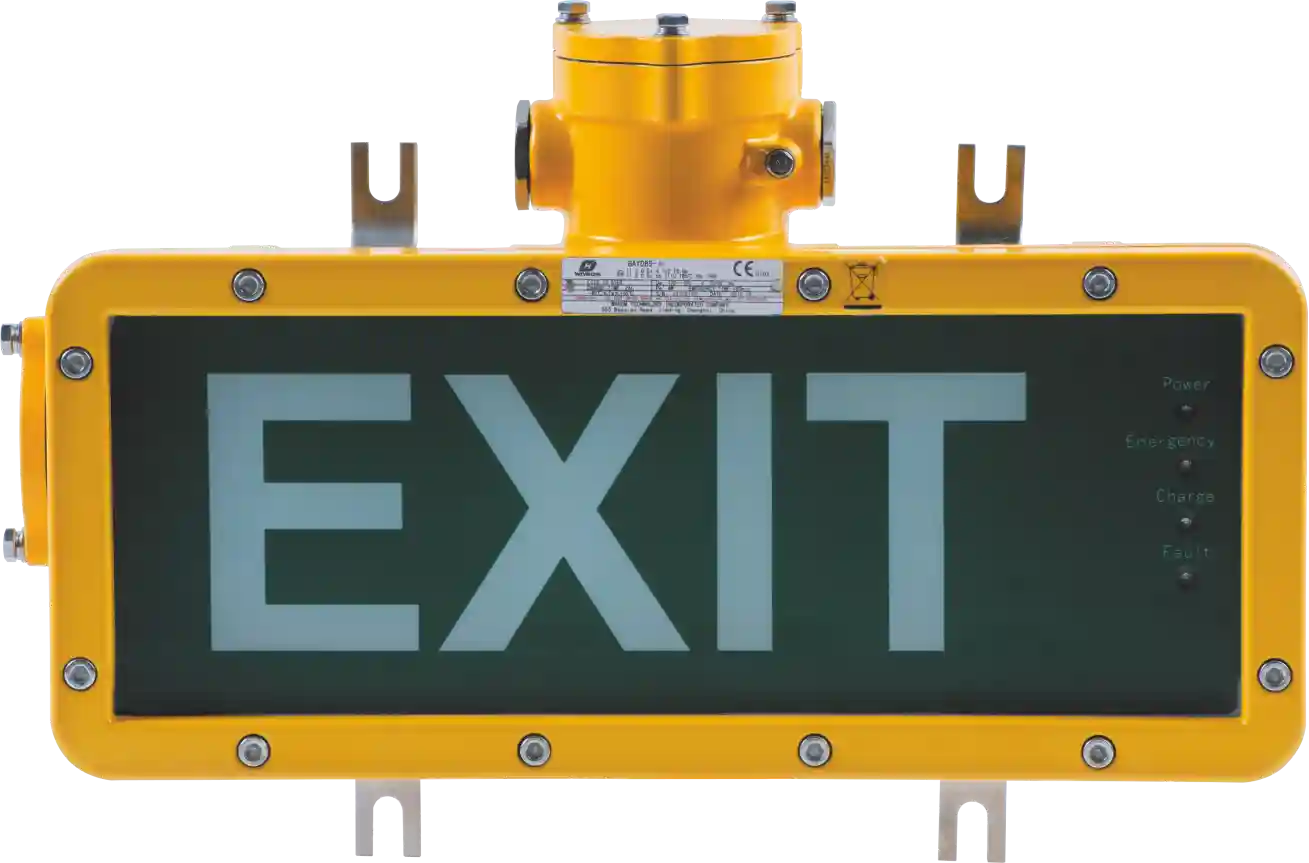
What Should You Confirm Before Replacing or Ordering?
The most expensive mistake I see is replacing a fitting because of a driver or seal problem, then matching only the wattage and voltage. If the replacement does not suit the zone, gas group, temperature class, or ambient range, the site has not solved the problem. Before you finalize a replacement or new order, confirm the actual ambient temperature around the fixture, the gas or dust classification, the mounting height and orientation, and the maintenance access.
Send the existing fitting model, site photos, and the required replacement timeline to gm*@***om.com or call +86 21 39977076 or +86 21 39972657. We will check the certified options against your installation conditions instead of simply matching wattage.
What Do Buyers Ask About Explosion Proof LED Light Fitting Service Life?
How many hours should I use for maintenance planning?
Plan on three separate intervals. The LED module can remain above 70 percent output for tens of thousands of hours, but the practical maintenance window is usually set by the driver and enclosure. I recommend inspecting the driver compartment, gasket surface, and cable entries every one to three years depending on temperature and vibration. For a stable indoor Zone 1 installation, a five year inspection cycle may be possible. At a hot, high vibration site, annual inspection should be the minimum. The replacement decision should never use the LED L70 figure alone.
Is a longer L70 figure always better?
Not necessarily. A higher L70 rating on a data sheet does not mean the complete fitting will survive longer in service. L70 describes only the LED package light output under defined conditions, usually on the manufacturer’s test board. The driver capacitors, gasket, glass cover, powder coating, and cable glands all have their own aging paths. I have seen high L70 modules installed in hot unshaded enclosures with undersized heat sinking fail within two years. The more useful comparison is the complete fitting’s rated ambient temperature, IP rating, protection class, and driver protection features.
Do I need to replace the whole fitting when the driver fails?
It depends on the model and the certification. Some fittings allow field replacement of the LED module or driver, while others are certified as a sealed assembly and must be replaced as a unit. If the enclosure, flame path, glass, and gasket are intact and the original manufacturer certifies the replacement part, driver replacement can restore service. If the flame path has been damaged, corroded, or improperly cleaned, the fitting should be taken out of service. I would also confirm the replacement driver has the same protection features as the original.
What certification issues affect operating life?
That question is really asking whether the fitting remains certified after years in service. Certification life is not a fixed hour count; it depends on enclosure integrity, the state of the flame path, the condition of the cable glands, and any modifications made during maintenance. A fitting that still illuminates may no longer meet its IEC 60079 or ATEX certification if a gasket was reused after damage or a fastener was replaced with an incorrect grade. Send the current inspection records and fitting model to gm*@***om.com and we will confirm the replacement interval and spare parts.
If you’re interested, check out these related articles:
Class 1 Division 1 vs Division 2 Lighting: 2025 Safety Guide
Balikpapan Industrial Expo – BEX
PETROLEUM ENERGY SHOW 2024
Happy National Day
What is Portable Explosion Proof Lighting? An Expert Guide
With over a decade of experience, he is a seasoned Explosion-Proof Electrical Engineer specializing in the design and manufacture of safety and explosion-proof products. He possesses in-depth expertise across key areas including explosion-proof systems, nuclear power lighting, marine safety, fire protection, and intelligent control systems. At Warom Technology Incorporated Company, he holds dual leadership roles as Deputy Chief Engineer for International Business and Head of the International R&D Department, where he oversees R&D initiatives and ensures the precise delivery of design documentation for international projects. Committed to advancing global industrial safety, he focuses on translating complex technologies into practical solutions, helping clients implement safer, smarter, and more reliable control systems worldwide.

Qi Lingyi