

Explosion proof motor switches for fan and ventilation systems sit where a starting inrush, a hot motor surface, and a flammable atmosphere can intersect. That is why this is not a small control accessory you can copy from a general industrial starter schedule. The switch must be certified for the zone, matched to the fan’s actual load profile, and arranged so a local operator can isolate the fan safely. We see most specification errors when teams confirm the motor’s running current but not its starting method, the gas group, or the cable entry arrangement. This article gives a practical sequence for specifying these switches without overordering or losing approval time.
Why Do Fan and Ventilation Motor Circuits Need Explosion Proof Switching?
Fans are easy to treat as auxiliary loads, but they combine two hazards in classified plants. The first is the switching arc. A motor switch for a fan is frequently operated for maintenance, filter changes, and seasonal isolation, so its contacts are not sealed away and forgotten. The second is the load itself. Fans start under static pressure, often across the line, and the inrush can run from six to eight times full load current. If the switch or overload is selected only from the motor nameplate current, the installation can trip on start or, worse, overheat during a stalled rotor.
The local code question is simpler than many teams expect. If the fan motor sits inside a classified area, the switch and starter must be rated for that area. If the motor sits outside the classified area but the switch is mounted beside the fan for local isolation, the switch still needs an explosion proof enclosure. That second case is the one most often missed on a single-line diagram.
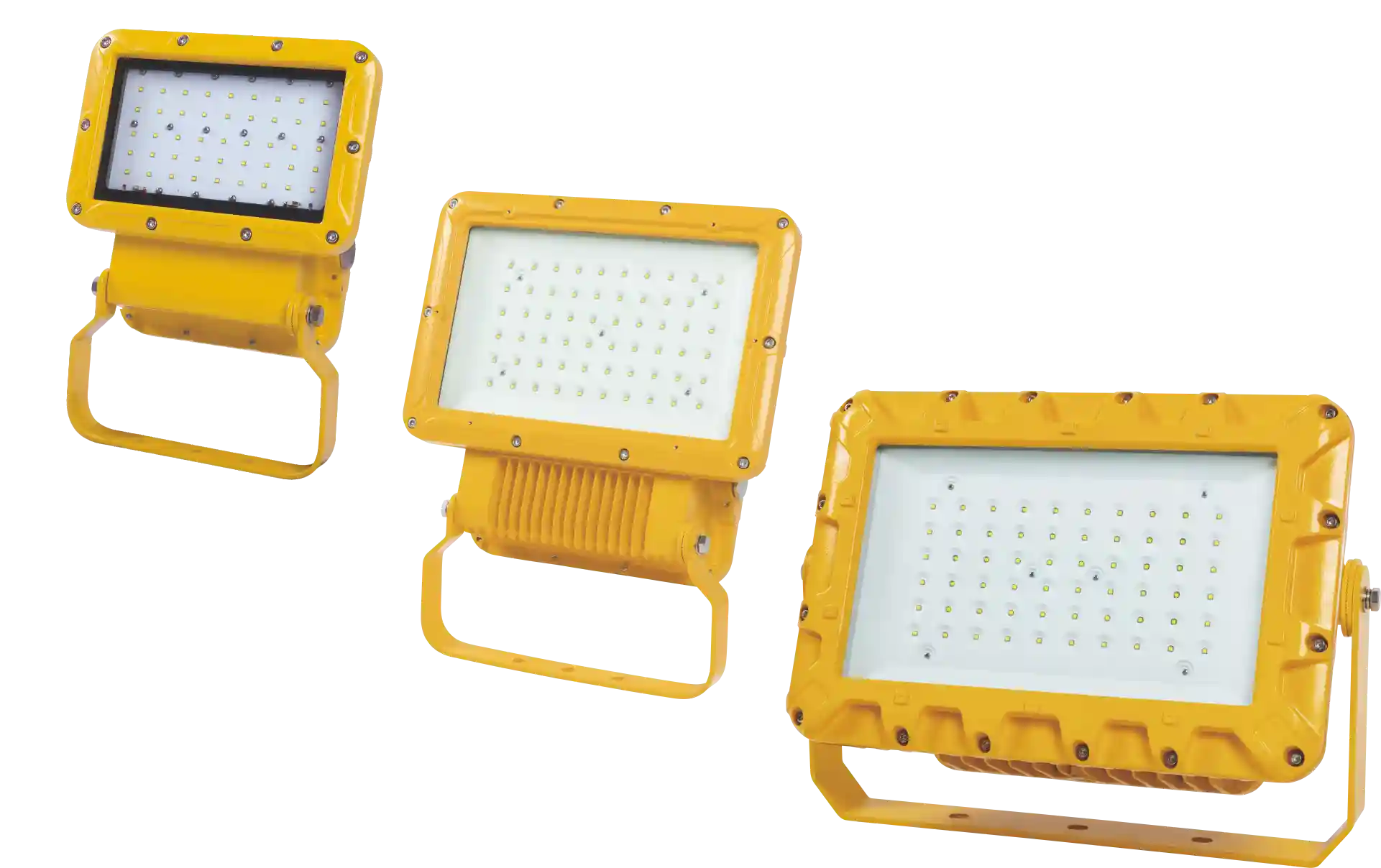
On open structures, operators must also be able to see the switch position clearly. Lighting is handled as a separate certified circuit and does not belong inside the motor switch enclosure.
Which Ratings Should You Confirm Before Specifying an Explosion Proof Motor Switch?
Start with hazardous area data, not with horsepower. Confirm the zone classification, the gas or dust group, and the temperature class. Add the motor full load current, starting method, and the maximum expected switching frequency. Those six data points determine the protection method and the thermal setting.
| Data point | Why it affects the switch |
|---|---|
| Zone 1 vs Zone 2 | Zone 1 usually requires Ex d or Ex e; Ex n can be considered in Zone 2 only |
| Gas group IIA, IIB, IIC | Group IIC has tighter flamepath requirements and a higher enclosure cost |
| Temperature class T1-T6 | Switch and motor together must not exceed the gas or dust ignition threshold |
| Motor full load current and start method | DOL, star-delta, or soft start changes contactor size and overload class |
| Switching frequency | Frequent local isolation requires a switch built for mechanical endurance |
| Cable entry and gland type | Armoured cable, unarmoured cable, or conduit changes the entry drilling and gland |
For a fan the most practical check is the starting method. A direct-on-line fan can have a long acceleration time if it is connected to a large duct system. That often means selecting a higher overload class instead of simply increasing the contactor frame. Our application reviews usually start there, because a fan that trips on start during commissioning wastes more time than any enclosure cost difference.
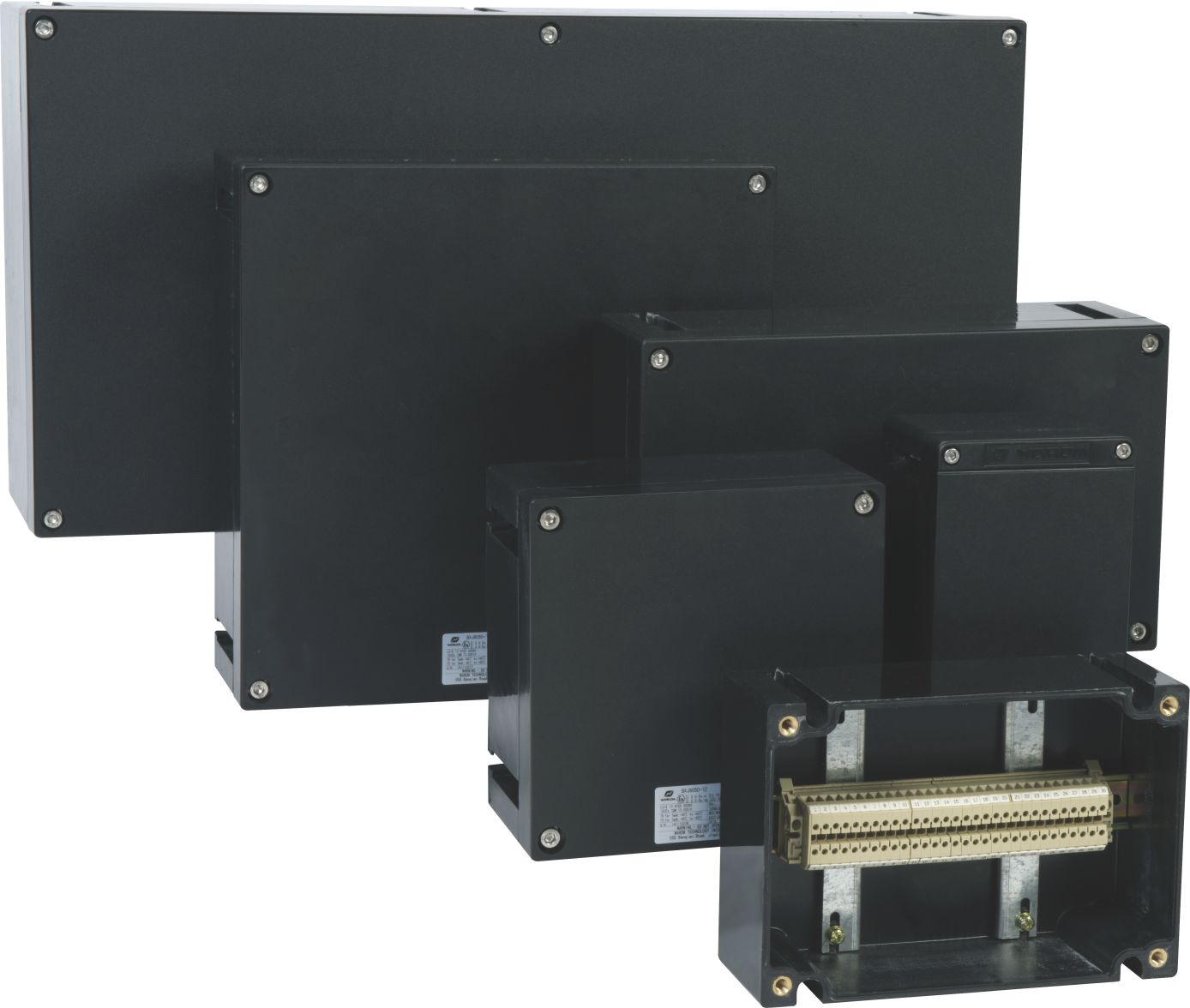
Where the control circuit is separated from the motor branch, using a certified terminal enclosure keeps the wiring inspection consistent.
How Do Protection Method and Temperature Class Affect Fan Duty?
The switch enclosure protection method and the fan motor’s T class work together. A T4 fan motor cannot be protected by a switch whose certified temperature class is T6 unless you derate or verify the assembly through the certificate. The certified combination follows the hottest surface, not the best component. In practice a fan motor for solvent-laden ventilation is commonly T4 or T3, so an Ex d switch with a T4 rating tends to be the realistic baseline.
Protection method alone does not settle the question; the circuit type and the amount of energy available in the switching operation decide whether a flameproof enclosure is the only workable route. <Intrinsically Safe vs Explosion Proof: Real-World Applications Guide> explains this in practice, including why a motor branch nearly always lands on explosion proof rather than an intrinsically safe barrier.
Ex d flameproof switchgear is built to contain an internal explosion and cool the escaping gases through a controlled flamepath. Ex e increased safety switchgear relies on certified components and careful terminations so an arc is prevented rather than contained. For fan and ventilation duty, Ex d remains the workhorse for heavier switching. Ex e can be a lighter option when the circuit is well understood and the terminal assembly is completed exactly as certified. Ex n is limited to Zone 2 applications where normal operation does not produce arcs.
If your fan circuit is above 37 kW, handles mixed gas and dust, or uses a soft starter, the overload and thermal coordination are worth confirming before you lock the bill of materials. Send the motor nameplate data and the starting method to gm*@***om.com and we will check the switch rating against the load profile.
What Installation Details Cause Site Acceptance Delays?
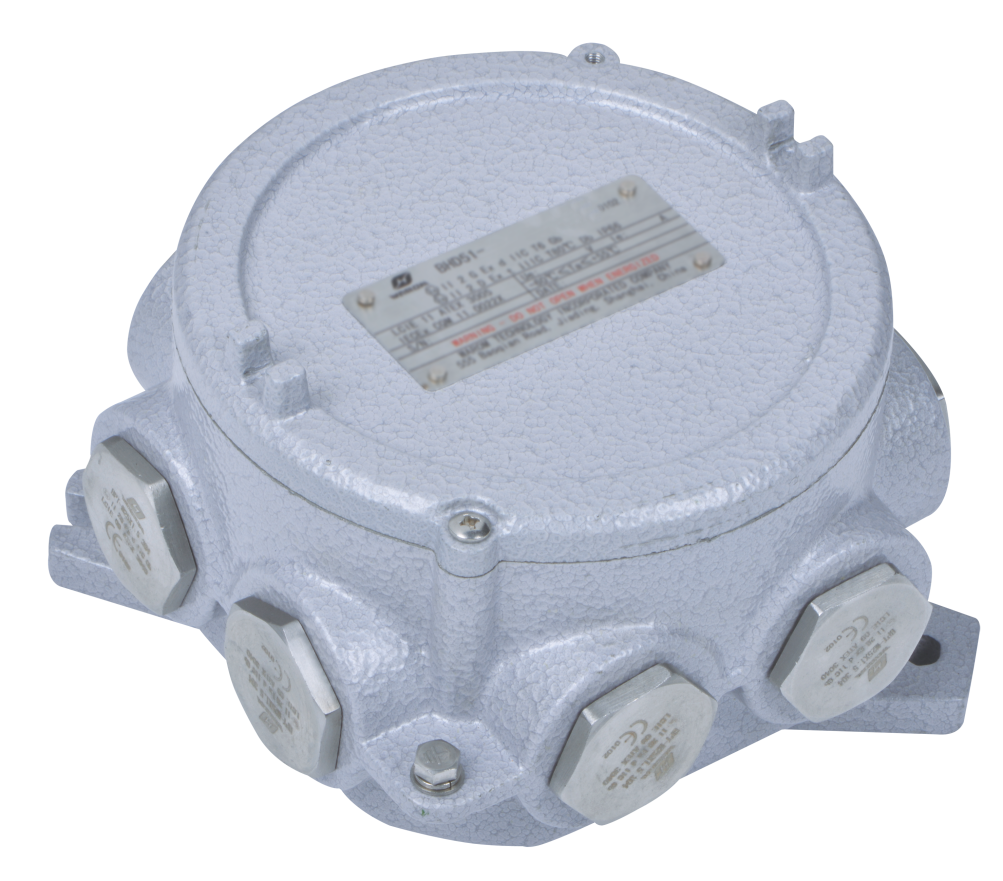
Most delays on fan motor switches are not caused by the switch itself. They come from cable entries, earthing, and documentation. A flameproof enclosure with an incorrectly selected cable gland loses its certification at the entry. If the project uses armoured cable, the gland must provide armour termination and maintain the flameproof barrier. If the cable is unarmoured and enters through an Ex e terminal chamber, the terminals must be rated for the actual cross section and the cables must be clamped to prevent pull-out.
Dust-laden ventilation adds another layer to the same installation rules. <Explosion Proof Equipment: Flour Mill and Grain Silo Safety> covers why fan circuits in these plants cannot be treated like standard industrial drives, particularly where flour dust builds up around enclosures and cable runs.
Site acceptance also depends on paperwork. The certificate must list the exact enclosure, the gland entry arrangement, and the terminal arrangement when the switch is part of a certified assembly. If a local panel builder changes the contactor after the certificate is issued, the site inspector can reject the whole package because the tested combination no longer exists. We build the switch packages with the final motor data confirmed first, then draw the entries and glands into the same approval file.
What Should You Send for an Accurate Explosion Proof Motor Switch Proposal?
When a request for quotation only says “explosion proof motor switch for fan, 11 kW”, there is not enough information to protect the circuit or to avoid a costly mismatch. The enclosure may be right while the overload class is wrong, or the contactor may be rated for Zone 1 while the cable gland arrangement cannot pass inspection. We would rather delay quoting by one day than send a switch that fails at site acceptance.
For a fast technical check, send the fan motor nameplate photo, the zone and gas group, the starting method, and the cable type to gm*@***om.com. If the schedule is already under pressure, call +86 21 39977076 and ask for the application engineering team. We will confirm the switch rating, the thermal setting, and the cable entry arrangement before the quotation is released.
What Else Should You Ask Before Ordering Explosion Proof Motor Switches?
Do I need an Ex d or Ex e motor switch for a Zone 1 fan?
For Zone 1, Ex d is usually the safer default unless the entire assembly and every terminal are certified as an Ex e system. Fan motor switching produces an arc at the contacts during normal operation, and Ex e is intended for circuits where arcs do not occur in normal service. A properly certified Ex e starter can be suitable when it is built with approved contactors and specifically tested terminal arrangements. I would choose Ex d when the motor is switched locally by operators or when maintenance staff are not able to follow an exact torque and glanding procedure.
What is the difference between a motor switch and a motor starter in this application?
Many specifications use the two terms interchangeably, but for fan and ventilation duty the distinction changes what you buy. A switch is the local isolation device and may only need an on-off or reversing function. A starter is the contactor, overload relay, and control circuit package that protects the motor against overcurrent and single-phasing. If the fan is started only from a remote control system and the site wants local isolation, you may need a combined switch-starter or a separate isolator plus starter. Confirm the control philosophy first.
Can one motor switch serve multiple fans?
It depends on the load and the certification. If the fans are identical, driven from the same starter, and the combined locked rotor current stays within the certified switch and overload rating, a single starter can feed multiple motors only under a tested arrangement. For independent fans, do not group them on one switch. A fault on one fan would stop all ventilation, and the certification may not cover the combined starting inrush. When redundancy matters, each critical fan gets its own circuit.
How do I handle a fan located in a gas zone but the motor switch in a safe area?
In projects we have reviewed, this is the most common source of confusion. If the switch is in the safe area and switches a motor inside a classified area, the switch itself may be a standard industrial unit as long as the circuit does not transfer dangerous energy into the classified area. The problem is that a fan motor inside the gas zone usually needs local isolation near the fan for maintenance. If local isolation is present, that local device must be explosion proof. Share the fan location and isolation plan with gm*@***om.com and we will confirm which side of the boundary needs the certified switch.
If you’re interested, check out these related articles:
WAROM at ACHEMA 2024
Explosion Proof Definition: Essential 2025 Safety Facts
Explosion-Proof DOL Motor Starters: Essential Specifications and Selection
Warom at 137th CANTON FAIR 2025
With over a decade of experience, he is a seasoned Explosion-Proof Electrical Engineer specializing in the design and manufacture of safety and explosion-proof products. He possesses in-depth expertise across key areas including explosion-proof systems, nuclear power lighting, marine safety, fire protection, and intelligent control systems. At Warom Technology Incorporated Company, he holds dual leadership roles as Deputy Chief Engineer for International Business and Head of the International R&D Department, where he oversees R&D initiatives and ensures the precise delivery of design documentation for international projects. Committed to advancing global industrial safety, he focuses on translating complex technologies into practical solutions, helping clients implement safer, smarter, and more reliable control systems worldwide.

Qi Lingyi