
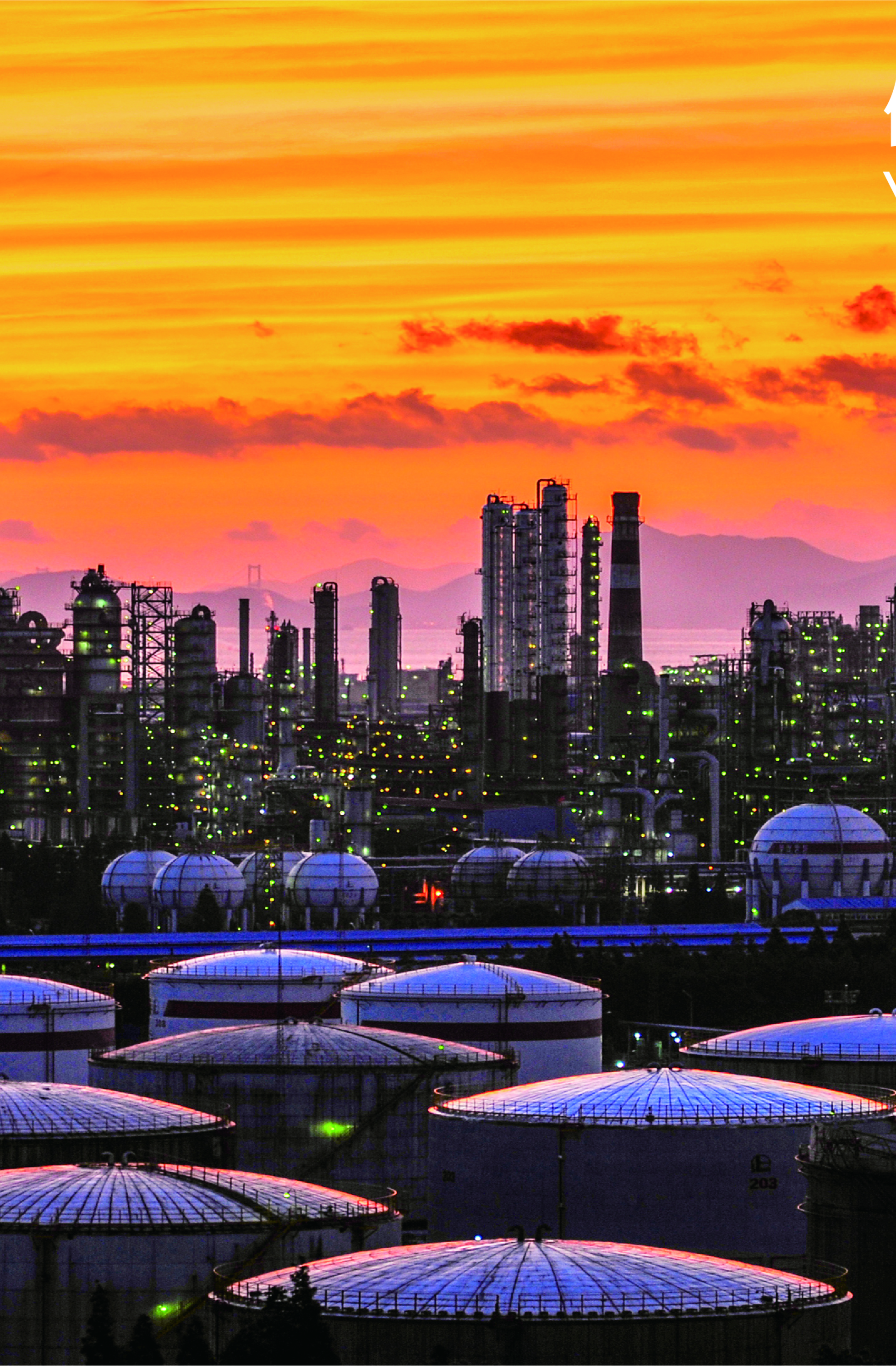
Fiberglass explosion proof distribution boxes have become the primary choice for engineers specifying power distribution in coastal and offshore hazardous areas. Salt-laden air, high humidity, and the constant threat of corrosion demand enclosure materials that can maintain integrity over decades of service. In our work across marine and offshore projects—including platforms, FPSOs, and coastal processing terminals—we have seen unwary material selections lead to pitting, flange deterioration, and ultimately certification compromises within a few years. This article examines why glass-reinforced polyester (GRP) enclosures outperform traditional metal alternatives, what certification marks to verify for marine use, and how to specify a distribution box that will not become a maintenance headache in a salt-spray environment.
Material Advantages of GRP in Corrosive Offshore Atmospheres
When exposed to marine environments, metallic enclosures—even those made of 316 stainless steel—can suffer from chloride-induced pitting and crevice corrosion. Galvanic action between different metals further accelerates damage at joints and cable glands. GRP (fiberglass) distribution boxes eliminate this failure mode entirely. The material is inherently non-conductive, does not corrode, and does not form galvanic cells. In addition, GRP enclosures are roughly one-third the weight of equivalent steel units, simplifying installation on offshore structures where every kilogram adds to structural load and crane costs.
We have seen this difference firsthand on offshore platform projects. In one installation, painted steel junction boxes began showing rust bloom at flange faces within 18 months of commissioning, requiring replacement with GRP units during the first planned maintenance shutdown. The GRP enclosures installed at the same time show no degradation after five years of continuous salt-spray exposure.
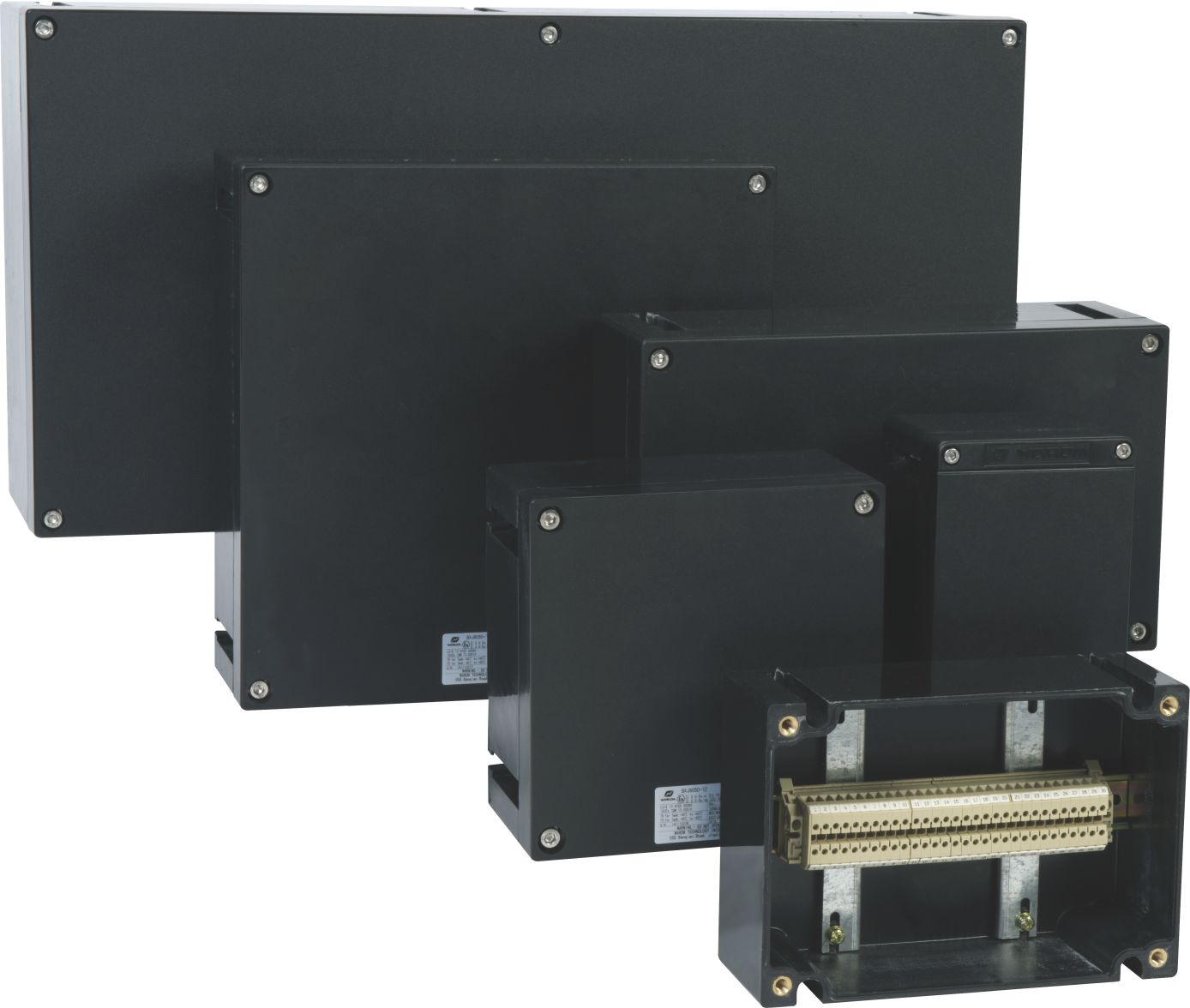
Certification Framework for Explosion-Proof Distribution in Marine Hazardous Areas
Offshore and coastal installations demand compliance with both explosion protection standards and marine classification society requirements. A fiberglass distribution box destined for an FPSO or an offshore wind substation typically carries multiple marks: IECEx or ATEX for explosion protection (Ex d flameproof or Ex e increased safety), an IP66 or IP67 rating for water and dust ingress, and type approval from a classification society such as DNV, ABS, or BV.
The enclosure material itself must meet the relevant standard for non-metallic enclosures—IEC 60079-0 clause 7.1.3 for resistance to chemical agents and ultraviolet radiation. This is not a generic “weatherproof” claim; it requires test evidence that the GRP compound retains its mechanical strength and flamepath dimensions after prolonged exposure to salt mist and solar radiation. When reviewing a supplier’s certificate, check whether the GRP material has been tested according to ISO 9227 (neutral salt spray) for at least 1000 hours with no significant deterioration, and whether the UV test conforms to ISO 4892-2.
Selection Criteria Beyond IP and NEMA
Choosing a fiberglass explosion proof distribution box for a marine project involves more than checking the IP rating. The following factors often determine whether the enclosure will survive its design life or become a premature replacement:
| Parameter | Common Shortfall | Recommended Specification |
|---|---|---|
| UV Stability | Enclosure becomes brittle, discolors, or loses impact resistance after 2–3 years | GRP with UV inhibitors, tested per ISO 4892-2 for 2000+ hours |
| Flame Path Integrity | Threaded covers seize, flamepath gaps widen due to thermal cycling | Stainless steel threaded inserts and covers; not molded plastic threads |
| Cable Entry Sealing | IP66 achieved in the lab fails in the field due to vibration and temperature swings | Ex e cable glands with dual-seal design, silicone rubber gasket, and anti-loosening locknuts |
| Temperature Class | T6 rating becomes T5 or T4 when internal components generate heat beyond enclosure capability | Thermal modelling of internal watt loss vs. ambient (+55°C minimum); specify oversized enclosure if needed |
| Mechanical Impact | GRP enclosures rated IK08 may still crack under repeated wave slap or dropped tools on open decks | Choose IK10 or add a steel protective canopy in high-traffic areas |
If your program requires a combination of high mechanical strength and corrosion resistance, it is worth confirming the IK rating and whether the GRP compound has been marine-tested for impact at low temperatures. Reach out to our engineering team at gm*@***om.com.
Case Experience: How Material Choice Affected Long-Term Reliability
In the Tilenga oil development in Uganda, we supplied explosion-proof distribution boxes alongside lighting and control equipment for wellpads and a central processing facility. The site, though inland, has high humidity and aggressive soil conditions that accelerate corrosion of coated steel. The GRP distribution boxes specified for outdoor locations have required no maintenance intervention since commissioning, while nearby metallic enclosures from another supplier required repainting within two years. This contrast was not lost on the operator, who now standardizes on GRP for all external hazardous area enclosures.
A similar pattern repeated at a chemical plant in Mexico—the General Paint facility—where our team identified corrosion-related defects on existing steel enclosures during a safety audit. The solution included replacing distribution and junction boxes with BXM(D)8050 series GRP units (IP66, Ex e), integrated with gas detection and static discharge systems. Three years later, the site reports zero corrosion-related failures and has added our products to their procurement specifications.
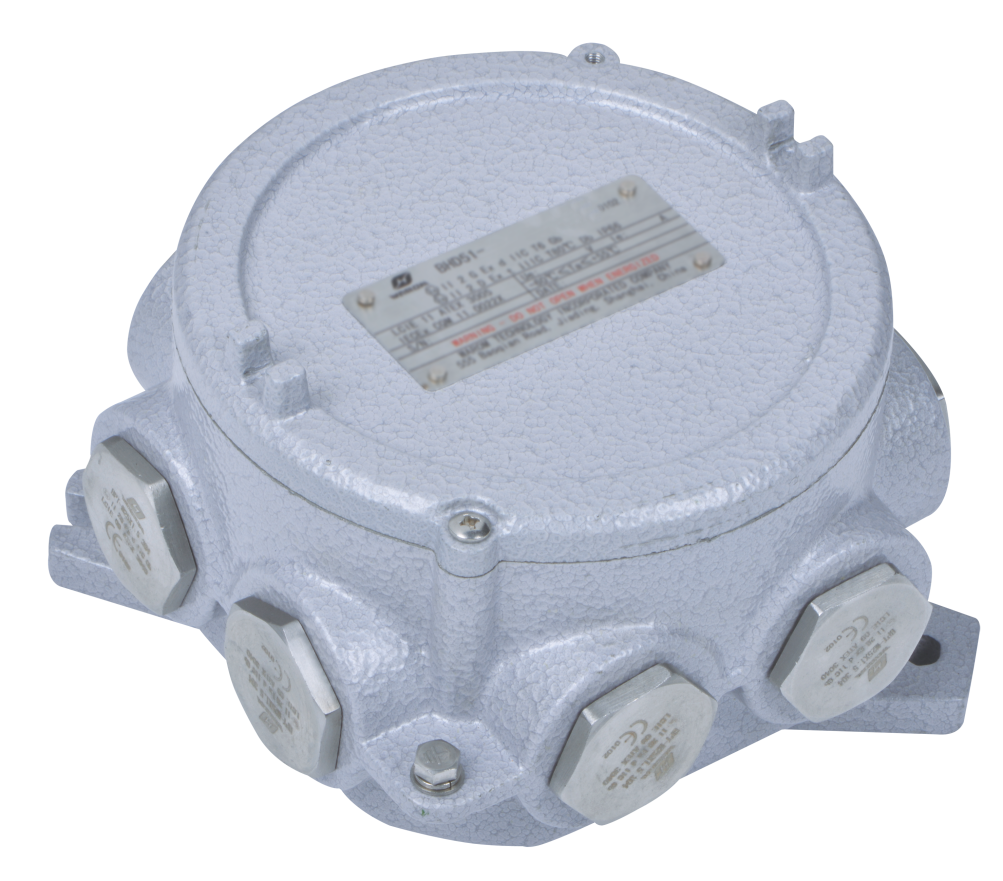
These cases underline a practical truth: the total cost of ownership favors GRP when the service environment includes persistent moisture, salt, or chemical vapors. The initial price difference versus painted metal enclosures is often recovered within the first avoided maintenance interval.
Installation Practices That Prevent Early Failures
Even the best fiberglass enclosure will fail prematurely if installed incorrectly. We regularly see the same issues on commissioning walks: cable glands tightened without torque wrenches, leading to cracked entry threads; breather/drain plugs installed on the top instead of the bottom, trapping condensation; and insufficient earthing connections on internal mounting plates, creating a potential ignition hazard inside an otherwise compliant enclosure.
For coastal and offshore sites, three practices stand out as non-negotiable:
- All cable entries must use Ex e or Ex d glands with nickel-plated brass or 316 stainless steel construction, applied with anti-seize compound to prevent galling.
- Mounting hardware (brackets, bolts, and washers) must be stainless steel grade 316 to avoid rust stains bleeding onto the GRP surface and, more critically, to maintain structural clamping force after years of salt exposure.
- Enclosure doors and covers should be left closed and sealed whenever possible, and opened only during planned maintenance. In a salt-laden environment, every opening invites chloride contamination onto terminal blocks and wiring, which eventually migrates to sensitive relay contacts.
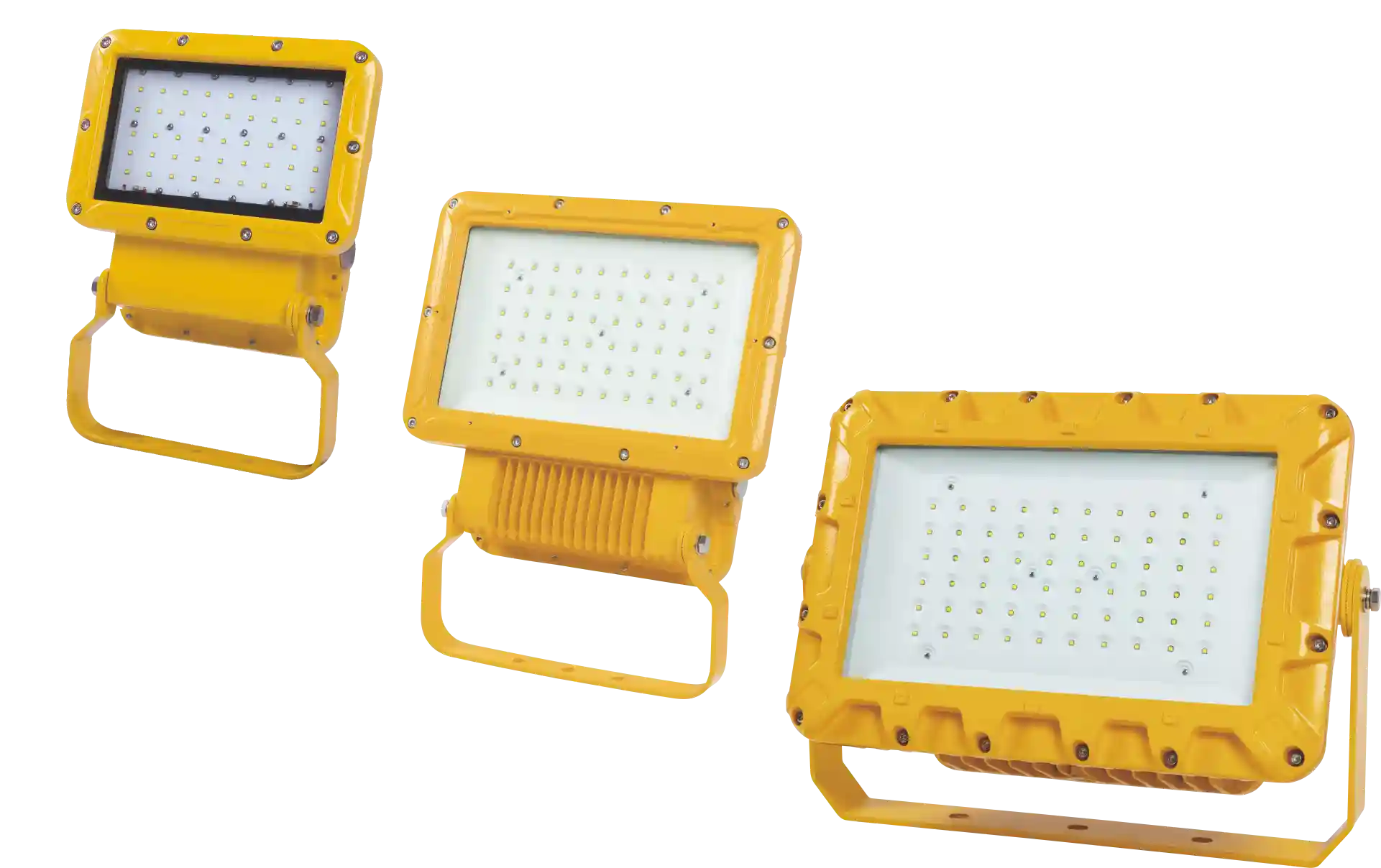
Securing Your Offshore Electrical Distribution for Decades
Material selection, certification compliance, and correct installation all contribute to long-term reliability, but every offshore project introduces unique variables—exposure angles, salt concentration, vibration signatures—that generic design rules cannot fully capture. We provide fiberglass explosion proof distribution boxes with full traceability, material test reports to ISO 9227 and ISO 4892-2, and classification society approval tailored to your hazardous area plan. To start a technical review of your enclosure requirements, send your part numbers, quantity, and hazardous area classification drawing to gm*@***om.com. For urgent inquiries, call +86 21 39977076.
Common Questions About Fiberglass Explosion Proof Distribution Boxes
Can GRP enclosures meet the same explosion protection level as metal enclosures?
Yes. GRP enclosures can be certified to Ex e (increased safety) and Ex d (flameproof) protection concepts, provided the material passes the required non-metallic enclosure tests. Ex d flamepaths in GRP require metallic inserts to maintain gap dimensions after thermal aging. We hold IECEx and ATEX certificates for GRP distribution boxes up to 1000 V and 250 A, with ambient temperature ranges from -40°C to +55°C.
Is UV degradation a real problem for fiberglass distribution boxes offshore?
It can be, but only with substandard material formulations. Quality GRP compounds contain UV absorbers and surface veils that prevent fiber bloom and chalking. Our standard marine-grade GRP enclosures have been tested for over 2000 hours of Xenon-arc exposure per ISO 4892-2 with no significant change in mechanical properties or flamepath dimensions.
What is the maximum operating temperature for a GRP distribution box?
Typically, GRP enclosures are rated for continuous operating temperatures up to 130°C in the non-exposed portion of the enclosure, but the overall temperature class of the assembly depends on the hottest internal component. We recommend thermal imaging during type testing to confirm that the enclosure wall temperature does not exceed the T-class limit for the gas group at the design ambient temperature—commonly 55°C for offshore locations.
Can existing steel distribution boxes be replaced with GRP without re-engineering the cable network?
Often yes, because the cable entry locations can be machined into GRP enclosures to match existing gland holes. However, the flameproof joint dimensions must be recalculated if you are changing from a metallic to a non-metallic enclosure with different flange dimensions. Our engineering team can review the existing cable schedule and gland layout to confirm interchangeability. Share your as-built drawings and requirements with us, and we will verify compatibility before you order—contact gm*@***om.com or call +86 21 39972657.
If you’re interested, check out these related articles:
Warom Explosion-Proof Supplier Conference 2024
Honor forward – Warom Technology won many awards
Warom at HANNOVER MESSE 2025
With over a decade of experience, he is a seasoned Explosion-Proof Electrical Engineer specializing in the design and manufacture of safety and explosion-proof products. He possesses in-depth expertise across key areas including explosion-proof systems, nuclear power lighting, marine safety, fire protection, and intelligent control systems. At Warom Technology Incorporated Company, he holds dual leadership roles as Deputy Chief Engineer for International Business and Head of the International R&D Department, where he oversees R&D initiatives and ensures the precise delivery of design documentation for international projects. Committed to advancing global industrial safety, he focuses on translating complex technologies into practical solutions, helping clients implement safer, smarter, and more reliable control systems worldwide.

Qi Lingyi