

Industrial Environments with Combustible Dust Present Significant Explosion Risks
Working around combustible dust changes how you think about electrical systems. The equipment that runs perfectly fine in a standard warehouse becomes a potential ignition source the moment fine particles enter the equation. Zone 21 dust hazardous areas sit in that uncomfortable middle ground where dust clouds appear often enough during normal operations to demand serious attention, but not so constantly that you can simply seal everything off and walk away. The electrical equipment in these spaces needs to do its job without ever becoming the spark that turns a routine shift into a disaster.
WAROM has been building explosion-proof solutions since 1987, and that experience shows up in how the equipment handles real-world conditions. The goal is straightforward: keep personnel safe, protect assets, and maintain operations without interruption.
How Zone Classification Shapes Equipment Decisions
Getting the classification right determines everything that follows. Zone 21 covers areas where combustible dust clouds show up occasionally during normal operation. Think about spaces near filling points, conveyor transfer stations, or anywhere material handling kicks particles into the air on a regular basis. The dust cloud frequency sits between the constant presence of Zone 20 and the rare occurrences of Zone 22.
ATEX and IECEx frameworks govern what equipment can operate in these spaces. These regulatory systems exist because dust explosions follow predictable physics. When airborne particles reach the right concentration and encounter an ignition source with sufficient energy, the results are catastrophic. The classification system matches protection levels to actual risk.
| Zone | Description | Frequency of Dust Clouds | Examples |
|---|---|---|---|
| 20 | Continuous or long periods of dust clouds | High | Inside dust collectors, silos |
| 21 | Occasional dust clouds during normal operation | Medium | Near filling/emptying points, conveyor belts |
| 22 | Infrequent and short-lived dust clouds | Low | Storage areas, packaging zones |
The classification process requires understanding your specific dust characteristics. Different materials ignite at different temperatures and concentrations. Grain dust behaves differently than metal powder. This specificity matters when selecting equipment temperature ratings.
Explosion Proof Electrical Equipment That Performs in Zone 21
The equipment selection process for Zone 21 environments comes down to preventing ignition while maintaining operational capability. Every component needs to either contain any potential explosion within its enclosure or operate at energy levels too low to ignite the surrounding atmosphere. WAROM builds products across both protection philosophies.
The Tilenga project in Uganda demonstrated what reliable explosion proof electrical equipment looks like under pressure. WAROM supplied lighting and electrical systems for wellpads, a Central Processing Facility, and pipeline infrastructure. The equipment ran without safety incidents throughout the project, handling extreme conditions while keeping energy consumption and maintenance requirements low.
Several equipment categories matter most for Zone 21 applications:
Explosion-proof lighting needs to illuminate work areas without creating hot surfaces or electrical arcs that could ignite dust. The BAT86 Explosion-proof LED Floodlights and BAY51-Q Explosion-proof Corrosion-proof Plastic Light Fitting carry IP66 protection ratings. That rating means dust cannot penetrate the enclosure, and the fixtures can handle direct water jets. The LED technology runs cooler than older lighting options, adding another safety margin. For additional perspective on hazardous area illumination, the article on 《Explosion Proof LED Lighting Solutions for Hazardous Areas》 covers the topic in depth.
Explosion-proof motors face the challenge of dissipating heat while keeping dust out. The construction prevents particle ingress through shaft seals and junction box connections. Heat management matters because surface temperatures must stay below the ignition point of whatever dust is present.
Control panels and distribution boxes often combine multiple protection methods. The BXM(D)8050 Explosion-proof Illumination Distribution Boxes use flameproof (Ex d) chambers for components that might arc, paired with increased safety (Ex e) chambers for terminals and connections. This hybrid approach allows flexible system design while maintaining protection.
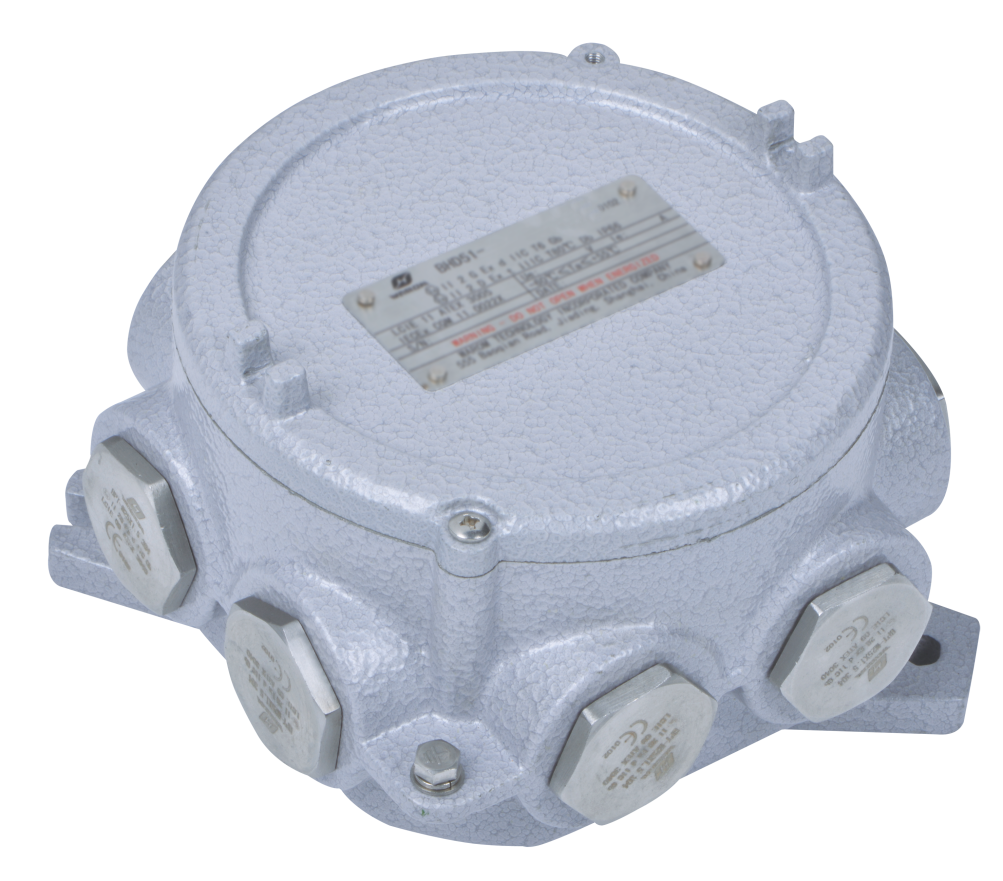
Junction boxes handle the cable routing that connects everything together. The BHD91 Series uses high-strength copper-free aluminum alloy construction. Copper-free matters because certain dusts react with copper, so eliminating it removes a potential hazard. The IP66 rating keeps internal components protected from both dust and moisture, preventing the corrosion that degrades seals over time.
Sensors and monitoring systems provide visibility into hazardous areas without requiring personnel to enter. The BJK-S/G Series Explosion Proof Camera allows remote surveillance, supporting both safety monitoring and operational oversight.
Plugs and sockets might seem like minor components, but they create connection points where dust can accumulate and arcing can occur. The BCZ8060 Series uses glass-reinforced plastic construction, making the units lightweight while maintaining strength and corrosion resistance. The interlocking switch design prevents disconnection under load, eliminating the arc that would otherwise occur.
Designing Electrical Systems That Meet Zone 21 Requirements
System design for dust hazardous areas requires attention to details that standard installations can ignore. Ingress protection ratings must match or exceed the zone requirements. Temperature classes need to account for the specific dust present, not just generic categories. Material selection affects long-term durability in environments where abrasive particles wear down surfaces and corrosive atmospheres attack metals.
Grounding deserves particular attention in dusty environments. Static electricity buildup can provide enough energy to ignite sensitive dusts. Proper bonding and grounding throughout the system prevents charge accumulation.
The General Paint project in Mexico showed how comprehensive design addresses multiple hazards simultaneously. The facility faced both flammable gas and dust risks. WAROM identified serious electrical safety hazards during the initial assessment and developed a solution covering gas detectors, explosion-proof plugs, junction boxes and distribution boxes, static electricity discharge devices, and corrosion-resistant equipment. The integrated approach addressed the full range of hazards rather than treating each one in isolation.
Cable routing and penetration sealing often get overlooked during design but create vulnerabilities if done poorly. Every cable entry point is a potential path for dust ingress. Proper glands and seals maintain the enclosure integrity that the equipment certification depends on.
Keeping Explosion Proof Electrical Equipment Reliable Over Time
Installation quality sets the baseline for equipment performance. Certified personnel who understand both the equipment and the hazardous area requirements should handle the work. Manufacturer guidelines exist because the certification testing assumed specific installation conditions. Deviating from those conditions can compromise the protection the equipment provides.
Maintenance in Zone 21 environments focuses on preserving the features that prevent ignition. Dust accumulation on enclosure surfaces can insulate the equipment, raising surface temperatures. Seal degradation allows dust ingress that the original design prevented. Corrosion weakens enclosures that need to contain internal explosions.
Inspection schedules should include visual checks for dust buildup, corrosion, and physical damage. Seal condition requires closer examination since degradation may not be visible from the outside. Fastener tightness matters because vibration can loosen connections over time, potentially creating gaps in the enclosure.
The Tilenga project equipment demonstrated what good design and proper maintenance achieve together. The systems performed reliably under extreme conditions with minimal maintenance requirements. That reliability comes from equipment built with adequate margins and maintained according to established schedules.
Spare parts availability affects how quickly you can address issues when they arise. Having critical components on hand reduces downtime when replacements become necessary.
Real Projects Show What Works in Practice
Project experience reveals how explosion proof electrical equipment performs outside the test laboratory. Conditions vary, challenges emerge, and solutions must adapt.
Tilenga Project, Uganda: This oil and gas development required explosion-proof lighting and electrical systems across wellpads, processing facilities, and pipeline infrastructure. The equipment operated without safety incidents throughout the project. Energy efficiency and low maintenance requirements mattered in a remote location where support resources were limited. The project met all safety, environmental, and performance requirements on schedule.
General Paint, Mexico: The chemical plant assessment uncovered electrical safety hazards that created genuine explosion risks. The solution included gas detection, explosion-proof plugs, junction boxes and distribution boxes, static discharge equipment, and corrosion protection. Beyond addressing the immediate hazards, the project established WAROM products in the customer’s procurement system for future needs.
Fushilai Pharmaceutical, China: The new 48,000 square meter pharmaceutical facility required explosion-proof distribution boxes for workshops, warehouses, tank farms, and pump controls. Early coordination with all project stakeholders enabled timely execution at the quality level the pharmaceutical industry demands.
These projects span different industries, geographies, and specific challenges. The common thread is equipment that performs reliably in demanding environments.
Where Dust Explosion Protection Technology Is Heading
The technology continues advancing on multiple fronts. Smart sensors integrated with IoT platforms enable real-time monitoring of conditions that affect explosion risk. Dust concentration, temperature, humidity, and equipment status can all feed into systems that identify developing hazards before they become incidents. Predictive maintenance becomes possible when equipment can report its own condition.
Material science improvements produce enclosures that resist corrosion longer and maintain seal integrity under more demanding conditions. Lighter materials reduce installation labor and structural requirements without sacrificing strength.
WAROM participates in the research and development driving these advances. The goal is solutions that meet current standards while anticipating future requirements. Industrial operations will continue handling combustible materials, and the explosion proof electrical equipment protecting those operations needs to keep pace with evolving expectations.
Working with WAROM on Zone 21 Challenges
Effective protection in Zone 21 dust hazardous areas requires equipment designed for the purpose and expertise in applying it correctly. WAROM brings over 35 years of explosion-proof technology experience to these challenges. The support extends from initial consultation through system design, product supply, and ongoing assistance.
Contact us to discuss your Zone 21 requirements.
Email: gm*@***om.com
Tel: +86 21 39977076 / +86 21 39972657
Frequently Asked Questions About Zone 21 Electrical Safety
What is the difference between Zone 20, 21, and 22 for dust hazardous areas?
The zones reflect how often combustible dust clouds appear. Zone 20 has dust clouds present continuously or for extended periods, like the interior of a dust collector or silo. Zone 21 sees occasional dust clouds during normal operation, typical of areas near material transfer points. Zone 22 experiences dust clouds only infrequently and briefly, such as storage areas where material stays contained most of the time. The zone determines what level of protection all electrical equipment must provide to prevent becoming an ignition source.
How often should explosion-proof electrical equipment in Zone 21 be inspected?
Initial inspection happens at installation to verify correct setup. Visual inspections should occur every 6 to 12 months, checking for dust accumulation, physical damage, and obvious seal degradation. More thorough inspections examining internal components and seal condition should happen every 1 to 3 years. The specific schedule depends on the environment severity, equipment type, and applicable regulations. Harsh conditions or critical applications may warrant more frequent attention.
Can standard industrial electrical equipment be modified for Zone 21 applications?
Standard equipment cannot be modified to meet Zone 21 requirements. The certification process tests complete assemblies designed from the start for hazardous area use. Modifications to uncertified equipment cannot replicate the protection features that certified designs incorporate throughout their construction. Using modified standard equipment creates explosion risk that the original equipment would have prevented. Always specify purpose-built, certified explosion proof electrical equipment for Zone 21 installations.
With over a decade of experience, he is a seasoned Explosion-Proof Electrical Engineer specializing in the design and manufacture of safety and explosion-proof products. He possesses in-depth expertise across key areas including explosion-proof systems, nuclear power lighting, marine safety, fire protection, and intelligent control systems. At Warom Technology Incorporated Company, he holds dual leadership roles as Deputy Chief Engineer for International Business and Head of the International R&D Department, where he oversees R&D initiatives and ensures the precise delivery of design documentation for international projects. Committed to advancing global industrial safety, he focuses on translating complex technologies into practical solutions, helping clients implement safer, smarter, and more reliable control systems worldwide.

Qi Lingyi