

Battery energy storage systems introduce a containment risk that standard industrial switchgear is not built to manage. Explosion proof equipment for battery energy storage systems has to be selected around off-gas behavior, DC arc potential, and equipment interoperability inside sealed enclosures, not around a generic Zone 1 label. The error I see most often in BESS specifications is treating a battery container like a conventional electrical room: the atmosphere is normally clean, but it can change in seconds during thermal runaway. This article works through the equipment categories, environmental conditions, and acceptance checks that decide whether a battery storage installation stays safe.
How Does a Battery Energy Storage System Create a Hazardous Area?
A battery energy storage system is not a continuous hazardous area under normal operation. The risk appears when a cell enters thermal runaway and releases a flammable mixture of hydrogen, methane, carbon monoxide, and electrolyte solvent vapors. That off-gas can accumulate faster than the HVAC path removes it, especially in a sealed container with minimal free volume. The result is the exact condition explosion protection was designed for: a normally clean space that can become explosive without warning.
This puts the specification focus on two things. The first is gas group. Hydrogen drives the mixture closer to group IIC conditions, so equipment that is only rated for IIA or IIB may not cover the actual release chemistry. The second is battery cell chemistry. LFP, NMC, and sodium-ion cells do not release identical gas volumes or compositions, and the same container layout may produce different flammable cloud behavior. A written hazardous area assessment is the starting point. Without it, no equipment list can be technically defensible.
The DC circuit matters too. A battery string can sustain a DC arc much more readily than an AC circuit under the same voltage. That means local disconnection and termination points inside the container or immediately adjacent to it need to be evaluated for both normal current interruption and fault clearing. It is not enough to select an explosion proof light fitting and leave the rest of the electrical supply as standard industrial product.
Which Explosion Proof Equipment Does a BESS Package Actually Need?
Most BESS packages need fewer product categories than a petrochemical plant, but each category must withstand the battery environment. Batery containers are usually high-density electrical assemblies with limited access for replacement, so the selected apparatus should be serviceable without opening live flameproof enclosures more often than necessary.
Where do lighting and observation equipment sit?
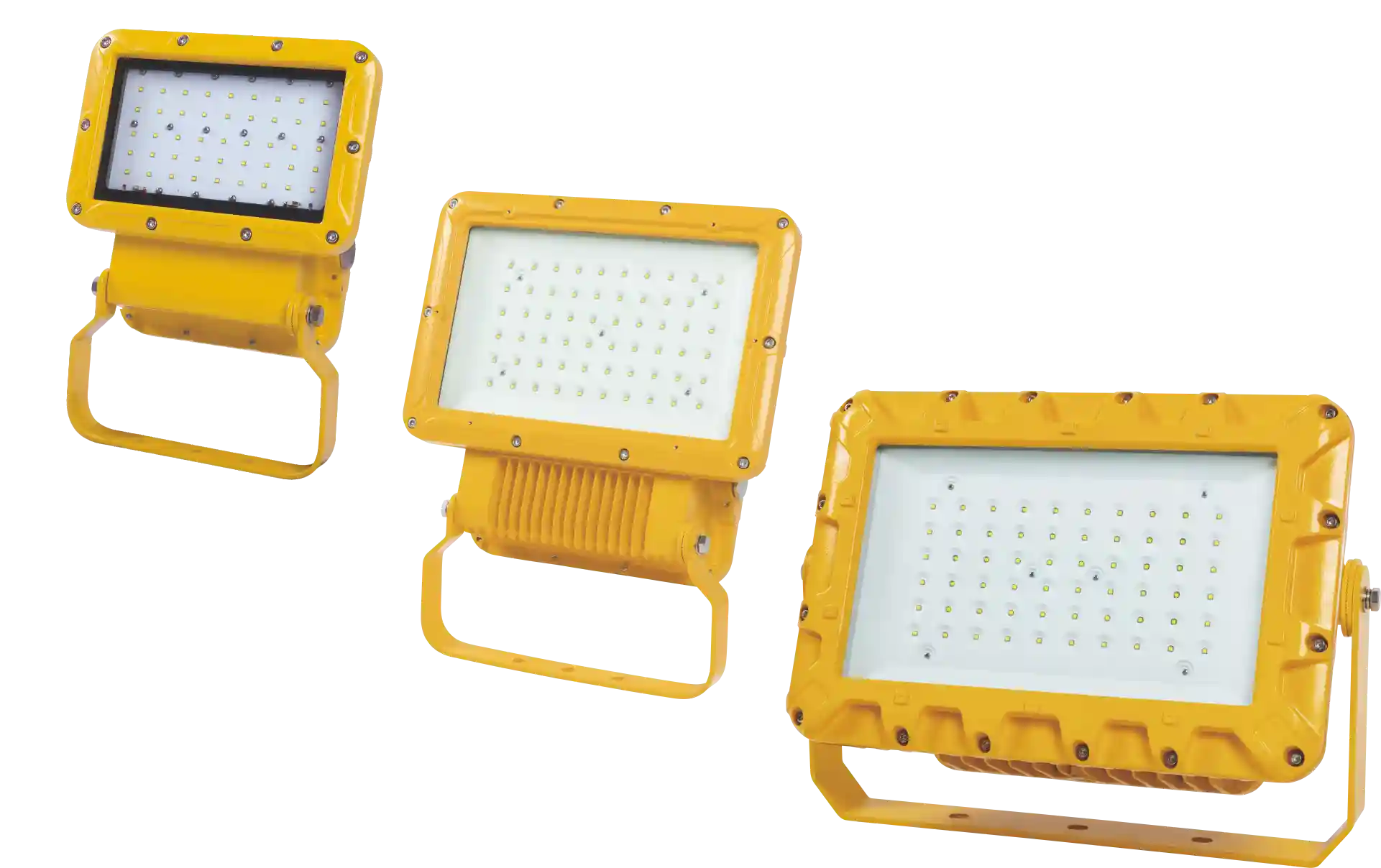
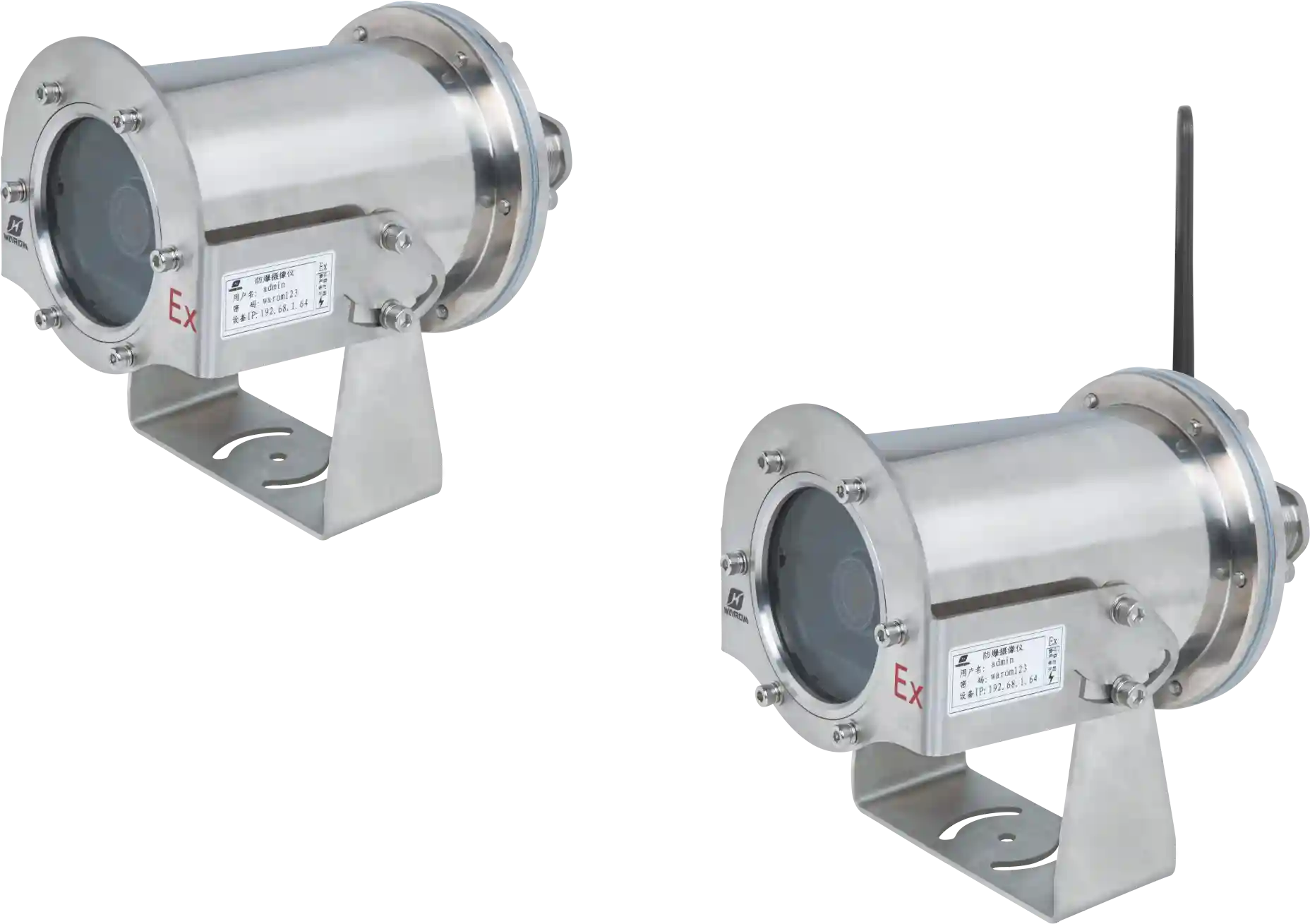
The container interior and the service area around the container usually need LED lighting that can handle outdoor heat and dust. The BAT86 series from Warom, for example, is rated to IEC 60079 and EN 60079 with IP66 and W F2 corrosion protection, with an LED source and an ambient range that reaches 60°C. That suits a container wall where daytime solar load pushes surface temperature well above ambient. An explosion proof camera, such as the BJK-S/G series, can cover Zone 1, Zone 2, Zone 21, and Zone 22 locations with IP66/IP68 protection for sites where battery halls are watched remotely.
Which enclosures and cable entries matter?
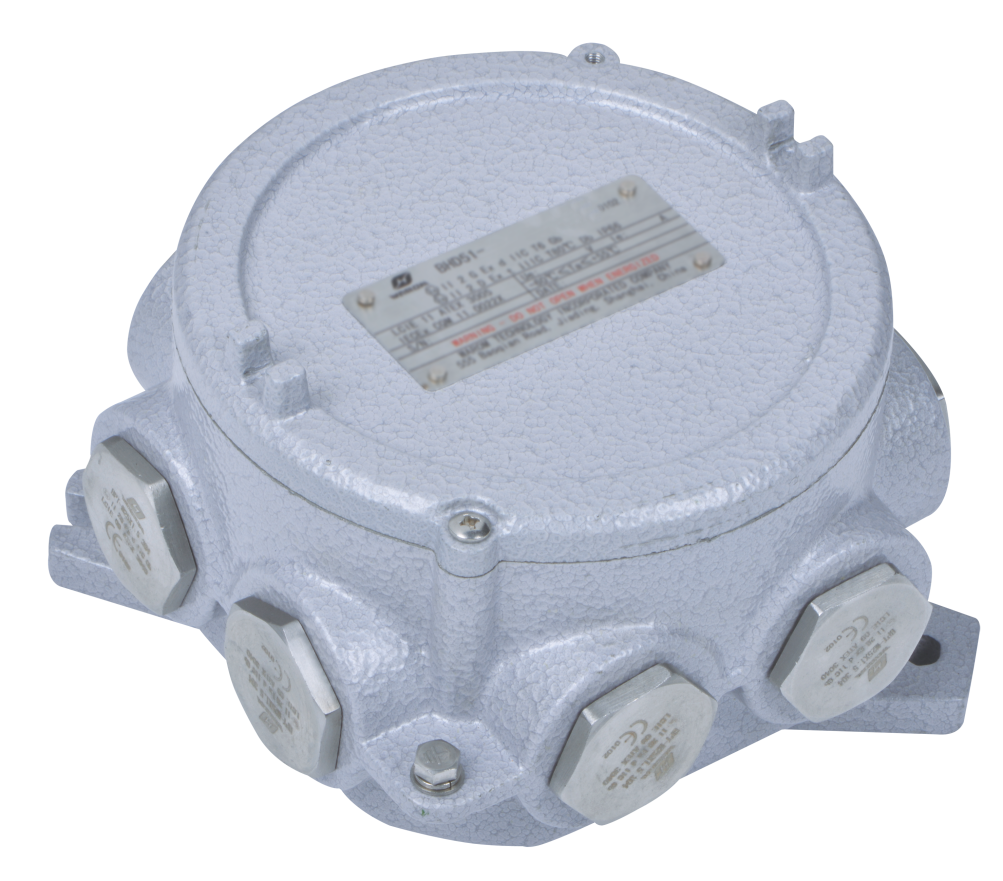
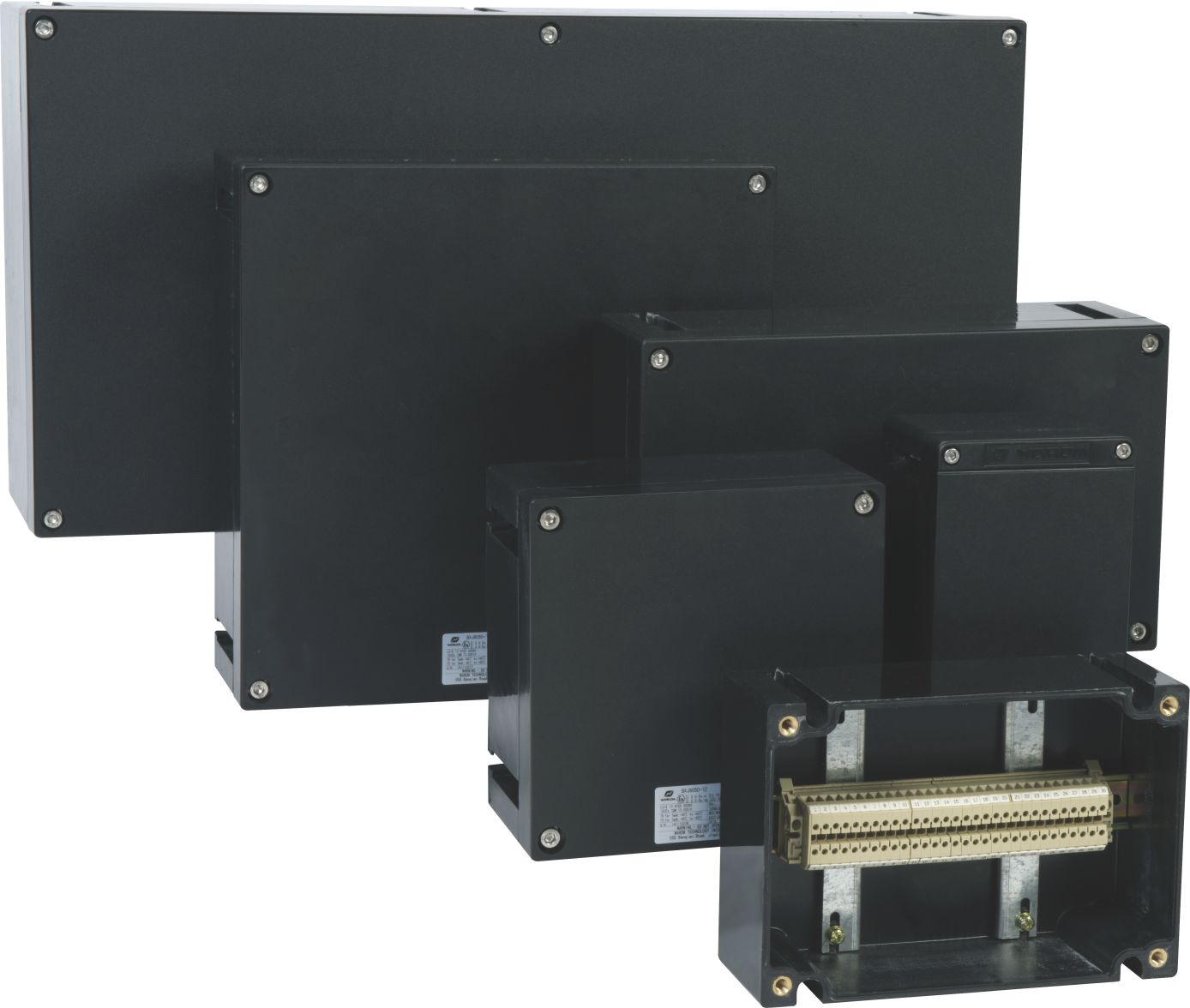
The real work is in termination, distribution, and glanding. A BESS container contains hundreds of control and power connections. A BXJ8050 series terminal box with Ex e IIC protection and IP66 gives a clean point for marshaling instrument and control conductors without piling connections into a flameproof enclosure. For lighting and auxiliary circuits, a BXM(D)8050 distribution box with GRP enclosure and Ex e design can organize outgoing circuits up to 250A. Cable glands should be Ex d rated and tested for the cable type used, since the flamepath and the cable outer sheath combination is what holds the protection system together.
| BESS function | Typical equipment | Key specification to verify |
|---|---|---|
| Container lighting | BAT86 LED floodlight | IP66, W F2, IEC/EN 60079, ambient to 60°C |
| Remote observation | BJK-S/G camera | Zone 1,2,21,22, IP66/IP68 |
| Control and instrument termination | BXJ8050 terminal boxes | Ex e IIC, IP66, max 690V AC |
| Auxiliary circuit distribution | BXM(D)8050 distribution boxes | GRP, Ex e, max 250A |
| Field cable termination | DQM-III/II cable glands | Ex db IIC Gb, IP66, cable range match |
| Local power and signal junction | BHD91 junction boxes | Flameproof, IP66, max 500V |
This table is not an equipment schedule. It is the category check before a schedule can be written. The actual ratings follow the hazardous area assessment, the available short-circuit current, and the installed cable construction.
What Do Specifiers Misjudge About Thermal Runaway and Gas Detection?
The largest miss is treating the BESS as an electrical room that happens to contain batteries. Most electrical rooms are not sealed to the same degree, and their fire risk is more likely to be cable insulation or switchgear failure. A battery container can release a flammable cloud before any flame appears. That changes what has to happen first.
At General Paint in Mexico, the project I worked on had ordinary electrical accessories installed in areas where flammable solvent vapor and combustible dust were both present. The fix was not a single piece of equipment. It was a package: gas detectors, explosion proof plugs and sockets, junction boxes, distribution boxes, static discharge devices, and corrosion resistant fittings. The site became safer because the electrical infrastructure matched the chemical reality, not because one premium component was installed. The same pattern applies to battery storage. Gas detection needs to be tied to ventilation, alarm, and shutdown logic, not treated as a standalone warning device.
Hydrogen is buoyant and tends to gather at the top of a container. Solvent vapor can be heavier and may pool low. A single detector at breathing height will not see both. The practical answer is multi-level detection plus a defined response: at what concentration does the HVAC ramp up, at what concentration does the battery circuit isolate, and at what concentration does the container vent or suppress. These set points belong in the control narrative. If your program has a gas detection interface that must be interlocked with the main controls, confirm the alarm and shutdown sequence before the control panel design is frozen.
If the BESS forms part of a larger EPC delivery, <Specifying Explosion-Proof Electricals for EPC Projects: Safety & Compliance> covers how package documentation and division of responsibility should be handled across electrical, instrumentation, and mechanical scopes.
How Do Explosion Proof Enclosures and Cable Glands Perform in Battery Storage Environments?
Battery storage environments are mechanically harsh even before any fire. Day and night thermal cycling makes enclosure bolts, flange gaps, and cable entry seals move. A flameproof enclosure is only as good as the gap condition, so the flat machined surfaces and fasteners need to stay corrosion free and properly torqued. In coastal or humid locations, aluminum can corrode if not protected, and GRP or stainless steel may be the better material for terminal boxes and distribution panels.
The same goes for cable glands. A DQM-III/II series gland carries an IP66 rating and a wide temperature range, but it only retains its protection if the cable outer diameter and armoring match the gland specification. When multiple cables enter a terminal box, the entry plate must be designed so no gland is forced out of alignment. In a container that vibrates with inverter or cooling equipment, a misfitted gland becomes a gas entry point long before anyone notices.
A case-forward approach helps here. In the Tilenga project in Uganda, the explosion proof lighting and electrical systems had to remain reliable under extreme conditions while the scope moved through wellpads, a central processing facility, and pipelines. The equipment survived because the package was specified for the environment before installation, not adjusted after site complaints. Battery storage deserves the same discipline.
Containerised BESS in high-ambient locations push cooling assumptions beyond a standard electrical room. <Explosion Proof AC for 50°C: Extreme Heat Solutions> covers 50°C ambient design and why the cooling duty has to be fixed before enclosure thermal class is selected.
What Should a Battery Energy Storage Explosion Proof Equipment Package Include Before Shipment?
A BESS electrical package should be accepted only against a document file that matches the actual hardware. The core documents are the IECEx or ATEX certificate for each model, the product schedule with ratings, a terminal and cable gland schedule, and the test reports for the assembled cabinets if multiple devices are built into a distribution panel. If a certificate is marked for a different cable entry thread form than the one delivered, the package is not acceptable.
Additional checks before shipment: verify the temperature class and gas group on the nameplate, verify the ingress protection and corrosion class for all outdoor enclosures, and confirm the lift and insertion drawings for container-mounted panels. A battery storage package may include ordinary industrial equipment such as inverters, chargers, and busbar assemblies. The explosion protection usually applies to field enclosures, lighting, cameras, local control stations, and cable entry devices, not to every component in the value chain. The acceptance review should make that boundary explicit.
For a package that feeds a larger EPC project, the enquiry should include the battery chemistry, the container GA, the single-line diagram, and the cable schedule. Engineers then check whether each flameproof or increased safety enclosure has enough internal volume, whether the cooling load is already covered, and whether the client’s earthing arrangement matches the internal/external earthing studs. Missing one of these inputs leads to a quotation that fits the price but not the site.
Battery energy storage procurement goes wrong when equipment is treated as a catalogue purchase. The final check is whether the gas group, the DC circuit arrangement, the cooling duty, and the acceptance documentation line up before money is committed. Warom Technology’s engineers can review the preliminary single-line diagram, cell chemistry, and container layout and confirm the required ex equipment, enclosure material, and cable entries. Send those documents to gm*@***om.com or call +86 21 39977076 / +86 21 39972657. Share the battery chemistry and container GA first, and ask specifically whether your terminal and gland schedule is safe for the expected gas release scenarios.
What Do Procurement Teams Ask About Battery Storage Explosion Proof Equipment?
Does every battery storage container need full explosion proof equipment?
No. The risk comes from abnormal off-gas release, not normal operation. If the HVAC keeps the container below the flammable limit under all defined failure scenarios, the interior may stay unclassified. Each equipment location still needs a documented hazardous area assessment. Without that assessment, using ordinary industrial enclosures and glands is a guess, and a flammable off-gas event is too late to find your mistake.
Can we use Zone 1 equipment that also carries dust ratings for battery storage?
Only if the spec actually requires dust handling. Many suppliers offer dual gas and dust ratings, for example Zone 1 and Zone 21, because a site may sit near combustible dust from manufacturing or inverter room construction. The extra rating is harmless, but it does not replace gas-group verification. If the BESS is installed close to coal dust or biomass handling, dual-rated equipment makes sense. Otherwise it adds little beyond cost.
Which matters more, the IP rating or the Ex certification?
Ex certification comes first. IP66 is not an explosion protection method. IP66 keeps water and dust out, while Ex d or Ex e contains or limits ignition energy inside. A weatherproof enclosure with IP66 but no certification is still not acceptable where a flammable atmosphere can occur. BESS packages should require both: the correct Ex marking for the zone and gas group, and IP66 or better for outdoor service. One without the other leaves a different failure path open.
How do we verify certificates before delivery?
I ask suppliers to send the certificate number, not the certificate front page. The number can be checked with the issuing body, such as IECEx or ATEX, and should match the nameplate on every item. We also require the rated voltage, current, gas group, temperature class, and cable entry thread form on the delivered documentation. If any of these do not match, it is a documentation failure not just an admin issue. Share your procurement list with gm*@***om.com and we can check the marking requirements against your equipment schedule.
If you’re interested, check out these related articles:
NEMA 7 vs ATEX Certified Explosion Proof Control Stations
WAROM at OTC 2025
Ensuring Safety: The Indispensable Role of Explosion-Proof Fluorescent Lamps
PETROLEUM ENERGY SHOW 2024
Energy Innovation · Smart Green · Digital Drive ·2024 ADIPEC Oil Exhibition in ABU Dhabi
With over a decade of experience, he is a seasoned Explosion-Proof Electrical Engineer specializing in the design and manufacture of safety and explosion-proof products. He possesses in-depth expertise across key areas including explosion-proof systems, nuclear power lighting, marine safety, fire protection, and intelligent control systems. At Warom Technology Incorporated Company, he holds dual leadership roles as Deputy Chief Engineer for International Business and Head of the International R&D Department, where he oversees R&D initiatives and ensures the precise delivery of design documentation for international projects. Committed to advancing global industrial safety, he focuses on translating complex technologies into practical solutions, helping clients implement safer, smarter, and more reliable control systems worldwide.

Qi Lingyi