
Explosion proof distribution boxes are not made safer by changing the second digit from 6 to 7. The two ratings answer different installation risks, and the cable entry method usually determines which one can actually be achieved. I start every specification with the same question: will the enclosure sit in pooled water, receive high-pressure washdown, or only face rain and hosing from a distance? That answer matters more than the IP number on the drawing. In most outdoor process plants, IP66 is the correct baseline. IP67 becomes necessary only where temporary flooding, buried cable ducts, or standing water at the mounting base is part of normal operation.
IP66 and IP67 Carry Different Water Exposure Limits
IP66 and IP67 are both dust tight, so dust ingress is not the point of comparison. Under IEC 60529, IP66 protects against powerful water jets from any direction. The test uses a 12.5 mm nozzle at 100 liters per minute. IP67 protects against temporary immersion, usually tested at 1 meter for 30 minutes. A product that passes IP67 does not automatically pass IP66, because the jet test and the immersion test create different pressure patterns on seals and cable entries. For explosion proof distribution boxes, this difference matters because the enclosure is only one part of the sealing system. The glands, plugs, cover joints, and mounting orientation share the water exposure.
| Exposure condition | IP66 | IP67 |
|---|---|---|
| Dust | Dust tight | Dust tight |
| Water | Powerful water jets from any direction | Temporary immersion, usually 1 m for 30 minutes |
| Typical site condition | Rain, spray, hose cleaning from a distance | Pooled water, flooded cable ducts, below grade pits |
| Main sealing focus | Cover joints, cable glands, blanking plugs | Cover joints, cable glands, blanking plugs under hydrostatic pressure |
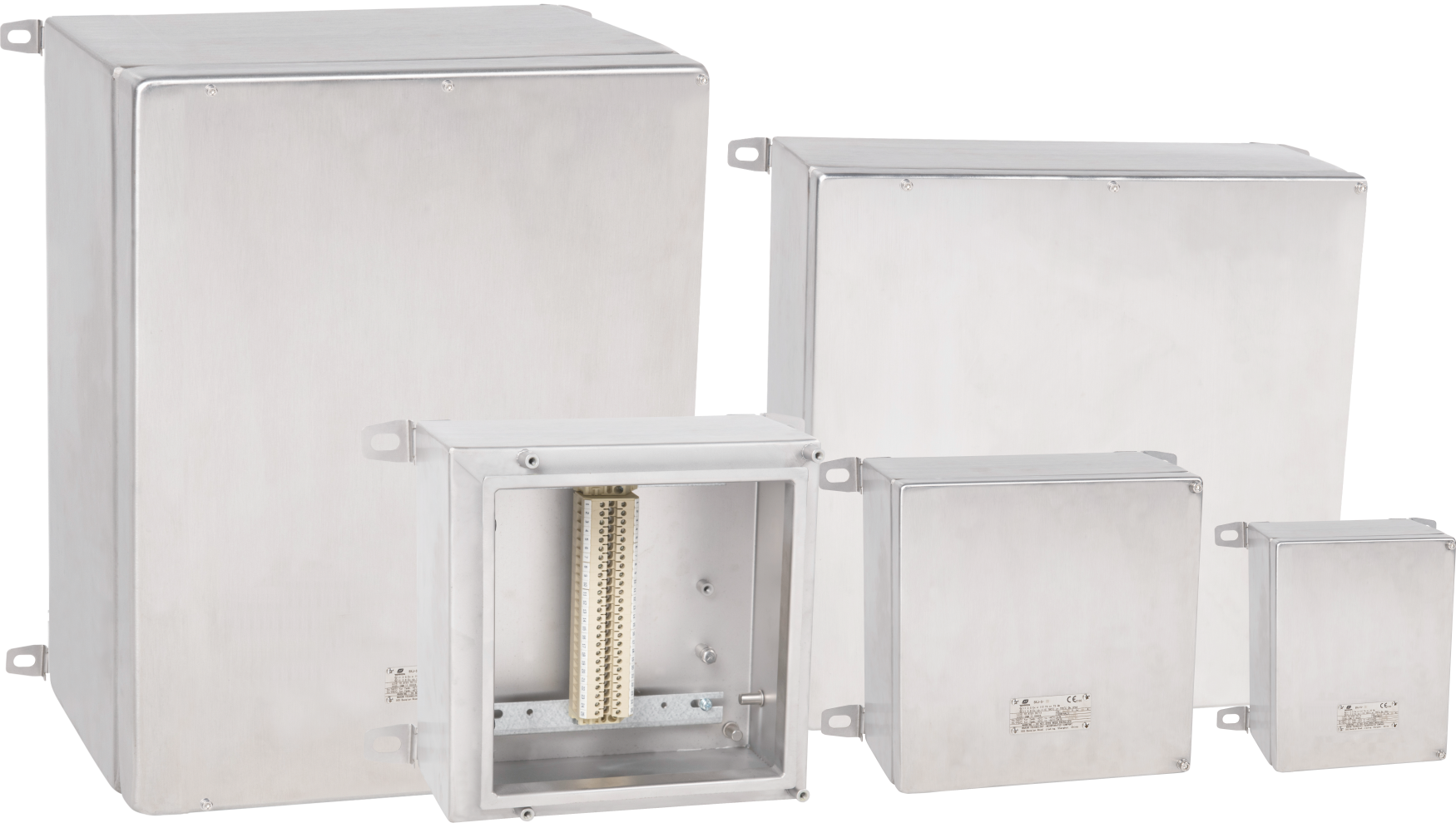
The same rating logic applies to junction boxes within the distribution assembly.
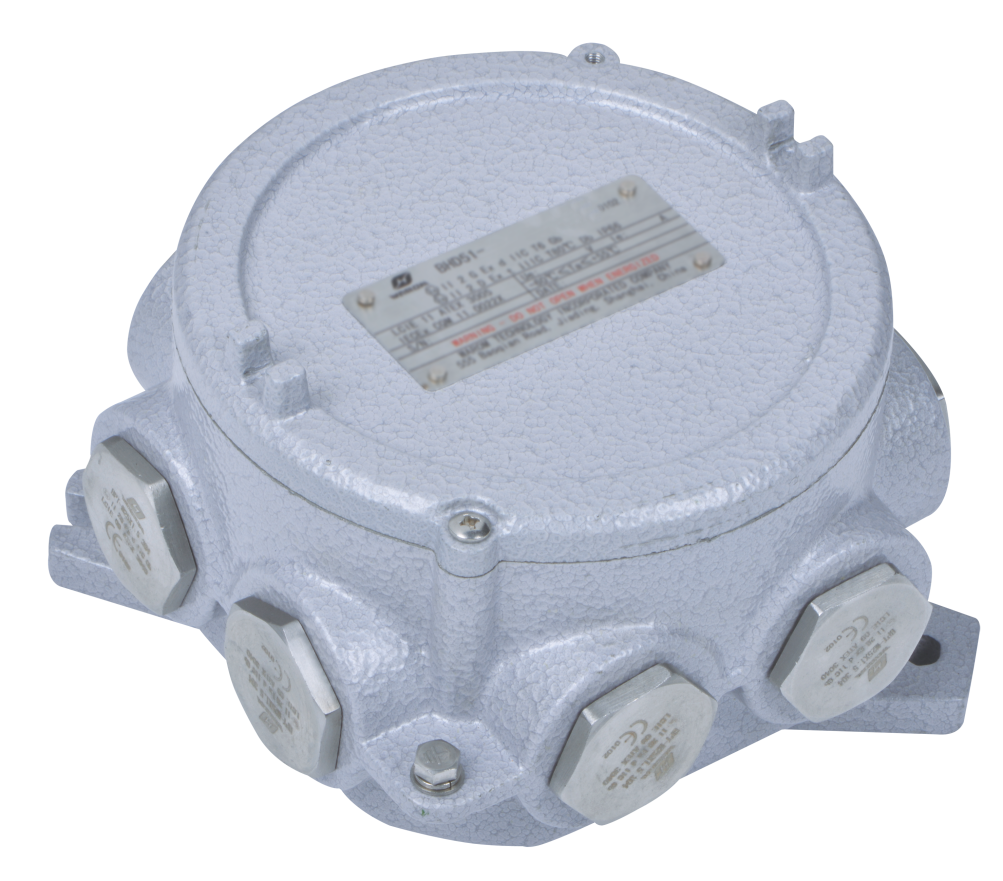
Most Outdoor Explosion Proof Distribution Boxes Are Better Served by IP66
Most outdoor hazardous area installations do not submerge the enclosure. Rain runs off, hose water hits the outside, and the enclosure drains. IP66 is designed for that condition. On wellpads, chemical plants, and marine topsides, distribution boxes are mounted above grade, on skids, or on cable racks, and the water exposure is from rain, spray, and occasional washdown. Specifying IP67 across a project in those locations adds sealing complexity without changing the site risk. The more practical concern is whether every unused cable entry is sealed with an explosion proof blanking plug. A single open entry will let water in long before the IP rating becomes the limiting factor.
On the Tilenga project in Uganda, outdoor electrical systems were exposed to rain, heat, and washdown conditions rather than immersion. The IP66 enclosure baseline, combined with correctly specified cable glands, matched the operating conditions and the safety requirements. In that type of service, the enclosure protection level is less important than the discipline of completing the entry schedule.
Outdoor distribution enclosures in marine and offshore installations face the same water-jet exposure as land-based plants, though the corrosion load is higher. <Offshore Wind Substations: Explosion Proof Electrical Distribution Solutions> covers how distribution enclosures and cable entries are specified together for offshore substation rooms where salt spray and washdown are part of normal operation.
Specify IP67 for Explosion Proof Distribution Boxes Only When Temporary Flooding Is Expected
IP67 is a specific tool, not a general upgrade. If the distribution box sits in a below grade concrete pit, a cable trench that can flood, a loading area where water pools, or a location subject to temporary immersion during maintenance, IP67 is the right specification. The test represents a short submersion, not continuous underwater service. For continuous immersion or frequent submergence, neither IP66 nor IP67 should be the primary defense. The enclosure should be relocated, raised, or protected by a drained enclosure or a sealed pit. I have seen pump pits where IP67 was written into the datasheet, but the cable glands were standard Ex e glands with no pressure test record. The rating on the box meant little because the entry system was not qualified for the same water condition.
If your project includes pump pits, cable troughs, washdown zones, or mixed indoor and outdoor distribution boards, the rating decision should be checked against the cable entry arrangement before the bill of materials is locked. Send your layout and cable schedule to gm*@***om.com and we will review where IP66 will hold and where IP67 is required.
Cable Entry Selection Determines Whether the Rating Holds
In an explosion proof distribution box, the IP rating applies to the assembled enclosure, not the body alone. The cable glands, adapters, blanking elements, and cover screws all have to maintain the same water protection. That is why two enclosures marked IP66 can perform differently in service. A flameproof Ex d enclosure may have a wide cover joint that passes the IP66 jet test but can leak under immersion unless the seals are specified for IP67. Equally, an Ex e enclosure with high-density terminal blocks may have enough space for cable bending, but the IP rating can be lost if an installer uses the wrong gland or leaves an unused entry unplugged. When I review a specification, I read the entry schedule before I read the enclosure code.
Warom’s DQM-II and DQM-III cable glands are specified with the enclosure because the gland type affects flameproof capability as well as ingress protection. The distribution box rating on the nameplate should not be copied from a catalog without checking that the selected glands, plugs, adapters, and cover can all meet the same water test. For IP67, ask for the assembly-based test report or certification, not only the empty enclosure certificate.
When enclosure ratings are sourced from multiple suppliers, the certificate should show the complete assembly, not only the empty enclosure body. <Evaluating Weatherproof Electrical Suppliers in China for Industrial Safety> covers how to check material, ingress protection, and certification claims before accepting a supplier’s technical datasheet.
Finalizing the Explosion Proof Distribution Box Specification
A drawing note that says “IP66 or IP67” puts the decision on the installer, who may not know the site drainage conditions. The specification should instead name the rating for each location class, the cable entry arrangement, and the gland type. If the site has below grade pits or flood-prone areas, mark those locations IP67 and keep the rest IP66. If the project documentation is still uncertain, send the installation drawings and cable schedule to gm*@***om.com or call +86 21 39977076 / +86 21 39972657. We will mark each distribution box on your equipment list with the rating and entry configuration that will pass inspection and keep the rating valid in service.
Common Questions About Explosion Proof Distribution Box Ratings
Is IP67 always better than IP66?
No. IP67 is not a more advanced version of IP66. It covers a different water exposure condition, which is temporary immersion rather than water jets. A box that carries both ratings has been tested for both conditions. If the site only sees rain and spray, IP66 is the more appropriate requirement because it matches the actual stress on the seals and does not add cost or installation constraints. The safer choice is the rating that matches the facility’s drainage and washdown conditions, not the higher second digit.
Can an IP66 explosion proof distribution box be upgraded to IP67 on site?
A common assumption is that replacing the cover gasket or applying sealant upgrades the rating. That is not the case. The IP rating belongs to the complete assembly as tested, including the enclosure, cover, cable glands, and blanking elements. Field modifications can degrade the original IP66 rating. If a site is changed to include flooding risk, the correct approach is to replace the box with an assembly tested for IP67, or to change the installation conditions so that water cannot collect around the enclosure.
What documentation should I ask for when ordering IP67 distribution boxes?
The documentation should match how the manufacturer lists the product. If IP67 is claimed, ask whether the rating applies to the empty enclosure only or to the complete assembly with specified glands and plugs. Request the test standard reference, the test conditions, and the certificate number. If the box is also explosion proof, the IEC 60079 certification should cover the same enclosure configuration. Do not accept a catalog IP rating without seeing what cable entry components were fitted during the test.
If the site has high-pressure washdown, which rating should I specify?
For high-pressure washdown, IP66 is the primary rating because it is tested against powerful water jets. The specification also needs to define the nozzle pressure, flow rate, distance, and duration, because not every IP66 enclosure is intended for the same jet energy. If the washdown creates standing water at the base of the enclosure, add IP67 for those locations or install a raised mounting and drainage. Share the washdown equipment data and the mounting arrangement with gm*@***om.com and we will confirm which distribution boxes need which rating.
If you’re interested, check out these related articles:
Chint Group Chairman Nan Cunhui and His Party Visited Warom for Investigation and Exchange
Explosion Proof Definition: Essential 2025 Safety Facts
Warom Spring Festival Groundbreaking Ceremony
With over a decade of experience, he is a seasoned Explosion-Proof Electrical Engineer specializing in the design and manufacture of safety and explosion-proof products. He possesses in-depth expertise across key areas including explosion-proof systems, nuclear power lighting, marine safety, fire protection, and intelligent control systems. At Warom Technology Incorporated Company, he holds dual leadership roles as Deputy Chief Engineer for International Business and Head of the International R&D Department, where he oversees R&D initiatives and ensures the precise delivery of design documentation for international projects. Committed to advancing global industrial safety, he focuses on translating complex technologies into practical solutions, helping clients implement safer, smarter, and more reliable control systems worldwide.

Qi Lingyi