

Explosion proof signal lights and beacons do more than flash. In a hazardous area, they must stay visible through pipe racks, remain audible above pump noise, carry a certification that matches the gas or dust present, and maintain an intact cable entry for the life of the installation. Through project reviews and supplier audits, I have found the weak points are usually not the LED source but the zone marking, the audible output at the required distance, and the gland selection. The right choice depends on a short list of site data that I work through in this article.
Explosion Proof Signal Light and Beacon Functions
These devices are not general-purpose luminaires. A beacon communicates a state: gas detected, process start, emergency stop, or evacuation. A signal light draws attention to a changing condition before an operator is close enough to read a display. In a chemical loading area, that distinction changes placement. A red beacon above the skid does nothing for a moving operator if the flash rate is too slow to catch peripheral vision.
I have watched commissioning checks fail because the device met the electrical specification but not the line-of-sight requirement. The same applies to sound. An audible warning carries urgency, but its value disappears in a zone where motor noise, steam vents, or compressor banks mask the tone. The specification therefore begins with the operator position, not the catalogue.
Certification and Zone Matching for Hazardous Area Beacons
Check the marking before the datasheet. For a gas application, the marking should include the protection concept, gas group, temperature class, and equipment protection level. For dust, the marking differs. The common mistake is ordering a unit listed for Zone 1 gas and installing it in a dust zone without confirming a second certificate.
| Item to verify | Why it matters |
|---|---|
| Zone or division marking | Confirms the device is certified for the actual classified area |
| Gas group and temperature class | Matches the hazardous gas and surface temperature limit |
| Dust marking | Covers combustible dust environments separately |
| IP rating and ambient range | Keeps moisture and dust out at the installed location |
| Cable entry size and thread form | Prevents a mismatched gland from weakening the explosion protection |
Zone classification sets the baseline for every fitting decision. <Explosion Proof Light Fittings for Zone 1 Hazardous Areas> covers the enclosure, ingress, and cable entry choices that apply to signal lights as well as general luminaires.
Audible and Visual Performance Requirements
Audible output must be checked at the operator distance, not at one meter. Acoustic pressure falls with distance in open areas, and a rating of 110 dB at 1 m does not mean the same level reaches a technician across the skid. I review the surrounding noise profile before locking the device choice because a high-output beacon in a quiet gas cabinet may be as wrong as a low-output unit on a noisy wellhead.
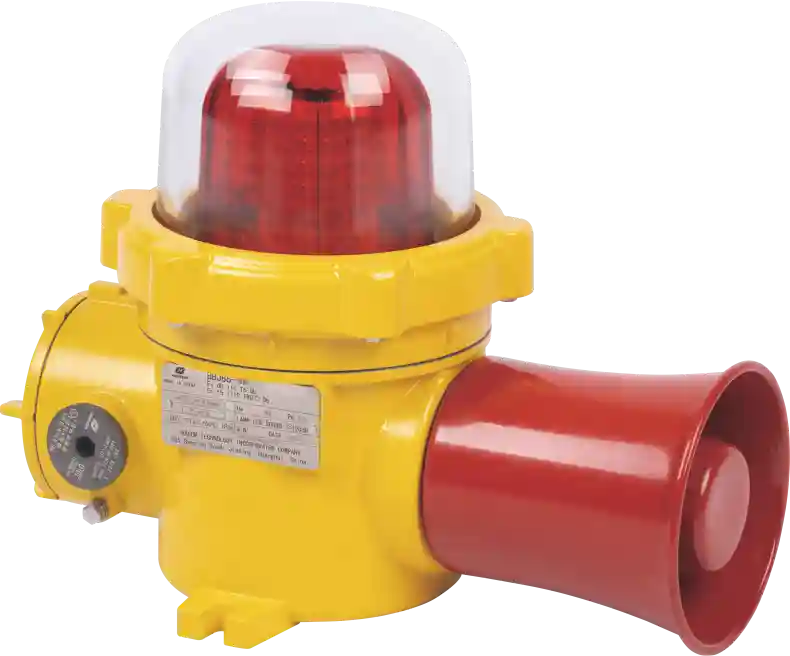
The BBJ86 audio and visual caution spotlight fitting is a useful reference for this discussion because it combines a flash rate of 150 to 160 flashes per minute with a sound intensity of 110 to 120 dB at 1 m. Its cover glass is rated for 4 J impact, and the ambient range extends from -60 °C to +60 °C. Those figures matter when the installation is outdoors, exposed, and expected to function during an emergency rather than only during a scheduled test.
If your site combines high ambient noise with long line-of-sight distances, the beacon selection cannot be settled from a catalogue alone. Send your layout, zone classification, and the measured noise level at the operator position to gm*@***om.com, and I will confirm the flash rate, sound output, and placement you need before you finalize the bill of materials.
Installation and Wiring Practices for Signal Lights
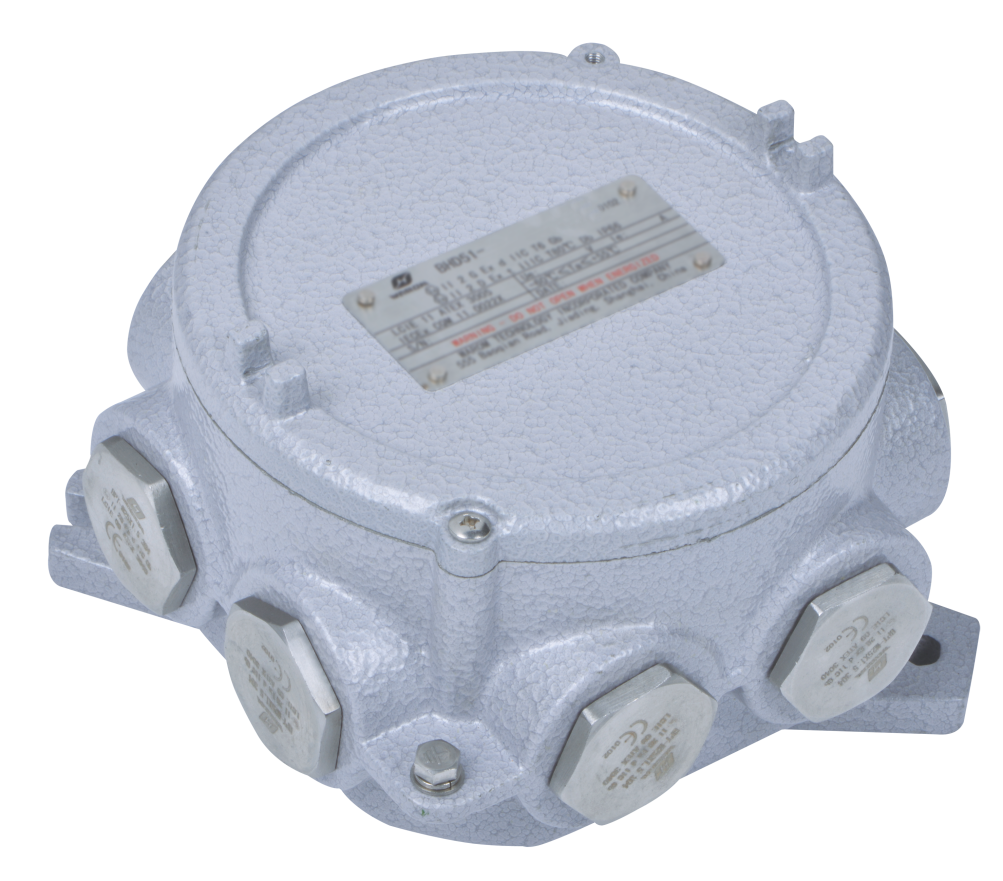
The cable gland is part of the explosion protection, not an accessory. If the installed cable diameter falls outside the gland range, the flameproof path may not be maintained. That is why I ask for the cable schedule before confirming the gland detail. For the BBJ86, the entries are three M25 plugs and two M25 glands in nickel plated brass, with a terminal range of 1.5 to 4 mm2. Those details matter when a contractor tries to terminate a larger supply conductor without a transition box.
Where beacons are tied into site alarm logic, the wiring is only as dependable as the control path behind it. <Explosion-Proof SCADA Systems for Petrochemical Safety> covers how monitored alarm states and remote I/O reduce blind spots in hazardous process areas.
Before ordering, confirm the zone marking, the required audible output at operator distance, and the cable entry compatibility with the site cable schedule. Send those three items plus the quantity and required delivery date to gm*@***om.com or call +86 21 39977076. We will return a technical quotation with certificate references.
Common Questions About Explosion Proof Signal Lights and Beacons
What is the difference between a signal light and a beacon?
A signal light indicates a defined state, such as equipment running, valve open, or power present. A beacon is typically reserved for alarm or warning events where the operator must respond quickly. In practice, many hazardous area devices combine both functions in one enclosure. The selection should start from the operator action required: if the response is emergency stop or evacuation, the device should be treated as a beacon with audible output, not as a passive status indicator.
Does a Zone 1 beacon also work in Zone 2?
In most cases it does, but the marking must still be read closely. A Zone 1 device carries a higher equipment protection level than a Zone 2 device because Zone 1 assumes an explosive atmosphere is more likely to occur during normal operation. Using that higher-rated unit in Zone 2 is generally acceptable from a certification standpoint. The practical concern is cost, size, and cabling, not safety. If the project specification requires Zone 1 only, do not substitute a Zone 2 unit without written approval.
Can the same beacon be used in both gas and dust areas?
It depends on the certificate. Some devices carry both gas and dust markings, but the zone designations must be checked separately. A beacon certified for Ex db IIC gas may not automatically carry Ex tb IIIC dust certification. In grain handling, sugar processing, or pharmaceutical powder rooms, the dust requirement often becomes the deciding factor. If the site has both risks, request the combined certificate and verify the temperature class for each environment before issuing the purchase order.
How often should explosion proof signal lights be inspected?
A practical interval is every three to six months for visual condition, lens clarity, flash function, and audible output. High vibration sites may need shorter intervals. The inspection should also include gland tightness, signs of corrosion at the cable entry, and any cracking of the cover. If the unit is part of a safety instrumented loop, the site maintenance schedule takes precedence over a general recommendation. Share your device list and operating conditions with gm*@***om.com and we will confirm a realistic inspection cycle and spare parts package for your site.
If you’re interested, check out these related articles:
Explosion-Proof Solenoid Valves: Gas Pipeline Control Safety
WAROM to Exhibit at Oil & Gas Asia Kuala Lumpur 2025
Shanghai Emergency Management Bureau expert bank electrical explosion-proof safety professional group learning seminar was held in Warom.
IP64 Rating Guide: Practical Device Protection Tests
Class 1 Division 1 vs Division 2 Lighting: 2025 Safety Guide
With over a decade of experience, he is a seasoned Explosion-Proof Electrical Engineer specializing in the design and manufacture of safety and explosion-proof products. He possesses in-depth expertise across key areas including explosion-proof systems, nuclear power lighting, marine safety, fire protection, and intelligent control systems. At Warom Technology Incorporated Company, he holds dual leadership roles as Deputy Chief Engineer for International Business and Head of the International R&D Department, where he oversees R&D initiatives and ensures the precise delivery of design documentation for international projects. Committed to advancing global industrial safety, he focuses on translating complex technologies into practical solutions, helping clients implement safer, smarter, and more reliable control systems worldwide.

Qi Lingyi