
Placing an order for explosion proof electrical equipment without auditing the manufacturer firsthand is one of the most dangerous shortcuts a project team can take. After more than thirty years designing, producing, and commissioning this equipment across oil refineries, pharmaceutical plants, and offshore platforms, I have seen what happens when a factory passes a paper audit but fails the real one: delayed commissioning, rejected equipment, and safety incidents that could have been prevented. Auditing an explosion proof manufacturer before ordering is not about ticking a certification box. It is about verifying that the engineering, production processes, and quality culture behind the certificates can actually deliver safe, repeatable results for your specific hazardous area conditions.
What to Evaluate Before You Set Foot in the Factory
A useful audit starts weeks before you walk onto the shop floor. I recommend building a short technical profile of the manufacturer based on three data points: industry track record, engineering capacity, and documentation maturity.
First, look at where their equipment is installed. A manufacturer that has delivered explosion proof distribution cabinets to offshore wind substations or LNG terminals has solved problems that a factory supplying only general-purpose hazardous area lighting has never encountered. At Warom, our projects such as the Tilenga field in Uganda, which required explosion-proof lighting and electrical systems to operate reliably inside a national park with zero safety incidents, forced us to mature our thermal management, ingress protection, and logistics capabilities in ways a standard factory audit might not reveal.
Second, understand their engineering headcount. A manufacturer with three hundred employees and five engineers is not the same as one with three hundred employees and sixty engineers. The former can produce what you ask for; the latter can tell you when your specification is wrong. Ask to see the engineering team’s internal design review records for a recent project, not just the final drawings. In our pharmaceutical projects, such as the Fushilai Pharmaceutical CM/CDMO facility with 48,000 m² of production space, early engineering coordination with the design institute and end user was what secured the bid — not the lowest unit price.
Third, request their document package before the visit. If the response is slow, incomplete, or full of standard brochures rather than project-specific evidence, the audit has already started and the result is not good.
What to Inspect on the Factory Floor
Certificates tell you the equipment passed a type test once. The factory floor tells you whether it can pass the same test a thousand times. I always start my own supplier audits in the raw material storage area and the machining workshop, because that is where most hidden problems begin.
Enclosure integrity. For flameproof Ex d equipment, the quality of the cast housing is non-negotiable. Walk to the foundry or the incoming material inspection station. Check the copper-free aluminum alloy composition and look at the casting surface finish. Porosity in a casting will not show up on a dimensional inspection but will fail under the overpressure test that every Ex d enclosure must pass. At Warom, we apply powder coating and anti-static treatment to every enclosure, and we test a sample from each production batch to destruction. Ask the manufacturer to show you the records of their batch hydrostatic or overpressure testing, not just the type test certificate.
Flame path consistency. Ex d protection depends on a precisely machined flame path that cools escaping gases below ignition temperature. Take a calibrated feeler gauge and request to measure the gap on a randomly selected production unit. The gap tolerance is typically 0.1 mm or less for IIC enclosures. If the manufacturer is reluctant to let you do this, or if the measured gaps vary significantly across samples, the manufacturing process is not under control. I have seen entire shipments rejected by a classification society surveyor because of this single check.
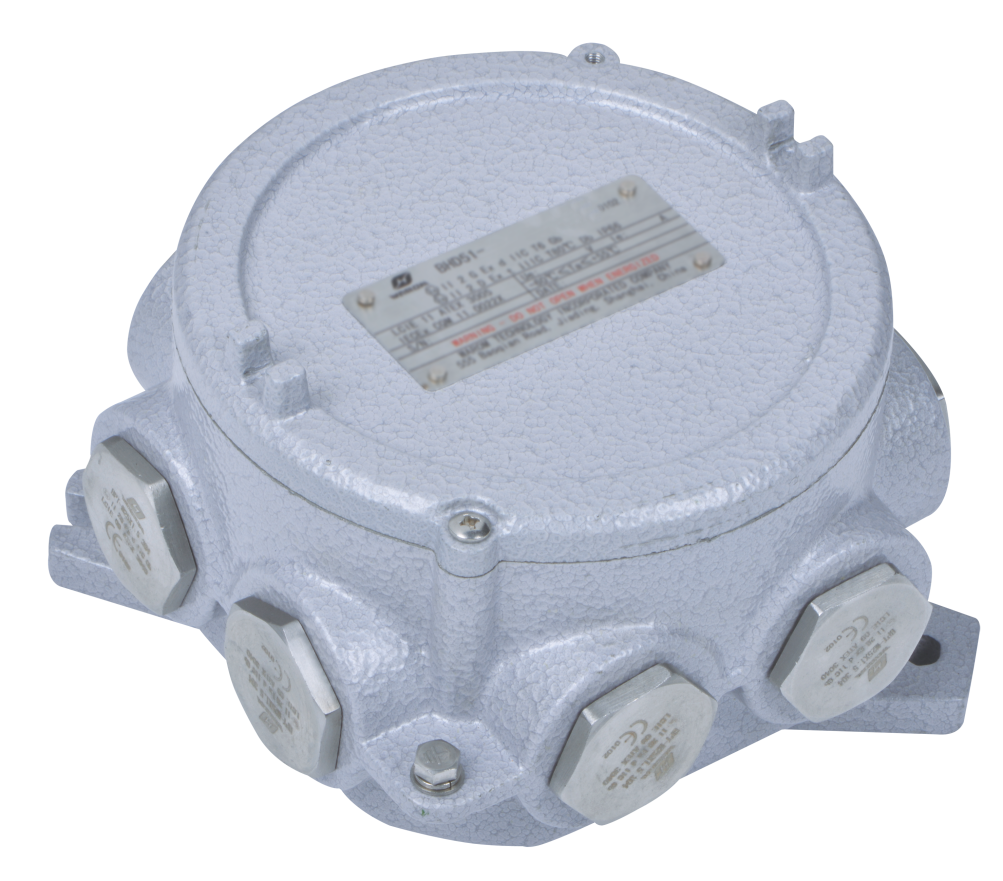
Cable entry and gland assembly. An explosion proof enclosure is only as strong as its cable entries. Look at how cable glands are installed on assembled products. Are they tightened with a torque wrench according to the gland manufacturer’s specification? Are the IP66 or IP67 sealing washers correctly seated? I once visited a chemical plant in Mexico where we discovered that standard industrial cable glands had been installed on explosion proof equipment by a local contractor; the resulting gas leak path made the enclosure’s Ex rating meaningless. That field observation, documented during our General Paint safety upgrade project, became a training case for our own assembly teams.
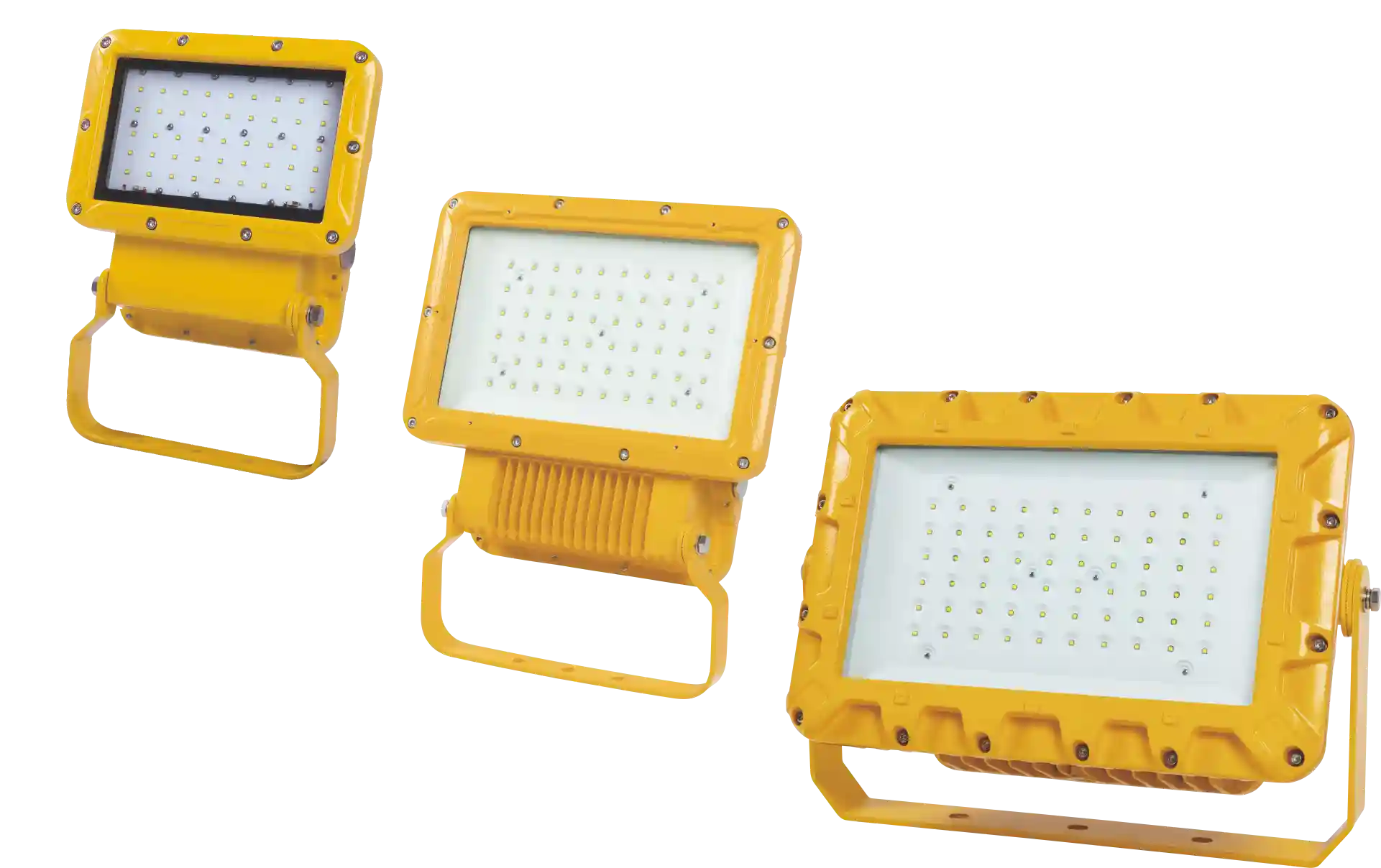
If your order includes equipment for combined gas and dust hazardous areas or for corrosive marine environments, the factory floor inspection should also cover anti-corrosion treatment, gasket material certification, and stainless steel fastener traceability. For offshore projects where salt spray and vibration are constant, we insist on 316 stainless steel exposed fasteners and WF2-rated corrosion proofing as a minimum. During the Tilenga project, components had to function reliably in a tropical environment with high humidity and temperature extremes. The factory’s ability to demonstrate environmental stress screening and coating adhesion test results was more persuasive than any certificate.
How to Verify Certifications Without Relying on the Certificate Alone
Certification bodies do not audit every piece of equipment that leaves a factory. They audit the manufacturer’s quality management system and type-test representative samples. The responsibility for consistent conformity lies with the manufacturer’s ongoing production control.
When you review an ATEX, IECEx, or CNEX certificate, do not stop at the first page. Open the technical annex and compare the listed critical components — cable glands, terminal blocks, windows, sealing compounds — against the actual bill of materials used in the product you are ordering. A fully certified Ex d enclosure with an uncertified terminal block is not certified equipment. I have seen this substitution happen when a manufacturer runs short of a certified component and quietly installs a generic alternative to meet a delivery deadline.
Ask for the manufacturer’s latest surveillance audit report from the certification body. This report will note any non-conformities found during the last factory inspection and whether they were closed. A manufacturer that claims to have a clean record for five consecutive years is either exceptionally disciplined or operating in a certification regime with very light oversight. In China, for example, the CNEX certification system includes annual factory inspections; in my experience, a manufacturer that has received one or two minor non-conformities and resolved them transparently is often more credible than one that reports zero findings.
Also verify that the certification covers the exact gas group and temperature class your application requires. A floodlight certified for IIB T4 cannot be installed in a hydrogen environment requiring IIC T6, even if the housing looks identical to the one in the catalog. The marking plate on every certified product must match the certificate exactly. During a factory audit, pick a finished product at random and check the nameplate data against the certificate and the internal component ratings. Mismatches are usually not fraud; they are signs of a weak document control system, which in hazardous area work is a serious alarm.
| Certification Aspect | What to Verify on Site | Common Red Flags |
|---|---|---|
| Certificate validity | Match serial number range to production batch | Expired certificate for current production |
| Critical components | Cross-check terminal, gland, and enclosure certificates | Generic components substituted for certified ones |
| Nameplate marking | Compare marking data against certificate and drawing | Missing gas group, temperature class, or certificate number |
| Surveillance audit | Request latest factory surveillance report | Unresolved non-conformities from last audit |
Why Testing Data Matters More Than a Test Pass
A type test certificate shows that one sample passed a defined test sequence. What you need to know is how every production unit is verified. During the factory audit, spend time in the testing area, not just the assembly line.
For distribution cabinets and control panels, request to witness a complete routine test on a finished product. This routine test typically includes an insulation resistance measurement, a dielectric withstand test at 2Un+1000V (or as required by the standard), and a functional check of all switching and interlocking mechanisms. For Ex d enclosures, a factory routine test may also include an overpressure test on each enclosure — not just a sample. Ask whether the factory applies an overpressure test to every Ex d enclosure before delivery. If the answer is “only on samples,” understand that you are accepting a statistical probability of a failed enclosure reaching your site.
In our factory, every BXM(D)8050 explosion-proof distribution box undergoes a routine test sequence that is documented with a unique serial number. That test record travels with the product and is available to the customer before shipment. For a large EPC project, I recommend including a factory acceptance test (FAT) as a contractual requirement. At the FAT, you or your representative witness the testing of the actual equipment you will receive, not a golden sample. For the Fushilai Pharmaceutical project, the FAT protocol was part of the bid package, and every distribution box was tested in the presence of the end user’s engineer before being released. That level of transparency sets a manufacturer apart from those who consider testing an internal formality.
8050 Explosion-proof Illumination Distribution Boxes)
If your program involves equipment for Zone 0 or Zone 1 with frequent thermal cycling, it is wise to confirm that the factory’s aging tests or temperature rise tests reflect your operating conditions. A distribution cabinet that passes a thermal test at 40°C ambient may not perform the same at 55°C on a Gulf Coast refinery. Share your ambient temperature range and let the manufacturer demonstrate that their component derating calculations are valid for your extremes. I once had to reject a supplier’s proposal for a compressor control panel because they had assumed 30°C ambient in their thermal analysis; the actual site regularly reached 48°C. The panel would have tripped within an hour of startup.
How to Decide After the Audit and Build a Safe Supplier Relationship
The audit does not end when you leave the factory. I always prepare a one-page audit closure report that ranks findings by safety criticality: critical non-conformities that must be resolved before order placement, major observations that should be addressed during production, and minor improvement suggestions. Send this to the manufacturer and evaluate their response before committing.
Beyond the audit findings, consider three commercial and operational factors that affect long-term safety:
Spare parts philosophy. Explosion proof equipment is not maintenance-free over a 15-year lifecycle. Ask the manufacturer how they handle spare parts for products they manufactured ten years ago. In our case, we maintain a controlled archive of all flameproof enclosure designs and casting molds, so that a replacement cover or terminal block can be reproduced even for legacy installations. A manufacturer whose answer is “we can offer a new model” is effectively telling you that your equipment becomes unrepairable when production stops.
After-sales engineering support. The factory may produce excellent hardware, but the real test comes during commissioning. At the General Paint project in Mexico, our engineering team worked on site to diagnose existing electrical hazards and then designed a solution that included gas detectors, explosion-proof plugs, and static discharge devices. That level of support is not included in a unit price quote but is what prevents a safety incident three years later. When you audit a manufacturer, ask them to describe the last three site-support cases they handled. If they cannot name them, their after-sales capability is a phone line, not an engineering function.
Counterfeit awareness. The explosion proof equipment market has a counterfeit problem, especially for cable glands and small terminal boxes. A genuine IECEx-certified DQM-III cable gland from our factory includes a unique batch number and a tamper-evident marking. A counterfeit may look identical externally but use a different sealing compound or a lower-grade brass. During the factory audit, ask to see how they mark and trace their products. A manufacturer that uses laser-engraved, unique serial numbers on every component is taking the problem seriously. If they use stick-on labels that can be duplicated, treat that as a vulnerability.
At the conclusion of a successful audit, you are not just buying equipment. You are entering a relationship that will last as long as that equipment is installed in a hazardous area. The manufacturer’s willingness to share technical data, support FATs, and provide engineering assistance during commissioning is part of the safety envelope.
Moving Forward After an Audit
The gap between a certified explosion proof manufacturer and a genuinely capable one is measured in the details: casting consistency, batch test coverage, design change control, and the factory’s response when a non-conformity is found. An audit that stops at the certificate binder will miss all of these. The projects I have seen succeed — from offshore wind substations to pharmaceutical solvent areas — shared one factor: the procurement team treated the factory audit as an engineering exercise, not a purchasing formality.
If you are preparing to audit an explosion proof equipment supplier and need a technical checklist tailored to your specific gas group, temperature class, and installation environment, send your requirement to gm*@***om.com. Our engineering team can help you define the audit criteria that matter for your project before you travel. You can also reach us at +86 21 39977076 to schedule a pre-audit technical discussion. There is no cost for this support — we consider it part of our responsibility as a manufacturer with more than three decades in hazardous area engineering.
Common Questions About Auditing Explosion Proof Equipment Manufacturers
Can I rely on an IECEx certificate alone to approve a manufacturer?
An IECEx certificate proves that a specific product model passed type tests and that the factory passed an initial quality audit, but it does not guarantee ongoing production consistency. After the initial certification, annual surveillance audits check the quality system, not every product. I have reviewed IECEx-certified products where the terminal block listed in the certificate had been substituted by a different model without re-certification. Always verify the actual bill of materials against the certificate’s technical annex during the factory visit.
What is the single most overlooked item during an explosion proof equipment audit?
The factory’s document control and engineering change process. Most auditors focus on the shop floor but don’t ask how the manufacturer manages design revisions. If a casting design is modified but the certificate is not updated, the product becomes non-compliant without anyone noticing. During an audit, request a design change log for a product that has been in production for more than two years and compare it against the current certificate. If the manufacturer cannot produce a coherent design history, their configuration management is weak.
How long should a proper factory audit take?
For a full technical audit covering manufacturing, testing, certification review, and documentation traceability, plan one full working day for a manufacturer with a focused product range, and two days for a large manufacturer producing multiple product families. A half-day audit is rarely sufficient to go beyond a superficial tour. In the Fushilai Pharmaceutical project, the end user’s audit team spent a full day reviewing test records, witnessing routine tests, and inspecting raw material certificates before approving the first shipment. That level of depth is the norm for safety-critical equipment.
Is a factory audit necessary for a small order?
Yes, but the depth can be adjusted. Even for a few explosion proof junction boxes, you need to confirm that the manufacturer’s certificates are valid and that the products are not counterfeit. A remote audit — where you request a live video walkthrough of the production line, test records for your batch, and close-up photos of the nameplate and critical components — can serve as a practical minimum for small orders. The risk of counterfeit or uncertified equipment does not decrease with order size.
What documentation should I receive before shipment?
At minimum, you should receive the IECEx or ATEX certificate for each product model, a declaration of conformity, routine test records for your specific batch, a material certificate for the enclosure, and an installation and maintenance manual. If the manufacturer is hesitant to provide pre-shipment test data, that is a red flag. Share your documentation requirements before placing the order and make pre-shipment document submission part of the payment terms. If you need help defining a documentation checklist for your project, send the equipment list to gm*@***om.com and we will confirm what test and certification documents are available before shipment.
If you’re interested, check out these related articles:
OSHA Guide: Essential Construction Site Lighting Compliance
Weatherproof Enclosures for Arctic Conditions: Design Essentials
With over a decade of experience, he is a seasoned Explosion-Proof Electrical Engineer specializing in the design and manufacture of safety and explosion-proof products. He possesses in-depth expertise across key areas including explosion-proof systems, nuclear power lighting, marine safety, fire protection, and intelligent control systems. At Warom Technology Incorporated Company, he holds dual leadership roles as Deputy Chief Engineer for International Business and Head of the International R&D Department, where he oversees R&D initiatives and ensures the precise delivery of design documentation for international projects. Committed to advancing global industrial safety, he focuses on translating complex technologies into practical solutions, helping clients implement safer, smarter, and more reliable control systems worldwide.
Qi Lingyi