

Compressor failures in Zone 1 and Zone 2 environments rarely begin with the compressor itself. In my experience designing explosion proof electrical systems for gas compression stations and petrochemical facilities, the root cause more often traces back to the motor starter: undersized contactors, incorrect temperature class ratings, or protection circuits that trip nuisance faults while missing genuine overload conditions. Selecting an explosion proof motor starter for compressor control requires matching the starter’s electrical ratings to the compressor’s inrush characteristics, confirming the enclosure’s Ex protection method suits the area classification, and verifying that the thermal protection settings account for the compressor’s duty cycle. This article addresses the specification decisions that procurement engineers and project managers encounter when sourcing explosion proof motor starters for compressor applications, with particular attention to the coordination between starter ratings and compressor load profiles that most product datasheets do not clarify.
Why Compressor Loads Demand Specific Motor Starter Characteristics
Compressors impose starting currents that can reach six to eight times the full load current, sustained for several seconds until the motor reaches operating speed. Reciprocating compressors add pulsating torque loads that create current fluctuations throughout operation. Screw compressors operating with variable discharge pressure generate load swings that standard motor protection curves do not anticipate.
An explosion proof motor starter selected purely on nameplate horsepower will likely experience premature contactor wear or nuisance tripping. The contactor’s AC-3 rating must accommodate the locked rotor current duration, not just the steady state current. For a 75 kW compressor with a locked rotor current of 480 A and a starting time of 8 seconds, a contactor rated for 150 A AC-3 at utilization category AC-3 may be marginal. The thermal overload relay must be adjustable to a range that covers the motor’s service factor while providing Class 10 or Class 20 trip characteristics appropriate for the compressor’s starting frequency.
I have seen projects where the motor starter was correctly sized for the motor but failed within months because the compressor’s unloaded start sequence was replaced with loaded starts after process changes. The starter’s thermal memory accumulated heat faster than the relay could dissipate, leading to nuisance trips that operators eventually bypassed, creating a genuine safety hazard.
Matching Protection Method to Area Classification and Installation Requirements
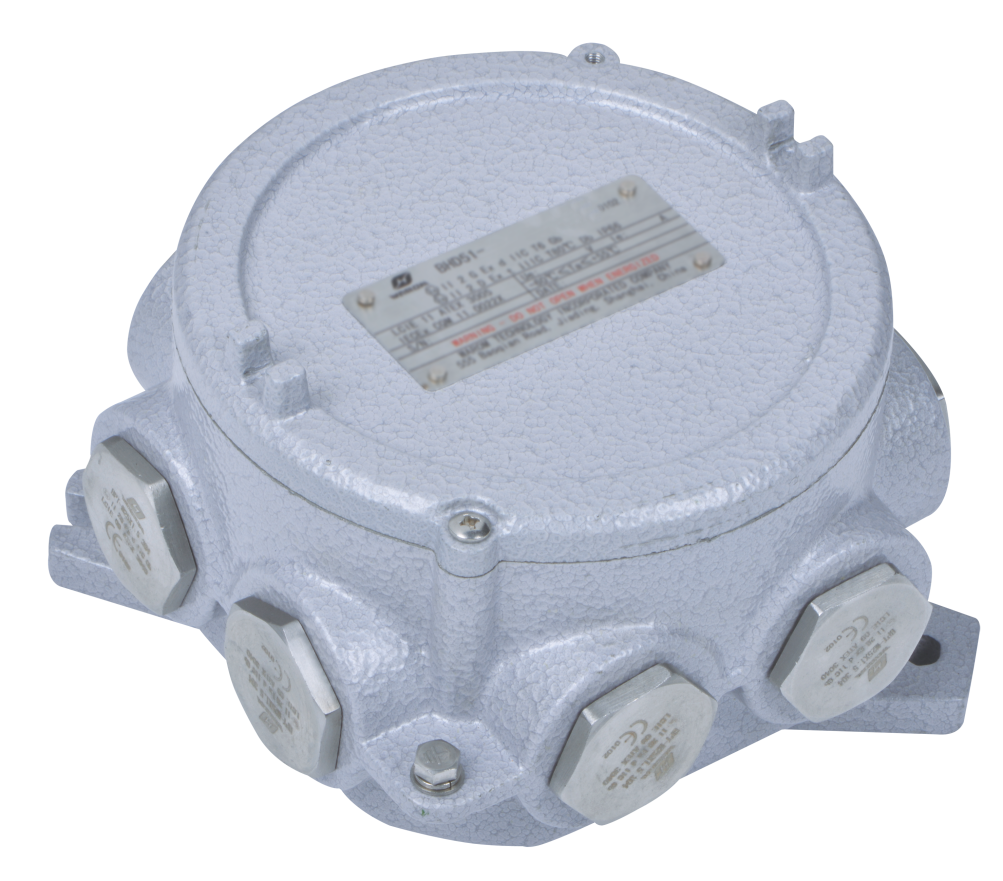
Explosion proof motor starters for compressor control are available in Ex d (flameproof), Ex e (increased safety), and combined Ex de configurations. The selection depends on the area classification, the switching frequency, and the maintenance access requirements.
| Protection Method | Typical Application | Switching Components | Maintenance Consideration |
|---|---|---|---|
| Ex d (Flameproof) | Zone 1, Division 1 | Contactor and overload inside flameproof enclosure | Requires certified gasket replacement after opening |
| Ex e (Increased Safety) | Zone 2, Division 2 | Only non-sparking components permitted | Simpler maintenance but limited to lower risk zones |
| Ex de (Combined) | Zone 1 with Ex e terminal chamber | Contactor in Ex d chamber, terminals in Ex e chamber | Allows field wiring without opening flameproof chamber |
For compressor applications in Zone 1 gas environments, Ex d or Ex de configurations are standard. The Ex de arrangement simplifies cable termination because the increased safety terminal chamber can be opened without the recertification concerns associated with flameproof joints. When specifying Ex de starters, confirm that the cable gland entries into the Ex e chamber are rated Ex e or Ex d as required by the installation standard.
Gas group classification matters. A compressor station handling natural gas (IIA) requires equipment certified for IIA minimum. Hydrogen service (IIC) demands IIC certification, which typically means larger flamepath dimensions and correspondingly larger enclosures. Temperature class must match the autoignition temperature of the gas with margin. For most hydrocarbon compressor applications, T3 or T4 ratings are sufficient, but hydrogen applications may require T1 or T2 depending on process conditions.
Sizing the Starter for Direct On Line and Reduced Voltage Starting
Direct on line (DOL) starting is the simplest and most common method for compressors below 200 kW in facilities with adequate supply capacity. The explosion proof DOL starter contains a main contactor, thermal overload relay, and control circuit components. The contactor must be rated for the motor’s full load current with adequate margin for the utilization category.
For larger compressors or installations with limited supply capacity, reduced voltage starting methods become necessary. Star delta starters reduce starting current to approximately one third of DOL values but require motors wound for dual voltage operation. Soft starters provide adjustable current limiting and are increasingly specified for compressor applications where mechanical stress reduction extends equipment life.
When specifying an explosion proof soft starter enclosure, the heat dissipation requirements increase substantially. Soft starters generate significant heat during the ramp period, and the flameproof enclosure’s thermal capacity must accommodate this without exceeding the temperature class rating. I have reviewed specifications where the soft starter’s power electronics were correctly rated but the enclosure’s internal temperature rise pushed the surface temperature beyond T4 limits during extended starting sequences.
| Starting Method | Typical Starting Current | Enclosure Size Impact | Application Suitability |
|---|---|---|---|
| DOL | 6-8 × FLC | Standard | Compressors below 200 kW with adequate supply |
| Star Delta | 2-3 × FLC | Larger (additional contactors) | Motors with dual voltage windings |
| Soft Starter | Adjustable 2-5 × FLC | Larger (heat dissipation) | Large compressors, limited supply capacity |
| VFD | 1-1.5 × FLC | Separate VFD enclosure typical | Variable speed compressor control |
Thermal Protection Settings for Compressor Duty Cycles
The thermal overload relay protects the motor from sustained overcurrent conditions, but compressor duty cycles complicate the protection coordination. A compressor running continuous duty at 85% load has different thermal characteristics than one cycling between loaded and unloaded states every few minutes.
Class 10 thermal overload relays trip within 10 seconds at 7.2 times the set current. Class 20 relays allow 20 seconds at the same multiple. Compressors with heavy flywheels or high inertia loads may require Class 20 or Class 30 protection to avoid nuisance trips during normal starts while still protecting against genuine locked rotor conditions.
The overload relay’s ambient temperature compensation becomes critical in explosion proof enclosures. The enclosure’s internal temperature during operation can exceed 60°C in hot climates, shifting the relay’s trip curve. Relays with automatic ambient compensation maintain consistent protection regardless of enclosure temperature. Relays without compensation require manual adjustment of the current setting to account for the elevated ambient, which introduces human error into the protection coordination.
For compressors with frequent starts, the thermal memory of electronic overload relays provides more accurate protection than bimetallic relays. Electronic relays calculate the motor’s thermal state based on current magnitude and duration, accounting for cooling between starts. Bimetallic relays rely on physical heating and cooling of the bimetal element, which may not accurately track the motor’s actual thermal condition during rapid cycling.
Control Circuit Voltage and Interface Requirements
Explosion proof motor starters for compressor control must interface with the facility’s control system, which introduces control circuit voltage and signal compatibility requirements. Common control voltages include 24 V DC, 110 V AC, and 230 V AC. The control transformer inside the starter must be rated for the enclosure’s temperature class and must provide adequate VA capacity for the contactor coil, indicator lamps, and any auxiliary relays.
Remote start/stop capability requires auxiliary contacts rated for the control system’s input requirements. Programmable logic controllers typically require dry contacts or voltage free contacts for status feedback. The auxiliary contact blocks must be certified as part of the explosion proof assembly, not added as field modifications.
For compressors integrated into safety instrumented systems, the motor starter may require SIL rated components. The contactor and overload relay combination must achieve the required SIL level, typically SIL 2 for compressor applications in hazardous areas. This requirement affects component selection and may require redundant contactors or dedicated safety relays within the explosion proof enclosure.
Enclosure Material and Environmental Considerations
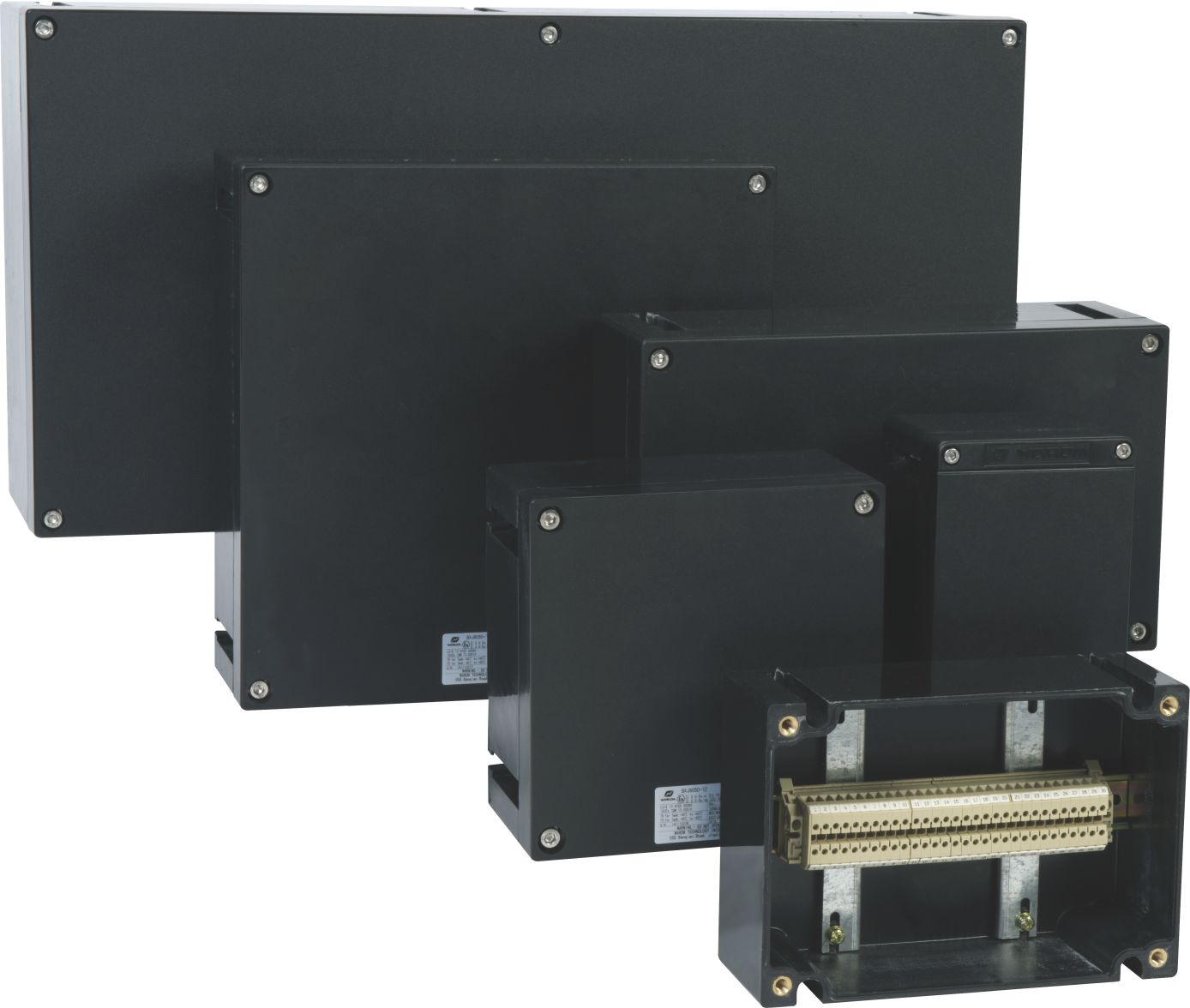
Explosion proof motor starter enclosures are manufactured in cast aluminum alloy, cast iron, stainless steel, and glass reinforced polyester (GRP). The material selection affects corrosion resistance, weight, thermal performance, and cost.
Cast aluminum alloy (copper free for explosion proof certification) offers good corrosion resistance with moderate weight. Powder coated surfaces provide additional protection in chemical environments. For offshore and marine compressor applications, stainless steel 316L enclosures resist chloride induced corrosion but increase weight and cost substantially.
GRP enclosures offer excellent chemical resistance and lighter weight than metal alternatives. However, GRP’s lower thermal conductivity can increase internal temperatures, affecting the temperature class rating. For motor starters with high heat dissipation requirements, metal enclosures typically provide better thermal performance.
The IP rating must match the installation environment. IP66 is standard for outdoor industrial installations, providing protection against dust ingress and powerful water jets. Offshore installations may specify IP67 for temporary immersion resistance during deck washing operations.
Cable entry positions affect installation flexibility. Bottom entry is standard for most industrial installations, but side entry may be required for wall mounted configurations or where floor space is limited. The cable gland specification must match the cable type: armored cables require Ex d cable glands with armor clamping, while unarmored cables use Ex e or Ex d glands appropriate for the cable diameter.
Procurement Specifications That Prevent Field Problems
Specifying explosion proof motor starters for compressor control requires more detail than standard motor control center specifications. The following parameters should appear in every procurement specification:
Motor data: full load current, locked rotor current, starting time, service factor, and duty cycle. Without this information, the supplier cannot verify contactor and overload sizing.
Area classification: zone (0, 1, or 2) or division (1 or 2), gas group (IIA, IIB, or IIC), and temperature class (T1 through T6). The certification must cover all applicable parameters.
Starting method: DOL, star delta, soft starter, or VFD. For reduced voltage methods, specify the starting current limit and ramp time requirements.
Control voltage and interface: control circuit voltage, auxiliary contact requirements, and any safety system integration needs.
Environmental conditions: ambient temperature range, corrosive atmosphere exposure, and IP rating requirements.
Certification requirements: IECEx, ATEX, or regional certifications as required by the installation jurisdiction. Specify whether third party certification verification is required before shipment.
When we supported the Tilenga project in Uganda, the specification process identified that several compressor motor starters required IECEx certification with specific temperature class ratings that differed from the standard product range. Early identification allowed manufacturing adjustments without schedule impact. Projects that leave certification details to supplier discretion often discover compliance gaps during factory acceptance testing, when corrections become expensive and time consuming.
Coordinating Motor Starter Selection with Your Compressor Requirements
The gap between a motor starter datasheet and a compressor’s actual operating requirements is where specification errors occur. Datasheets list maximum ratings under ideal conditions. Compressors operate under variable loads, elevated ambients, and starting sequences that stress components differently than the test conditions underlying the ratings.
If your compressor application involves Zone 1 classification, frequent starting cycles, or integration with safety instrumented systems, the standard product selection tables may not provide adequate guidance. Send your compressor motor data, area classification details, and control interface requirements to gm*@***om.com or call +86 21 39977076. We will confirm whether standard configurations meet your requirements or whether application specific adjustments are needed before you commit to a purchase order.
Common Questions About Explosion Proof Motor Starters for Compressors
What certifications should an explosion proof motor starter have for international projects?
IECEx certification provides the broadest international acceptance and is recognized in most countries outside North America and Europe. ATEX certification is mandatory for European Union installations. Projects in North America typically require UL or CSA certification to NEC 500 or 505 standards. For projects spanning multiple jurisdictions, specifying IECEx with ATEX as a secondary certification covers most requirements. The certificate must list the specific gas group and temperature class, not just the protection method. Verify that the certificate number matches the product nameplate before accepting shipment.
How do I determine the correct temperature class for a compressor motor starter?
The temperature class must be lower than the autoignition temperature of the gas divided by a safety factor specified in the applicable standard. For most hydrocarbon gases in compressor applications, T3 (200°C maximum surface temperature) or T4 (135°C) ratings are appropriate. Hydrogen and acetylene require T1 (450°C) or T2 (300°C) depending on concentration and process conditions. The motor starter’s internal heat generation during operation must not cause the enclosure surface to exceed the temperature class limit. If your process gas has an autoignition temperature below 200°C, confirm the specific temperature class requirement with your safety engineer before specifying equipment.
Can I add auxiliary contacts or modify an explosion proof motor starter after installation?
Field modifications to explosion proof equipment void the certification unless performed according to the manufacturer’s certified instructions using certified components. Adding auxiliary contacts, changing cable glands, or modifying internal wiring requires recertification by a notified body in most jurisdictions. The practical approach is to specify all required auxiliary contacts and interface components during initial procurement. If your control system requirements change after installation, contact the manufacturer to determine whether a certified modification kit is available or whether replacement is necessary.
What is the difference between Ex d and Ex de motor starters for compressor applications?
Ex d starters contain all components within a single flameproof enclosure. Opening the enclosure for any reason, including cable termination, requires proper gasket replacement and potentially recertification of the flamepath. Ex de starters separate the flameproof chamber containing the contactor and overload from an increased safety terminal chamber. Field wiring connects in the Ex e chamber, which can be opened without affecting the flameproof certification. For compressor applications requiring periodic cable maintenance or termination changes, Ex de configurations reduce maintenance complexity. If your installation involves frequent cable modifications or you prefer simpler field wiring procedures, specify Ex de rather than pure Ex d construction.
How do I verify that a motor starter supplier can meet my project requirements?
Request the IECEx or ATEX certificate and verify it through the issuing body’s online database. Certificates can be checked against the IECEx online certificate system or the ATEX notified body records. Ask for reference projects with similar compressor applications and contact those references directly. For critical projects, conduct a factory audit before placing orders. The audit should verify that production processes match the certified design, that testing equipment is calibrated, and that quality records demonstrate consistent compliance. Share your compressor specifications and project timeline with gm*@***om.com to discuss how our factory acceptance testing process addresses these verification requirements.
If you’re interested, check out these related articles:
Explosion Proof Definition: Essential 2025 Safety Facts
Explosion Proof Wiring: Essential Standards for Industrial Safety
With over a decade of experience, he is a seasoned Explosion-Proof Electrical Engineer specializing in the design and manufacture of safety and explosion-proof products. He possesses in-depth expertise across key areas including explosion-proof systems, nuclear power lighting, marine safety, fire protection, and intelligent control systems. At Warom Technology Incorporated Company, he holds dual leadership roles as Deputy Chief Engineer for International Business and Head of the International R&D Department, where he oversees R&D initiatives and ensures the precise delivery of design documentation for international projects. Committed to advancing global industrial safety, he focuses on translating complex technologies into practical solutions, helping clients implement safer, smarter, and more reliable control systems worldwide.

Qi Lingyi