

Explosion proof air conditioners for offshore wind cabins are often selected by cooling capacity alone, but the decision should start with derating and corrosion protection. I have seen multiple wind farm bids where the cheapest compliant-looking unit met the nominal kW rating yet could not hold cabin temperature when the platform ambient exceeded 45°C, because the compressor and condenser were rated for a clean inland environment. The real specification question is not whether the unit can cool, it is whether the unit can keep cooling under marine salt loading, platform vibration, and a Zone 1 or Zone 2 gas atmosphere. This article explains the checks I use when reviewing these packages.
Marine Grade Derating and Corrosion Protection for Offshore Wind Cabins
An explosion proof air conditioner that works in a refinery control room can fail in an offshore wind cabin because the boundary conditions are different. The cabin sits in salt fog, faces direct solar gain on the steel enclosure, and often draws condenser air from a space affected by nearby cable decks and ventilation outlets. I review the derating curve before the nameplate capacity. If the curve stops at 45°C and the platform maximum ambient is 50°C, the published cooling capacity is not the capacity that will run on site.
| Operating condition | Common cabin failure mode | Information to request |
|---|---|---|
| 45 to 50°C ambient air | Compressor capacity falls below cabin load | Cooling capacity at 50°C condenser entering air |
| Salt fog and humidity | Coil fins pit, fasteners corrode | Coil coating and fastener material, C5-M or CX test report |
| Platform vibration | Refrigerant pipe and compressor mount fatigue | Vibration isolation and pipe support detail |
| Frequent start/stop from door cycles | Compressor short cycles | Short-cycle protection and restart delay |
Stainless steel is not a default answer. 316L fasteners and a C5-M coil coating matter more than a stainless enclosure when the condenser air is the main corrosion path. If the unit uses a standard aluminum fin with an uncoated copper coil, salt fog will reduce heat transfer long before the enclosure shows visible rust.
Cabin cooling cannot be separated from the electrical loads around it. <Explosion Proof LED Lighting Solutions for Hazardous Areas> covers how lighting circuits inside the same hazardous area cabin add to the heat and power load, which changes the air conditioner sizing.
Which Corrosion Test Data Should a Buyer Request
Request ISO 12944-9 or similar offshore corrosion grade for coated items, IP66 on the electrical enclosure, and 316L or equivalent exposed fasteners. The test report can be short. What matters is that the claim is tied to the actual coil and fastener material, not to the outdoor cabinet alone. If the coil is only protected by a standard hydrophilic coating, the cabin unit may run well in a factory test and struggle after one winter in a salt-laden wind farm.
Explosion Proof Air Conditioner Certification for Offshore Wind Projects
Offshore wind platform cabins are usually Zone 1 or Zone 2, depending on the project’s hazardous area schedule. The air conditioner must be certified to ATEX or IECEx, and in many Asian and Middle East offshore projects the end user also wants CCS, DNV, or BV class review. I treat the ATEX and IECEx certificates as separate evidence. The ATEX certificate shows EU conformity; the IECEx certificate is the more direct starting point for global project acceptance, but it does not automatically cover every marine installation condition. Ask for the certificate schedule and the conditions of use, especially the maximum surface temperature class and the permitted ambient range.
Offshore wind equipment usually crosses IECEx, ATEX, and class society review, so certificate alignment is part of the selection work. <WAROM at OTC 2025> covers offshore technical discussions where operators and EPCs review how Ex equipment fits topside and support vessel electrical systems.
Temperature class is another point I check before cooling capacity. A T5 unit is safer than T4, but if the unit must reject heat at a 50°C ambient, a T5 limit may force the designer to reduce cabinet load or select a larger condenser. The correct sequence is gas group, temperature class, then cooling capacity, not the reverse.
Explosion Proof Air Conditioner Cooling Capacity for Cabin Heat Loads
Nominal cooling capacity is usually published at a standard condition that rarely matches the cabin. I ask the project team for three heat contributions: solar gain on the cabin envelope, heat from electrical panels and lighting inside the cabin, and occupant load. A small 8 kW unit may be enough for a two-person control cabin in a 35°C design case and too small when switchgear, battery chargers, and LED lighting raise the internal load. Buyers should not convert cabin volume directly into kW. Use the heat load calculation or ask the manufacturer to rerate from your actual design ambient.
The same unit will show different sensible and latent capacity depending on humidity. Offshore wind platforms in humid coastal zones need more sensible capacity because the main loads are electrical, not human. A unit rated with high latent capacity for people may be less useful in a cabinet shelter full of electronic equipment. If the cabin contains a switchboard, battery charger, and control panel, the electrical heat load usually dominates the cooling need.
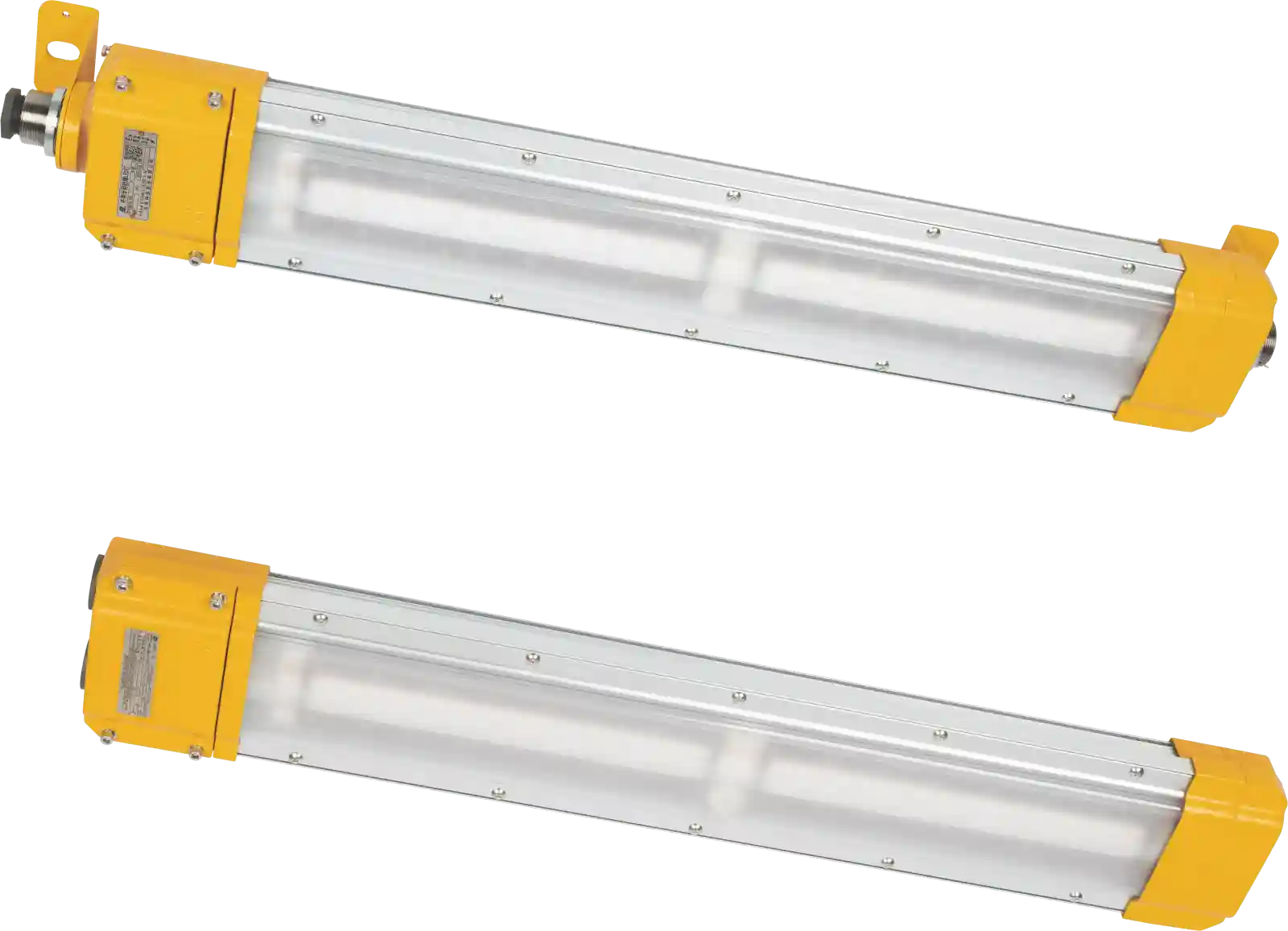
If your offshore wind cabin package includes mixed gas zones, a 50°C ambient, or both metric and NPT cable entries, it is worth confirming the derating curve, certification schedule, and cable entry layout before finalising the BOM. Send the cabin heat load and zone layout to gm*@***om.com and the team can confirm the matching air conditioner package and interface schedule.
Explosion Proof Air Conditioner Installation and Interface Requirements
Before I sign off an order, I check the cable entry schedule, mounting type, power supply, and control interface. Offshore wind cabins use metric cable glands on many IEC projects, but US EPC packages may require NPT. If the datasheet is silent, the wrong thread arrives and the site team either re-machines entries or adds adapters, both of which can degrade a flamepath. The same applies to condensation drainage. A unit installed inside a sealed shelter can route condensate into the same tray as power cables, which is an avoidable failure.
Cabin HVAC packages often mix metric cable glands with North American conduit after the EPC has already wired the platform. <NPT Explosion Proof Cable Glands for US & Middle East Projects> covers NPT entry requirements and why field adapters have to be checked against the hazardous area certificate.
Cable Entries and Electrical Interfaces
Confirm power voltage and frequency, control signal for start/stop, alarm contacts for temperature and refrigerant pressure, and the method of remote on/off. The marine package usually needs 380 to 415 V AC or 440 V AC depending on the wind farm service voltage. I have seen more delays from a missing 60 Hz specification than from the Ex certification, because the supplier has to verify the fan and compressor protection after the cabinet is already built.
Door Interlocks and Condensation Management
Door switches should stop the compressor when the enclosure opens. On an offshore cabin this protects maintenance crews and prevents condensation from immediate cold restart. Specify the restart delay and drain connection. A unit can meet the certificate and still create a puddle inside the shelter if the drain hose is not piped to the platform drainage system.
Confirming the Offshore Wind Cabin Cooling Package
Cabin cooling packages fail when the selection stops at capacity. The buyer who starts with the derating curve and the certificate conditions gets a unit that can actually run on the platform. The buyer who starts with price often inherits site modifications, corrosion repair, and commissioning delays later. If you are preparing a specification or comparing quotes for an offshore wind platform cabin, send your zone classification, maximum ambient temperature, cabin heat load, and cable entry standard to gm*@***om.com, or call +86 21 39977076 or +86 21 39972657 to confirm the scope before ordering.
Common Questions About Explosion Proof Air Conditioners for Offshore Cabins
Can a standard marine air conditioner be used in a Zone 2 offshore cabin if the cabin is sealed?
No. A standard marine air conditioner has no flameproof or increased safety design for the compressor, fan motor, control circuit, and cable entries, so it cannot be installed in a Zone 2 atmosphere without a valid hazardous area certificate. Even a sealed cabin can dilute gas only if the HVAC system itself is part of the ventilation analysis. The safe path is to use an IECEx or ATEX certified unit matched to gas group IIC and the platform temperature class, then confirm the cabin ventilation with the project’s hazardous area engineer.
Do explosion proof air conditioners for offshore wind cabins always require stainless steel enclosures?
It depends on the location and the cooling air path. A unit mounted outside with direct salt spray and uncoated aluminum fins will fail early, but a unit mounted inside a fire-rated shelter may only need coated aluminum plus 316L fasteners. For the condenser coil, the material and coating matter more than the outer cabinet. When the platform is in a C5 or CX coastal environment, ask for C5-M test data on the coil and fasteners. Stainless steel enclosures add cost; buy them only when the mounting location faces direct wave splash or persistent sea fog, not as a cosmetic upgrade.
How does temperature class affect air conditioner selection?
Many buyers assume a higher temperature class always means a better unit. It means a lower surface temperature, which is safer, but it also reduces the thermal headroom for the compressor and condenser. A T5 or T6 unit may force a larger coil or a lower ambient limit. The selection should match the gas group and temperature class to the maximum ambient in the project. If the platform sees 50°C and the gas is IIC, a T4 unit that can reject heat at that ambient may pass, while a T6 unit might need an oversized package. Match the class to the gas, not to a generic preference.
What documentation should be requested before shipment?
In the packages I review, the useful documents are the IECEx or ATEX certificate, the hazardous area schedule cross-check, the derating curve, the corrosion test summary, and the installation drawing with cable entries and drain points. Ask for the certificate’s conditions of use page, not just the certificate number. If the unit has a C5-M or CX coating claim, request the test report for the actual coil and fastener material. Also confirm the power supply voltage, frequency, and remote alarm contact before production. If you need these documents checked against an offshore wind specification, share your data sheet and zone layout with gm*@***om.com.
If you’re interested, check out these related articles:
Warom at 40th ADIPEC 2024
Choosing Temporary Construction Lighting: An Ultimate Safety Guide
Choosing IP68 Outdoor Junction Boxes: A Buyer’s Strategic Guide
Warom Spring Festival Groundbreaking Ceremony
Love And Respect For The Elderly, Warm Sunset Red
With over a decade of experience, he is a seasoned Explosion-Proof Electrical Engineer specializing in the design and manufacture of safety and explosion-proof products. He possesses in-depth expertise across key areas including explosion-proof systems, nuclear power lighting, marine safety, fire protection, and intelligent control systems. At Warom Technology Incorporated Company, he holds dual leadership roles as Deputy Chief Engineer for International Business and Head of the International R&D Department, where he oversees R&D initiatives and ensures the precise delivery of design documentation for international projects. Committed to advancing global industrial safety, he focuses on translating complex technologies into practical solutions, helping clients implement safer, smarter, and more reliable control systems worldwide.

Qi Lingyi