

Explosion proof distribution boxes on temporary construction sites rarely fail because the enclosure was weak; they fail because the site changes, the generator supply behaves differently from grid power, or a cable entry is modified after delivery. I have spent thirty years reviewing these assemblies before they reach excavation, coating, piling, and shutdown projects. The boards that survive repeated moves are specified from the start for the actual area classification, the actual load schedule, and the actual need to strip and reterminate cables. This article sets out the checks I apply when a temporary board crosses my desk.
Site Conditions That Change Explosion Proof Distribution Box Requirements
Temporary construction sites are often treated as ordinary locations until a coating operation, solvent wipe, gas-cutting bench, or LPG heater appears. Once a flammable gas or vapor may be present, the area must be classified under IEC 60079-10-1 or the project standard in use, and every electrical board inside that envelope must carry the appropriate protection method. A weatherproof enclosure with an IP66 rating is not enough, because water and dust protection does not contain an internal arc or exclude a flammable atmosphere.
The practical problem is that temporary site layouts shift weekly. A distribution box placed for the first phase may be relocated beside a temporary paint store for the second phase. I saw this on a coating project where a standard GRP panel was moved next to a solvent consolidation area. The atmosphere changed; the installed equipment did not. The board had to be swapped before commissioning could continue. That is why I now ask the site team for the full temporary layout before the first circuit is specified, not just the permanent building drawings.
Certification and Enclosure Protection for Temporary Power Boards
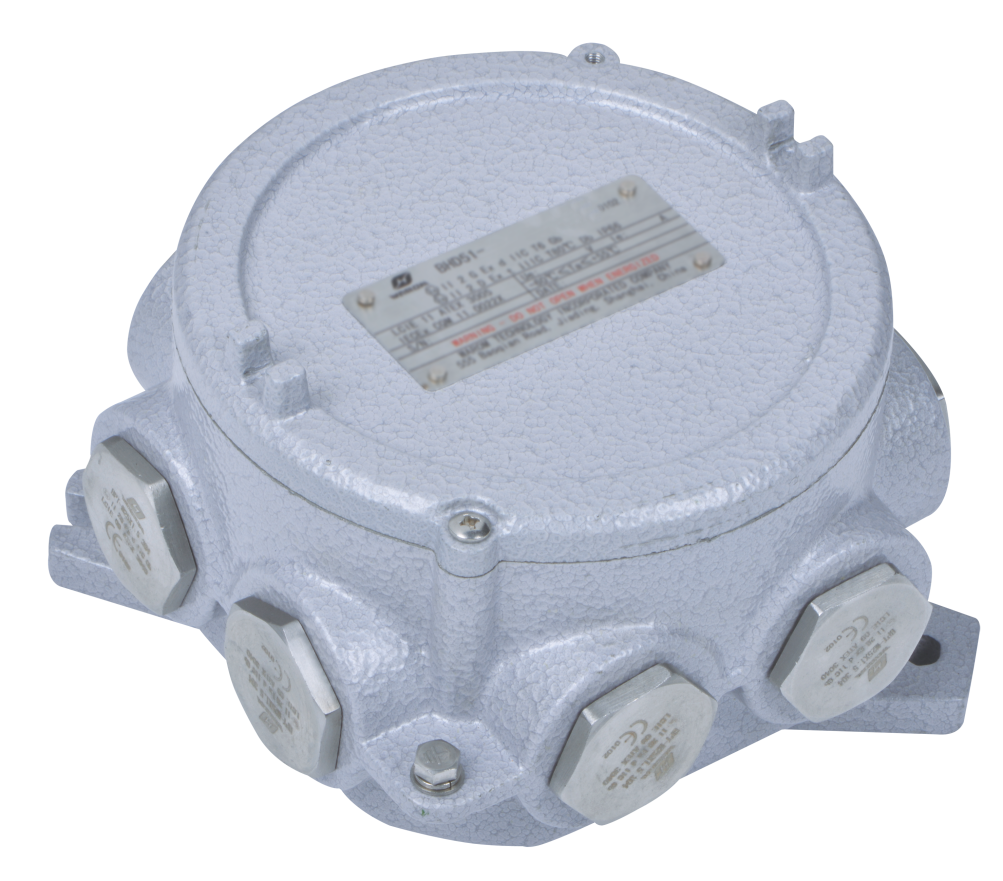
Two protection concepts usually apply to temporary distribution boards. Increased safety (Ex e) enclosures suit terminals and busbar compartments where arcing is not expected during normal operation. Flameproof (Ex d) chambers suit circuit breakers or switching devices that can arc when they operate. A factory-built board often combines both. Temporary boards shifted from phase to phase benefit from Ex e main enclosures with Ex d breaker chambers, because this keeps routine inspection simpler without putting the switching function inside a high-maintenance flame path.
Check the marking against the actual site standard. IECEx and ATEX are accepted across many international projects, while North American installations follow NEC Class and Division or Zone. The certificate should match the cabinet as delivered, including the exact gland entries and internal component list. If the site has coastal or high-humidity exposure, the material selection matters as much as the marking.
| Condition | Preferred Enclosure Material | Reason |
|---|---|---|
| Standard inland temporary site | Copper-free aluminum alloy | High mechanical strength and wide ambient range |
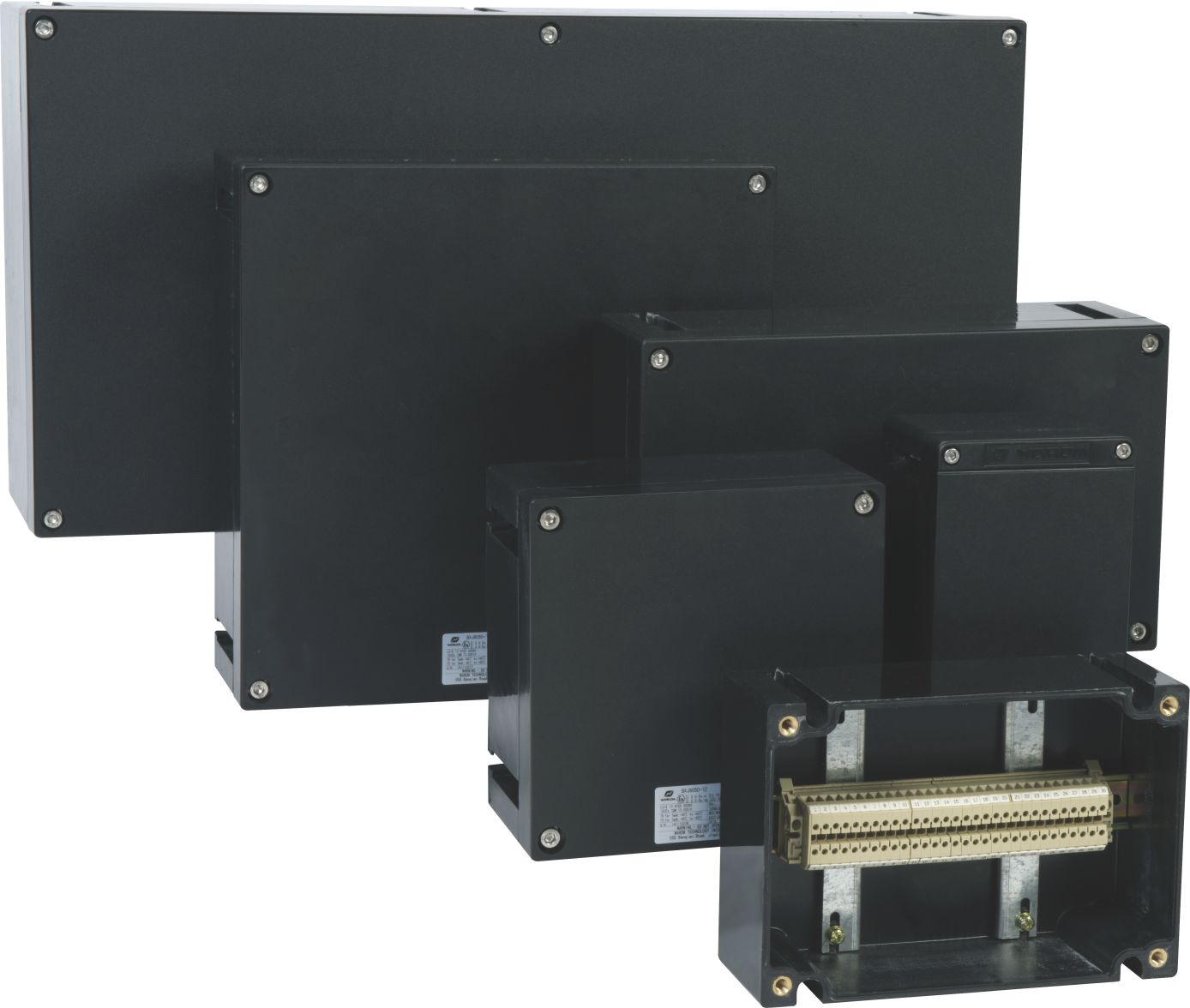
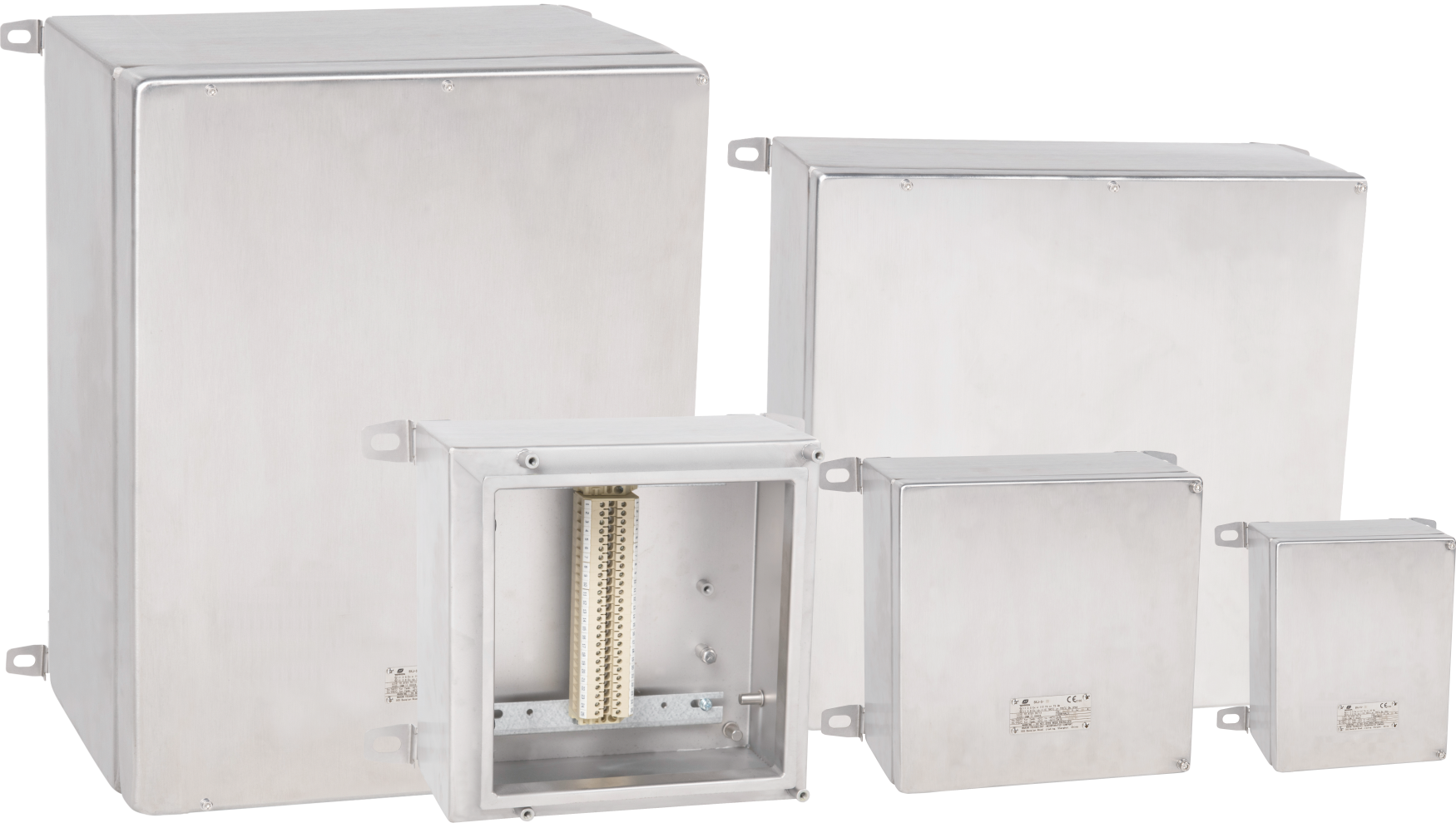
| Coastal or high-humidity phase | Stainless steel or GRP with stainless fasteners | Corrosion resistance during extended exposure |
| Frequent manual handling | GRP composite | Lighter weight and corrosion resistance |
What does IP66 actually protect on a temporary board?
IP66 keeps powerful water jets and dust out of the enclosure. It does not make the board explosion proof. On a construction site, the rating works when the covers are closed, the gaskets are seated, and the blanking plugs are installed. Once a cable gland is removed or a cover is left loose, the IP rating is lost even though the marking remains on the nameplate. Water entry into an Ex e terminal chamber then becomes a corrosion and tracking issue before it becomes an explosion risk.
How do IECEx and ATEX markings apply to a movable assembly?
The certificate covers the enclosure, the installed electrical components, and the cable entry configuration as a unit. When a board moves to another site, the certificate does not automatically transfer if the site standard changes. A global contractor may use an ATEX board on one project and find the next site requires a local approval or a different cable entry thread. I have seen submittals rejected because the board certificate did not list the factory-machined NPT entries the project required. That detail is cheaper to confirm before fabrication than to modify after delivery.
Right-Sizing Explosion Proof Distribution Boxes for Generator Loads
Grid-fed distribution boards usually see a predictable short-circuit current. Generator-fed temporary boards see far less fault current, and breaker coordination changes with it. A board sized only by running amps may trip slowly or not at all when a trailing cable is crushed. If a cable fault does not clear quickly, the enclosure has to contain the fault energy longer than the certificate assumed. That is the failure mode that concerns me most in temporary power.
I start with the one-line diagram, not the breaker list. The diagram shows whether lighting circuits, hand tools, dewatering pumps, and a small compressor all share one bus. Pumps and compressors add starting current; inverters and LED drivers add harmonic current. For temporary boards working with small generators, I prefer to keep motor branches separate from sensitive control circuits. This changes the busbar and breaker grouping, and it is much easier to do in a factory-built panel than in a field-modified box.
How many circuits should a temporary board have?
A board with too few circuits encourages site electricians to join two loads at one breaker. A board with too many circuits adds cost and unused entries. I ask for the final expected load schedule with one extra spare feeder per major function, not one spare per breaker. That spare covers the small dewatering pump or stair tower light that always appears after the first mobilization. On projects where we supply multiple boards, I match the largest motor branch to a 6 mm² terminal group and keep instrumentation cables on separate Ex e terminals.
Before finalizing the breaker schedule, one check is worth the time. If the generator supply has limited short-circuit current or the board mixes 110 V tools with 400 V motor feeders, the breaker curves and disconnection times need to be verified against the actual supply. Send the one-line sketch and generator data to gm*@***om.com before the panel layout is frozen.
Relocation and Cable Entry Checks for Explosion Proof Distribution Boxes
The biggest mechanical risk on a temporary construction site is not rain. It is being moved. Boards get lifted by excavator, dragged, and set down on uneven ground. Each move stresses cable glands, blanking plugs, and the internal earth links. I ask the site team to photograph the gland area before every move. A cracked gland or a shifted gland plate is much easier to see in daylight than after a night shift.
Grounding on temporary sites needs the same attention as the active conductors. The generator neutral and the distribution board earth must follow the project earthing system. An Ex e enclosure depends on reliable internal and external earthing, not just the line conductors. If the site uses TT earthing, a missing earth path can leave the board frame at a dangerous potential while the breakers operate normally. This is why every factory board we ship includes marked internal and external earthing points with stainless fasteners. The site must keep them torqued and clean after each move.
What should be checked after every move?
Check the gland area first, then the cover bolts, then the earth links, then the breaker operation. On a recent phased delivery I required the site electrician to open one test terminal and confirm continuity before the board was re-energized. It took minutes and caught a loose link after the second move. If a flameproof cover is dented or a flame path shows scoring, take the board out of service until the manufacturer can evaluate it. A flame path cannot be cleaned up with a file on site.
Factory-Built Assemblies Versus Field-Modified Boxes
Contractors sometimes buy an empty enclosure and fit breakers and glands on site to save time. That approach works for ordinary electrical panels. It does not work well for explosion proof distribution boxes. When the site drills an extra entry into an Ex e or Ex d enclosure, it changes the certified assembly. In a flameproof enclosure the flame path dimensions may no longer be valid; in an Ex e enclosure the creepage and clearances may change. Neither condition will be visible on a routine visual check.
I prefer to start with a standard modular board from the supplier, then have the supplier machine the additional entries, install the specified breakers, and reissue the documentation as a certified assembly. For a small board, that starting point may be a BXM(D)8050 illumination distribution box with a GRP Ex e enclosure, a 690 V rating, and a main bus up to 250 A. For harsher ambient conditions, the HRMD series distribution panels carry the same modular concept down to -60°C. This is how we supply temporary boards for phased construction projects. For the General Paint chemical plant upgrade, the site conditions had to be diagnosed first, then the enclosures and entries were selected around the customer’s real processing risks. That order of work is the opposite of buying a box and adapting the site to fit it.
If the project will need additional circuits or nonstandard entry threads, it is less expensive to fix those in the specification stage than to modify the enclosure after certification. <Technical Specification for Explosion Proof Distribution Cabinets: A Guide> covers how to structure the load schedule and entry schedule so the factory-built assembly matches the certified drawing.
| Factor | Field-Modified Box | Factory-Built Assembly |
|---|---|---|
| Entry machining | Changes certified flame path or clearances | Machined before certification |
| Documentation | Site sketches incomplete | Certified drawings and test reports |
| Breaker coordination | Limited to local stock | Matched to generator and load schedule |
| Later moves | May require re-evaluation | Built for planned relocation |
Specifying Explosion Proof Distribution Boxes for Procurement
Temporary site power becomes unreliable when the distribution board is treated as a generic rental item. I have watched projects pay for the mistake in delay rather than in component cost, usually because a field entry was drilled, a breaker was swapped, or the board was moved into a classified area without a review. A factory-configured explosion proof distribution box built to the circuit schedule and the site’s zone classification takes those decisions off the site. At WAROM, send the temporary load schedule, generator data, and zone classification to gm*@***om.com, or call +86 21 39977076 or +86 21 39972657. We can confirm which enclosure material, gland entries, and breaker groups should be factory-prepared before delivery.
Questions Site Teams Ask About Temporary Explosion Proof Distribution
Can a weatherproof distribution box be used if the area is only occasionally hazardous?
No, if the area is classified, only equipment with the appropriate protection method belongs inside it. A temporary site may look clear for weeks and then hold solvent vapors during a coating or sealing phase. The classification is not based on how often the hazard appears. It is based on whether a flammable atmosphere can occur under defined conditions. Once that condition exists, a weatherproof enclosure does not contain internal faults or prevent gas entry. The correct step is to classify the temporary works first, then select the distribution box for that envelope.
What is the difference between IP66 and explosion proof for temporary boards?
The usual mistake is to treat IP66 as a lower-grade explosion proof rating. IP66 addresses dust and water ingress. Explosion proof protection addresses internal ignition and hot surfaces reaching a flammable atmosphere. A board can carry both ratings because they control different things. On a construction site, IP66 stops rain and dust during normal use. The Ex protection contains an arc or limits surface temperature if a fault occurs. Losing the IP66 gasket does not automatically remove the Ex protection, but water inside can degrade terminals, and a loose cover can defeat both functions.
How quickly can a temporary distribution box be moved to a new area?
It depends on whether the new area has a different classification and whether the cable entry arrangement matches the new layout. If the board moves from an unclassified compound to a Zone 2 envelope, the protection method and documentation have to be reviewed before it is connected. If the move only changes the board position within the same classified envelope, the work may be limited to gland inspection and torque verification. The key is that no move should be treated as routine until the area classification at the new position is confirmed.
Do temporary construction boards need certified documentation?
On phased projects, the temporary board usually receives the same document check as permanent equipment. The certificate, the component list, and the entry schedule have to agree with the board as delivered. When a project passes through client hold points, missing documentation stops mobilization just as quickly as a failed inspection. For temporary equipment, I also keep a short move log with the date, the location, and the person who checked the glands and earth links. That record becomes the basis for deciding whether a board can be reused on the next phase or needs factory evaluation. If you are preparing a submittal for a phased project, share the zone classification and load schedule and we can confirm which documentation set applies before the board is delivered.
If you’re interested, check out these related articles:
Warom Technology Shines at 2025 ADIPEC: Empowering Global Energy Transformation with Innovative Technologies
PETROLEUM ENERGY SHOW 2024
WAROM at 2024 CASPIAN OIL AND GAS EXHIBITION
CANTON FAIR 2024
With over a decade of experience, he is a seasoned Explosion-Proof Electrical Engineer specializing in the design and manufacture of safety and explosion-proof products. He possesses in-depth expertise across key areas including explosion-proof systems, nuclear power lighting, marine safety, fire protection, and intelligent control systems. At Warom Technology Incorporated Company, he holds dual leadership roles as Deputy Chief Engineer for International Business and Head of the International R&D Department, where he oversees R&D initiatives and ensures the precise delivery of design documentation for international projects. Committed to advancing global industrial safety, he focuses on translating complex technologies into practical solutions, helping clients implement safer, smarter, and more reliable control systems worldwide.

Qi Lingyi