Weatherproof and explosion proof enclosures solve different problems, and confusing them is an expensive mistake. A weatherproof enclosure keeps rain, dust, hose water, salt spray and corrosive vapors away from electrical components. An explosion proof enclosure adds a certified protection method for a defined gas or dust hazardous area, so an internal fault or an external flammable atmosphere is less likely to become an ignition event. The decision starts with the area classification, not with the weather forecast. If the location is classified, a weatherproof box alone does not meet the installation requirement, even when its IP rating is high. If the location is ordinary but exposed, an explosion proof enclosure may add cost, weight and inspection work without adding the protection you need.
What Weatherproof and Explosion Proof Enclosures Protect Against
A weatherproof enclosure is built around environmental protection. It may carry a NEMA 250 or UL 50 rating such as NEMA 3R, 4 or 4X, or an IEC 60529 ingress rating such as IP65 or IP66. Those ratings describe resistance to rain, sleet, dust, hose-directed water or corrosion. They do not describe what happens if a terminal loosens, a relay arcs or a hot surface meets a flammable gas.
An explosion proof enclosure is built around ignition control. The protection method may contain an internal explosion and quench the flame through a controlled path, prevent sparks and hot surfaces, limit circuit energy, or restrict dust ingress and surface temperature. The enclosure must be certified for the zone, gas or dust group, temperature class and ambient conditions. It is not simply a heavier weatherproof box with a better gasket.
| Decision input | Weatherproof enclosure | Explosion proof enclosure |
|---|---|---|
| Location | Ordinary, non-classified area | Classified gas or dust area |
| Main job | Keep weather, dust, water and corrosion out | Prevent ignition or contain an internal explosion |
| Certification basis | NEMA 250, UL 50, IEC 60529 ingress rating | IEC 60079 series, ATEX, IECEx, NEC Articles 500 through 506 |
| Typical marking | NEMA 4X, IP66 | Ex d IIC T6 Gb, Ex tb IIIC T80°C Db |
| Cable entries | Standard glands if listed for the enclosure | Certified Ex glands, plugs and stoppers |
| Inspection focus | Gasket, latch, corrosion and water path | Flame path, fastener torque, entries, marking and certificate |
The two categories can look alike. A cast aluminum box with a gasket and stainless fasteners may appear robust enough for any site. Appearance is not a classification. The nameplate, certificate and marking decide what the enclosure is permitted to do.
How Hazardous Area Classification Changes the Answer
The first document to request is the area classification drawing. It defines where flammable gas, vapor, mist or combustible dust can occur, and how often. Without that drawing, a buyer is guessing. Weather conditions describe the environment around the enclosure. The classification describes the ignition risk around the enclosure. Both matter, but only one determines whether explosion protection is required.
Gas zones and dust zones
Gas hazardous areas are commonly divided into Zone 0, Zone 1 and Zone 2. Dust areas are commonly divided into Zone 20, Zone 21 and Zone 22. Zone 0 and Zone 20 describe the most continuous or long-lasting hazardous condition. A lower zone number does not mean any certified box will do. The equipment still has to match the gas or dust group, temperature class and ambient range.
A weatherproof enclosure may be appropriate in an ordinary area next to the classified boundary, but it does not become suitable because it is outdoors or because the hazardous zone is small. The boundary on the drawing controls the selection.
Gas group, dust group and temperature class
Gas groups such as IIA, IIB and IIC describe the ignition sensitivity of the gas. IIC covers the most easily ignited group and is the most demanding of the three. Dust groups such as IIIA, IIIB and IIIC describe the nature of the dust, including conductive dust. Temperature class controls the maximum surface temperature of the equipment relative to the ignition temperature of the gas or dust.
A common buying error is to select an enclosure with the right zone but the wrong group or temperature class. A T6 marking is more restrictive than a T1 marking for gas. A dust enclosure may need a specific maximum surface temperature and a defined dust layer condition. The certificate must cover the actual service condition, not only the general product family.
North American divisions and IEC zones
North American projects often use Class I, Division 1 or Division 2 for gas, and Class II, Division 1 or Division 2 for dust. IEC-based projects use zones. The systems are not interchangeable by description alone. A Zone 1 certificate does not automatically satisfy a Class I Division 1 requirement, and the reverse is also unsafe to assume. Use the classification system named in the project specification and confirm that the certificate is accepted for that system.
When a Weatherproof Enclosure Is the Correct Choice
A weatherproof enclosure is the correct choice when the location is ordinary and the main threat is environmental. Typical examples include outdoor pump skids in non-classified areas, water treatment panels, wastewater equipment, construction distribution boards, solar inverter rooms, telecom cabinets and food processing washdown areas without combustible dust. The enclosure still needs the right IP rating, material and mounting detail. Weatherproof does not mean generic.
Outdoor ordinary locations
For outdoor ordinary locations, start with water entry and UV exposure. A NEMA 4X or IP66 enclosure with a UV-stable finish and a properly designed drain or breather may be suitable. If the area receives direct hose washdown, IP66 may be adequate; if it receives high-pressure hot water, IP69K may be more relevant. If the enclosure is likely to be submerged, IP68 may be needed, but submersion ratings require installation conditions that match the test.
The enclosure also needs a cable entry plan. A weatherproof box with an ordinary gland and an unused knockout can leak. The gasket, door latch, hinge and mounting hardware must be suitable for the site. A stainless steel enclosure may resist corrosion better than a painted steel box, but it can also weigh more and cost more.
Corrosive and marine environments
Salt spray, deck washdown and coastal humidity push material selection beyond a basic painted enclosure. Stainless steel, GRP and properly coated aluminum each have a place. The tradeoff is not only purchase price. Stainless steel adds weight and may require isolated mounting to avoid galvanic corrosion. GRP is lighter and corrosion resistant, but its UV performance and impact resistance depend on the formulation. Aluminum is strong and thermally conductive, but the coating and fasteners must be specified for the environment.
A weatherproof marine enclosure is still not an explosion proof enclosure. If the deck area is classified, the enclosure needs the appropriate Ex certification in addition to corrosion resistance.
Cold climate and UV exposure
Cold climate adds ice load, low-temperature impact and condensation risk. A material that performs well at room temperature may become brittle or difficult to seal at low temperature. UV exposure can degrade gaskets, cable ties and polymer enclosures over time. The installation should include a drain or breather strategy where condensation is possible, and the gasket material should match the temperature range.
Cold climate adds ice load, low-temperature impact and condensation risk to otherwise ordinary outdoor enclosures. <Weatherproof Enclosures for Arctic Conditions: Design Essentials> covers design essentials for weatherproof enclosures in arctic conditions.
When Explosion Proof Construction Is Required
In a classified area, the applicable installation code normally requires a certified explosion protection method. The method must match the zone or division, gas or dust group, temperature class and ambient conditions. A weatherproof enclosure, even with IP66, does not satisfy this requirement. The question is not whether the box looks strong. The question is whether the certificate covers the installation.
Flameproof and increased safety
Flameproof protection, commonly marked Ex d, contains an internal explosion and cools the escaping flame through a flame path. Increased safety, commonly marked Ex e, prevents sparks and excessive surface temperature through design and construction. Intrinsically safe protection, Ex i, limits the energy in the circuit rather than relying on the enclosure to contain an explosion. Each method has different wiring, inspection and maintenance rules.
A project may use a flameproof junction box, an increased safety terminal box and an intrinsically safe sensor circuit in the same plant. They are not interchangeable. The enclosure marking and certificate must match the protection concept used in the design.
Dust ignition protection
Dust protection is not a lesser version of gas protection. Combustible dust can settle on an enclosure, enter through damaged gaskets and create a hot layer. Dust ignition protection, commonly marked Ex t, controls dust ingress and surface temperature. The rating may include a maximum surface temperature and a dust group. A enclosure that is suitable for gas may not be suitable for conductive dust, and a dust-rated box may not be suitable for a gas zone.
The installation also matters. A dust-rated enclosure mounted where dust cannot accumulate behaves differently from one buried under a dust layer. The mounting position, maintenance access and cleaning method belong in the selection review.
The enclosure is only one part of the system
A certified enclosure can be compromised by an uncertified cable gland, an ordinary breather, a missing blanking plug or a damaged gasket. The certificate covers the enclosure and the entries defined in its documentation. If the site adds a different gland or drills an extra hole, the protection concept may no longer be valid.
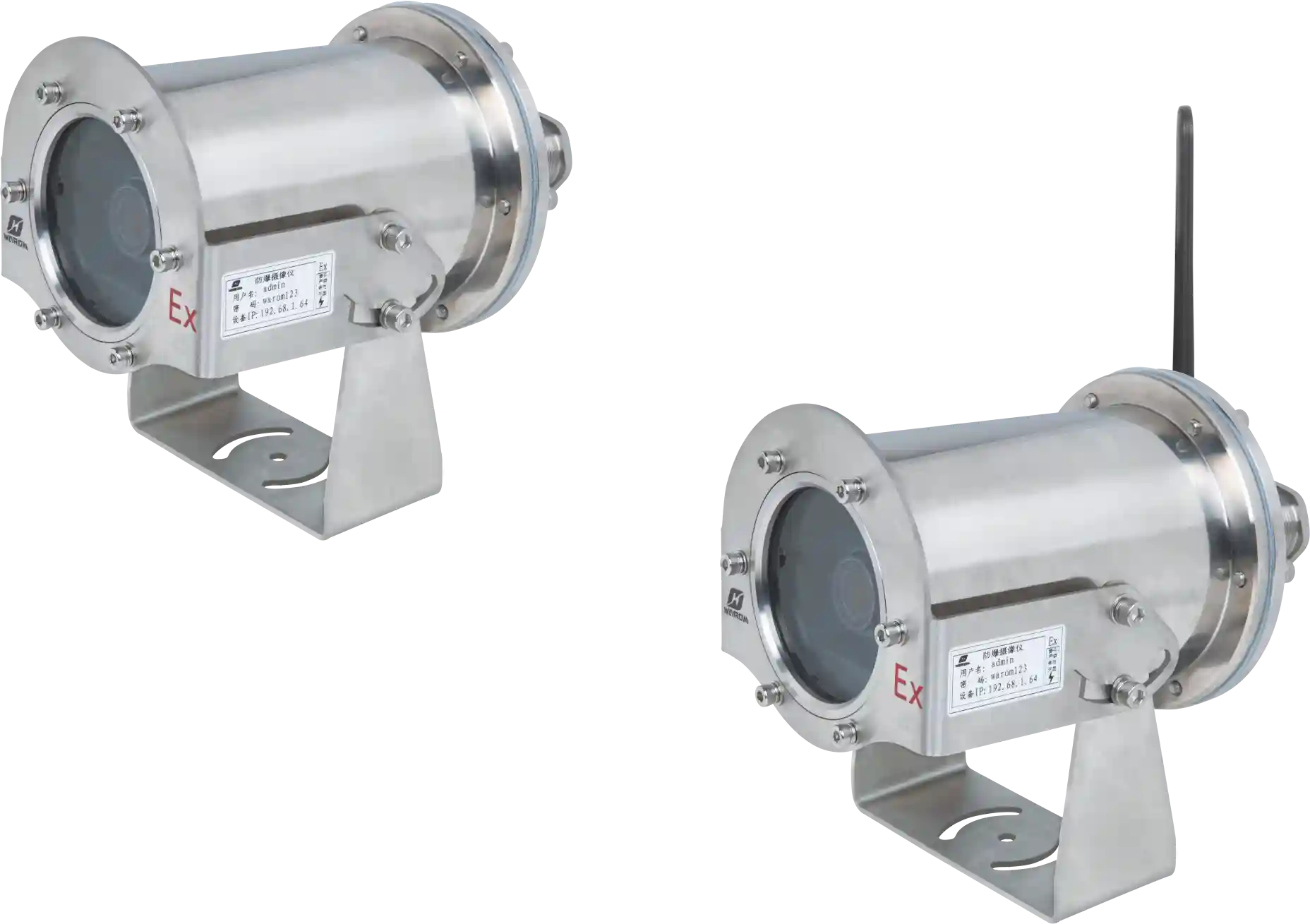
The same logic applies to luminaires, cameras, terminal boxes and control stations. The enclosure, cable entry and internal device form a system. A flameproof junction box with the wrong gland is a weak point, even if the box itself is correctly marked. A hazardous area camera needs a certified housing and cable entry, not only a weatherproof dome.
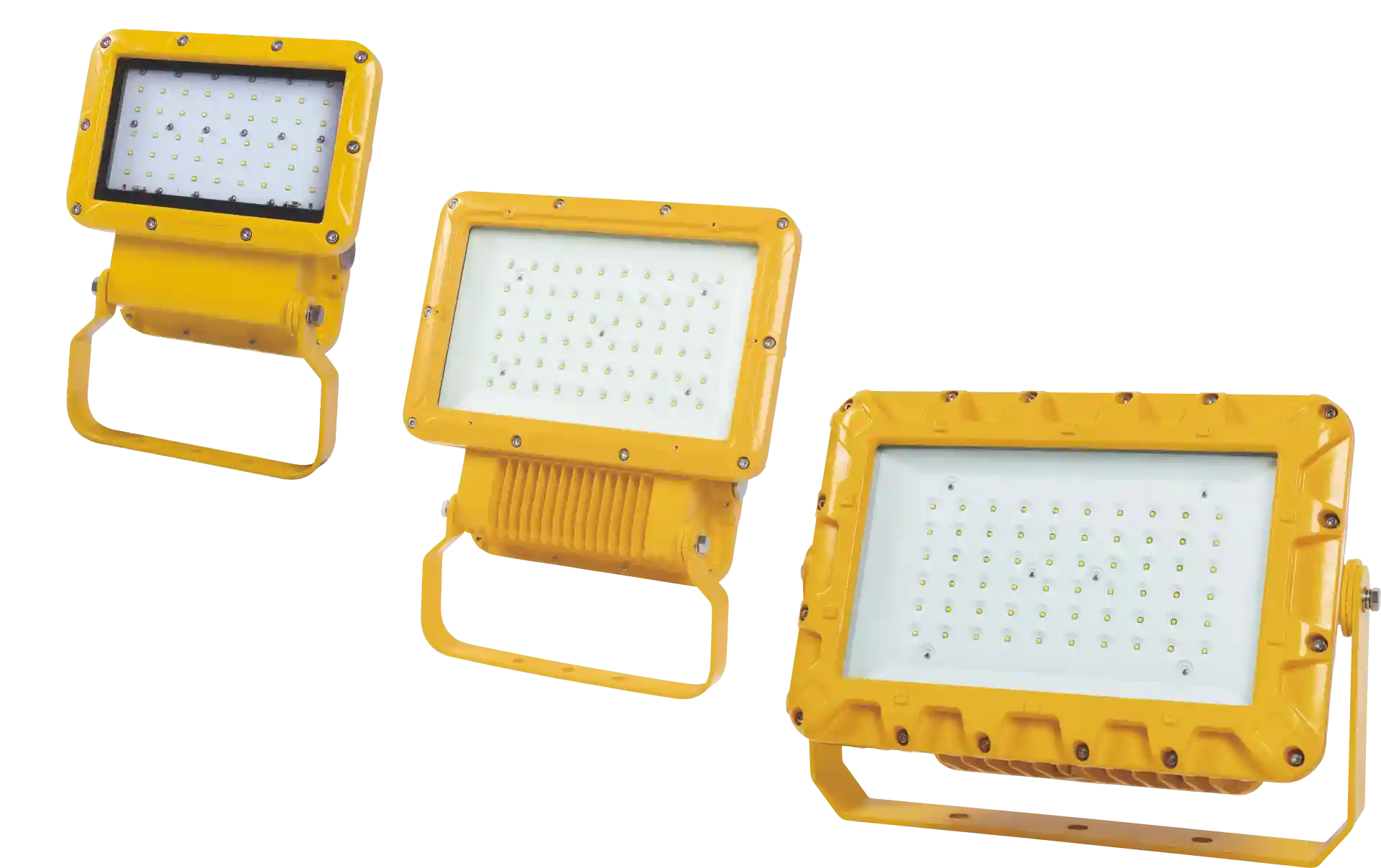
Hazardous area lighting is part of the same enclosure and cable-entry system as the junction boxes. <Explosion Proof LED Floodlights: Enhancing Safety and Efficiency> covers explosion proof LED floodlights and their safety and efficiency considerations.
For monitoring equipment, the housing and cable entry need the same review. A camera may be rated for the gas group, but the Ethernet cable, gland and connector also need to be suitable for the area. The certification scope should list the permitted entries and accessories.
In a gas processing project in Uganda, the Tilenga development combined wellpads, a central processing facility and pipelines, some inside Murchison Falls National Park. WAROM supplied explosion-proof lighting and electrical systems for those areas, and the project reported zero safety incidents while meeting its schedule and environmental requirements. The lesson is not that every site needs the same hardware. The lesson is that the hazardous area boundary, cable entries and equipment schedule have to be coordinated before shipment.
What IP Ratings and Material Data Do Not Tell You
An IP rating describes ingress protection, not ignition protection. IP66 means dust tight and protected against powerful water jets. IP68 means suitable for continuous immersion under defined conditions. IP69K means protected against high-pressure, high-temperature washdown. None of those ratings describes gas grouping, temperature class or flame containment.
A higher IP rating is not a safer explosion protection rating. An IP68 weatherproof enclosure can still be unsuitable in Zone 1. An explosion proof enclosure may be IP66, but its Ex marking is what addresses the hazardous area. Buyers should read both ratings separately. The IP rating answers the environmental question. The Ex certificate answers the ignition question.
Material data has a similar limit. A stainless steel grade may resist corrosion, but the enclosure still needs a certificate for the area. A GRP enclosure may be lightweight and corrosion resistant, but its UV stability and impact performance depend on the formulation and the installation. A polycarbonate enclosure may be tough and UV stabilized, but chemical exposure and low-temperature impact can change the choice.
Salt spray and deck washdown push material selection beyond a painted steel box. <Explosion-Proof Marine Products for Drillships & Jack-Up Rigs> covers explosion-proof marine products for drillships and jack-up rigs.
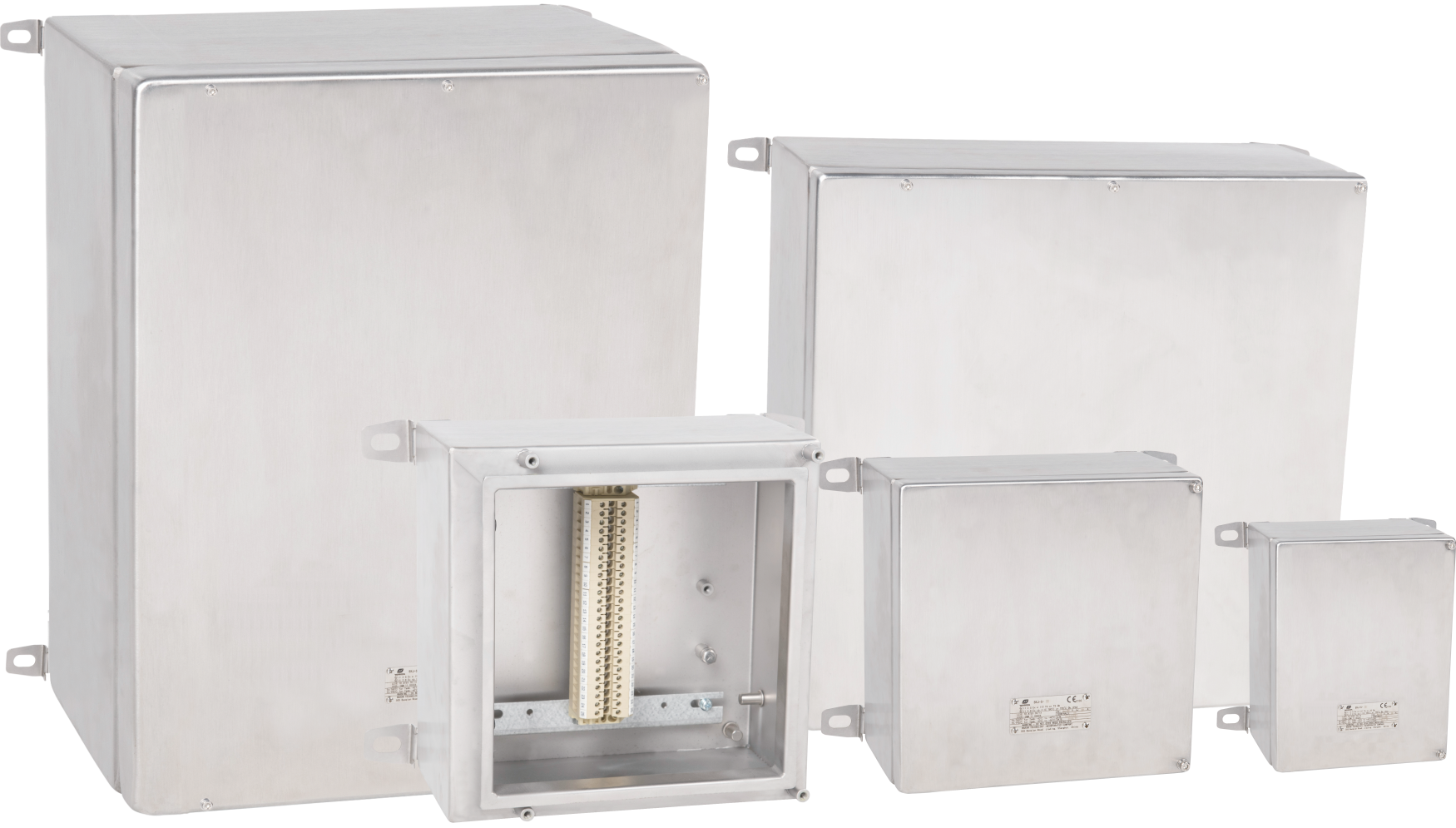
Stainless steel terminal boxes are often selected for corrosive or marine locations because the enclosure and fasteners can resist salt-laden air. The tradeoff is weight, cost and the need to protect against galvanic coupling with adjacent steel structures. GRP terminal boxes are lighter and can be corrosion resistant, but the mounting and UV exposure still need review. Aluminum boxes are common for flameproof construction because they are strong and can be cast into complex shapes, but the coating and fastener material must suit the site.
Certification and Cable Entry Checks Before Ordering
A compliant enclosure package is more than a box with a certificate. The following checks catch most specification gaps before the order is placed.
- The nameplate marking matches the area classification, gas or dust group and temperature class.
- The certificate number and scope cover the actual enclosure size, material and entry configuration.
- The ambient temperature range covers the site, including solar gain and winter low temperature.
- The IP rating matches the cleaning method, washdown pressure and immersion exposure.
- Cable entries, glands and blanking plugs are certified for the enclosure and are included in the scope.
- The enclosure material and fasteners suit the corrosion, UV and impact conditions.
- The documentation includes the certificate, declaration, outline drawing, torque values and installation instructions.
The cable entry check deserves particular attention. A certified junction box with an ordinary gland is not a certified installation. An unused entry left open or closed with a plastic plug can fail the ingress test and the explosion protection concept. The gland must match the cable type, armor, diameter and entry thread. The installer also needs the correct torque and a way to verify it.
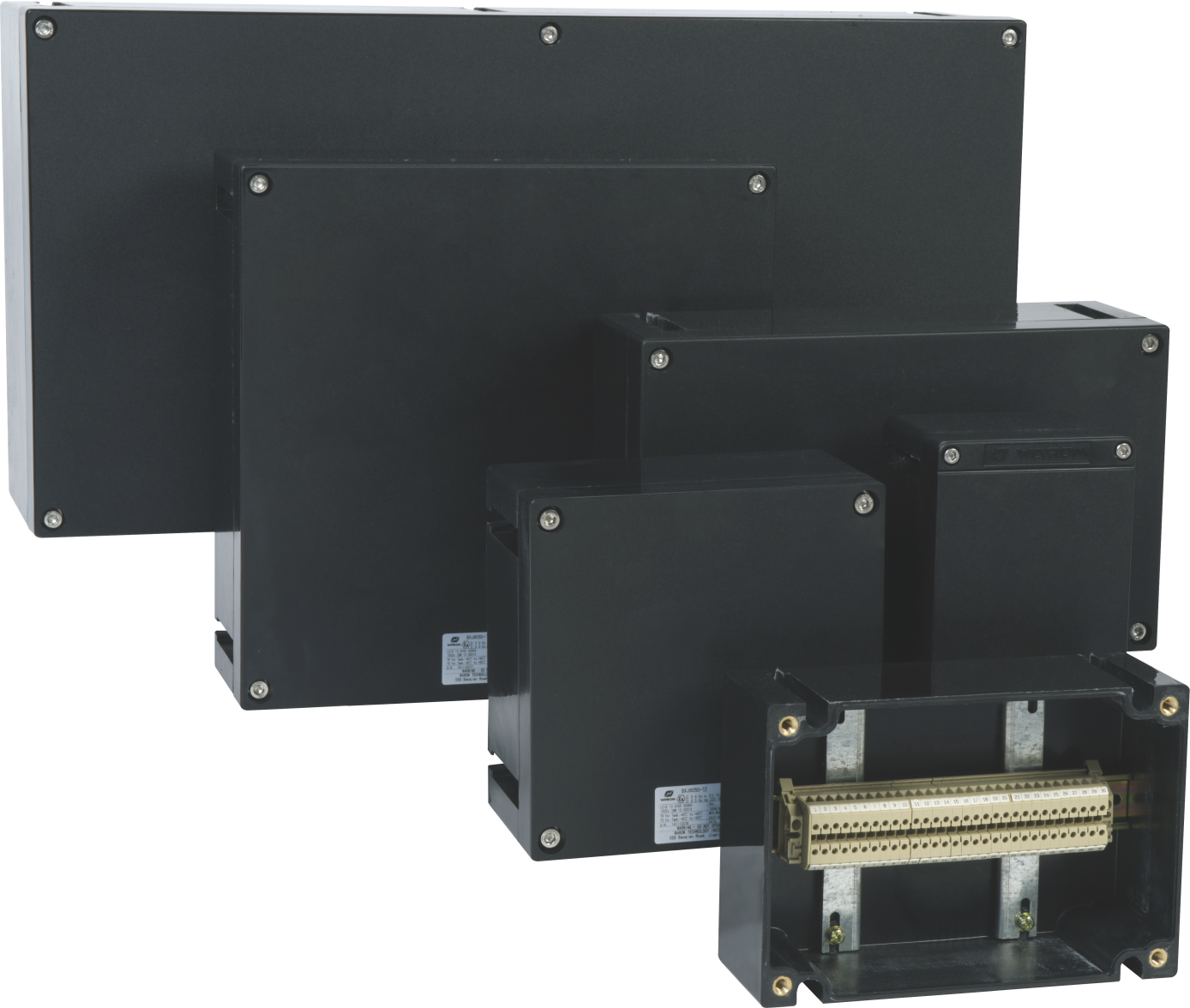
For terminal boxes, the internal terminal count, cross section and rated current must match the circuit schedule. A box with enough physical space can still be wrong if the terminals cannot accept the cable or if the current rating is too low. The enclosure selection and the terminal selection belong in the same review.
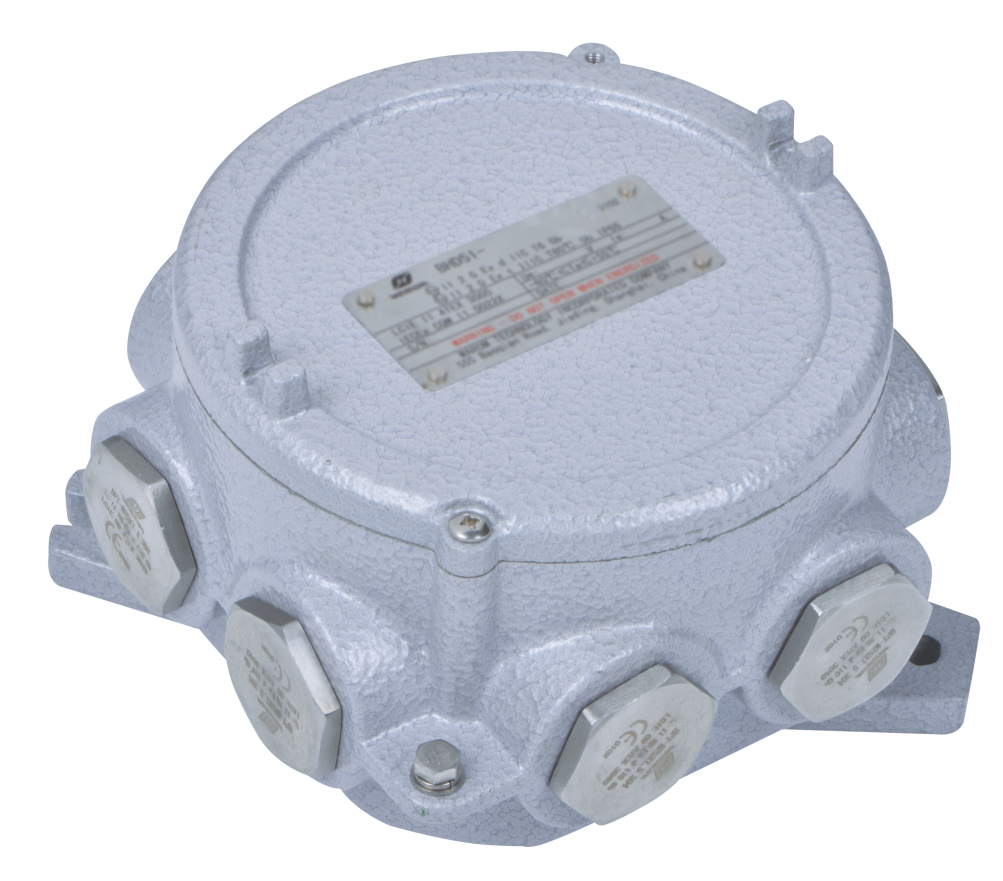
Junction boxes add another check: the flame path and fastener condition must remain intact after installation. A painted flame path, a missing fastener or a damaged gasket can invalidate the protection. The maintenance team should know which surfaces must not be painted, which fasteners must be torqued and which spare parts are certified for the enclosure.
A Practical Decision Sequence for Your Site
Use this sequence before requesting quotes. It keeps the environmental and hazardous area decisions separate, then joins them at the specification stage.
- Confirm whether the location is classified. Start with the area classification drawing, not the weather exposure. If the area is ordinary, record that conclusion and move to the environmental checks.
- Record the zone or division, gas or dust group and temperature class. Include the ambient temperature range and any dust layer condition. These fields determine which certificates can be considered.
- Define the environmental load. Record UV exposure, salt spray, washdown pressure, temporary immersion, ice load, condensation and chemical exposure. These fields determine the IP rating, material and gasket choice.
- Select the protection concept and enclosure material together. Do not choose a stainless steel weatherproof box for a classified area unless the enclosure also carries the required Ex certification.
- Match the cable entries and glands. Confirm cable type, armor, diameter, thread and entry direction. Include certified blanking plugs for unused entries.
- Verify the certificate, nameplate and documentation. Check that the certificate scope covers the actual configuration, not only a similar catalogue item.
- Plan inspection and spares. Record torque values, gasket part numbers, fastener part numbers and the inspection interval for flame paths, seals and corrosion.
The output of this sequence is a short specification that a supplier can quote against. It separates the weather question from the explosion question, which is exactly where most errors begin.
Get the Enclosure Specification Checked Before Ordering
Send the area classification drawing, zone or division, gas or dust group, temperature class, ambient range, cable entry schedule, required IP rating and preferred material to gm*@***om.com or call +86 21 39977076. WAROM Technology Incorporated Company can review the enclosure and cable-entry scope against those inputs and confirm the documentation needed before order. If the area is ordinary, state that clearly; if it is classified, include the classification boundary and the equipment schedule. That information turns a generic enclosure quote into a specification that can be checked.
FAQ
Do I need an explosion proof enclosure if the area is outdoors and wet?
Not by weather alone. Outdoor equipment needs a weatherproof enclosure with the right IP and corrosion rating. If the same outdoor location is classified for flammable gas or combustible dust, the enclosure also needs a certified explosion protection method. Rain, hose water and salt spray are environmental loads. They do not replace the area classification. Check the classification drawing first, then select a weatherproof or explosion proof enclosure that matches both the environment and the hazardous area requirements.
Can I use a weatherproof enclosure inside a hazardous area if nothing normally sparks?
No. Normal operation does not define the protection requirement. A fault, loose terminal, insulation failure or hot surface can create an ignition source. The applicable installation code normally requires certified equipment for the zone, gas or dust group and temperature class. A weatherproof enclosure may keep water out, but it is not certified to control ignition. Use a certified protection method and confirm that cable entries, glands and unused openings are part of the certified system.
Does a higher IP rating make an enclosure explosion proof?
No. The IP rating describes ingress protection against solids and water. It does not describe ignition protection, gas grouping or surface temperature. An IP66 or IP68 weatherproof enclosure can still be unsuitable in a classified area. Explosion proof equipment carries a separate Ex marking and certificate. When comparing offers, check both ratings: the IP rating for the environment and the Ex certification for the hazardous area. A higher second IP digit does not upgrade the explosion protection.
What information should I send for an enclosure quote?
Send the area classification drawing, zone or division, gas or dust group, temperature class, ambient temperature range, indoor or outdoor location, corrosion or washdown exposure, cable entry schedule, required IP rating and preferred enclosure material. Also state whether the enclosure will contain terminals, controls, a camera, a luminaire or another device. These details determine the protection concept, certificate scope, cable glands and documentation. Without them, a supplier can only quote a generic box, not a compliant enclosure package.
If you’re interested, check out these related articles:
WAROM Explosion-proof 2023 Summer Marketing Conference a Complete Success
Warom at OIL&GAS ASIA
With over a decade of experience, he is a seasoned Explosion-Proof Electrical Engineer specializing in the design and manufacture of safety and explosion-proof products. He possesses in-depth expertise across key areas including explosion-proof systems, nuclear power lighting, marine safety, fire protection, and intelligent control systems. At Warom Technology Incorporated Company, he holds dual leadership roles as Deputy Chief Engineer for International Business and Head of the International R&D Department, where he oversees R&D initiatives and ensures the precise delivery of design documentation for international projects. Committed to advancing global industrial safety, he focuses on translating complex technologies into practical solutions, helping clients implement safer, smarter, and more reliable control systems worldwide.
Qi Lingyi