

Cast iron explosion proof distribution boxes earn their place when the enclosure must hold a flame path, survive repeated mechanical impact, and accept deep machined entries without losing dimensional stability. The decision is not a default material choice. In our project work, cast iron tends to win when the distribution point sits near moving equipment, heavy pipework, or areas where an aluminum or glass-reinforced enclosure would be dented or cracked. The following guidance separates the installation conditions where cast iron is justified, the situations where it becomes a liability, and the specification details that decide the field outcome.
Why Cast Iron Explosion Proof Distribution Boxes Are Specified for Hazardous Area Power Distribution
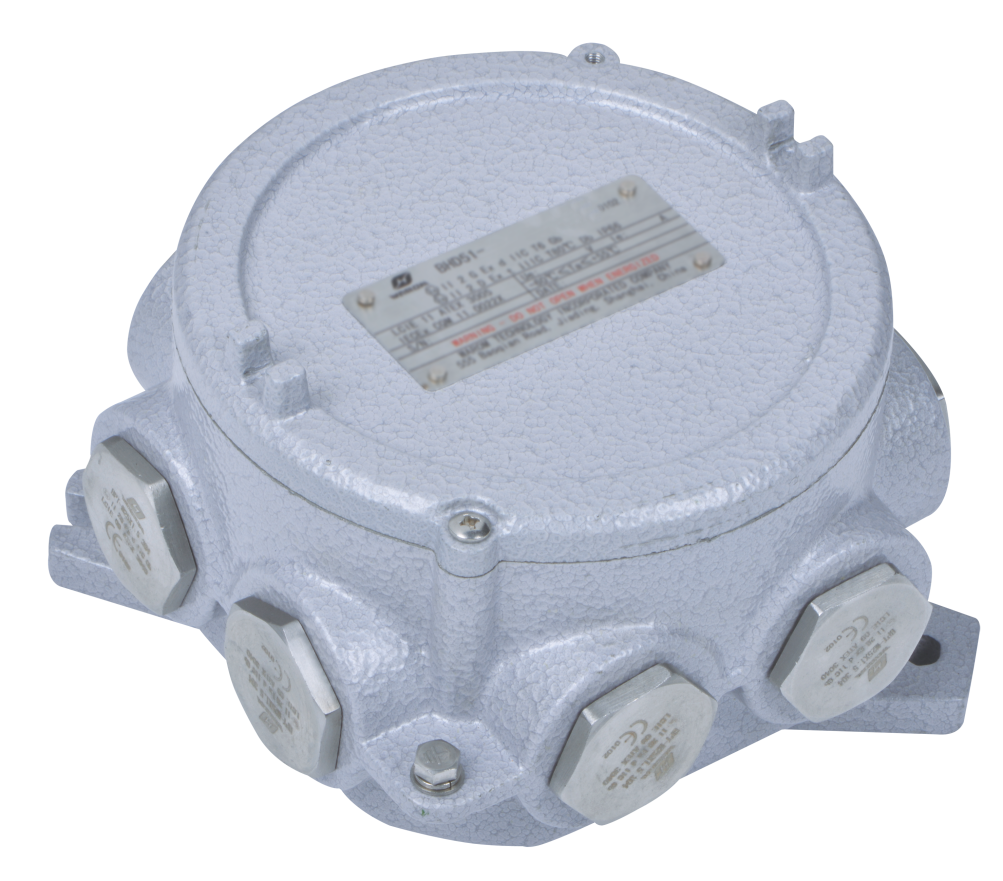
Cast iron has been a standard flameproof enclosure material because it can be cast into deep, stable flame paths and machined for threaded entries. In an Ex d enclosure, an internal explosion has to be contained and cooled before hot gases reach the outside atmosphere. The flange gaps and spigot joints must stay within certified limits after machining and after years of site handling. Cast iron holds those dimensions well under impact and thermal cycling, which is why it still appears in distribution boxes for process skids, compressor stations, and plants with frequent mechanical activity.
The tradeoff is weight and corrosion. A cast iron distribution box is heavier than a comparable aluminum or GRP enclosure. That weight is not a small detail when the box mounts on a column, a cable tray, or a process pipe. Corrosion protection depends on the coating system, and once the coating is damaged, exposed thread or flange surfaces rust. For indoor process areas with impacts but low salt exposure, cast iron works well. For offshore and coastal sites, we have moved toward stainless steel or GRP designs because the corrosion risk outweighs the mechanical benefit.
The base requirements for a flameproof enclosure come from IEC 60079-0 and IEC 60079-1, with EN 60079 versions used for ATEX certification. A cast iron distribution box should be evaluated against these requirements, not against a material preference alone.
Which Conditions Make Cast Iron the Right Distribution Box Material
Material selection should follow the site exposure, not the reverse. The table below is the decision sequence we use when a project asks whether cast iron should replace aluminum or GRP.
| Material | Mechanical behavior | Corrosion risk | Entry machining | Weight |
|---|---|---|---|---|
| Cast iron | High impact resistance; stable flame paths | Needs heavy coating; exposed threads and flanges can rust | Deep NPT or metric threads hold well | Heavy |
| Copper-free aluminum | Moderate impact resistance | Good with powder coating; avoid direct chemical or salt attack | Standard metric or NPT entries | Light |
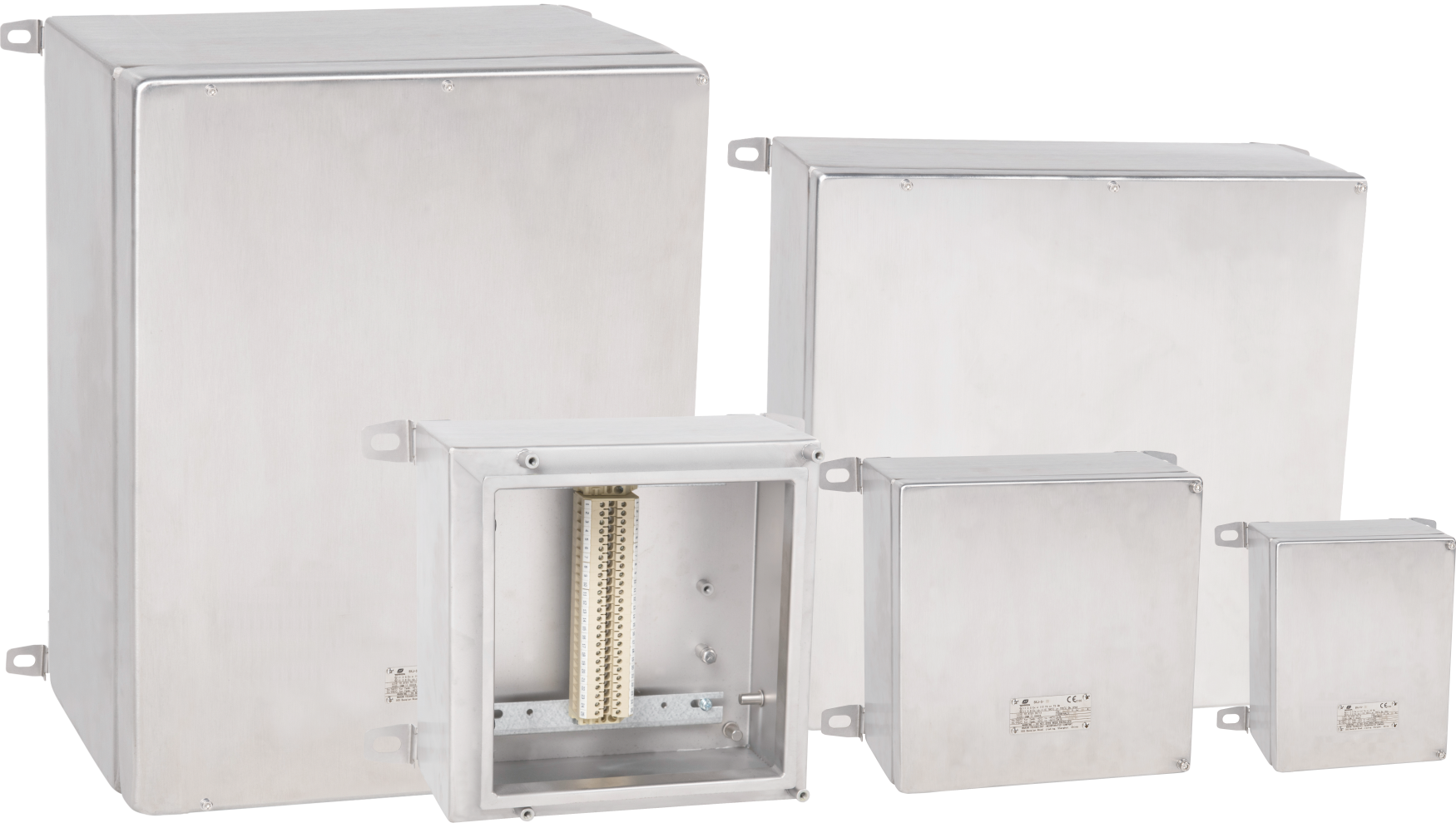
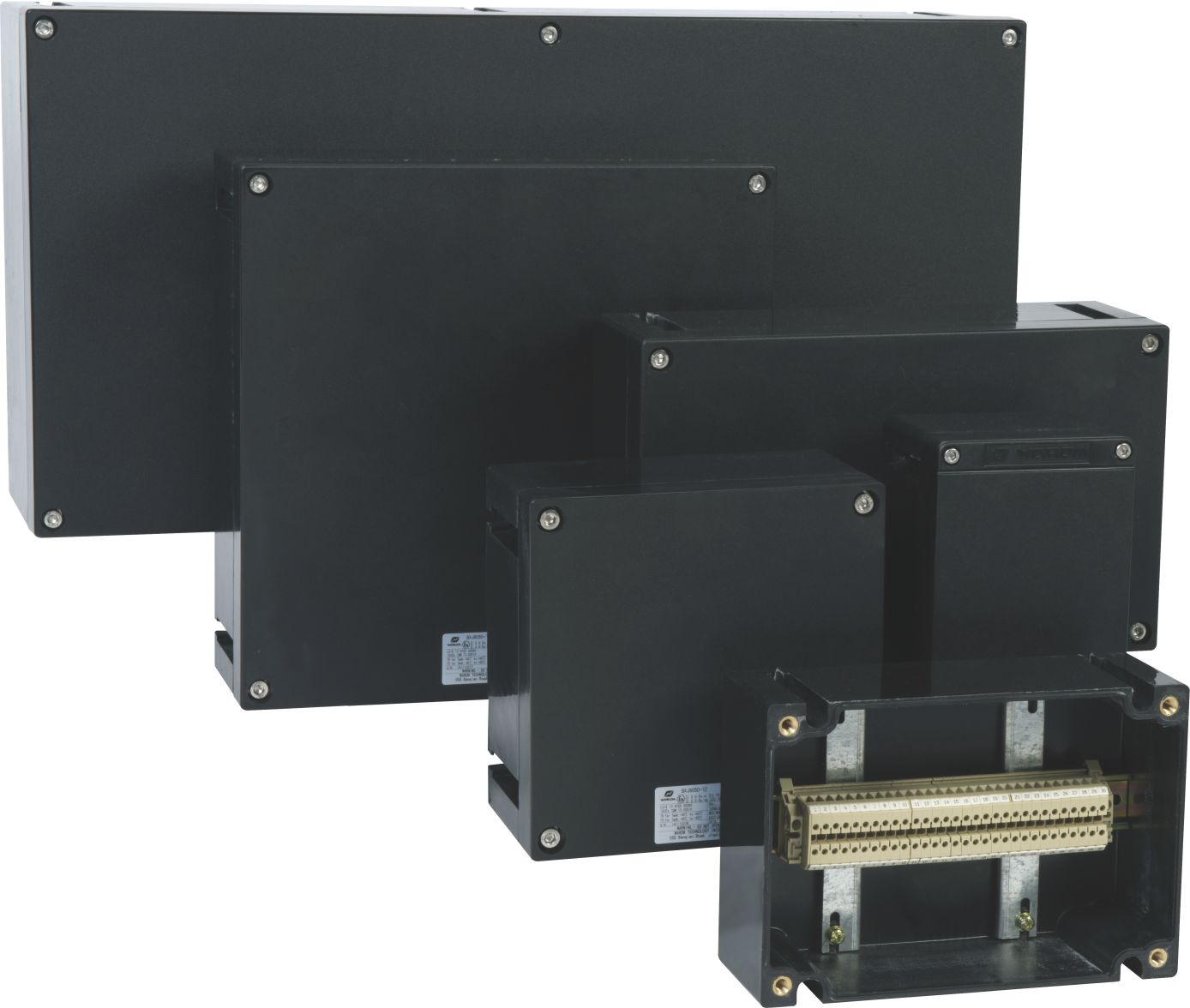
| GRP | Good nonmetallic impact resistance; no machined flame path | Excellent in chemical and coastal exposure | Limited to pre-moulded entries | Very light |
| 316 stainless steel | High impact resistance; higher cost | Best for saltwater and washdown | Machined entries hold well | Medium to heavy |
Cast iron becomes the right choice when the enclosure will be hit, walked on, or used near heavy equipment. It also makes sense when the project already has a maintenance regime for painted steel and the installation is indoors or under a shelter. If the project cannot control corrosion, do not select cast iron just because an old specification lists it.
What Makes Cast Iron the Wrong Distribution Box Specification
Cast iron becomes a liability in four situations we see regularly in project reviews: salt-laden atmospheres, overhead mounting, pre-moulded or plastic cable entry requirements, and maintenance teams that do not repair coating damage. A chipped flange or a corroded thread is not a cosmetic issue in an Ex d enclosure. It changes the flame path dimension and can invalidate the certification.
At a chemical plant in Mexico, we replaced conventional distribution and junction equipment with explosion-proof enclosures after a site survey found flammable gas and dust exposure. The material decision was not based on one product. We separated the areas with mechanical abuse from the areas with corrosive fumes, and specified the enclosure material accordingly.
For the Tilenga project in Uganda, remote wellpads and a central processing facility required distribution and lighting equipment that could handle site stress while keeping certification clear. The enclosure selection followed the same pattern: match the material to the worst case at each location, not to a global material preference.
Overhead mounting is another trigger to avoid cast iron. A cast iron distribution box suspended on a cable tray or bracket adds mass, and the installation team may need temporary supports or two-person lifting. If the enclosure is large, that weight makes maintenance on a ladder or platform more difficult. In those locations, aluminum or GRP often meets the same electrical duty with far less handling risk.
How to Specify Cast Iron Explosion Proof Distribution Boxes Correctly
The specification fails when it stops at material and certification. We have seen purchase orders for cast iron distribution boxes arrive with no cable schedule, no fault level, and no mounting details. The enclosure is then configured from assumptions, and the site team has to modify entries or add adapters after delivery.
- Define the hazardous area classification and gas group first. The enclosure marking, temperature class, and protection concept come from this.
- List every incoming and outgoing circuit with conductor size, current rating, and gland type. Cast iron boxes need entry holes machined or drilled before final coating.
- Confirm the fault current and protection devices. Distribution boxes with breakers or fuses must be sized for the available fault level and rated current.
- State the mounting arrangement and access direction. A cast iron box on a plinth, skid, column, or wall changes the entry layout and the hinged opening requirements.
- Request the certificate pack early: IECEx or ATEX certificates, declaration of conformity, and general arrangement drawing. Do not accept a generic data sheet.
What certification data matters most
Ask for the certificate number, the exact enclosure model, the gas group, temperature class, and the permitted ambient range. The certificate should match the drawing revision. If the vendor changes the entry arrangement or adds windows and operators, the certification must still cover that configuration.
What entry and gland details decide the final design
Cast iron distribution boxes are often paired with NPT entries on projects in the US and Middle East. The gland body, sealing ring, and thread form must be compatible with the enclosure entry and the cable type. For armored cable, the gland has to terminate the armor and maintain the flame path.
Cast iron enclosures are often paired with NPT entries on projects in North America and the Middle East. <NPT Explosion Proof [Cable Glands](https://www.waromgroup.com/product-category/explosion-proof-cable-glands/cable-glands/) for US & Middle East Projects> covers why thread form and gland certification need to be locked before the enclosure drawing is approved.
If your project uses cast iron distribution boxes with NPT entries in a US or Middle East installation, confirm the gland flame path and thread form before you lock the bill of materials. Send your cable schedule to gm*@***om.com and we will check the gland and enclosure interface against the certification drawings.
What temperature class and load rating must match the site
Select the temperature class from the gas or dust present. A cast iron enclosure with a high-power breaker may need a larger surface area or a derated load to stay within the temperature class for the gas. The current rating and busbar arrangement should leave enough room for wiring and heat dissipation without violating the certified temperature limits.
What to Confirm Before You Commit to a Cast Iron Distribution Box
A cast iron distribution box is not a simple material substitution. If the flame path, entry schedule, gland compatibility, and corrosion protection are treated as separate decisions, the result is an enclosure that is certified on paper but difficult to install and maintain in the field. We have reviewed enough project specifications to see the same pattern: the material is selected first, and the electrical and mechanical details are sorted out after the order is placed.
Send your hazardous area classification, load schedule, cable list, and mounting location to the Warom engineering team, and we will confirm the enclosure material, entry arrangement, gland type, temperature class, and certification path before quotation. Email gm*@***om.com or call +86 21 39977076 / +86 21 39972657 with your project drawings and quantities.
What Buyers Ask About Cast Iron Explosion Proof Distribution Boxes
Does the enclosure material change the explosion proof certification?
The certification concept does not change with the enclosure material. A cast iron distribution box and an aluminum distribution box must still pass the same flameproof or increased-safety tests and carry the same gas group and temperature class markings. The material changes mechanical strength, flame path stability, corrosion behavior, and weight. Buyers should compare the certificate drawing to the actual enclosure configuration rather than assume that cast iron gives a higher safety level. The safest specification is the one that matches the certified assembly, regardless of material.
Can cast iron distribution boxes be used only in Zone 1?
Many buyers assume cast iron is only for Zone 1 or Ex d switchgear. The material choice is separate from zoning. Cast iron enclosures can be used in Zone 1, Zone 2, and dust zones as long as the certified protection concept and markings match the location. The more important question is the mechanical environment. If the box sits in a corrosive Zone 2 area with little impact risk, GRP or aluminum may be a better choice. Cast iron is selected when impact, threaded entries, and a heavy-duty enclosure justify the weight and corrosion maintenance.
When does stainless steel make more sense than cast iron?
It depends on the exposure and mounting position. Stainless steel is the stronger choice when saltwater, washdown, or constant humidity are present, especially offshore or on marine vessels. Cast iron can perform in those environments only with an intact high-quality coating and a maintenance program that repairs damage quickly. If the enclosure is overhead or on a cable tray, the lighter weight of aluminum or GRP may reduce installation and maintenance risk. If the installation is indoors, mechanically exposed, and not subject to salt, cast iron remains a sound choice.
How long does a cast iron distribution box with custom entries take?
In projects we have supplied, the lead time for an explosion proof distribution box with custom entries usually depends on the entry schedule and certificate drawing approval. A standard configuration can move quickly once the model and current rating are confirmed. Custom entry layouts, special coatings, or additional windows and operators add drawing time. We usually ask clients to freeze the cable list before the enclosure drawing is issued. Send your entry schedule and zone classification to gm*@***om.com and we will confirm the production lead time and certificate availability.
If you’re interested, check out these related articles:
Day 1 of EGYPT ENERGY SHOW 2025
Warom at 40th ADIPEC 2024
Choosing IP68 Outdoor Junction Boxes: A Buyer’s Strategic Guide
With over a decade of experience, he is a seasoned Explosion-Proof Electrical Engineer specializing in the design and manufacture of safety and explosion-proof products. He possesses in-depth expertise across key areas including explosion-proof systems, nuclear power lighting, marine safety, fire protection, and intelligent control systems. At Warom Technology Incorporated Company, he holds dual leadership roles as Deputy Chief Engineer for International Business and Head of the International R&D Department, where he oversees R&D initiatives and ensures the precise delivery of design documentation for international projects. Committed to advancing global industrial safety, he focuses on translating complex technologies into practical solutions, helping clients implement safer, smarter, and more reliable control systems worldwide.

Qi Lingyi