
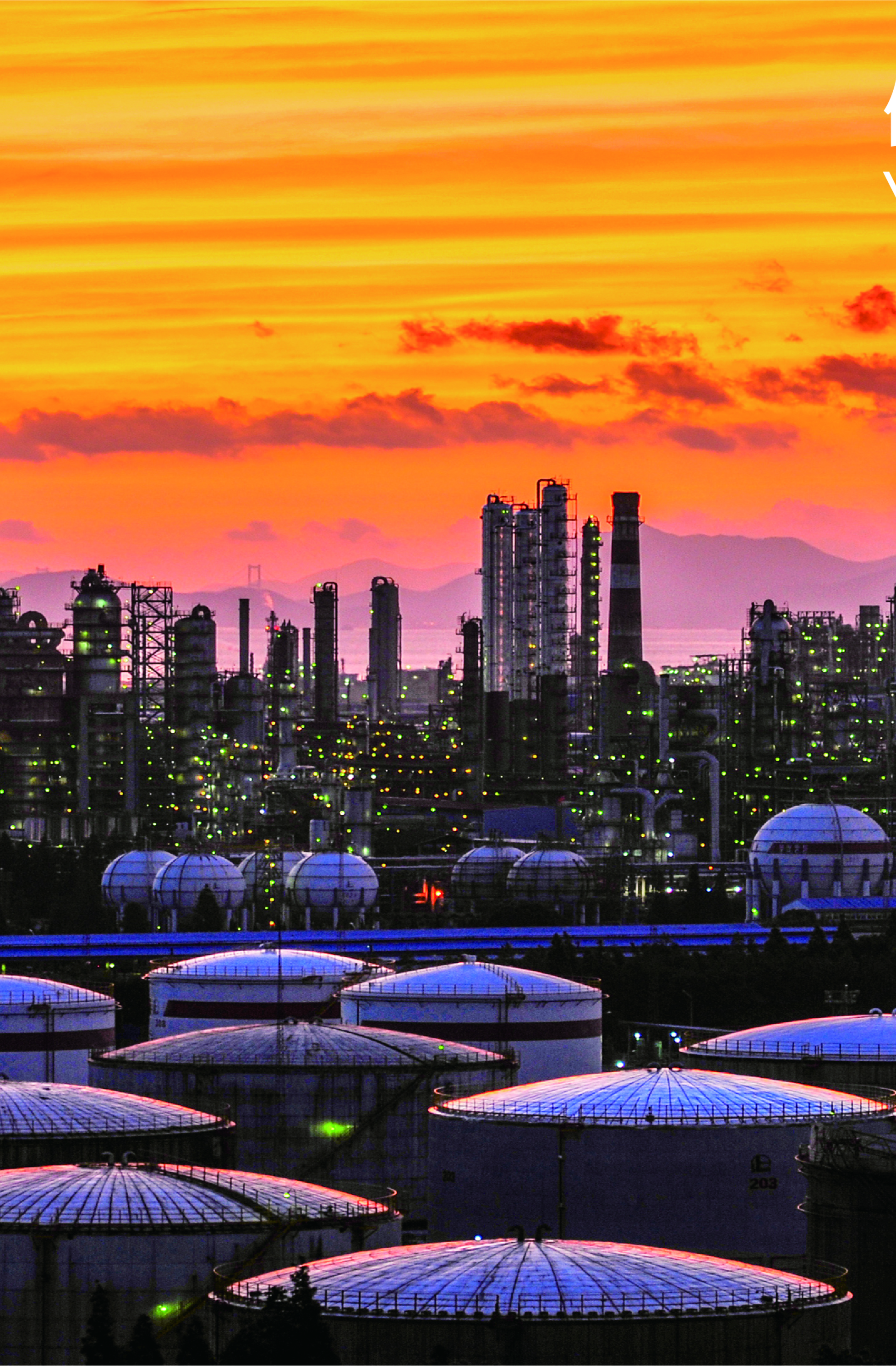
LNG terminal operators usually discover that a standard PTZ camera is not acceptable for Zone 1 after the equipment list has already been approved. Explosion proof video surveillance for LNG terminals is not a camera selection problem; it is a certification, cabling, and integration problem that most bid packages treat as three separate purchases. The result is equipment that passes on paper and creates disputes at site acceptance. From our work on hazardous area electrical systems, we focus on the points that decide whether the camera system can actually be installed in the classified area: gas grouping, cable entries, earthing, and network architecture. This article gives terminal engineers and security teams a specification path that avoids rework.
LNG Terminal Hazard Zones and Explosion Proof Video Surveillance Coverage
LNG terminals contain multiple classified zones around process manifolds, loading arms, vapor return lines, and tank vents. The area classification study, usually based on IEC 60079-10-1, defines where a flammable atmosphere may be present during normal operation and where it may appear only under upset conditions. A camera placed in a Zone 1 boundary has to meet a more demanding protection concept than a camera on the terminal perimeter. The equipment is not just weatherproof; it must be designed so that no internal arc or hot surface can ignite the surrounding gas.
The zone drawing determines the legal installation boundary, not the fence line. We often see project teams treat Zone 1 and Zone 2 as interchangeable because both are called hazardous areas. That creates two failure patterns. The first is installing a Zone 2 camera inside a Zone 1 boundary because the enclosures look identical. The second is over-specifying every camera as Zone 1, which raises cost and lead time without adding safety value. The correct approach is to map each camera location to the classified envelope first, then select the protection concept that matches.
What changes between Zone 1 and Zone 2 coverage at an LNG terminal?
The zone determines the protection concept, not just the camera housing. In Zone 1 a camera is expected to keep working while a flammable atmosphere may be present, so the enclosure uses flameproof, increased safety, or another certified protection method. In Zone 2 the same camera may be acceptable under a non-sparking or restricted breathing concept. The site should not move Zone 2 equipment into Zone 1 simply because both carry an explosing proof marking. We see this mistake in refurbishment projects where a perimeter camera is relocated closer to a new pump skid without revising the area classification drawing.
Explosion Proof Camera Certification and Enclosure Requirements for LNG Service
Buyers often treat ATEX, IECEx, and NEC as interchangeable labels. They are not. An ATEX certificate follows the EU directive, an IECEx certificate is an international conformity scheme, and NEC/CEC certification follows North American installation codes. The camera must carry the certificate recognized by the local authority or the EPC contract. The marking includes gas group, temperature class, protection concept, and certificate number. If any element does not match the terminal plot plan, the equipment should not be accepted.
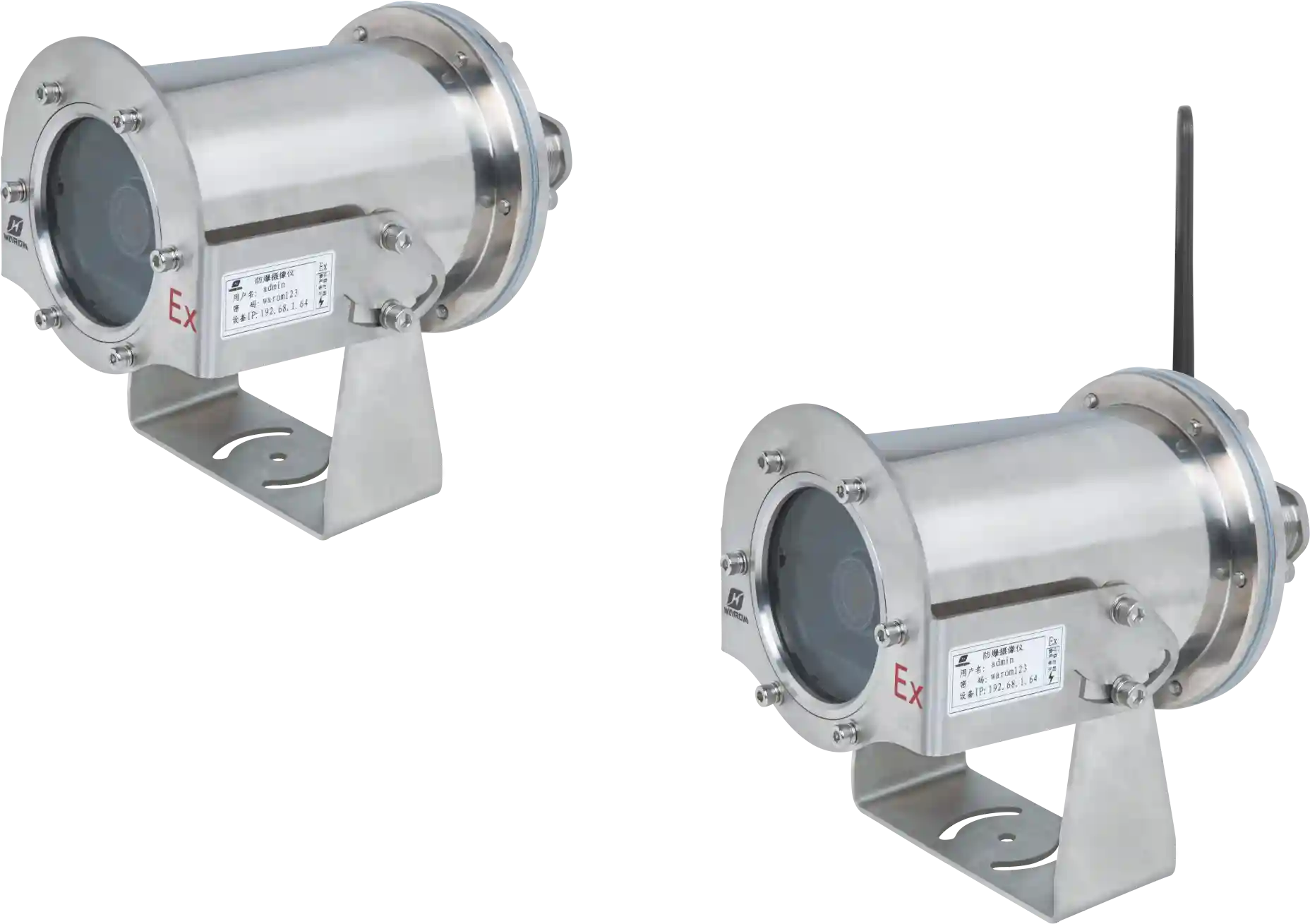
The BJK-S/G camera is designed for Zone 1 and 2 gas and Zone 21 and 22 dust with IECEx and ATEX certification and an IP66/IP68 enclosue. The compresion options are H.265, H.264, H.264B, and MJEG, which matters when the terminal security network has limited bandwidth to the central control room. The model number on the certificate must match the actual camera, and the gas group and temperature class must cover the terminal gas.
| Terminal area | Typical zone | Protection concept to specify | Minimum ingress protection |
|---|---|---|---|
| Process manifold and flanges | Zone 1 | Ex db IIC T6 Gb | IP66 |
| Loading arm | Zone 1 | Ex db IIC T6 Gb | IP66/IP68 |
| Tank perimeter and bund wall | Zone 2 | Ex nA or Ex ec IIC T6 Gc | IP66 |
| Control room camera | Safe area | None required | IP66 optional |
How do ATEX, IECEx, and NEC certificates differ for an LNG terminal camera?
First confirm the jurisdiction and the EPC standard. A European-bound project or an international terminal designed to IEC standards normally accepts IECEx and ATEX. A Gulf of Mexico terminal under US Coast Guard or OSHA jurisdiction may require NEC Class I Division 1 or Division 2 certification. A few projects ask for both. Do not change the certification path late in the project; certificate lead time and marking affect the entire camera assembly, including glands, brackets, and any local power unit.
Camera Placement and Scene Design for Explosion Proof Video Surveillance
Surveillance coverage at an LNG terminal should be designed around the release sources, not the perimeter fence. Loading arms, manifolds, pig receivers, vapor return lines, and truck loading bays are the scenes that security and operations actually review after an incident. A camera placed at the fence line will record activity, but a camera placed near the loading arm captures the condition that leads to an event.
The zone drawing also controls how close the camera can sit. In a typical LNG terminal, the classified envelope around a pump or compressor may extend several meters horizontally and vertically. Cameras should be located outside the jet or vapor cloud path where possible, with the bracket designed to avoid collecting water or ice. On a cold vent, gas can drop as it warms, so a low position directly under the vent is often the wrong location even if the area is only Zone 2.
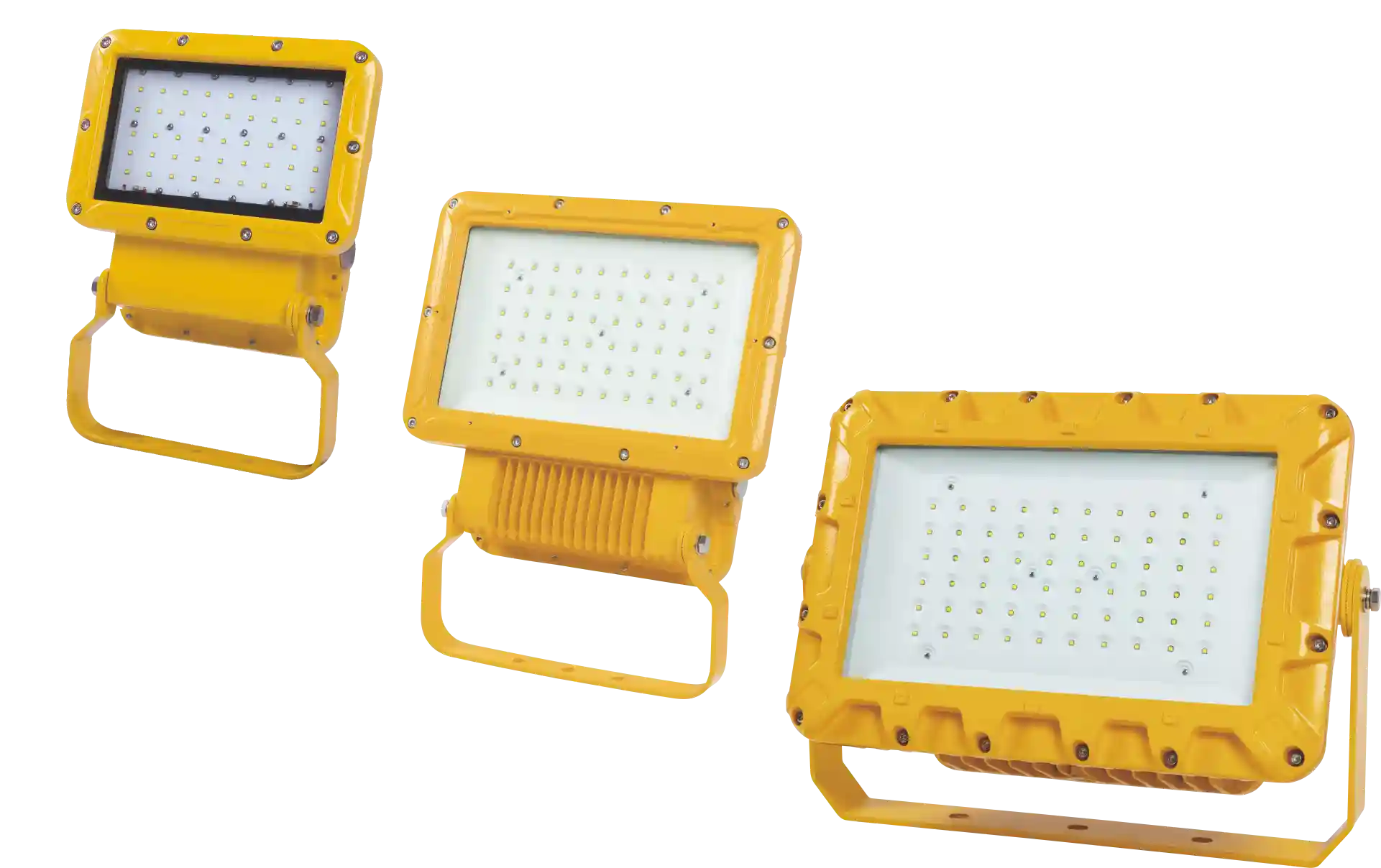
At night, cameras need the scene lit well enough to produce identification-grade video. Use certified LED floodlights with the same gas group and temperature class as the camera, not general area lighting. A floodlight that is not certified for the zone becomes another ignition risk, and one that produces heavy glare in the wrong direction can defeat the camera at the exact moment it is needed.
How close can a camera sit to a loading arm or process vent?
There is no fixed distance. The hazardous area schedule or gas dispersion study defines the extent of Zone 1 and Zone 2. You reverse the logic: first fix the camera’s function, then confirm whether that point falls inside a classified boundary. If it does, select a camera certified for that zone rather than moving the camera to an unclassified spot and losing the field of view. We have reviewed layouts where the security contractor shifted a camera outside Zone 1 and missed the valve that operations specifically needed to see.
If your terminal has a Zone 1 boundary next to a loading arm or a vent where gas grouping is not confirmed, it is worth verifying the camera certificate against the plot plan before finishing the cable schedule. Share the zone drawing and camera list with gm*@***om.com and we can check the certification path against IEC 60079.
SCADA and Network Integration for LNG Security Video Systems
An explosing proof camera is only one node in a larger safety system. The path from camera to recorder has to be treated as a system. If the Ethernet switch, power supply, or fiber optic interface sits inside a classified area, every element in that boundary needs the same rigor as the camera. A common defect is placing a non-certified media converter inside a Zone 2 cabinet because the camera itself carries an explosing proof mark.
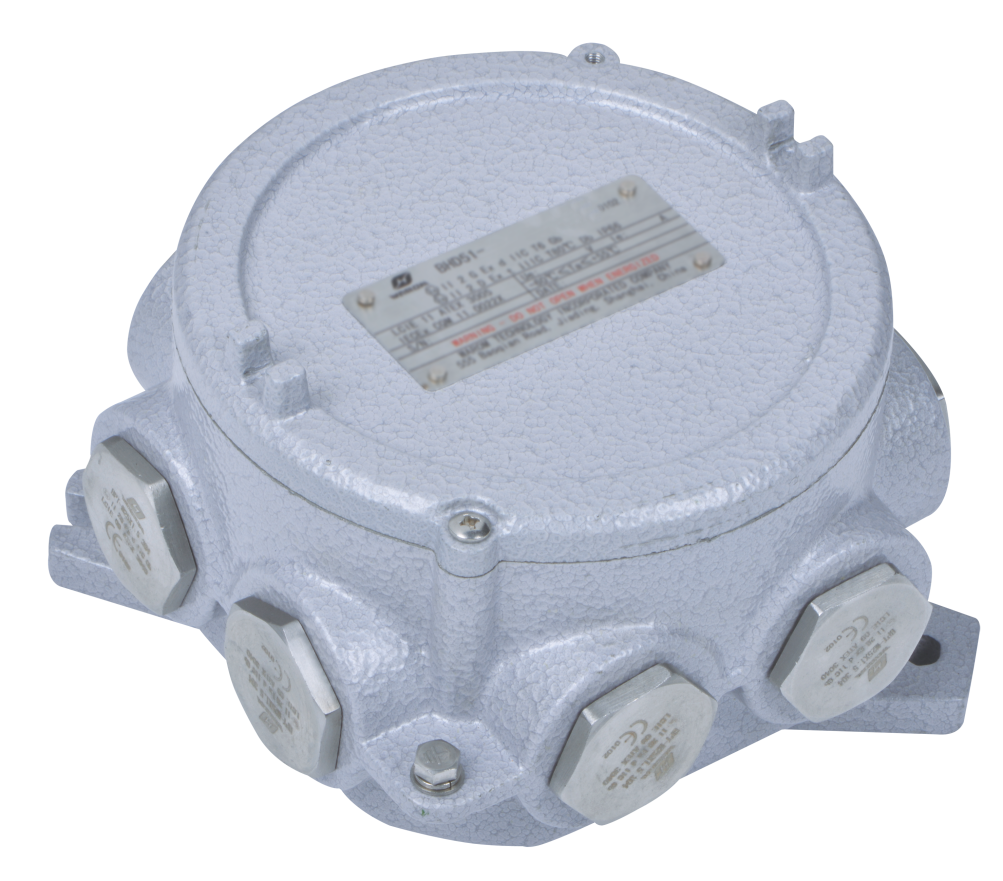
Power-over-Ethernet is not automatically acceptable in hazardous areas. The PoE source must be evaluated as an energy source and the cable installation must follow the protection method. Fiber to a safe-area switch removes one ignition risk but creates another issue: the camera’s local power supply may still need a certified gland and enclosue. For termination points in classified areas, junction boxes with IP66 and certified glands keep the cable path inspectable.
Integration between a certified camera network and the plant control system is where most LNG terminal installations fail after commissioning. <Explosion-Proof SCADA Systems for Petro[chemical](https://www.waromgroup.com/industry-category/chemical/) Safety> covers how hazardous area monitoring architecture should be matched to the control room path before the network is laid out.
Event integration matters. When a gas detector or ESD signal is activated, the video system should move a camera to the affected area and record for post-incident review. That requires linking the camera to the plant network in a way that does not bypass the network security policy. It is easier to design this into the original termination drawing than to add it after a near miss.
Documentation and Factory Verification for Explosion Proof Video Surveillance Equipment
Request the EC-Type Examination Certificate or IECEx Certificate of Conformity before accepting any quote. Check that the model number on the certificate matches the camera, the gas group and temperature class cover the terminal gas, and the certificate is still valid. A certificate for one camera model does not cover another model from the same supplier.
At factory acceptance, witness the nameplate and certificate copy against the physical unit. Compare the ambient temperature range, IP rating, cable entry size, and enclosure material. If the terminal is coastal, stainless steel or a corrosion-resistant coating should be specified. We also ask for the actual test report or a traceable copy, not just the certificate number.
Before accepting a camera quote for LNG terminal service, the supplier qualification rules deserve the same scrutiny as the equipment itself. <Evaluating Weatherproof Electrical Suppliers in China for Industrial Safety> covers how to verify manufacturing and documentation controls, not just certificate numbers.
After the technical review, the remaining risk is usually a gap between the supplier’s certificate and what the site actually needs. If your LNG terminal project includes Zone 1 process areas, send the zone drawing, camera count, cable entry type, and network protocol to gm*@***om.com or call +86 21 39977076 / +86 21 39972657. That single package lets us confirm the certification path and the enclosure material before you finalize the bill of materials.
Common Questions About Explosion Proof Video Surveillance for LNG Terminals
Can a standard security camera be used inside an LNG terminal building if the window faces a process area?
A common assumption is that an indoor camera does not need classification because the hazardous area is outside. That assumption fails when the building is on the boundary. In practice many LNG terminal buildings are safe areas, but a window looking at a process unit can be an issue if the wall forms part of the classified envelope. The camera itself is not the only concern; the installation has to follow the area classification for cable routing and wall penetrations. If the building is not classified, a standard PTZ camera may be fine, provided the HVAC and door interlock design remains current.
Does an explosion proof camera require an explosion proof network switch?
It depends on where the switch is installed. If the switch sits in a non-hazardous control room, a standard industrial switch is acceptable because the fiber or copper link enters through a safe routing path. If the switch, media converter, or PoE injector is located inside a Zone 1 or Zone 2 cabinet, it must be certified for that zone. We often see this point missed when a contractor places a small media converter next to the camera in a junction box and assumes the camera certificate covers the whole network path.
What is the difference between IP66 and IP68 for LNG terminal cameras?
Many people assume IP68 is a higher level of explosion protection. It is not. IP66 protects against powerful water jets from any direction and prevents dust ingress. IP68 adds protection against continuous immersion under conditions specified by the manufacturer, such as one meter for 30 minutes. Neither rating makes a camera explosion proof. An LNG terminal camera needs both ingress protection and explosion protection, and the certificate must state the IP rating. IP66 is the common minimum; IP68 helps where flooding or prolonged water exposure occurs.
How do we verify an IECEx certificate before purchase?
Go to the IECEx online certificate checker and enter the certificate number from the marking. Confirm the manufacturer name and model, gas group, temperature class, protection concept, and certificate status. A certificate that references a different product or has expired should stop the purchase. Also ask for the certified product schedule or annex. If the supplier cannot produce the current certificate copy, treat that as a warning sign. If your terminal project spans multiple zones, share the equipment list with gm*@***om.com and we can confirm which certificates apply to that scope.
If you’re interested, check out these related articles:
Explosion Proof Control Equipment: Food Processing Dust Zone Safety
WAROM Shines at CSSOPE 2025
Explosion-Proof DOL Motor Starters: Essential Specifications and Selection
MED ENERGY CONFERENCE & EXHIBITION
Ensuring Safety: The Indispensable Role of Explosion-Proof Fluorescent Lamps
With over a decade of experience, he is a seasoned Explosion-Proof Electrical Engineer specializing in the design and manufacture of safety and explosion-proof products. He possesses in-depth expertise across key areas including explosion-proof systems, nuclear power lighting, marine safety, fire protection, and intelligent control systems. At Warom Technology Incorporated Company, he holds dual leadership roles as Deputy Chief Engineer for International Business and Head of the International R&D Department, where he oversees R&D initiatives and ensures the precise delivery of design documentation for international projects. Committed to advancing global industrial safety, he focuses on translating complex technologies into practical solutions, helping clients implement safer, smarter, and more reliable control systems worldwide.

Qi Lingyi