

Explosion proof AC installation is not the same as mounting a standard air conditioner in a hazardous area. ATEX compliance depends on the equipment certificate, the zone classification, the gas or dust properties, and the installer’s control of cable entries, glands, bonding, and sealing. When any one of these elements is treated as a formality, a correctly certified unit can still be installed in a way that invalidates the protection concept. This guide sets out the installation checks that engineers and contractors should complete before powering the unit, based on ATEX and IEC 60079 practice.
What ATEX Installation Compliance Means for Hazardous Area Air Conditioners
An explosion proof air conditioner for a hazardous area is not selected by cooling capacity alone. The unit carries an Ex marking that defines the protection concept, equipment group, category, gas or dust group, temperature class, and equipment protection level. Under the ATEX Directive 2014/34/EU, equipment placed on the EU market for potentially explosive atmospheres must be assessed against its intended use [1]. Installation rules then follow from the installed environment and the wiring method, with IEC 60079-14 setting the main requirements for design, selection, and erection of electrical installations [2].
For an air conditioner, the most common problem is not the refrigerant circuit. The ignition risk usually comes from the electrical controls, compressor contactors, fan motors, cable terminations, and hot surfaces. The installer must therefore protect the complete installation envelope. A unit marked for Zone 2 cannot be placed in a Zone 1 location merely because it looks similar to another unit. The certificate and nameplate must match the area classification, the gas present, and the maximum ambient design condition.
Compliance is not a single sticker. It is the result of coordinated checks across the product certificate, the site conditions, and the electrical connections. Missing one requirement can create an unsafe condition even when the air conditioner itself is correctly certified.
Confirm the Zone, Gas Group, and Temperature Class Before Installation
Before positioning the unit, confirm the hazardous area classification from the plant’s current hazardous area schedule and drawings. The air conditioner must be rated for the correct zone and for the gas or dust that may be present. A unit rated for IIB is not automatically suitable for a hydrogen or acetylene atmosphere that requires IIC. Likewise, a temperature class selected for a high ignition temperature gas can be unsafe where the gas ignites more readily.
| Check | What to verify | Why it matters |
|---|---|---|
| Zone | Compare the area drawing with the unit marking for Zone 1, Zone 2, Zone 21, or Zone 22 | A wrong zone rating can place an unapproved ignition source inside a hazardous volume |
| Gas group or dust group | Match the IIA, IIB, IIC or IIIA, IIIB, IIIC marking to the atmosphere | Gas group changes the required enclosure clearance and flame path performance |
| Temperature class | Confirm the T1 to T6 marking against the gas ignition temperature | The maximum surface temperature must remain below the lowest ignition temperature of the atmosphere |
| Ambient temperature | Check the certified ambient range, not the annual average | A unit rated for 40°C is not automatically safe for a site reaching 50°C |
| Equipment protection level | Match Ga, Gb, Gc or Da, Db, Dc marking to the required EPL | EPL forms part of the ATEX and IECEx marking and must match the zone |
| Certificate status | Check the certificate number, schedule, and drawing revision against the nameplate | A mismatch means the installed product is not the certified equipment |
The same model range can contain several protection concepts and marking variants. The installation must be based on the nameplate of the unit actually delivered, not on a datasheet or a previous project.
Verify the Equipment Certificate Against the Installed Location
ATEX equipment is generally supported by an EU-type examination certificate issued by a notified body. The installer should verify that the certificate number, product type, protection concept, and drawing revision match the air conditioner nameplate [2]. A certificate for the compressor terminal box alone is not the same as a certificate for the complete air conditioner, and a component certificate does not authorize installation as a complete appliance.
Special attention is needed when the certificate number carries an X suffix. This indicates special conditions for safe use, which may limit mounting orientation, ambient temperature, cable entry type, or external protective devices. Those conditions are part of the certification, not optional recommendations. Before mounting, record the certificate number and the relevant drawing revision so the commissioning team can compare them with the final installation.
The air conditioner should also be checked against the manufacturer’s installation instructions. These instructions may specify minimum clearances around the flameproof enclosure, required gasket condition, bolt torque, and the acceptable direction of condensate drainage. Even a small deviation can affect the protection concept.
Cable Glands, Sealing, and Earthing Requirements
Cable entry is one of the most common failure points in explosion proof AC installation. The cable glands must be certified for the same protection concept as the enclosure entry. A flameproof Ex d enclosure needs flameproof cable glands or approved blanking devices, not standard industrial glands. The thread form, cable diameter, and gland material must match the entry plate and the installed cable [2]. An undersized gland or an incompatible metric to NPT thread can destroy the flame path.
Every unused entry must be closed with a certified stopping plug suitable for the enclosure protection type. Leaving a transport plug in place is not acceptable unless the manufacturer confirms that plug is certified as a blanking element. For increased safety Ex e enclosures, terminal connections need correct creepage and clearance, secure clamping, and the manufacturer’s approved terminal arrangement.
Equipotential bonding and earthing must be completed both internally and externally where required. The external earthing point should be connected to the plant protective conductor system, and the connection must remain accessible for inspection. Corrosion at the bonding point can increase resistance, so stainless steel fasteners and joint protection are preferred in coastal or chemical environments.
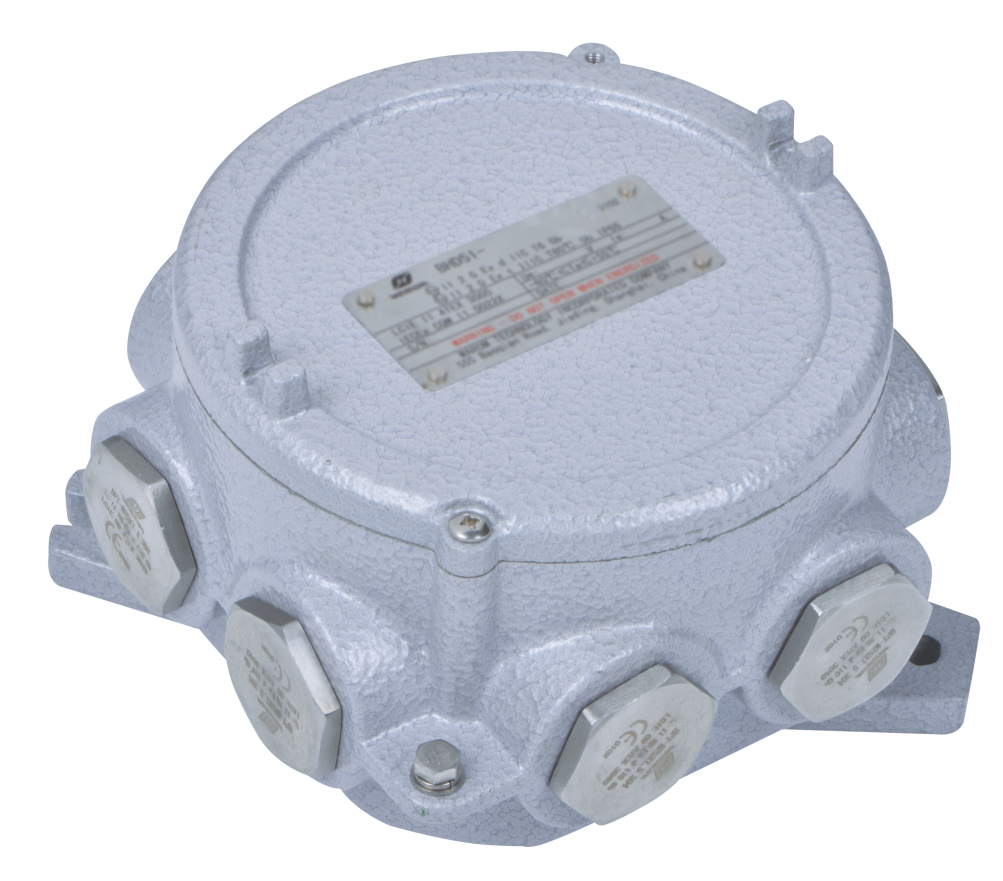
For circuits that pass from the hazardous area into a non-hazardous area, the boundary must be controlled by a suitable cable gland, sealing fitting, or enclosure. Surge protection, if required, must be selected and installed within the certified envelope rather than added later as an ordinary external device.
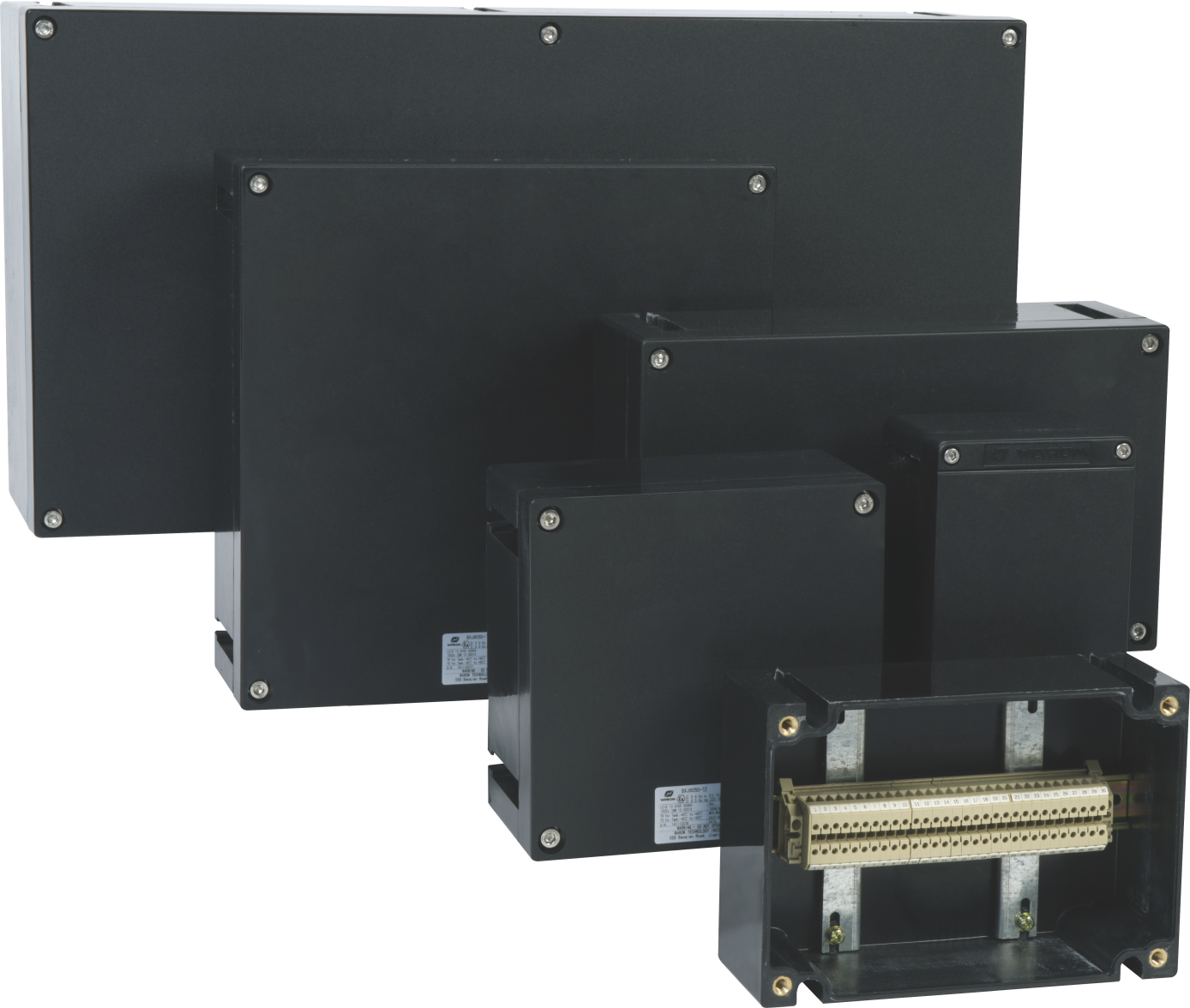
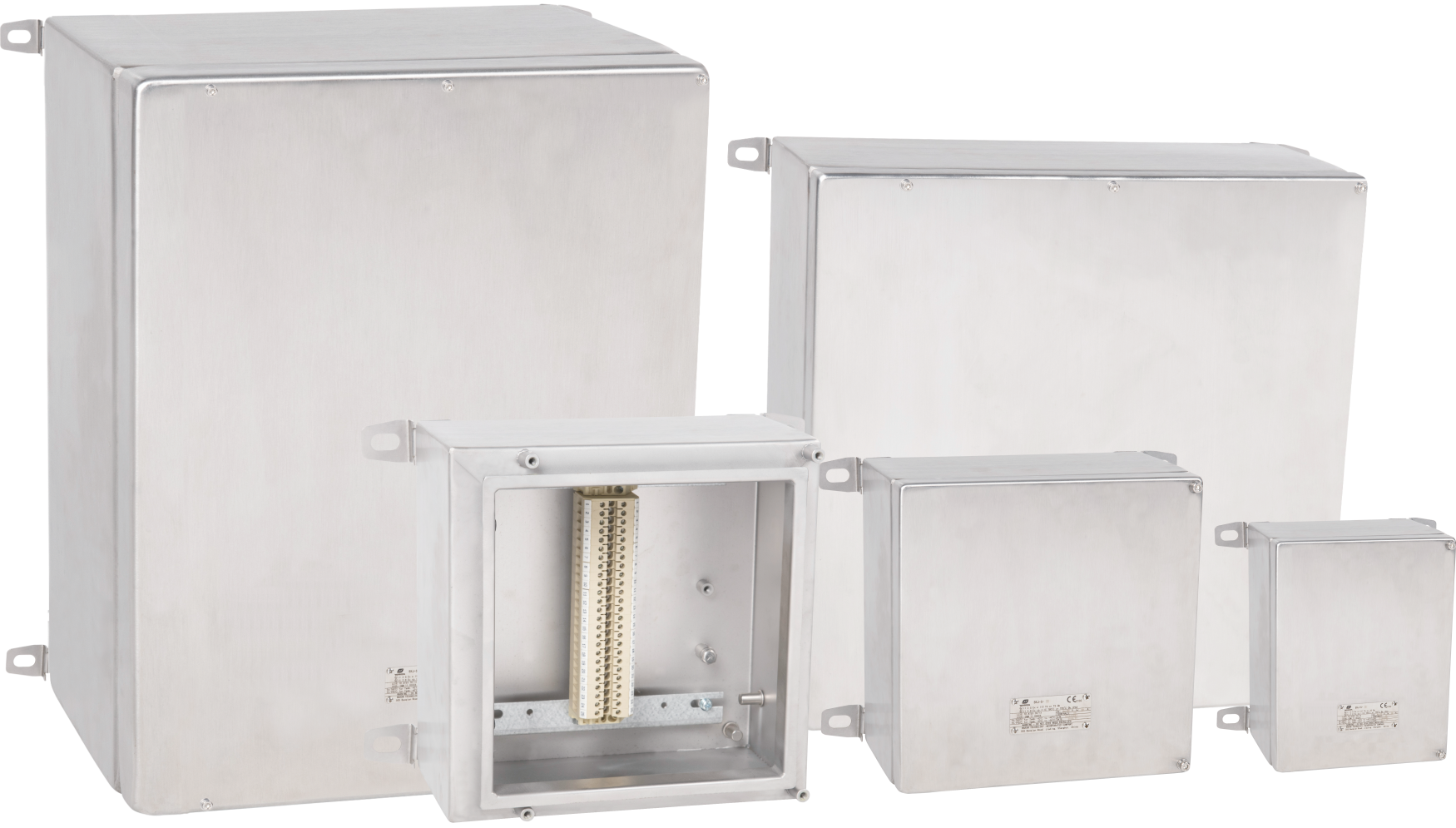
Terminal boxes used for local connection or circuit division must carry the same Ex discipline as the main air conditioner. If a stainless steel terminal box is used in a corrosive area, confirm that its cable entries, glands, and stopping plugs are also suitable for that environment.
Structural, Drainage, and Cooling Airflow Checks
Mechanical installation affects safety as much as electrical connection. The air conditioner must be mounted on a support that can carry its full operating weight without excessive vibration. Loose mounting can loosen flameproof bolts, damage gaskets, or shift cable glands over time. For wall mounted units, the wall structure and bracket must remain stable under operating load.
Condensate drainage must not create a direct path from the hazardous area into an unprotected space, and it must not allow flammable vapor to enter the equipment. The drain arrangement should follow the manufacturer’s certified instruction, including any requirement for a liquid seal, slope, or secondary containment. If the drain passes through an enclosure wall, the opening must not reduce the explosion protection.
Cooling airflow is a performance and safety requirement. Blocked condenser coils, closed louvres, or insufficient clearance raise the refrigerant pressure and the surface temperature. Install the unit with the manufacturer’s stated clearance around the condenser intake and discharge. A high ambient installation requires the cooling capacity and certified ambient range to be checked together.
Explosion proof air conditioners in warm regions must also be selected for the maximum ambient design condition, not only for the hazardous area designation. <Explosion Proof AC for 50°C: Extreme Heat Solutions> covers cooling performance and selection considerations for extreme heat installations.
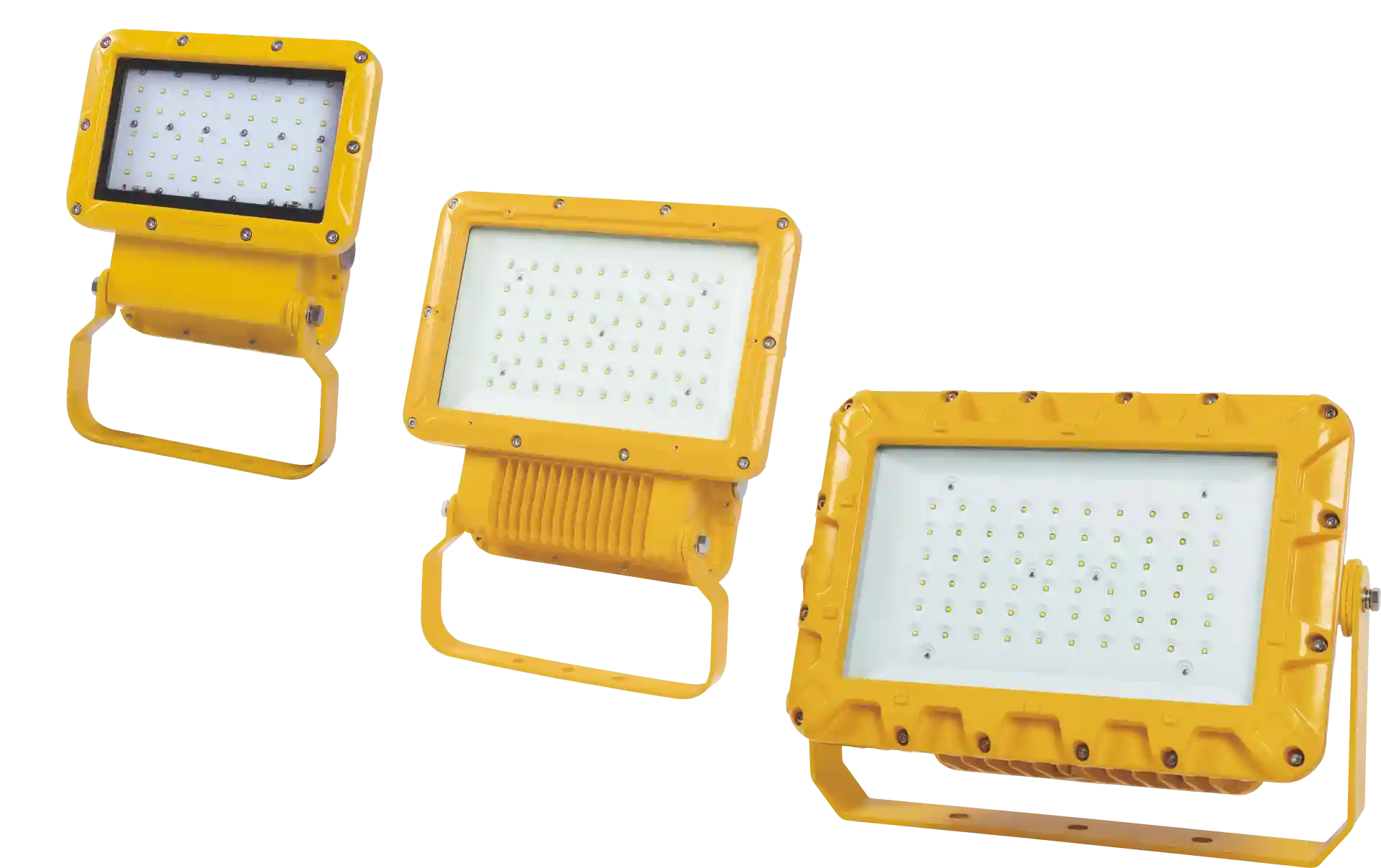
Permanent area lighting helps installation teams inspect labels, cable entries, and joints before start-up, but it is not a substitute for the air conditioner’s certified enclosure or the installation checks. Lighting should be selected for the same hazardous area if it is installed inside the classified space.
Start-Up Documentation and Initial Verification
Before the first energization, complete an initial detailed inspection according to the project’s installation verification procedure and IEC 60079-17 principles [4]. The inspection confirms that the installed equipment matches the documentation and that no damage has occurred during transport or erection.
| Pre-energization check | Acceptance point |
|---|---|
| Nameplate and certificate | Certificate number, marking, and drawing revision match the location and delivered unit |
| Enclosure and flamepath | No missing bolts, scratched flamepath surfaces, distorted covers, or damaged gaskets |
| Cable entry | Glands, stopping plugs, and seals are certified, tight, and matched to the cable |
| Earthing and bonding | Internal and external protective connections are present and secure |
| Area condition | Zone, gas group, temperature class, and ambient range match the installed environment |
| Cooling and drainage | Clearances are correct, airflow is unobstructed, and condensate cannot carry vapor into unprotected areas |
The initial verification should be recorded as part of the plant electrical safety documentation. If a deviation is found, the unit must not be energized until the condition is corrected and rechecked. A later periodic inspection can build on the same record [4].
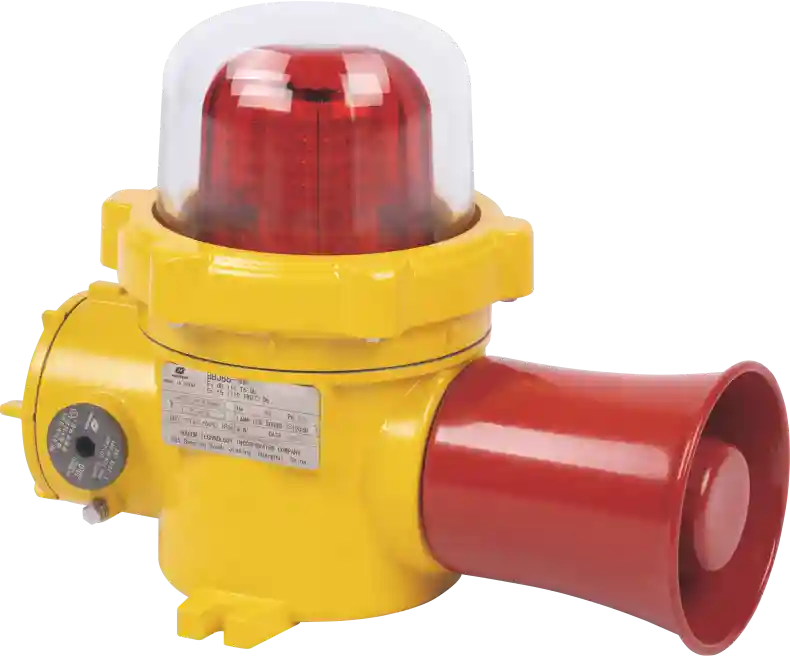
Audible and visual caution devices can support controlled access during commissioning and maintenance, but they do not reduce the required Ex integrity of the air conditioner itself.
Get Project-Specific Installation Support
For a project involving an engineered enclosure, mixed Ex protection, or an unusual ambient condition, forward the area classification, equipment marking, certificate number, cooling capacity, and cable entry details before final installation approval. Contact WAROM at gm*@***om.com or +86 21 39977076 and +86 21 39972657.
ATEX Installation FAQ
Does an ATEX certificate prove the air conditioner can be installed in Zone 1?
No. The certificate defines the equipment and its permitted conditions of use. The marking must show the correct category, equipment protection level, gas group, and temperature class for Zone 1. If the certificate carries an X suffix, the installer must also apply the stated special conditions. Installation with the wrong glands, sealing, or ambient range can invalidate the certified protection.
Can a standard HVAC contractor install an explosion proof air conditioner?
The mechanical work can often be done by a competent HVAC contractor, but the electrical connection and the Ex integrity checks require a person who understands IEC 60079-14 and the local hazardous area rules. The safest approach is to separate the structural and piping work from the certified electrical installation, and to use the manufacturer’s installation instructions and a recorded inspection before start-up.
What is the difference between Ex d and Ex e installation requirements for an air conditioner?
An Ex d flameproof enclosure contains an ignition and prevents flame transmission through carefully machined flamepaths. The installer must not damage those paths, and the cable glands and blanking plugs must be certified for Ex d. An Ex e increased safety enclosure prevents arcs, sparks, and excessive temperatures by using approved terminals, correct creepage and clearance, and reliable connections. Mixed Ex db eb units need both sets of rules applied at the same time.
References
[1] European Union, “Directive 2014/34/EU of the European Parliament and of the Council of 26 February 2014 on the harmonisation of the laws of the Member States relating to equipment and protective systems intended for use in potentially explosive atmospheres,” Official Journal of the European Union, 2014.
[2] IEC 60079-14:2013, “Explosive atmospheres – Part 14: Electrical installations design, selection and erection,” IEC, 2013.
[3] IEC 60079-0:2017, “Explosive atmospheres – Part 0: Equipment – General requirements,” IEC, 2017.
[4] IEC 60079-17:2013, “Explosive atmospheres – Part 17: Electrical installations inspection and maintenance,” IEC, 2013.
If you’re interested, check out these related articles:
Warom Technology Shines CSSOPE 2024
Honor forward – Warom Technology won many awards
PETROLEUM ENERGY SHOW 2024
With over a decade of experience, he is a seasoned Explosion-Proof Electrical Engineer specializing in the design and manufacture of safety and explosion-proof products. He possesses in-depth expertise across key areas including explosion-proof systems, nuclear power lighting, marine safety, fire protection, and intelligent control systems. At Warom Technology Incorporated Company, he holds dual leadership roles as Deputy Chief Engineer for International Business and Head of the International R&D Department, where he oversees R&D initiatives and ensures the precise delivery of design documentation for international projects. Committed to advancing global industrial safety, he focuses on translating complex technologies into practical solutions, helping clients implement safer, smarter, and more reliable control systems worldwide.

Qi Lingyi