

Grain storage explosion proof distribution boxes are not a commodity. Grain dust, flour dust, and chaff fines settle into every cable entry and enclosure joint. A box that meets a general hazardous area rating but leaks dust around one gland can become an ignition source after a single cleaning shift. The specification that matters is not only the explosion protection marking: it is the combined performance of dust-tight construction, surface temperature limits, cable entry sealing, and maintenance access. We review the checks that keep grain storage distribution circuits safe and inspection-ready.
What Makes Grain Storage a Dust Explosion Hazard?
Grain elevators, flour mills, and feed plants generate dust from conveying, grinding, screening, and drying. Dust settles on horizontal surfaces inside and outside equipment. The hazard is not only the suspended cloud; a layer of grain dust can insulate a warm enclosure and raise its outer surface temperature above the ignition threshold. In North America, NFPA 499 treats many grain handling areas as Class II locations with Group G dust. In IEC zones, the same facilities normally fall into Zone 20, Zone 21, or Zone 22 depending on whether dust is present continuously, occasionally, or only under abnormal conditions.
A distribution box carries mains, motor, and lighting circuits. It is not the largest dust source, but it is one of the few places where heat and dust remain close for years. If the enclosure surface reaches a temperature that can ignite a dust layer, no amount of clean wiring inside resolves the problem.
| Dust zone | Dust presence | Typical grain storage location |
|---|---|---|
| Zone 20 | Continuous or frequent | Inside silos, hoppers, and enclosed conveying ducts |
| Zone 21 | Occasional during normal operation | Bucket elevator boots, mill inlets, and bagging stations |
| Zone 22 | Abnormal or short release only | Clean storage buildings and warehouse areas |
How Do Explosion Proof Distribution Boxes for Grain Storage Stop Ignition?
In grain handling, the distribution box has to do two things at once: keep grain dust out of the energized interior and prevent the enclosure surface from becoming an ignition source. The first requirement points to dust-tight construction. The second points to temperature classification and dust layer management.
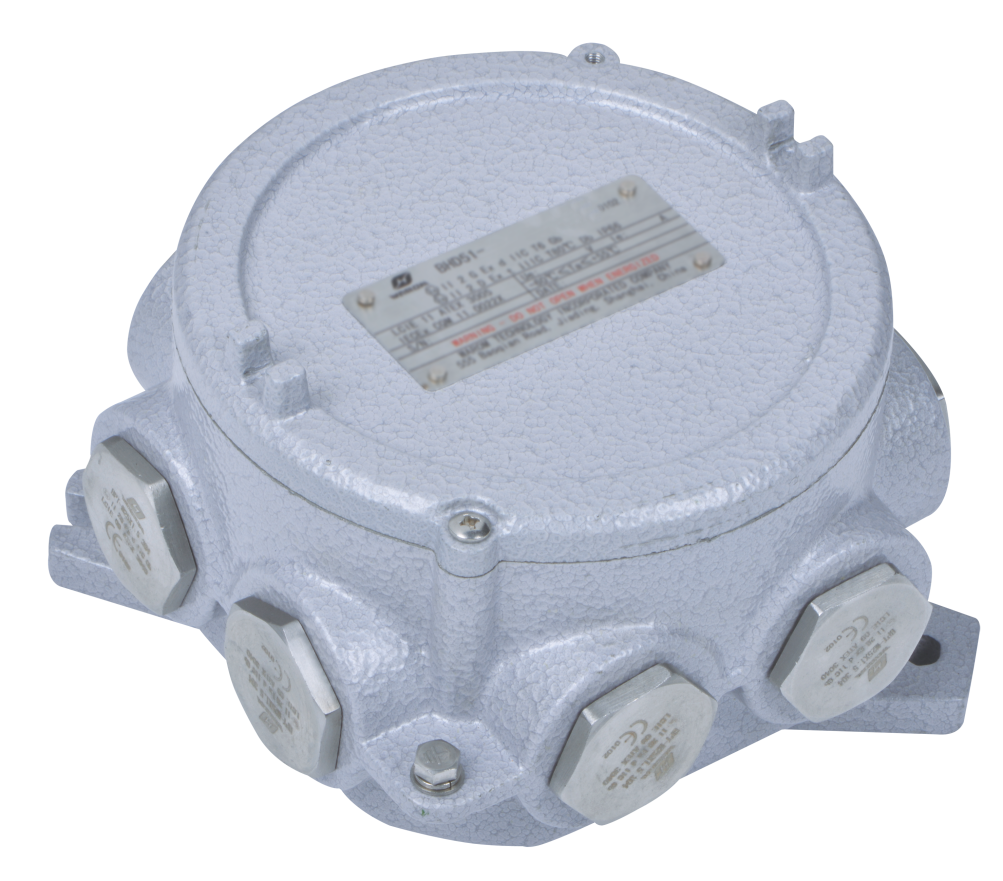
What does Zone 21 mean for a grain storage distribution box?
For Zone 21, an enclosure should be certified for dust. The common IEC marking is Ex tb IIIC T80°C Db. Ex tb means protection by enclosure; IIIC covers conductive and non-conductive dusts; T80°C limits the applicable maximum surface temperature; Db is the equipment protection level for Zone 21. In North American Class II language, the equivalent requirement is dust-ignitionproof construction and a Group G dust rating. The marking must include the dust group and the maximum surface temperature for the actual installation.
Why is surface temperature harder to control with dust layers?
Surface temperature limits assume the enclosure is not buried under dust. In grain installations, dust can accumulate on top of boxes, especially on flat covers and cable tray runs. Our design rule is to treat any surface that can collect dust as a potential hot spot. We prefer enclosures with sloped tops or mounting arrangements that reduce dust accumulation. If a site cannot control dust depth, the temperature class alone may not be enough; the owner must manage housekeeping or request a lower temperature class.
What Should Buyers Check in Cable Entries, Earthing, and Terminal Ratings?
Gland plate or conduit: which one seals better against flour dust?
Grain dust is finer than many industrial dusts and works into threaded joints. A gland plate is only as good as the glands installed in it. We specify certified Ex e or Ex d glands matched to the cable outer diameter. Conduit can be used, but it should not be treated as an automatic dust seal. Every unused entry must be closed with a certified blanking plug. The plug and gland should carry the same dust protection rating as the enclosure.
IP rating alone does not confirm a cable entry will stay dust tight once a cable is installed. <IP64 Rating Guide: Practical Device Protection Tests> covers the test method, the difference between device ratings and installed performance, and why the enclosure IP value should be read alongside the gland certificate.
What earthing details do grain storage auditors check?
Grain dust can build static charges. Distribution boxes need internal and external earthing terminals sized for the largest fault current. In our audits, the most common finding is a painted external earthing pad that was never scraped to bare metal, leaving a high resistance path. Use stainless steel fasteners and confirm the earthing conductor matches the fault current rather than the phase conductor size.
Terminals must be rated for the load current and the conductor cross-section. A 6 mm² terminal rated 41 A may be too small for a large motor feeder. If the box feeds dust collectors or bucket elevator drives, ask the supplier for terminal current ratings at the actual conductor size, not a generic panel rating.
| Check | Grain storage concern | What to require |
|---|---|---|
| Enclosure material | Flour dust mixes with moisture to form a corrosive paste | GRP or corrosion-resistant aluminum with IP66 |
| Cable entries | Fine dust enters through unsealed openings and settles in terminals | Certified Ex e or Ex d glands matched to the cable |
| Earthing terminals | Dust movement builds static and a painted lug path fails under fault | Internal and external terminals with the paint removed under the lug |
| Terminal current rating | Motor and heating loads produce heat at small terminals | Confirm rated current at the actual conductor cross-section |
| Drainage | Washdown water can collect and affect seals | Ask how the mounting and drilling plan keeps water out of entries |
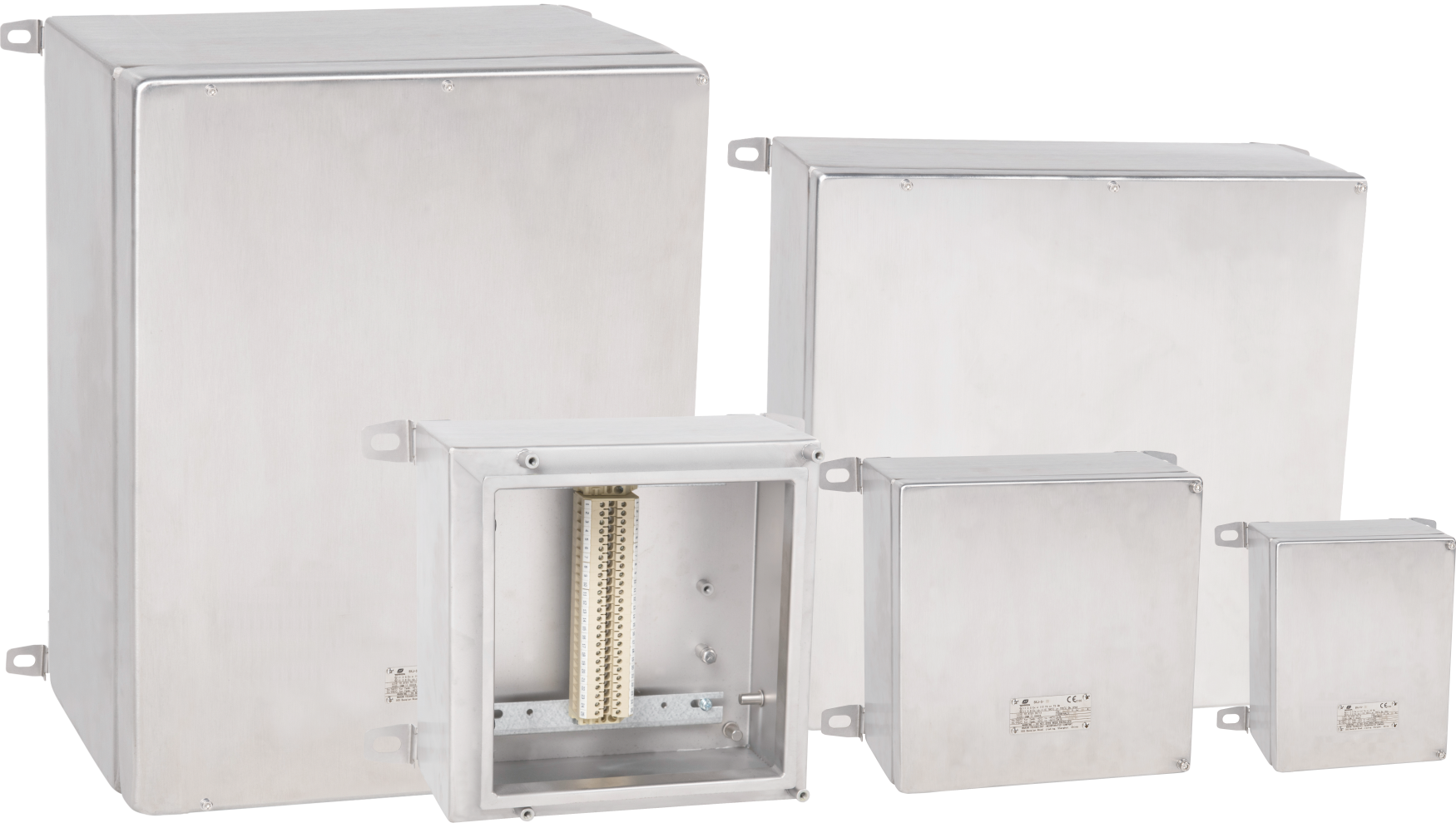
If your grain storage program includes bucket elevator or dust collector motor feeders, it is worth confirming the terminal current rating and short-circuit coordination before finalizing your BOM. Send the load schedule to gm*@***om.com.
How Should Grain Storage Distribution Boxes Be Installed and Maintained?
Fit the box where operators can reach it without standing on process equipment. Mount it above grade to avoid water entry from washdown. In grain storage, avoid mounting on vibrating equipment; vibration loosens glands and locknuts over time. If the box must be mounted near a bucket elevator or conveyor, use vibration-resistant cable glands and check torque annually.
Open the enclosure only after de-energizing and after removing loose dust from covers. Replace any cover gasket that has hardened or lost compression. During cleaning, avoid directing high-pressure water directly at cable entries; IP66 is not a substitute for a damaged gasket. Dust layers should be removed from the top of the box before inspections because a dust blanket changes thermal performance.
We have seen a grain elevator panel with a correctly certified enclosure and an undersized external earthing conductor. The box itself was sound; the earth path was the weak point. A maintenance check that only looks at the enclosure and ignores the earthing lug misses the failure.
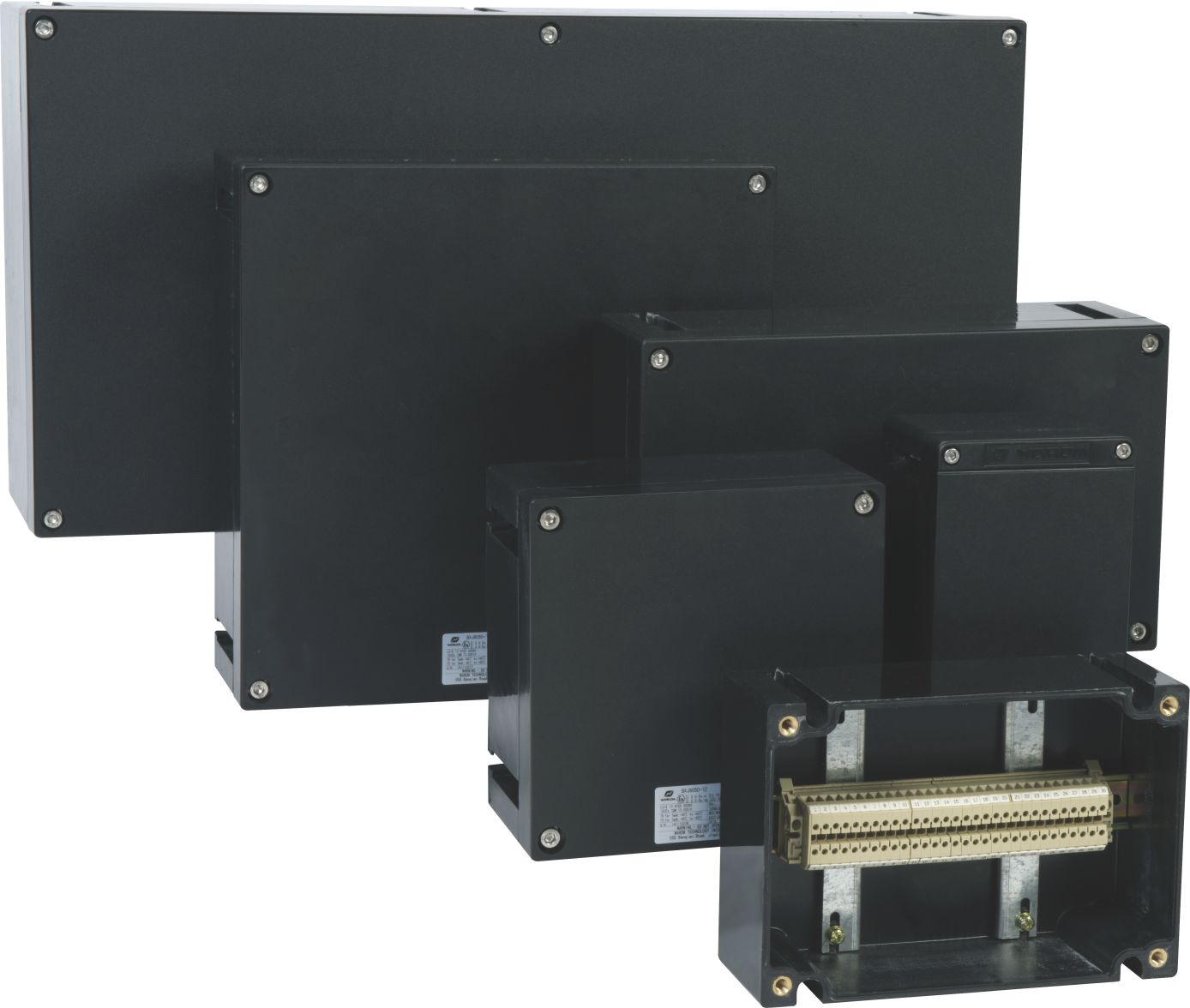
What Should You Prepare Before Sourcing Explosion Proof Distribution Boxes?
Most quote delays in grain storage projects come from incomplete area classification or missing load data. A supplier cannot size a dust-protected distribution box from a bill of quantities alone. Before sending an inquiry, collect three items: the dust zone on the area classification drawing, the load schedule with motor and lighting currents, and the cable type and outer diameter for every entry. If drawings are not yet final, share the list of equipment to be fed and the dust zones you expect.
Send the drawing, load schedule, and cable details to gm*@***om.com or call +86 21 39977076. We will confirm the enclosure protection concept, terminal ratings, entry drilling, and certification documents before you commit to production. A one-hour review before order placement often prevents expensive field modifications later.
What Do Buyers Ask About Grain Storage Explosion Proof Distribution Boxes?
Do grain storage distribution boxes require IP66 or is IP65 enough?
IP66 is the safer starting point for grain storage. Grain dust and flour dust are fine enough to enter a gap that passes an IP65 test. IP66 adds protection against powerful water jets, which matters in plants that wash down equipment. The enclosure should also be certified for dust explosion protection, usually Ex tb IIIC. An IP66 rating alone does not make a box explosion proof, but it addresses the dust ingress that leads to internal contamination and surface temperature problems.
What is the difference between Zone 21 and Class II Division 2 for grain storage?
A common mistake is to treat Zone 21 and Class II Division 2 as equivalent. They come from different classification systems and are not directly interchangeable. Zone 21 describes an area where a dust cloud is likely to occur occasionally during normal operation. Class II Division 2 describes a location where combustible dust is normally confined and would only be released under abnormal conditions. For grain storage, a bucket elevator boot or mill intake may be Zone 21 while a clean storage floor may be Division 2. The supplier needs the actual area classification drawing before selecting equipment.
Can a standard explosion proof distribution box be used for grain dust?
It depends on the certification and surface temperature limits. An explosion proof distribution box for gas, such as Ex d IIC, is not automatically suitable for grain dust. Dust rating requires protection by enclosure, usually Ex tb IIIC, with a maximum surface temperature suitable for the dust layer or cloud. Some enclosures are dual-certified for gas and dust, but the buyer must check the full marking. If the box only carries a gas certificate, do not use it in a Class II or Zone 21 dust area.
How often should grain storage distribution boxes be inspected?
In facilities we have audited, the inspection interval depends on dust loading and cleaning intensity. A high-dust grain elevator near bucket elevators may need open-and-check every six months, while a clean storage floor can go twelve months. The checks are specific: cover gasket condition, gland tightness, dust on top of the enclosure, earthing continuity, and any terminal overheating. After washdown, inspect entries for water staining. Share your cleaning schedule and dust zones and we will confirm an inspection interval that fits your maintenance routine.
If you’re interested, check out these related articles:
Vietnam ETE 2024 is underway
Explosion Proof Motor Switches: Safeguarding Underground Mining Operations
WAROM at Australian Energy Producers Conference &Exhibition 2026
IP64 Rating Guide: Practical Device Protection Tests
Intrinsically Safe vs Explosion Proof: Real-World Applications Guide
With over a decade of experience, he is a seasoned Explosion-Proof Electrical Engineer specializing in the design and manufacture of safety and explosion-proof products. He possesses in-depth expertise across key areas including explosion-proof systems, nuclear power lighting, marine safety, fire protection, and intelligent control systems. At Warom Technology Incorporated Company, he holds dual leadership roles as Deputy Chief Engineer for International Business and Head of the International R&D Department, where he oversees R&D initiatives and ensures the precise delivery of design documentation for international projects. Committed to advancing global industrial safety, he focuses on translating complex technologies into practical solutions, helping clients implement safer, smarter, and more reliable control systems worldwide.

Qi Lingyi