
LNG carrier hazardous areas are not a single uniform deck environment, and treating them as one leads to late substitutions during outfitting. ATEX marine products for hazardous areas on LNG carriers have to follow the vessel’s hazardous area plan from cargo tank vent outlets and compressor rooms to bunkering stations and pump rooms. Over thirty years of explosion-proof electrical engineering have shown me that the specification fails when certificates are checked after equipment arrives, not while drawings are still open. This article joins the zone classification to the ATEX category and product level checks that owners, yards, and procurement teams should apply before purchase.
Hazardous Area Zones on LNG Carriers
I start with the zone drawing because every ATEX product decision follows from it. LNG carrier designs normally separate the cargo containment space from the areas that can safely remain unclassified, but the transition zones around cargo handling equipment are the real scope of the electrical specification.
Zone 0, Zone 1, and Zone 2 on an LNG Carrier
Zone 0 covers areas where a flammable atmosphere is present continuously or for long periods during normal operation. On an LNG carrier this is mostly inside cargo tanks, LNG process piping, and sections of the vapor handling system. In practice, shipyards avoid placing electrical equipment in Zone 0 where possible. They route instrumentation through intrinsically safe circuits or locate transmitters outside the tank with impulse lines. Zone 1 includes areas where flammable gas is likely during normal operation, such as pump rooms, compressor rooms, vent mast outlets, and the immediate surroundings of cargo tank dome connections during transfer. Zone 2 covers locations where a flammable atmosphere is unlikely but can occur briefly under abnormal conditions, including open deck areas near bunkering stations and vent outlets.
Marine class rules such as IEC 60092-502 and classification society notations generally produce the zone maps for each hull. The important point for procurement is that Zone 1 does not mean every enclosure has to be Ex d. It means the equipment category and protection method must match the risk in that location.
Natural gas vapor is mostly methane, which is usually gas group IIA and temperature class T1. But there is no room for a blanket assumption. Some LNG carriers carry richer cargo or handle boil-off gas under pressure, and the gas group can shift toward IIB depending on the composition. The same applies to temperature class: liquid methane at cryogenic temperature is not at its auto-ignition condition, but onboard compressors and gas heaters raise surface temperatures locally. The zone drawing and gas grouping are not decorative; they determine whether a light fitting or junction box is acceptable in a given location.
ATEX Certification Requirements for LNG Carrier Electrical Equipment
ATEX certification alone does not make a product suitable for an LNG carrier. It confirms the explosion protection design under the European equipment directive. Marine type approval confirms that the product can withstand the shipboard environment. Both are required when the vessel is classed with a European owner or shipyard.
Reading an ATEX Marking on Marine Equipment
Take the marking II 2 G Ex db eb IIC T6 Gb as an example. The II indicates non-mining equipment. The category 2 aligns with Zone 1 use. The letter G means gas atmosphere protection. Ex db is the flameproof enclosure protection method for the main enclosure, and eb is increased safety used for terminal chambers. IIC is the gas group capability, the most severe group, so equipment rated for IIC is acceptable for LNG IIA or richer gas unless the marking says otherwise. T6 gives the maximum surface temperature class, and Gb is the equipment protection level corresponding to a high level of safety for Zone 1.
| Area classification | ATEX category | Typical protection methods | Common LNG carrier location |
|---|---|---|---|
| Zone 0 | 1G / Ga | Ex ia instrumentation, equipment avoided where possible | Cargo tank interiors, LNG process piping internals |
| Zone 1 | 2G / Gb | Ex d, Ex e, Ex de combinations | Pump rooms, compressor rooms, vent mast outlets, cargo dome connections |
| Zone 2 | 3G / Gc | Ex nA, Ex e, Ex d | Open deck near bunkering stations, flanged connections, adjacent stores |
Some equipment carries both IECEx and ATEX certificates. The IECEx certificate follows IEC 60079 standards, while the ATEX certificate follows the European directive and harmonized EN versions. On a global project, both are useful because classification societies accept IECEx and ATEX for equipment selection, but the marine type approval is still handled separately through the EU Marine Equipment Directive or the class society’s own approval process. DQM-III cable glands, for example, carry IECEx TUR 22.0035X and TÜV 22 ATEX 8855X with Ex db IIC Gb protection, IP66 ingress, and an ambient range from -60°C to +90°C. That certificate data belongs in the technical file before the yard installs the gland, not after.
When the equipment package covers several zones, the lighting rules need to be checked against current editions of the standard before the drawing package is frozen. <2025 Explosion Proof Lighting Standards: Compliance Guide> covers the latest compliance points for explosion proof lighting, including marking, temperature class, and installation checks that transfer directly to LNG carrier deck and accommodation lighting.
ATEX Marine Products for Cargo, Deck, and Accommodation Zones
Selection gets practical at the point where the zone drawing meets the bill of materials. For a newbuild or retrofit, I prefer to group products by location, because the same product family may need different materials, cable entries, and light distribution.
| Product type | Example model | Marine relevant specification | Typical LNG carrier location |
|---|---|---|---|
| LED floodlight | BAT86 | IP66, WF2, 5000K LED, ambient -60°C to +40°C or +60°C by version, 2×M25 entries | Cargo deck, manifold, gas handling zone edges |
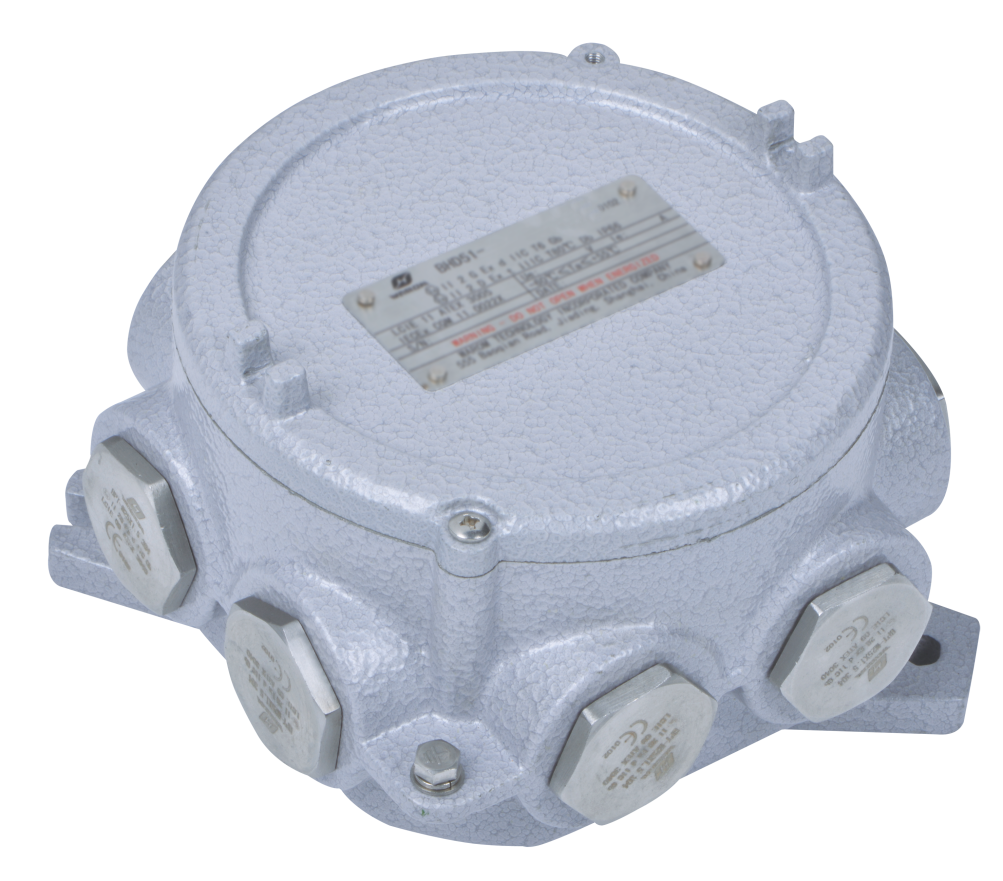
| Junction box | BHD91 | Copper-free aluminium, stainless fasteners, IP66, ambient -60°C to +60°C, max 500V AC | Deck and pump room cable splicing |
| Audio visual caution device | BBJ86 | IP66, 4J glass impact, 110 to 120 dB at 1m, 150 to 160 flashes per minute | Open deck alarm and navigation signal |
Cargo deck circuits generally start with the zone drawing and the light spacing plan. The BAT86 floodlight family covers open deck and manifold lighting. 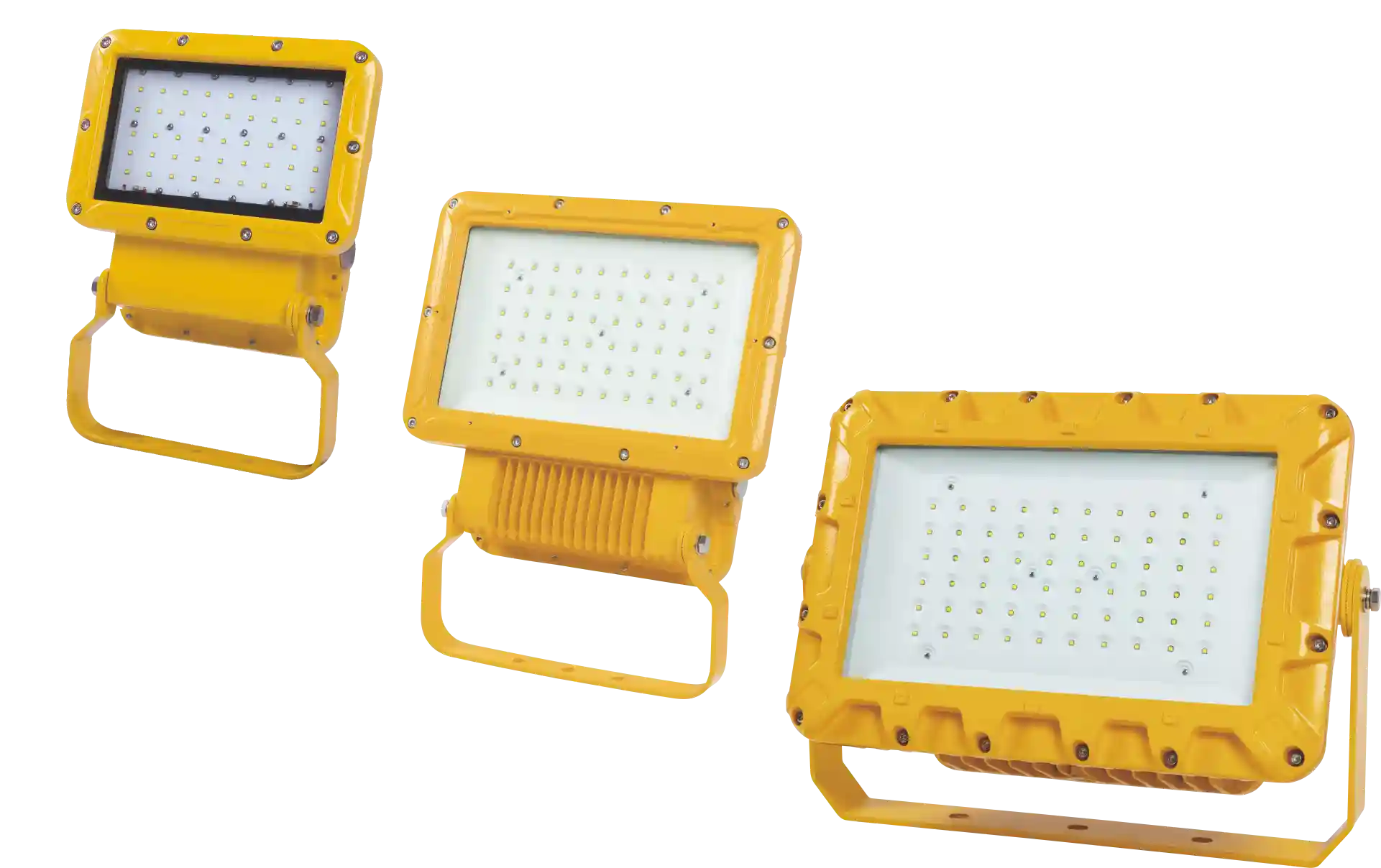 For cable splicing, copper-free aluminium junction boxes such as the BHD91 avoid a long-term corrosion point.
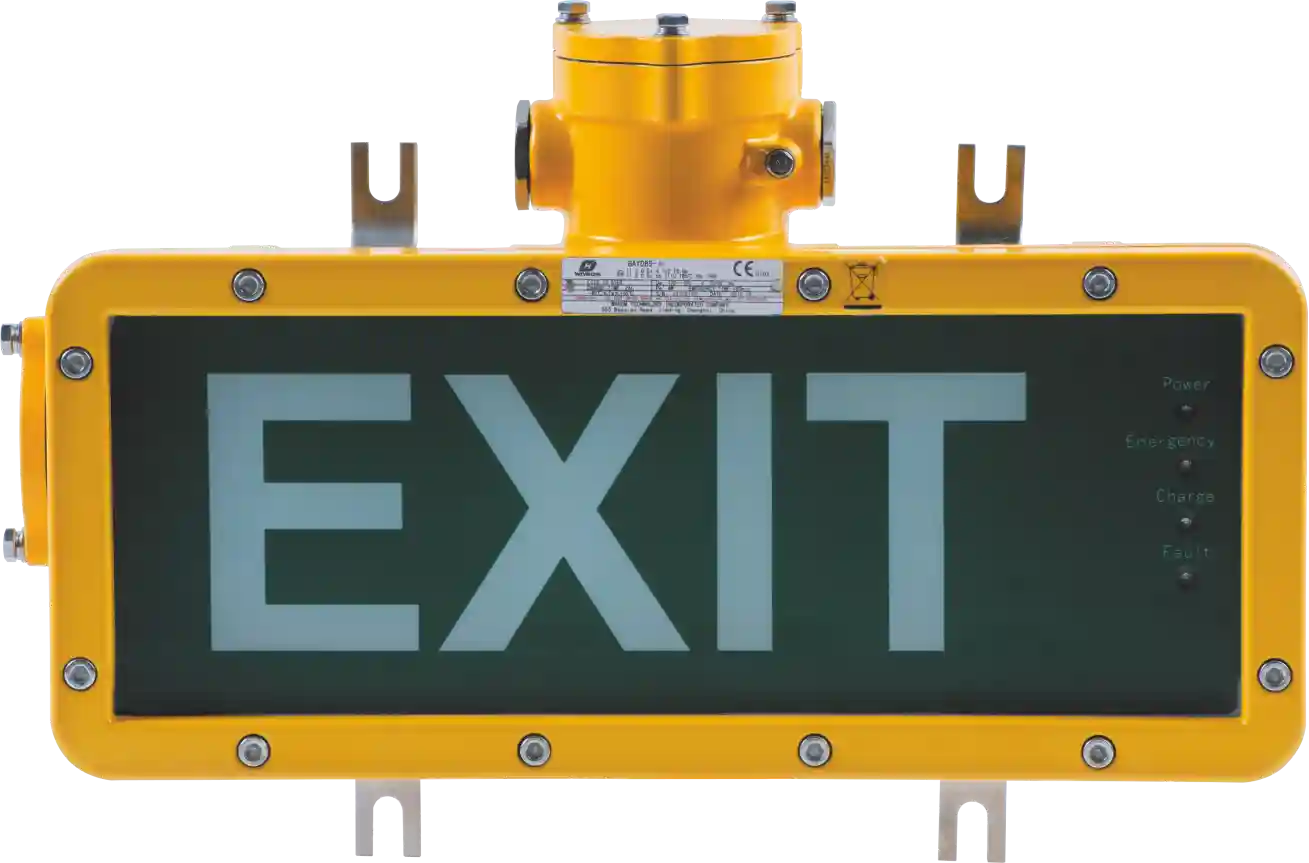
  Escape route lighting needs a separate marine emergency circuit.
  Where the deck plan calls for an audible and visual signal together, a combined caution fitting reduces enclosure count.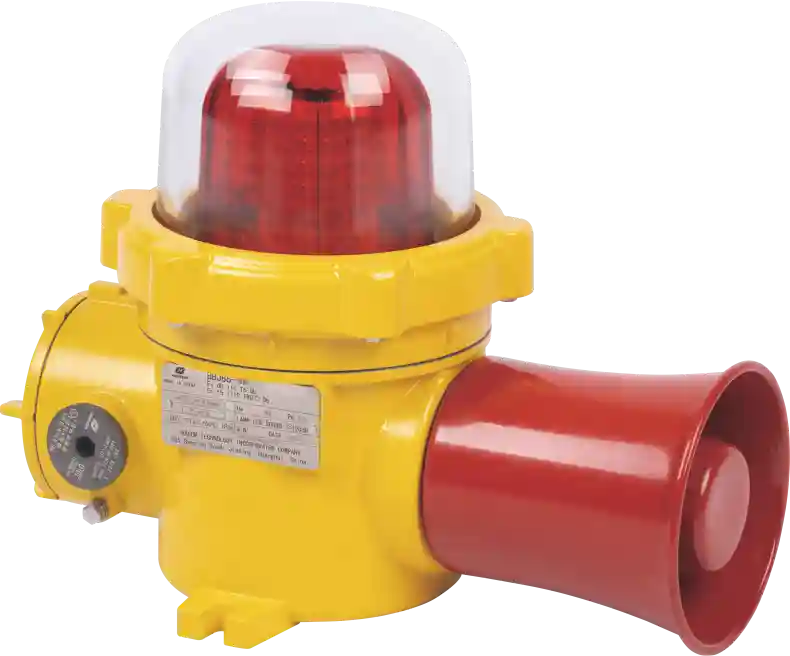
Material choice is as important as protection method. Aluminum is weight efficient but needs powder coating and care around dissimilar metals. Stainless steel and GRP are better choices for salt spray, pump room humidity, and areas with frequent washdown. The cable entry style also needs to match the installation. M25 entries with nickel plated brass glands work for many projects, but if the yard is using armored cable or another conductor arrangement, the gland selection changes.
At the midpoint of the specification, the questions that delay quotes are usually about gas group, cable entries, and shipboard environment rather than basic product availability. If your LNG carrier package includes mixed Zone 1 and Zone 2 areas with different cable armoring, it is worth confirming the protection method and gland compatibility before the BOM is frozen. Send the preliminary zone schedule and cable type to gm*@***om.com or call +86 21 39977076.
Acceptance Checks Before LNG Carrier Equipment Release
Most package rejections I see during FAT are not caused by poor product design. They come from gaps between the purchase order and the certified drawing. A few checks will close the risk before shipment.
- Match the certificate scope to the zone drawing. The ATEX and IECEx certificate numbers should appear on the drawing schedule or data sheet, and the gas group and temperature class should match the area, not just the equipment category.
- Verify the marine type approval. A light fitting or junction box can hold ATEX certification and still fail class society review if the enclosure material, mounting, or cable glands are not approved for marine service.
- Read the nameplate before accepting the lot. Product type, certificate number, gas group, temperature class, IP rating, and ambient temperature range are all on the nameplate. If one field does not match the order, fix it at FAT, not on board.
- Check cable entries and gland thread forms. A European project may require M threads while a Middle East or US linked project may use NPT. The flamepath and gland combination is part of the certified equipment arrangement.
- Check the final documentation package. The yard will need the EU declaration of conformity, certificate copies, installation instructions, and class society approval evidence before the commissioning team can sign off.
Marine projects bring class society approval and ATEX compliance into the same conversation, and the two requirements do not automatically align in every system package. <Warom at SMM Hamburg> covers our marine product range presentations at a major shipbuilding exhibition, including owner and yard discussions on ATEX lighting, junction boxes, and cable glands for LNG vessel layouts.
Zone Drawing Review for ATEX Marine Packages
LNG carrier electrical packages become less risky when the zone drawing, gas group, cable entry detail, and certificate set are reviewed together before the yard orders. The review is not a paper exercise; it is the point where substitutions are avoided. We review ATEX marine packages with owners, yards, and EPC teams from initial documentation to FAT and delivery. Send the vessel zone drawing, circuit schedule, and class society requirements to gm*@***om.com or call +86 21 39977076 or +86 21 39972657. We will mark the equipment categories, protection methods, and cable entry options that match the installation.
Common Questions About ATEX Marine Products on LNG Carriers
Do LNG carriers always require ATEX certificates for hazardous area equipment?
Not always, but ATEX requirements are common when the owner or charterer is European, when the shipyard is building to EU standards, or when the class society has aligned the specification with the ATEX directive. Many LNG carriers also use IECEx certified equipment because the IEC 60079 series is recognized globally. The safest path is to carry both ATEX and IECEx certificates. That avoids localized disputes during design review and gives the certification body and class society a recognized reference. If the vessel is flagged outside the EU, marine type approval may still be required, but ATEX can be treated as an additional quality and compliance benchmark.
What is the difference between ATEX and marine type approval?
A common assumption is that ATEX covers the marine environment. It does not. ATEX, the European equipment directive, focuses on explosion protection design. Marine type approval deals with salt spray, humidity, vibration, and shipboard installation requirements. A flameproof enclosure may hold an ATEX certificate and still need approval from the class society for the material, cable glands, and mounting method. Both are required when the equipment is installed on board. The practical check is to make sure the class society’s type approval certificate and the ATEX certificate refer to compatible product configurations.
Can standard marine lights be used on LNG carrier deck areas?
It depends on the ventilation and the zone drawing. Standard marine lights are not acceptable inside a defined Zone 2 area unless the light is specifically approved for use in that classification. Open deck locations can be unclassified if the hazardous area drawing shows them outside the vent outlet dispersion limits. Where the drawing extends Zone 2 across deck spaces, the light fitting, junction box, and glands all need to match the gas group, temperature class, and equipment category. Making this decision from the physical location alone, without the drawing, is where most costly substitutions originate.
Why do gas group and temperature class matter if the enclosure is flameproof?
The flameproof enclosure contains an internal explosion and lets it cool before it reaches the surrounding gas. That does not remove the need to match the gas group and temperature class. Gas group determines whether the flamepath dimensions and gaps are valid for the actual vapor. LNG vapor is generally IIA, but richer feed gas can shift the requirement toward IIB. Temperature class matters because the external housing surface can become hot, and hot surfaces can ignite gas even without a spark. Both values appear on the nameplate and should be checked against the hazardous area schedule.
What documentation should be requested before shipment?
In projects I have reviewed, the documents that cause last minute signoff issues are the EU declaration of conformity, the certificate schedule with model and certificate numbers, the class society type approval, and the installation instructions. Request all of these before shipment rather than after delivery. The certificate schedule should align with the purchase order line items. One certificate covering a product family is acceptable only when the specific product type is listed in the certificate scope. Share your equipment list and class society requirements with gm*@***om.com and we will confirm the documentation set and certificate coverage.
If you’re interested, check out these related articles:
Honor forward – Warom Technology won many awards
WAROM at ACHEMA 2024
Technical Specification for Explosion Proof Cabinets: A Guide
Explosion Proof Equipment: Flour Mill and Grain Silo Safety
With over a decade of experience, he is a seasoned Explosion-Proof Electrical Engineer specializing in the design and manufacture of safety and explosion-proof products. He possesses in-depth expertise across key areas including explosion-proof systems, nuclear power lighting, marine safety, fire protection, and intelligent control systems. At Warom Technology Incorporated Company, he holds dual leadership roles as Deputy Chief Engineer for International Business and Head of the International R&D Department, where he oversees R&D initiatives and ensures the precise delivery of design documentation for international projects. Committed to advancing global industrial safety, he focuses on translating complex technologies into practical solutions, helping clients implement safer, smarter, and more reliable control systems worldwide.
Qi Lingyi