

Explosion proof control panels with PLC integration fail most often because the panel is ordered as a certified enclosure rather than a complete controlled system. The purchaser confirms the explosion proof rating, the PLC part number, and the enclosure dimensions, then treats the interface between them as packaging. That gap shows up later as hot spots, unapproved field wiring, or an HMI that cannot be certified for the area. The panel should be specified from the loop list outward, starting with the hazardous area classification and the PLC I/O count. This article explains the checks I use before fabrication, based on three decades of explosion proof system engineering.
Start With the Area Classification for the Explosion Proof Control Panel
The area classification drives the protection method, the enclosure size, and the cost. A panel for a Zone 1 gas area cannot be treated as a Zone 2 panel with heavier metal. On the Tilenga project in Uganda, WAROM supplied explosion proof lighting and electrical systems across wellpads, a central processing facility, and pipelines, with the area classification fixed before panel schedules were released. That sequence avoided ordering panels that would later need recertification.
| Protection method | What it suits | Main limitation | Buyer check |
|---|---|---|---|
| Ex d flameproof | Standard PLC, power supplies, drives | Heat dissipation and weight | Surface temperature class at full load |
| Ex e increased safety | Terminals, switches, some control devices | Standard PLC rarely directly accepted | Certified component list |
| Ex p purge/pressurization | Full PLC and HMI in Zone 1 or Zone 2 | Purge gas supply and interlocks | Purge certificate and operating procedure |
| Intrinsic safety Ex ia/ib | Field sensors and low power analog circuits | Limited energy per channel | Barrier and cable parameter match |
Once the protection method is selected, the next variable is temperature class. A panel carrying a PLC plus six contactors may meet T6 at 40°C ambient but fall to T4 once the heat load rises. That changes whether the panel is acceptable in a T6 gas group. I have seen the same I/O schedule pass or fail depending on whether the buyer declared the full motor load during inquiry or only the PLC load.
Map the PLC I/O Before Sizing the Explosion Proof Control Panel
The most expensive mistake is sizing the enclosure from the physical panel drawing before the I/O map is fixed. A PLC with 60 digital inputs, 32 digital outputs, 8 analog inputs, and 4 analog outputs will require more terminal space, fusing, and heat dissipation than the same box would for a 40 point controller. I ask for the loop list first because everything else follows from it.
- Mark every field device and its zone, not just its signal type.
- Separate digital and analog channels because analog loops may need isolated barriers.
- Identify circuits that need intrinsic safety barriers or relays before terminal assignment.
- Reserve 15 to 20 percent spare terminals and at least one spare blank gland opening.
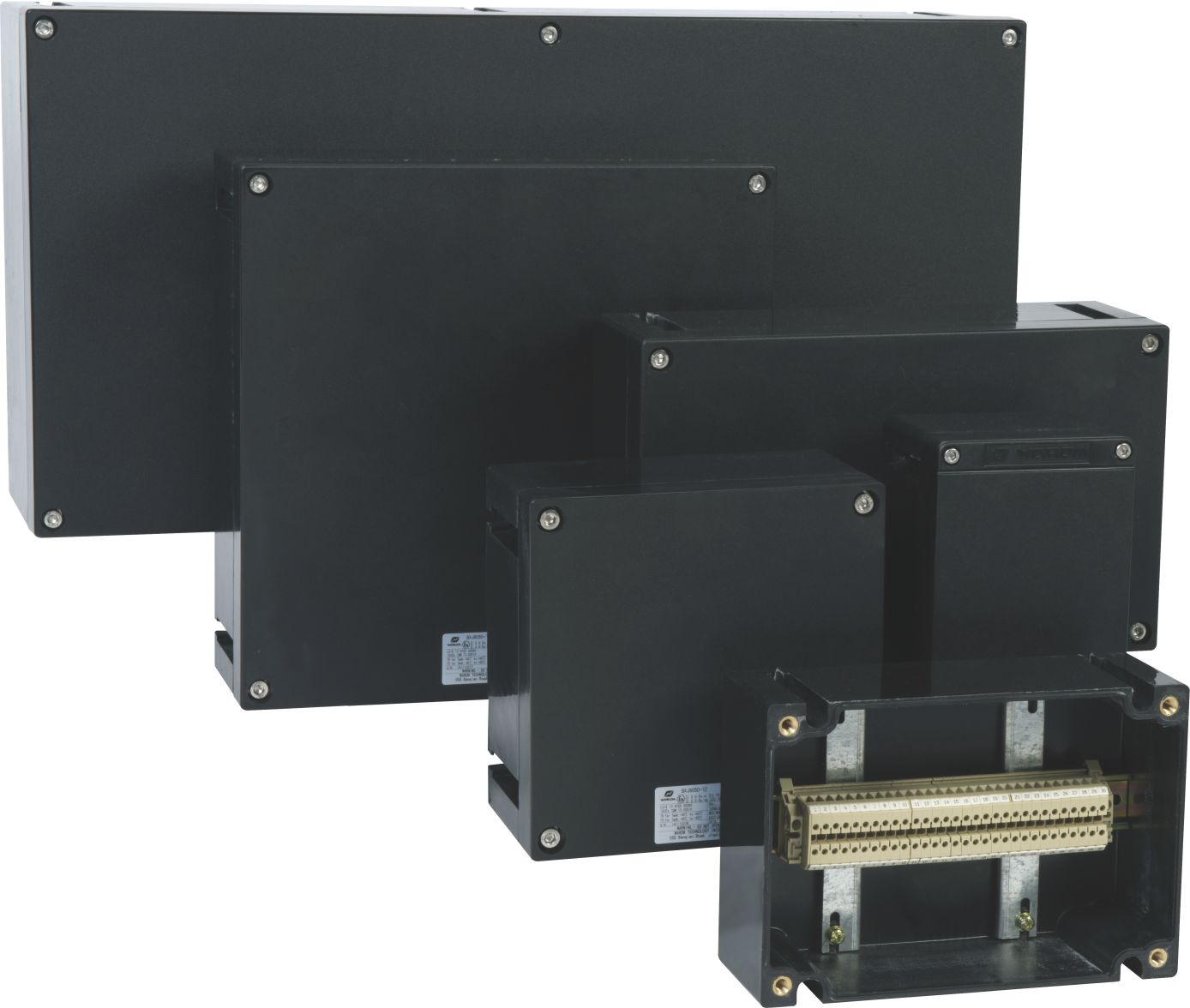
The enclosure platform matters as much as the logic. The BXM(D)8050 distribution panel combines Ex d and Ex e chambers in a GRP enclosure rated IP66 with a maximum current of 250 A. That kind of split chamber design places a standard PLC in the d chamber while the field terminals and switches sit in the e chamber. The panel drawing should show that separation before cable entry positions are fixed.
Why Zone 0 field signals change the panel design
Zone 0 connected transmitters cannot be wired back to a standard digital input card without a certified galvanic or zener barrier. If the loop list shows a Zone 0 temperature transmitter and the panel drawing has no Ex ia barrier slots, the panel will not certify. I flag this during the quotation stage because adding barriers after fabrication usually changes the enclosure depth and terminal layout.
What to do when the PLC type is not yet fixed
If the PLC vendor is not frozen, specify the panel for the largest likely I/O count and terminal footprint, not for one exact part number. The mechanical layout should leave vertical duct space above the terminal strip and a removable gland plate. That gives the panel enough room when the owner changes the PLC from a compact unit to a modular rack.
Specify Field Wiring, Barriers, and Cable Entries for PLC Integration
PLC integration is determined as much by field wiring as by the processor. An Ex d enclosure can lose its certification value if the cable entries are not selected for the cable type or if the gland plate is filled on site without a certified opening method. At General Paint in Mexico, the electrical hazard assessment included junction boxes, distribution boxes, gas detectors, static discharge devices, and anti-corrosion equipment. The three-month upgrade succeeded because the field wiring and panel entries were specified as one package, not as separate material lines.
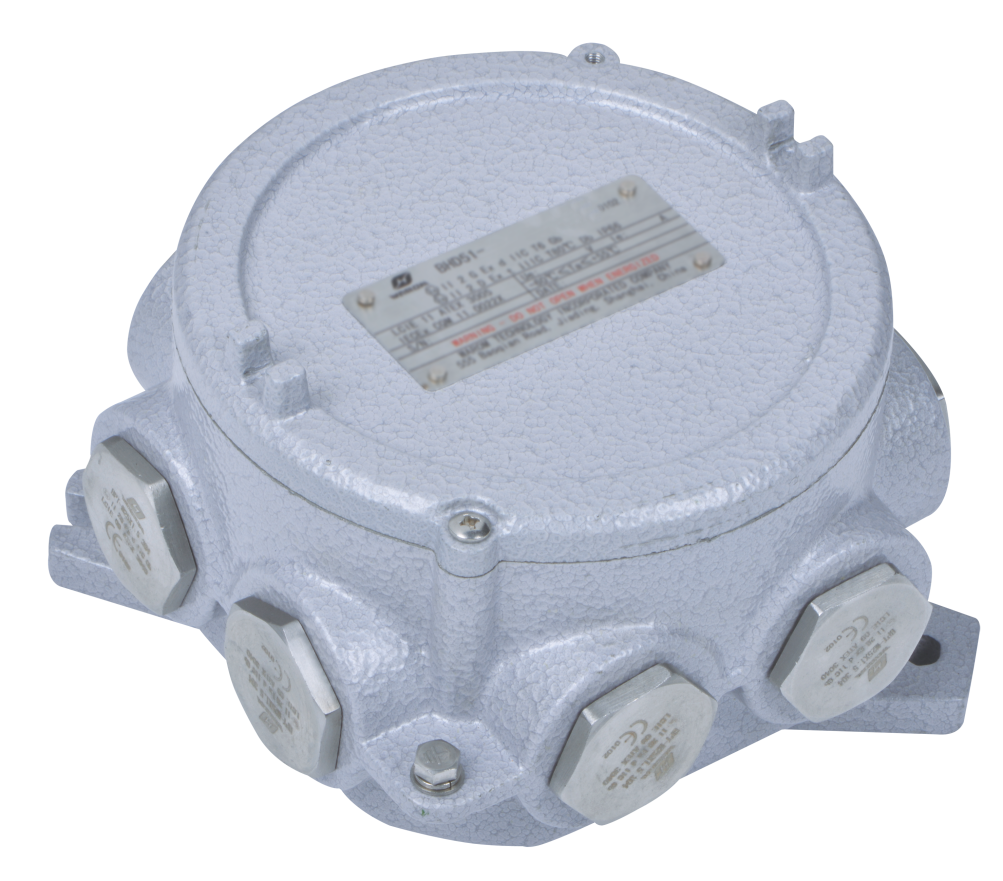
For PLC panels, I place barrier selection above terminal selection. A shielded analog cable from a Zone 1 pressure transmitter should be matched to the barrier parameters: maximum voltage, current, capacitance, and inductance. One unshielded spare pair can add enough capacitance to violate the entity parameters even when the barrier itself is certified. That is the kind of detail that does not appear on a datasheet but determines whether the site passes inspection.
When the PLC panel does not operate as a standalone controller and must feed a plant SCADA system, the integration boundary changes. <Explosion-Proof SCADA Systems for Petro[chemical](https://www.waromgroup.com/industry-category/chemical/) Safety> covers why the panel to server link should be specified early, from communication architecture to the interface between hazardous and safe areas.
If your project includes Zone 0 field devices or mixed intrinsically safe and non-intrinsically safe circuits, it is worth confirming the barrier layout and panel temperature class before finalizing the bill of materials. Send your loop list to gm*@***om.com and I will run the checks during quotation.
Check Certification and Documentation Before Accepting the Panel Quote
A quotation that says “IECEx certified panel” tells you very little until the certificate number, standard edition, and component list are supplied. IEC 60079 covers different protection concepts, so the certificate for the enclosure does not automatically cover the PLC, the HMI, and the barriers as an assembly. On Fushilai Pharmaceutical’s 48,000 square meter facility, the explosion proof distribution boxes for workshops, warehouses, tank farms, and pump controls were delivered in phases tied to construction. The certification package had to be ready before each delivery, not after arrival.
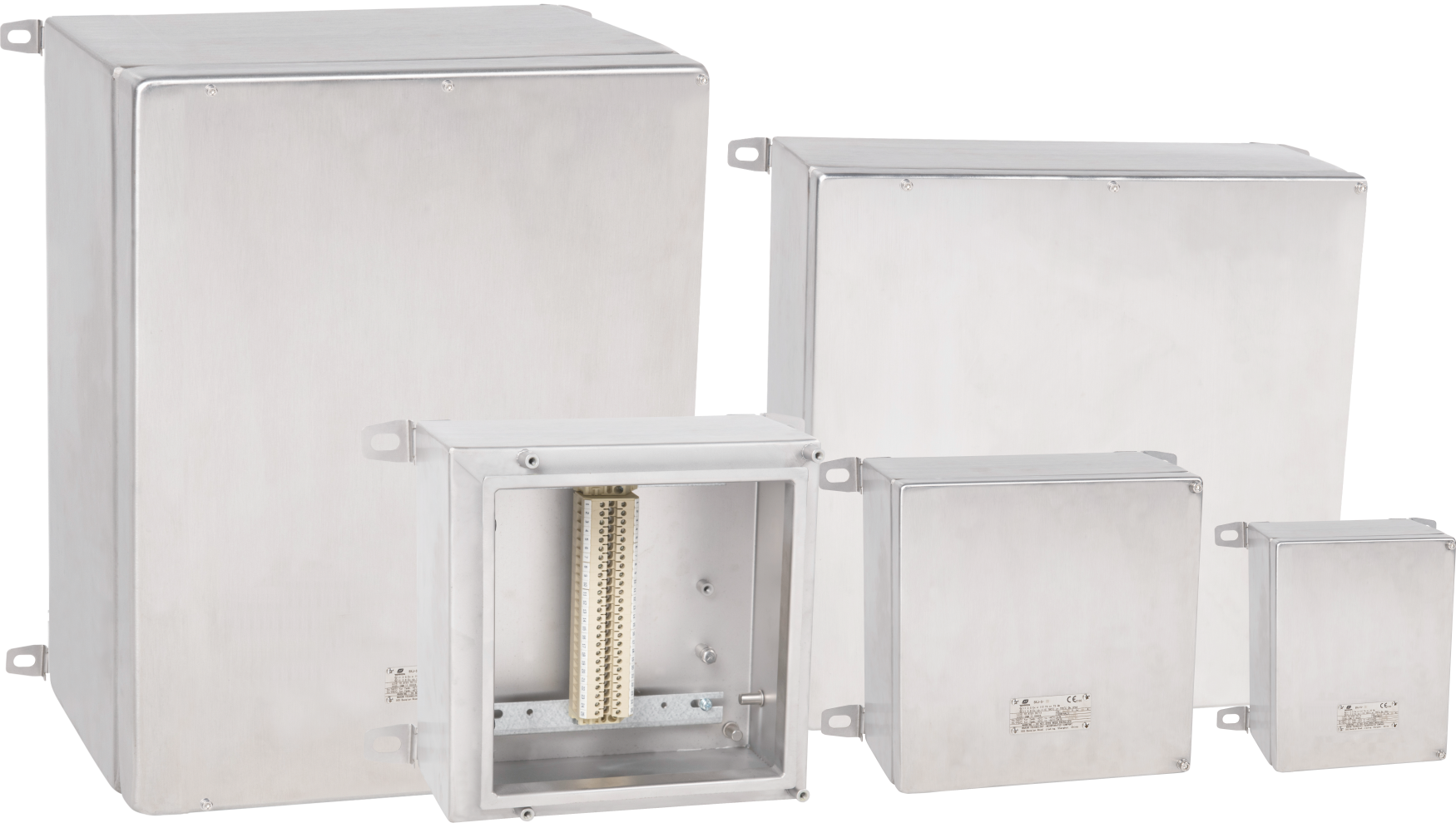
For cross-border projects, the buyer’s standard matters as much as the certificate. An ATEX panel for Europe is not automatically accepted on a North American site, and a UL listing is not an IECEx certificate. When the project mentions both, I ask whether the authority will accept component certification or require a complete assembly certificate. The answer changes the price and lead time more than the enclosure material does.
The same enclosure question appears in control stations specified for North American plants. <NEMA 7 vs ATEX Certified Explosion Proof Control Stations> covers how NEMA 7 and ATEX certification differ and which drawing and certificate set a buyer should request before shipment.
Send an RFQ That Produces a Buildable Explosion Proof Control Panel
The most common inquiry I receive is a one-line request for an explosion proof control panel with PLC, no I/O count, no zone, no cable schedule. That forces assumptions that later become rework. The better request is short but complete: area classification, protection concept, loop list, preferred PLC part number, cable size and gland type, ambient temperature range, certification standard, and delivery location. With those inputs, the panel can be engineered instead of estimated.
WAROM has built PLC-integrated control and distribution systems for oil, chemical, pharmaceutical, and marine projects, from wellpads in Uganda to pharmaceutical process buildings in Suzhou. The protection method, I/O layout, and certification path can be checked before pricing, so the quotation covers what the field will actually require. Send your loop list, area classification, preferred PLC part number, and cable schedule to gm*@***om.com or call +86 21 39977076, and I will confirm enclosure size, temperature class, and certification documentation. This one exchange takes less time than correcting a panel after fabrication.
Common Questions About Explosion Proof Control Panels with PLC Integration
Can a standard PLC be installed in an explosion proof control panel?
Yes, this is the standard approach. The PLC is placed inside a certified Ex d flameproof enclosure or behind a purge/pressurization system. The key point is that the enclosure certificate and the PLC heat load must be evaluated together. A standard processor does not become explosion proof by itself; the enclosure contains any internal ignition and controls the surface temperature. Always request the component list and the calculated temperature class, not just the PLC part number.
Is a Zone 2 PLC panel simpler than a Zone 1 panel?
A common assumption is that Zone 2 removes most certification work. Zone 2 can reduce the enclosure requirement for some circuits, but the PLC, communication modules, and cable entry method still need to meet the standard. A poor cable gland selection or an unapproved communication card can fail inspection as quickly in Zone 2 as in Zone 1. The practical difference is usually cost and heat management, not documentation. Confirm the exact zone and gas group before accepting a simplified quotation.
How much spare I/O capacity should the panel include?
It depends on the project stage and the owner standard. Early design panels should carry enough spare capacity to survive the inevitable field changes. I usually allocate 15 to 20 percent spare terminals and leave one or two blank gland openings. For a locked-down OEM machine with fixed I/O, that may be unnecessary and adds enclosure volume. The panel should be sized for the maximum project I/O list, not the first release of the software.
What documentation should the panel come with before shipment?
The minimum package on projects I have delivered includes the IECEx or ATEX certificate, the certified component list, the wiring diagram, the temperature class calculation, and the cable entry schedule. For North American work, the NEMA or UL documentation takes the place of the ATEX file. Without these records, the panel may sit at the site while inspectors review the paperwork. Share your requirements and I will confirm which certification documentation is available for your project.
If you’re interested, check out these related articles:
Specifying Explosion-Proof Electricals for EPC Projects: Safety & Compliance
Weatherproof IP66 Electrical Enclosures: Industrial Safety Imperatives
Oil Rig Lights Tested: Which Explosion Proof Lighting Performs Best?
Warom Technology Awarded CMMI International Certification for Software Capability Maturity
With over a decade of experience, he is a seasoned Explosion-Proof Electrical Engineer specializing in the design and manufacture of safety and explosion-proof products. He possesses in-depth expertise across key areas including explosion-proof systems, nuclear power lighting, marine safety, fire protection, and intelligent control systems. At Warom Technology Incorporated Company, he holds dual leadership roles as Deputy Chief Engineer for International Business and Head of the International R&D Department, where he oversees R&D initiatives and ensures the precise delivery of design documentation for international projects. Committed to advancing global industrial safety, he focuses on translating complex technologies into practical solutions, helping clients implement safer, smarter, and more reliable control systems worldwide.

Qi Lingyi