
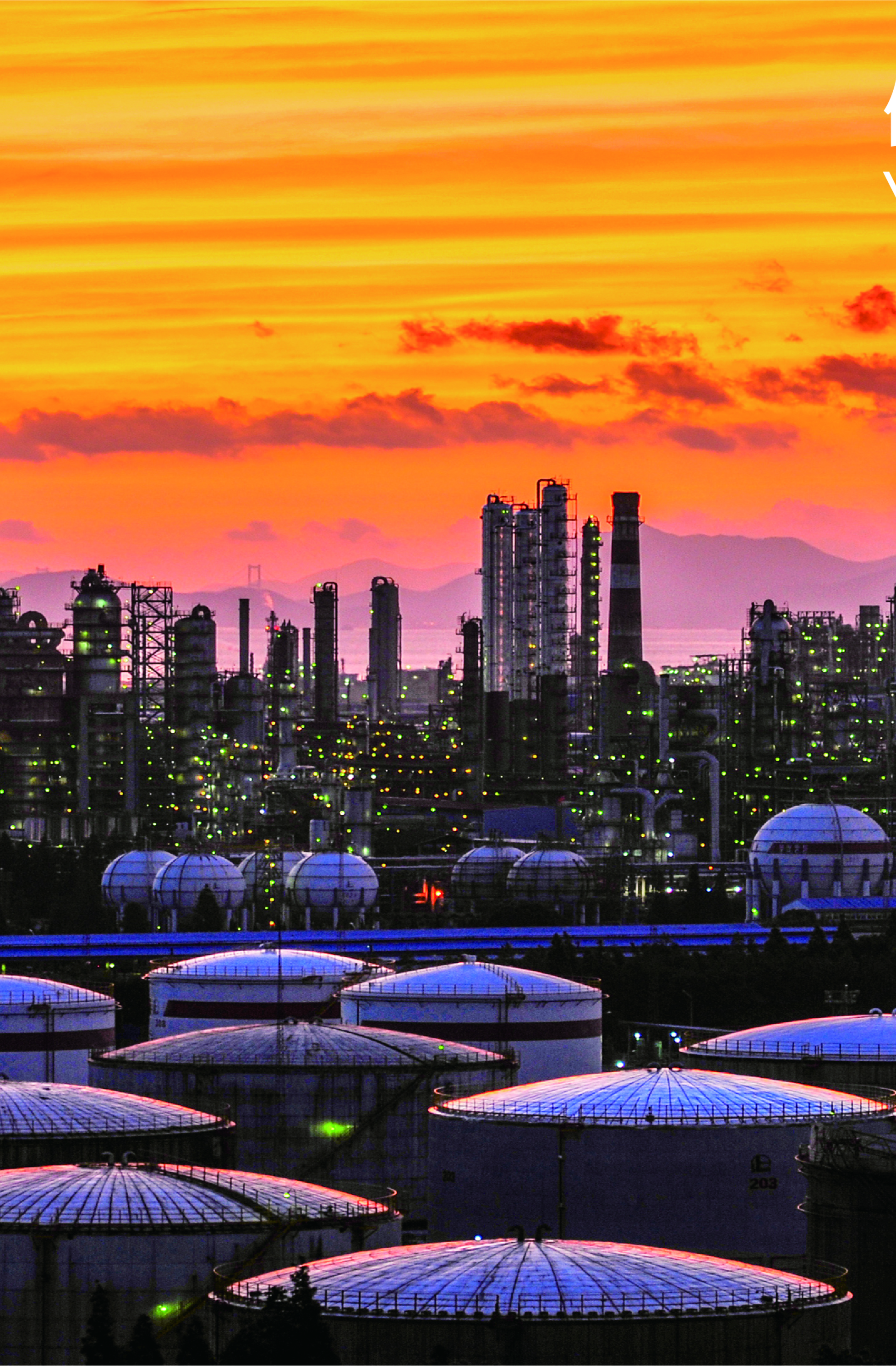
Refinery buyers do not lose projects because the available product range is too narrow. They lose time and budget when a lighting circuit specified for a IIB gas group is installed in a unit that should have been classified IIC, or when a certificate is accepted without reading the schedule of limitations. Explosion proof electrical equipment for oil refineries should be selected from area classification, gas group, temperature class, and corrosion exposure first, not from a catalog. This article covers the verification points that catch project teams at factory acceptance testing and field inspection.
What Does Hazardous Area Classification Change for Refinery Equipment?
Zone classification is not a paperwork exercise. It changes the protection concept, the enclosure material, and the cable entry design. In an oil refinery, most process units around pumps, compressor seals, and sampling points fall into Zone 1 where an explosive gas atmosphere is likely to occur during normal operation. Storage tank vents, bunds, and well-ventilated piperacks are more commonly Zone 2. Zone 0 is usually limited to the inside of tanks and vessels, and most electrical equipment is kept out of it.
Gas group then fixes the maximum experimental safe gap and ignition energy. Hydrogen-rich streams, such as those in hydrocrackers and reformer units, often push parts of the plant toward IIC. Gasoline, LPG, and many refinery hydrocarbons sit in IIA or IIB. A piece of equipment marked Ex d IIC T4 is not automatically suitable for every zone; the certificate and ambient rating must match the actual unit conditions.
Which Explosion Proof Electrical Equipment Do Oil Refineries Need?
A refinery package usually crosses more categories than the specification first suggests. Lighting, distribution, junction boxes, control equipment, and monitoring devices have to be reviewed together because cable entries and gland interfaces often decide the final cost.
Lighting and Visual Signaling
Pipe racks, walkways, tank farm perimeters, and process columns need floodlights that survive humidity and sulfur-containing atmospheres. The BAT86 LED floodlight carries an IP66 enclosure, WF2 corrosion protection, and an ambient range from -60°C to +60°C. That matters in refineries where a night failure on a live process column is not a routine lamp replacement.
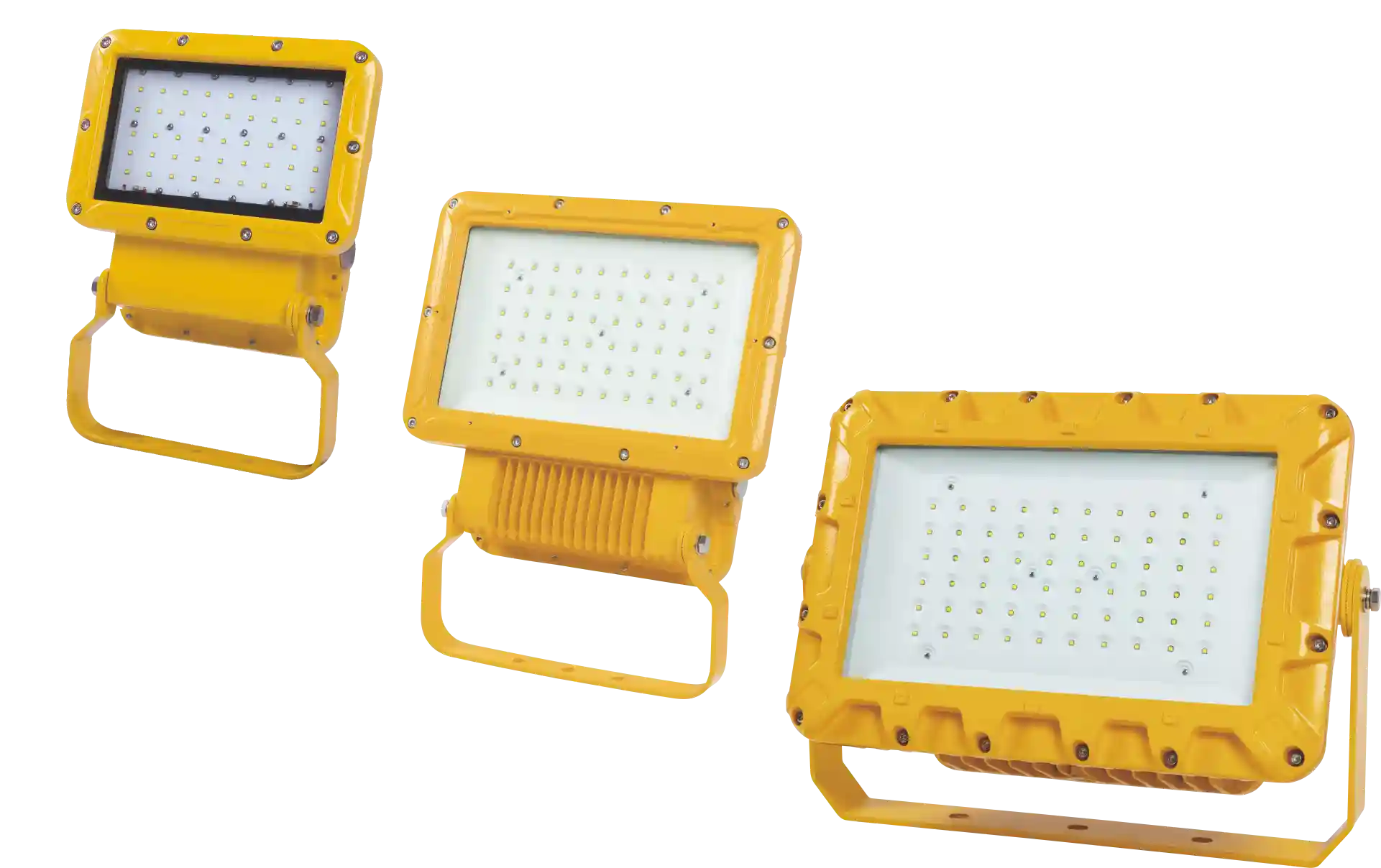
Emergency exit fixtures and audio-visual caution signals also have to match the same hazardous area classification; otherwise a visible alarm that cannot stay sealed in Zone 1 adds its own risk.
Distribution and Junction Enclosures
Distribution boxes and junction boxes carry the highest concentration of cable entries. The BHD91 junction box uses copper-free aluminum alloy, anti-static coating, and stainless steel fasteners, with terminal ratings up to 41 A for 6 mm² conductors. On refinery tank farms, entry direction and gland type have to be set before the casting is ordered.
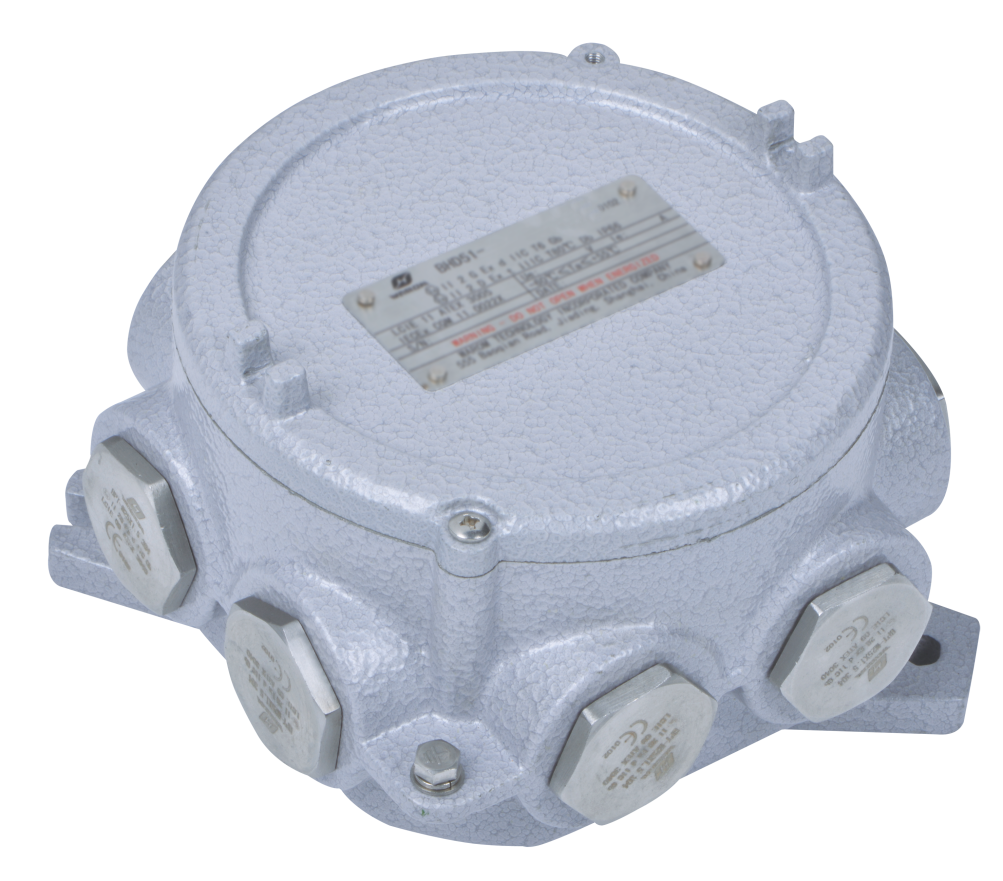
Distribution boxes are one of the main places refinery procurement goes wrong because the quoted enclosure may not match the cable type or site corrosion class. <Evaluating Chinese Explosion Proof Distribution Box Suppliers> covers the factory evidence and design checks that separate a reliable supplier from a cheap enclosure copy.
Control and Monitoring Equipment
Refineries also need control stations, motor starters, and monitoring devices that can be operated without opening a flameproof enclosure under live conditions. A CCTV camera rated for Zone 1 or Zone 2 must have the same gas group and temperature rating as the rest of the installation. When a camera is added later as an afterthought, its cable entry and bracket often become the weak point.
Refinery surveillance adds another layer of certification and environmental testing to the equipment list. <Explosion-Proof CCTV for Zone 1: Hazardous Area Surveillance> covers enclosure, lens, and cable entry details that determine whether a camera survives a live process unit rather than just a security checkpoint.
How Do You Verify Certificates and Stop Field Failures?
Certification documents do more than show that the equipment passed a test. They define the limits inside which the equipment remains certified. The main fields to check on every certificate are protection concept, gas group, temperature class, ambient temperature, and cable entry restrictions.
Certificate Fields That Refinery Teams Miss
| Certificate field | Where the mismatch appears |
|---|---|
| Protection concept | Ex d contains an internal explosion; Ex e prevents arcs. Mixing them on one chamber can invalidate the design. |
| Gas group | A IIB enclosure is not a IIC enclosure. Hydrogen or acetylene process streams can rule it out. |
| Temperature class | T4 may be fine for diesel; T6 may be required near lower autoignition temperature vapors. |
| Ambient temperature | A certificate limited to -20°C has no place in a cold climate shutdown. |
| Schedule of limitations | The X suffix and certificate notes restrict glands, entry types, or mounting orientation. |
Field Failure Patterns That Start in the Data Room
Most failures we see in the field do not come from the enclosure itself. They come from the interface between the cable, the gland, and the flamepath. An armored gland installed without the correct inner ring, or a gland moved from one cable type to another, can leave the flamepath gaps outside the certified dimensions. A terminal box with an extra unapproved hole is another recurring problem. Once a site modifies enclosures after delivery, the certification is gone unless the manufacturer revalidates the change.
Some refinery loops are better served by intrinsic safety than by flameproof enclosures. <Intrinsically Safe vs Explosion Proof: Real-World Applications Guide> explains where Ex ia instrumentation reduces field maintenance and where Ex d still dominates.
If your package spans Zone 1 process areas and Zone 2 utility areas, the interface details are unlikely to fit a single certificate set. Confirm the gland schedule, cable type, and gas group before the BOM freezes. Send the area classification list and cable data to gm*@***om.com.
What Should Procurement Check Before Accepting Refinery Explosion Proof Equipment?
At this stage, the buyer is not maintaining equipment; the buyer is verifying that what was ordered is what will arrive. These checks cost far less than a field hold.
Terminal boxes such as the BXJ8050 in GRP are often checked for terminal count and hole size, but not for current rating at the actual ambient temperature. The GRP body and stainless fasteners are not a substitute for confirming temperature class.
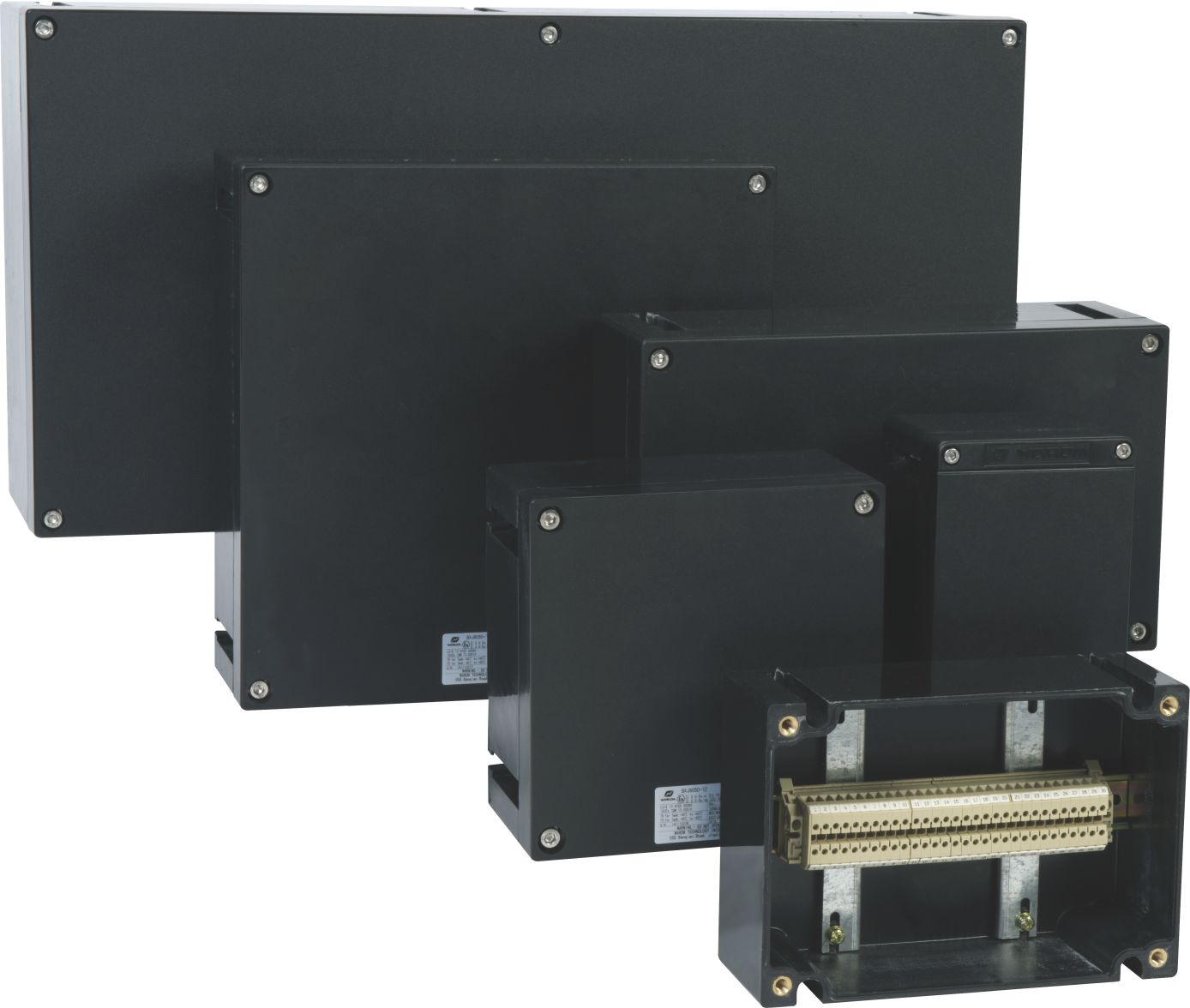
- Compare the nameplate with the purchase order and certificate. Model, protection concept, gas group, temperature class, and serial number must match.
- Review the certificate for the X suffix and the schedule. If limitations conflict with the cable schedule, stop the shipment review.
- Inspect sample cable entries. Thread form, gland type, and entry direction have to match the installation drawings.
- Confirm corrosion class on all external hardware. WF2 and IP66 are not interchangeable with marine-grade stainless for every location.
- Store test reports, material certificates, and conformity declarations with the asset register, not with the invoice.
Project history does not replace verification, but it shows whether the supplier has delivered complete certified packages before. On the Tilenga development in Uganda, Warom supplied explosion-proof lighting and electrical systems across wellpads, a central processing facility, and pipelines, including areas inside Murchison Falls National Park, with zero safety incidents.
What Should You Send Before Finalizing a Refinery Equipment Package?
Refinery procurement teams usually know the unit conditions better than any supplier can from a drawing set. The missing part is often a structured review of the hazardous area schedule against the certificate data. Send us the area classification schedule, cable types, gas group, temperature class, and preferred protection concept. Our engineering team will cross-check the package and confirm which equipment, glands, and entries fit the installation before you commit to a BOM. Email gm*@***om.com or call +86 21 39977076 / +86 21 39972657.
What Refinery Project Teams Ask Before Ordering Explosion Proof Equipment
Do refinery projects need ATEX, IECEx, or CNEX certification?
The answer is usually not a choice of one; it is whichever standard the project specification and local authority accept. IECEx is a widely accepted international certificate that many Middle East, Asian, and Australian refinery projects can use. ATEX is required for delivery into the European Union or for specifications written against EU directives. CNEX applies to China-based projects. Before ordering, request the certificate for the actual product variant, not a similar model, and check whether the country of destination accepts the issuing body.
What is the difference between Ex d and Ex e for refinery distribution boxes?
A common mistake is to think Ex d is stronger and therefore better. Ex d contains an internal explosion and stops the flame from escaping through a controlled flamepath. Ex e increased safety prevents arcs and hot surfaces under normal conditions, but it depends on careful terminal and entry design. In refineries, a distribution board may use Ex e chambers for terminals and Ex d components for switches. The correct choice follows the circuit function and the risk of arcing, not a general preference for one marking.
How do I know if a junction box certificate covers my cable gland?
That question is really two questions: whether the enclosure has certified entry options, and whether the gland itself carries the correct protection concept. The enclosure certificate lists permitted entry types and blanking plugs. The gland certificate must carry Ex d or Ex e marking for the cable type and armor construction. If the gland is certified but not listed in the enclosure certificate, the combination needs a new engineering review. Avoid mixing gland and box certificates from different design systems without checking the flamepath interface.
When should I specify stainless steel instead of aluminum for refinery enclosures?
It depends on the atmospheric exposure and the process fluids. In offshore or coastal units, salt spray and frequent washdowns push most exposed enclosures toward 316 stainless steel or GRP. Inland refinery areas with low chloride levels are usually served by copper-free aluminum alloy with powder coating and WF2 corrosion protection. The specification should also account for sulfur compounds and frequent thermal cycling. If the location is coastal and the aluminum option still appears cheaper in the quote, check the coating guarantee. Share your site location, exposure, and enclosure list at gm*@***om.com and we will confirm which material and coating match the conditions before you order.
If you’re interested, check out these related articles:
WAROM at SOGCE 2025
Weatherproof Products for Port Cranes: Ensuring Marine Reliability
Ensuring Safety: The Indispensable Role of Explosion-Proof Fluorescent Lamps
The “Canton Fair” blooming “WAROM” style
CIPPE 2024
With over a decade of experience, he is a seasoned Explosion-Proof Electrical Engineer specializing in the design and manufacture of safety and explosion-proof products. He possesses in-depth expertise across key areas including explosion-proof systems, nuclear power lighting, marine safety, fire protection, and intelligent control systems. At Warom Technology Incorporated Company, he holds dual leadership roles as Deputy Chief Engineer for International Business and Head of the International R&D Department, where he oversees R&D initiatives and ensures the precise delivery of design documentation for international projects. Committed to advancing global industrial safety, he focuses on translating complex technologies into practical solutions, helping clients implement safer, smarter, and more reliable control systems worldwide.

Qi Lingyi