
Explosion proof distribution boxes for coal mine installations are not interchangeable with standard industrial enclosures. Methane can accumulate around a working face, and the electrical system has to satisfy Group I certification while handling rock dust, moisture, physical abuse, and long cable runs. I have reviewed underground submittals where the enclosure body passed inspection, but the gland plate drawing failed because it did not match the mine’s cable schedule. That mismatch stopped the pre-shipment review. The right selection approach is not to chase the lowest enclosure price; it is to lock gas group, flamepath design, cable entry layout, and earthing before the quote, because those decisions determine whether the box stays compliant after years of underground maintenance.
Gas Group and Zone Classification for Coal Mine Distribution Boxes
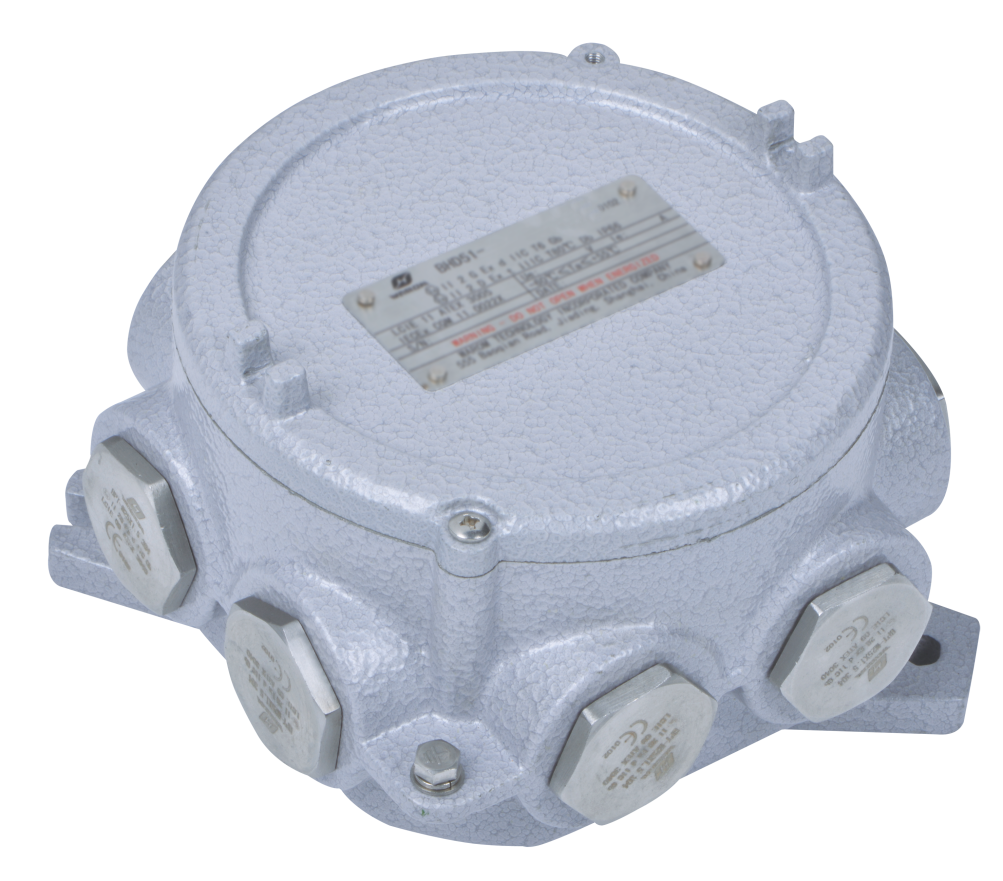
Coal mine distribution boxes operate under a different classification framework from surface petrochemical units. The atmosphere contains methane and coal dust, so the enclosure falls under IEC Group I rather than Group IIA, IIB, or IIC. This is not a paperwork difference. Methane has its own ignition energy and flame transmission behavior, and the flamepath parameters that pass a Group II test do not automatically pass a Group I test. When a tender document carries Zone 0, Zone 1, or Zone 2 wording, that language has usually been copied from a plant specification. Group I installations are assessed by equipment protection level, commonly Ma or Mb, not by the surface zone system.
Why Group I equipment is not a Group II conversion
Suppliers sometimes propose a standard petrochemical flameproof box with a coal mine label because the enclosure looks similar. The mine inspector checks the certificate and the marking, not the visual similarity. A Group II certificate cannot be re-read as Group I. The flamepath gaps, enclosure strength, and test gas differ enough that a conversion program fails at the documentation stage. As an explosion-proof electrical engineer, I treat any proposal that starts with a Group II enclosure as unqualified until the supplier produces a Group I certificate from a recognized test body.
What equipment protection level the mine actually requires
Ma equipment stays energized even when an explosive atmosphere is present. Mb equipment must be de-energized under that condition. Most underground distribution boxes are Mb because mine rules require isolation before methane reaches the area. A few safety-critical monitoring and gas drainage circuits may require Ma. The buyer should state EPL on the data sheet before circuit count, because it changes the certification route and internal layout. Do not accept a supplier who only asks “How many ways?” before asking EPL.
Underground coal mine electrical systems require more than a single compliant enclosure. <Group I Explosion Proof Lighting for Coal Mines: Safety First> covers how Group I lighting selection and surface temperature work together in a methane-capable installation, and why loose documentation can stall mine acceptance even when the hardware is sound.
Explosion Proof Distribution Box Selection for Coal Mines and Flamepath Design
Distribution boxes for coal mining tend to combine flameproof and increased safety construction. Breakers, contactors, and other arcing components sit inside an Ex d flameproof chamber. Terminal blocks and bus connections sit in an Ex e increased safety chamber where no arcing should occur during normal operation. Warom supplies the BXM(D)8050 illumination distribution box in GRP and the HRMD93 distribution panel in copper-free aluminium, both with separated Ex d and Ex e chambers for coal mine duty. The separation matters because Ex e terminal chambers give the mine cleaner access for inspection without opening a flameproof chamber. A single all-Ex d enclosure is also workable, but it costs more and increases the time needed for routine terminal work.
| Protection method | Best use in a coal mine distribution box | What to verify before release |
|---|---|---|
| Ex d flameproof chamber | Circuit breakers, switch disconnectors, arcing components | Flamepath length, gap, surface finish, certificate marking |
| Ex e increased safety chamber | Outgoing terminals, neutral and earth bars | Creepage and clearance distances, terminal torque, IP66 seal |
| Combined Ex d and Ex e enclosure | Mixed switching and distribution functions | Ex d and Ex e compartment separation, gland transition method |
| Non-metallic GRP enclosure | Lighting and control distribution in damp areas | Anti-static coating, impact rating, internal earth continuity |
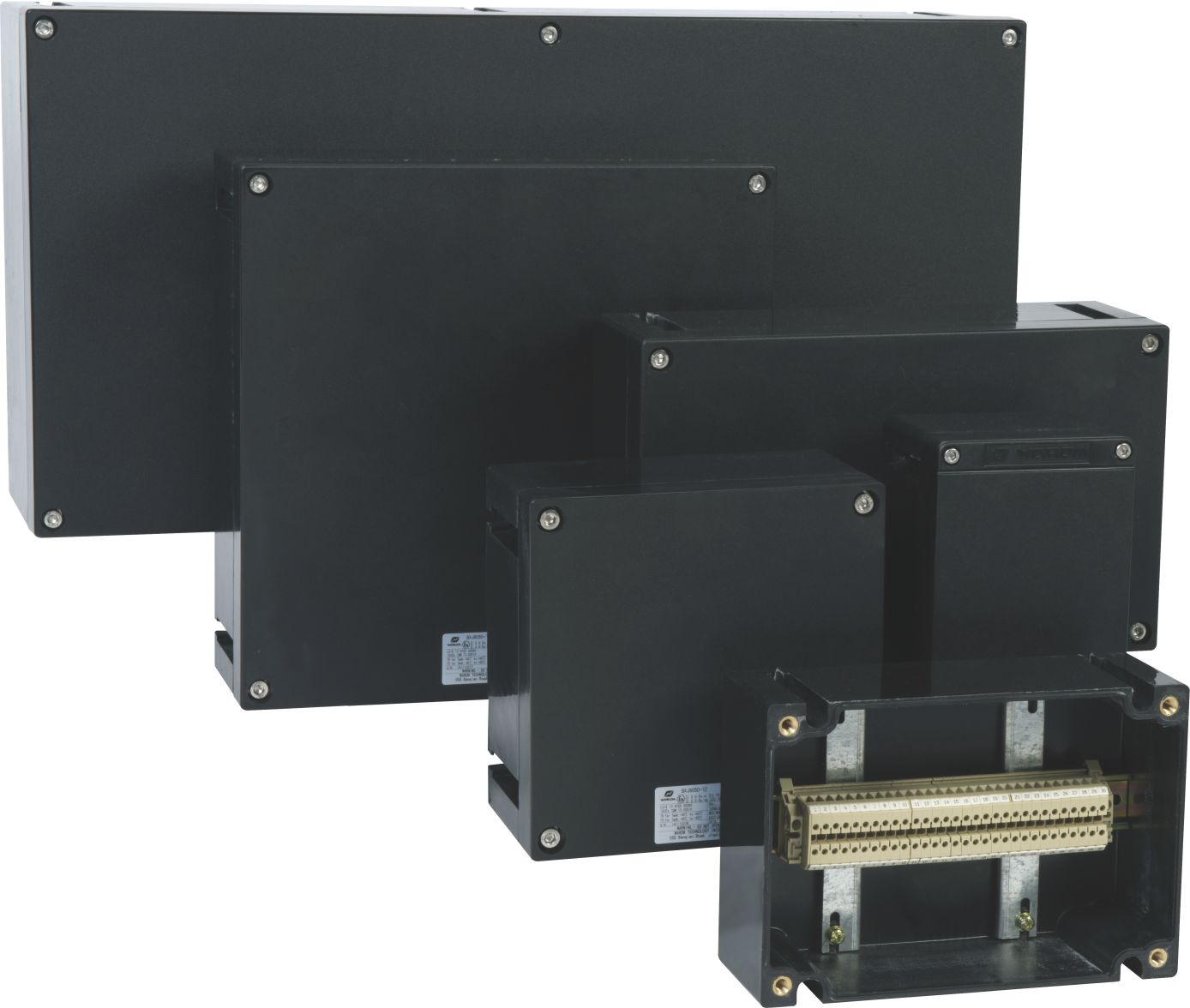
Enclosure material also changes how the box survives underground. GRP enclosures resist acid water and coal dust pitting, but they need an anti-static finish and a continuous internal earth network. Copper-free aluminium is lighter and machines cleanly for flamepaths, but it needs a powder-coated surface and care where roof water drips onto the flange. Cast iron is stronger and stands up to rock falls, yet it is heavy and harder to install in a mine entry. I usually specify aluminium alloy for wall-mounted distribution and GRP for lighting distribution, with cast iron reserved for high mechanical risk zones.
Cable Entry and Gland Specification for a Sealed Enclosure
Cable entry is where coal mine distribution boxes fail most often. Underground workings use armoured cables, screened cables, and trailing cables, often in the same distribution board. The gland plate must be machined to the actual cable schedule before pressure testing, because field drilling breaks the certified enclosure. I have seen purchase orders that listed “cable glands to be supplied loose” without cable diameters. The supplier shipped an enclosure with M25 holes, and the mine later terminated 38 mm armoured cable into an adaptor assembly that had no certificate. The pre-shipment inspection stopped the order until a new gland plate was manufactured.
If your mine layout mixes SWA armoured cable, unarmoured control cable, or metric and NPT entries, confirm the gland plate drawing against the cable schedule before production release. A specification that leaves entry drilling for site work can invalidate the flamepath and the certificate. Send your cable schedule to gm*@***om.com and we will check the entry configuration against the enclosure drawing before the order reaches fabrication.
Earthing, Circuit Protection, and Interlocking Requirements
Underground coal mine networks have high fault currents and long cable runs, so the distribution box earthing system is a safety device, not a convenience. The external earth terminal bonds the enclosure to the mine’s protective conductor. The internal earth bar collects all outgoing circuit earths. A loose earth inside an Ex e chamber can turn a cable sheath fault into an ignition source. Warom distribution panels carry dedicated internal and external earthing points, and the mine should always receive a drawing that shows the earth bar cross section against the calculated fault current.
Internal earth bar sizing under coal mine fault conditions
Coal mine supply points can sit far from the transformer, but fault current at the distribution board may still be high because mine transformers are specified to maintain protection operation. The earth bar must handle the let-through current for the full protection clearing time. Ask the supplier to state the earth bar material, cross section, and short-time rating rather than a generic “earth bar included” note. If the answer is only “we included a copper bar”, keep asking until the cross section is named.
Interlocking and isolation for underground maintenance
Distribution boxes in mines should be designed for lockable isolation. The door interlock on a flameproof enclosure prevents opening while the switch is live, and the mine electrician should be able to fit a padlock to the isolating handle. If the box contains only MCBs without a main disconnector, maintenance becomes a remote rack-out procedure that miners may bypass. Specify a switch disconnector or a lockable main breaker for any board feeding multiple outgoing circuits.
Factory Documentation and Verification for Coal Mine Distribution Boxes
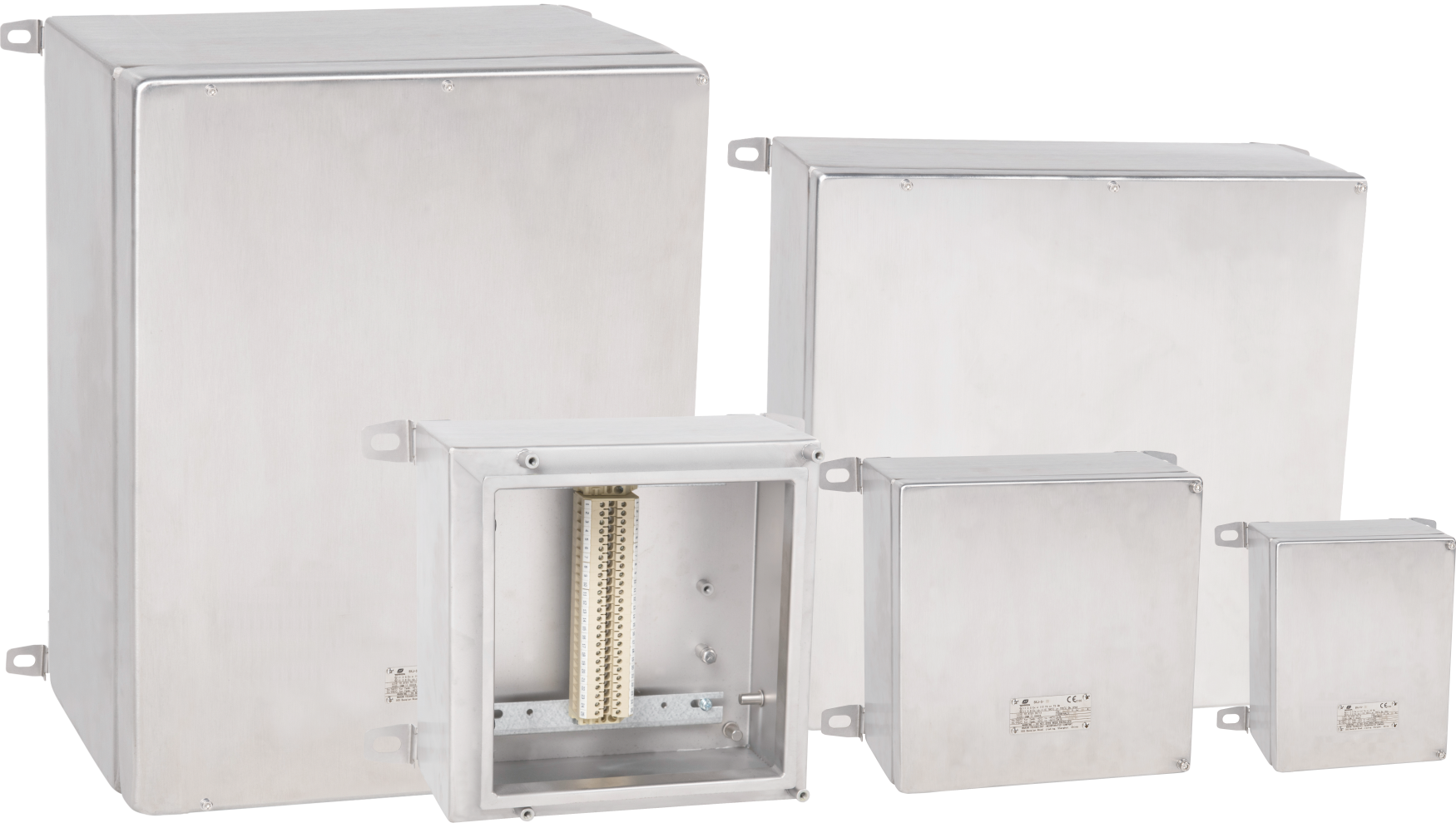
One recurrent problem in coal mine tenders is documentation that passes the commercial review but fails the mine’s technical acceptance. The certificate may be genuine, the drawing may be certified, and the delivered gland plate may differ from both because a production change went unrecorded. When that happens, the enclosure is not accepted even if the hardware is safe. Warom ties the certified drawing, the gland plate layout, and the actual component schedule to the production file for each order. That closes the gap between the certificate shown during negotiation and the box delivered to the mine.
If your project includes methane drainage stations, conveyor drives, or underground switch rooms, send the circuit list, EPL requirement, and cable schedule to gm*@***om.com or call +86 21 39977076. We will confirm the enclosure layout, Group I certification path, and delivery schedule before you finalize the purchase order.
Common Questions About Coal Mine Explosion Proof Distribution Boxes
What certification should a coal mine explosion proof distribution box carry?
Group I certification is the starting point. Look for a certificate that names the equipment protection level as Mb or Ma, references IEC 60079 or the Chinese GB/T 3836 series, and shows the enclosure type such as Ex d or Ex e. For mines in China, the buyer should also confirm whether a Ma safety certificate is required by the provincial mine safety authority. A supplier that only offers a Group II ATEX certificate has not shown a compliant coal mine product.
Do I need Ex d or Ex e for a coal mine distribution box?
It depends on what sits inside the enclosure. Breakers, switch disconnectors, and anything that can arc in normal service go into an Ex d flameproof compartment. Terminal blocks and bus bars can sit in an Ex e increased safety compartment if the connections are properly rated and protected. Most coal mine distribution boards use a combination: Ex d for switching and Ex e for outgoing terminals. A supplier should be able to explain which internal components drove each compartment choice, not simply declare one method better.
Can I use a standard flameproof distribution box in a coal mine?
Only if the certificate proves it is Group I equipment. A flameproof enclosure built for petrochemical Group II use has not been tested against the methane ignition conditions that apply underground. Simply strengthening the enclosure or adding a gland does not convert the certificate. If the marking shows IIB or IIC, it is a surface industrial product. The mine review will identify the mismatch even if the commercial comparison does not.
What documentation should I request before shipment?
Rather than asking for a generic certificate pack, request four items: the Group I certificate, the certified assembly drawing, the gland plate schedule tied to your cable list, and the earthing and short-time rating for the internal earth bar. The last item gets ignored too often. If you are ordering for a Chinese mine, also share the mine’s Ma requirements with your supplier so the submission set is complete. Write gm*@***om.com with those requirements and we will confirm which documents apply to your project.
If you’re interested, check out these related articles:
WAROM at OTC 2025
Happy Mid-Autumn Festival
WAROM on day 1 of the 139th Canton Fair 2026
With over a decade of experience, he is a seasoned Explosion-Proof Electrical Engineer specializing in the design and manufacture of safety and explosion-proof products. He possesses in-depth expertise across key areas including explosion-proof systems, nuclear power lighting, marine safety, fire protection, and intelligent control systems. At Warom Technology Incorporated Company, he holds dual leadership roles as Deputy Chief Engineer for International Business and Head of the International R&D Department, where he oversees R&D initiatives and ensures the precise delivery of design documentation for international projects. Committed to advancing global industrial safety, he focuses on translating complex technologies into practical solutions, helping clients implement safer, smarter, and more reliable control systems worldwide.

Qi Lingyi