
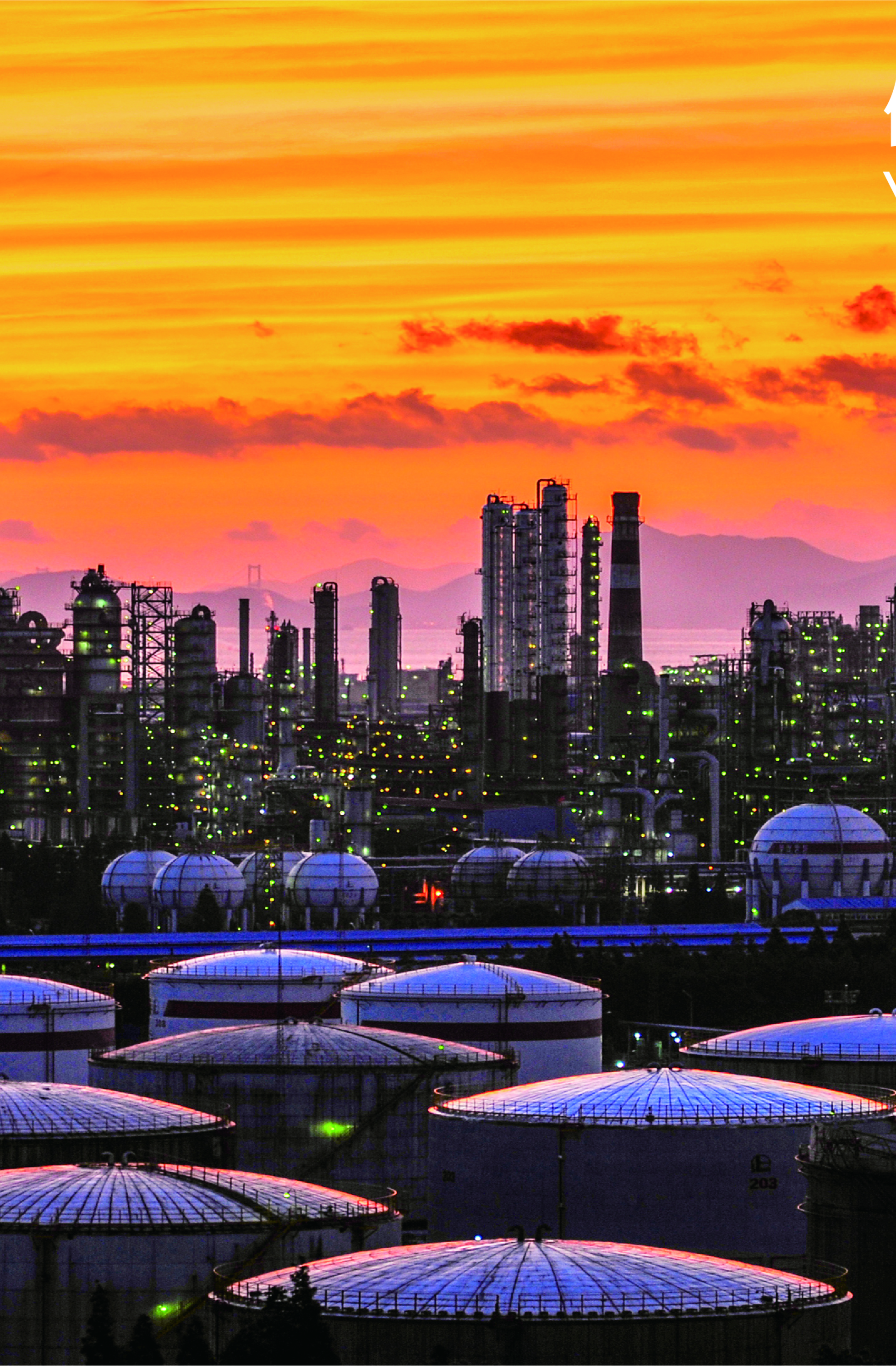
Selecting an explosion proof HMI panel for petrochemical process control requires matching the panel’s protection method, temperature class, and ingress rating to the specific zone classification and ambient conditions of your installation. Most procurement teams focus on certification marks and price, but the specification that determines whether a panel survives five years or fifteen in a refinery environment is the enclosure’s thermal management design under continuous load. I have seen panels certified to the same IECEx standard fail within two years because the thermal path from the display to the enclosure wall was undersized for the actual heat dissipation required at 55°C ambient. The panels that last are those where the manufacturer has validated thermal performance at the upper limit of the rated temperature range, not just at 40°C laboratory conditions.
Why Petrochemical Facilities Require Explosion Proof HMI Panels
Petrochemical process areas routinely contain flammable gases and vapors classified as IIC (hydrogen, acetylene) or IIB (ethylene, propylene) under IEC 60079-10-1. An HMI panel installed in a Zone 1 or Zone 2 area must prevent any internal electrical fault from igniting the surrounding atmosphere. Standard industrial HMI panels, even those rated IP65, lack the flameproof or increased safety construction required to contain an internal arc or prevent surface temperatures from exceeding the autoignition threshold of the surrounding gas.
The consequences of installing non-certified equipment extend beyond regulatory non-compliance. A panel failure in a Zone 1 area can trigger an explosion capable of destroying an entire process unit. Insurance underwriters increasingly require third-party certification verification before binding coverage for new installations. Projects I have supported in the Middle East now routinely include certificate authentication as a pre-shipment inspection hold point.
| Gas Group | Representative Gases | Minimum Equipment Requirement |
|---|---|---|
| IIA | Propane, butane, gasoline vapor | Ex d IIA or Ex e IIA |
| IIB | Ethylene, propylene, hydrogen sulfide | Ex d IIB or Ex e IIB |
| IIC | Hydrogen, acetylene, carbon disulfide | Ex d IIC (highest protection) |
Specifying IIC-rated equipment for all installations provides margin against future process changes, though the cost premium over IIB equipment runs approximately 15 to 25 percent depending on enclosure size.
How Protection Methods Affect Panel Selection
Explosion proof HMI panels use one of three primary protection methods: flameproof (Ex d), increased safety (Ex e), or a combination of both (Ex de). Each method addresses ignition risk differently, and the choice affects installation requirements, maintenance procedures, and long-term reliability.
Flameproof (Ex d) enclosures contain any internal explosion and cool the escaping gases below ignition temperature through precisely machined flame paths. The HMI display, processor, and power supply all reside within the flameproof chamber. This construction permits the use of standard industrial components inside the enclosure, but the enclosure itself becomes heavy and expensive. Flameproof panels typically weigh 25 to 60 kg depending on screen size.
Increased safety (Ex e) construction prevents arcs and sparks from occurring in the first place through enhanced insulation, wider creepage distances, and restricted operating temperatures. Ex e panels use components specifically designed to eliminate ignition sources rather than containing them. The enclosures are lighter and less expensive, but the internal components must be Ex e certified, limiting the available HMI hardware options.
Combination (Ex de) panels place the display and user interface components in an Ex e chamber while housing the power supply and any switching components in an Ex d chamber. This approach balances weight, cost, and component availability. Most petrochemical HMI installations I have specified in the past five years use Ex de construction.
Temperature Class Selection for Continuous Process Monitoring
Temperature class determines the maximum surface temperature the HMI panel can reach during operation. The selected class must be lower than the autoignition temperature of any gas present in the installation area. Petrochemical facilities processing multiple products need panels rated for the lowest autoignition temperature in the process stream.
| Temperature Class | Maximum Surface Temperature | Typical Application |
|---|---|---|
| T1 | 450°C | Methane, ammonia |
| T2 | 300°C | Acetone, toluene |
| T3 | 200°C | Gasoline vapor, hexane |
| T4 | 135°C | Acetaldehyde, diethyl ether |
| T5 | 100°C | Carbon disulfide |
| T6 | 85°C | Special applications |
Most refinery and petrochemical applications require T4 or T3 rated equipment. The challenge arises when ambient temperatures exceed 40°C. A panel rated T4 at 40°C ambient may only achieve T3 at 55°C ambient because the internal heat rise remains constant while the starting temperature increases. Manufacturers must derate the temperature class for high ambient installations, and this derating information is often buried in the certificate annexes rather than displayed on the nameplate.
When evaluating panels for installations in hot climates, request the temperature class rating at your actual maximum ambient temperature. If the manufacturer cannot provide this data, the panel’s thermal design has not been validated for your conditions.
Specification Requirements for Petrochemical HMI Panels
A complete HMI panel specification for petrochemical service must address certification, environmental ratings, electrical characteristics, and communication protocols. Missing any of these elements creates procurement delays and potential site rejection.
Certification requirements:
– IECEx or ATEX certificate for the complete panel assembly, not just the enclosure
– Gas group rating matching the area classification (IIB minimum for most petrochemical, IIC for hydrogen service)
– Temperature class validated at the project’s maximum ambient temperature
– Certificate of Conformity from an accredited notified body
Environmental ratings:
– IP66 minimum for outdoor installations; IP67 preferred for wash-down areas
– Ambient temperature range covering site extremes (typically minus 40°C to plus 55°C or plus 60°C)
– UV resistance for direct sun exposure
– Salt spray resistance for coastal or offshore installations
Electrical characteristics:
– Wide voltage input range (100 to 277V AC) to accommodate site power variations
– Surge protection rated for industrial environments (minimum 2kV line to line)
– Power consumption data for thermal calculations
Communication protocols:
– Modbus TCP/IP or Profinet for DCS integration
– OPC UA capability for modern SCADA systems
– Hardwired discrete I/O for safety interlocks
Common Specification Errors That Cause Project Delays
Three specification errors account for most HMI panel procurement problems in petrochemical projects. Avoiding these errors requires attention during the front-end engineering phase, not during procurement.
Error 1: Specifying enclosure certification instead of assembly certification. An Ex d enclosure certificate does not cover the HMI panel installed inside it. The complete assembly, including display, processor, power supply, and wiring, must be certified as a unit. Panels assembled from separately certified components require a system certificate from a notified body, adding 8 to 12 weeks to the delivery schedule.
Error 2: Ignoring cable gland compatibility. The cable entry method must match the panel’s protection concept. Ex d panels require Ex d cable glands with proper thread engagement. Using Ex e glands on an Ex d enclosure voids the certification. Specify cable gland type, size, and quantity in the panel specification to avoid field modifications.
Error 3: Underestimating display visibility requirements. Petrochemical control rooms and field stations have varying lighting conditions. A display that appears adequate in a sales demonstration may be unreadable in direct sunlight or under high-intensity emergency lighting. Specify minimum display brightness (1000 cd/m² for outdoor use) and viewing angle requirements based on actual operator positions.
| Specification Element | Common Error | Correct Approach |
|---|---|---|
| Certification | Enclosure only | Complete assembly certificate |
| Cable entry | Generic glands | Matched Ex d or Ex e glands |
| Display | Standard brightness | 1000 cd/m² minimum outdoor |
| Temperature class | Rated at 40°C | Rated at actual ambient |
Evaluating Manufacturers Before Ordering
The explosion proof equipment market includes manufacturers with decades of petrochemical experience alongside suppliers who have adapted general industrial products for hazardous areas. Distinguishing between them requires examining manufacturing capability, certification history, and project references.
Manufacturing capability indicators:
– In-house machining of flameproof enclosures (outsourced machining introduces quality variability)
– Documented flame path inspection procedures with measurement records
– Thermal testing facilities capable of validating temperature class at elevated ambient
– Assembly cleanroom or controlled environment for increased safety components
Certification history:
– Certificates issued by recognized notified bodies (PTB, LCIE, Nemko, DNV, BV)
– Certificate continuity without lapses or withdrawals
– Scope of certification covering the specific configuration you require
Project references:
– Installations in operating petrochemical facilities, not just oil and gas exploration
– References from EPC contractors who have completed commissioning
– Documented mean time between failures for installed base
During a recent project supporting Fushilai Pharmaceutical’s CM/CDMO construction, we specified explosion proof distribution boxes and control equipment across 15 production lines handling APIs and intermediates. The manufacturer selection process required coordination between the design institute, project owner, and equipment supplier to verify that each panel configuration matched the area classification and process requirements. Phased delivery aligned to construction progress prevented storage damage and reduced site handling.
Installation and Integration Considerations
An explosion proof HMI panel’s long-term reliability depends as much on installation quality as on manufacturing quality. Field installation errors can void certifications and create safety hazards that remain hidden until a failure occurs.
Mounting requirements:
– Structural support capable of handling panel weight plus cable load
– Vibration isolation for installations near rotating equipment
– Orientation matching the thermal design assumptions (most panels assume vertical mounting)
Wiring practices:
– Cable segregation between power, signal, and communication circuits
– Proper torque on terminal connections per manufacturer specifications
– Ferrite cores or shielding on communication cables in high EMI environments
Commissioning verification:
– Thermal imaging after 24 hours of continuous operation to identify hot spots
– Communication latency testing under maximum data load
– Display visibility verification from actual operator positions
Integration with existing DCS or SCADA systems requires protocol matching and address configuration. Most delays during commissioning stem from communication configuration errors rather than hardware problems. Request the manufacturer’s integration guide and verify protocol compatibility with your control system vendor before ordering.
The panels we supplied for the Tilenga project in Uganda included pre-configured communication settings matched to the site DCS, reducing commissioning time and eliminating field programming errors. This approach requires early coordination between the panel manufacturer and the control system integrator, but the schedule benefit justifies the engineering effort.
What Procurement Teams Ask About Explosion Proof HMI Panels
What is the typical lead time for a custom explosion proof HMI panel?
Standard configurations with common display sizes and established certifications ship in 8 to 12 weeks. Custom configurations requiring new certificate annexes or non-standard enclosure sizes extend to 16 to 20 weeks. The certificate amendment process, not manufacturing, usually determines the schedule for custom orders. If your project timeline is tight, confirm whether the exact configuration you need is already covered by an existing certificate before finalizing specifications.
Can we use a standard industrial HMI with an explosion proof enclosure?
Technically possible, but the assembly requires certification as a complete unit. Installing an uncertified HMI inside a certified enclosure does not create a certified assembly. The notified body must evaluate the thermal characteristics, wiring methods, and component ratings of the complete assembly. This evaluation adds cost and time compared to purchasing a pre-certified panel. For single units, the certification cost often exceeds the hardware cost.
How do we verify that a certificate is authentic?
Legitimate IECEx certificates are listed in the IECEx online database at iecex.com. ATEX certificates can be verified through the issuing notified body. Request the certificate number and issuing body from the supplier, then verify directly. Counterfeit certificates exist in the market, particularly for equipment sourced through trading companies rather than directly from manufacturers.
What maintenance does an explosion proof HMI panel require?
Routine maintenance includes cleaning the display surface, inspecting cable gland seals, and verifying enclosure fastener torque. Flameproof enclosures require periodic inspection of flame path surfaces for corrosion or damage. Any repair that opens the flameproof chamber must be performed by trained personnel following the manufacturer’s procedures. Improper reassembly can create gaps in the flame path that void the protection.
Is Zone 2 equipment acceptable for Zone 1 installation?
No. Zone 1 requires equipment certified for Zone 1 or Zone 0. Zone 2 equipment has reduced construction requirements that do not provide adequate protection for Zone 1 conditions. This error appears frequently in specifications written by engineers unfamiliar with hazardous area classification. Always match equipment certification to the actual zone classification, not to adjacent areas or general site classification. If your facility has multiple zone classifications, share your area classification drawing with us at gm*@***om.com or call +86 21 39977076, and we can confirm which panel configurations match each location.
If you’re interested, check out these related articles:
Warom at Australian Energy Producers Conference&Exhibition
Warom Explosion-Proof Supplier Conference 2024
Ultimate Guide to Portable Explosion Proof Lighting
The New Factory of WAROM MENA
Warom at SMM Hamburg
With over a decade of experience, he is a seasoned Explosion-Proof Electrical Engineer specializing in the design and manufacture of safety and explosion-proof products. He possesses in-depth expertise across key areas including explosion-proof systems, nuclear power lighting, marine safety, fire protection, and intelligent control systems. At Warom Technology Incorporated Company, he holds dual leadership roles as Deputy Chief Engineer for International Business and Head of the International R&D Department, where he oversees R&D initiatives and ensures the precise delivery of design documentation for international projects. Committed to advancing global industrial safety, he focuses on translating complex technologies into practical solutions, helping clients implement safer, smarter, and more reliable control systems worldwide.

Qi Lingyi